The Indian Ministry of Defence (MoD) (headquartered in New Delhi) and Hindustan Aeronautics Limited (HAL), the state warplane maker, have signed a contract worth $7 billion (₹66,500 crore) for the procurement of 97 Tejas Mk-1A light combat aircraft by the Indian Air Force (IAF). The agreement was signed on 25 September 2025, just a day before the official retirement of India’s last MiG-21 squadrons.
Under this accord, deliveries of the state-made war aircraft will commence in fiscal 2027–28 and be completed in six years later. The deal is a part of India’s push for self-reliance, as it falls under the aegis of what the government has called “Aatmanirbhar Bhaarat” (which can be translated to “a Self-sufficient India”). It has been claimed that the assembling of Tejas has led to the utilization of over 64 % indigenous materials, and this historic deal aims to invigorate the domestic aerospace supply chain.
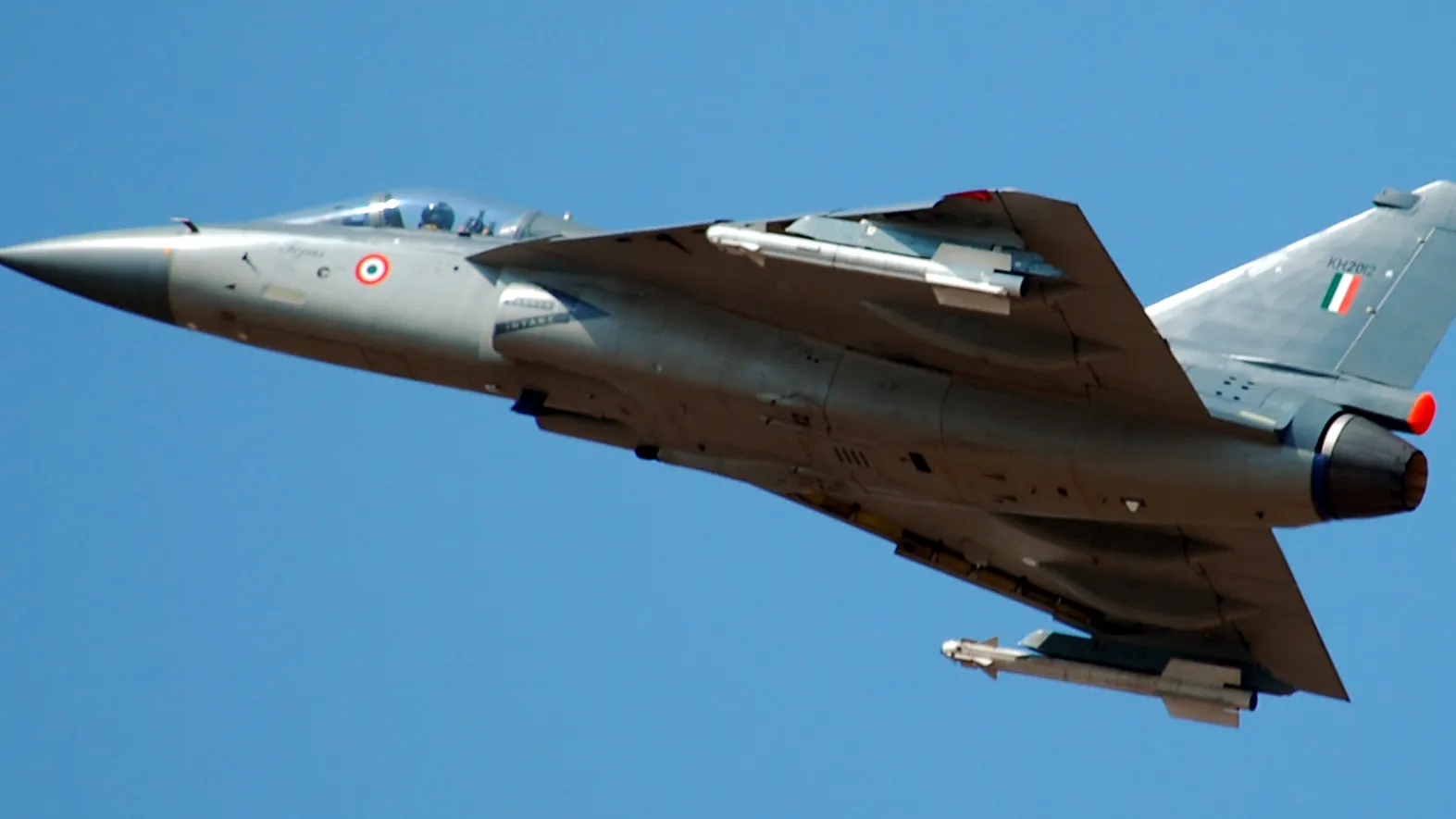
Details of the $7billion (₹66,500 crore) Tejas deal
HAL’s contract with the MoD comprises 68 single-seat fighter versions and 29 twin-seat trainer variants, along with associated systems, spares, and support infrastructure. Nearly 105 Indian vendors are expected to be part of the supply chain that will encompass the delivery of the aircraft to the Indian Air Force. Further, the deal is also expected to generate approximately 11,750 jobs (direct and indirect) annually over the contract period.
The new order is an extension to the contract for 83 Tejas Mk-1A jets (73 fighters + 10 trainers) [valued at ₹46,898 crore] that was signed in 2021. The New Indian Express reported that “Once this new order is completed in the stipulated 15 years, the IAF will have 40 LCA, over 180 LCA Mark-1A and at least 120 LCA Mark-2 planes.”
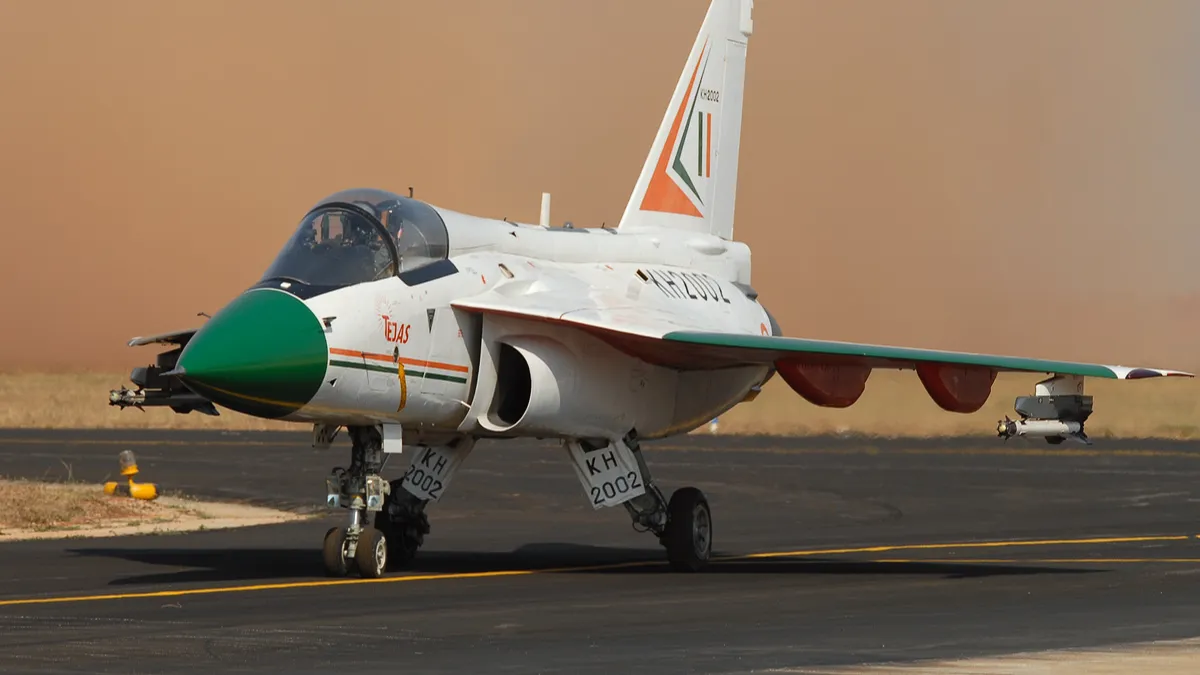
The Tejas, which is set to serve as India’s replacement for the MiG-21 – the aircraft type that has the rather biting distinction of being “a flying coffin”, a distinction it shares with the Consolidated B-24 heavy bomber. The Tejas entered service with the Indian Air Force in July 2016, with No. 45 Squadron. The first IAF unit to operate it named the aircraft “Flying Daggers”. The Indian Air Force initially placed an order for 40 Tejas Mk 1 jets, of which 35 have been delivered so far.
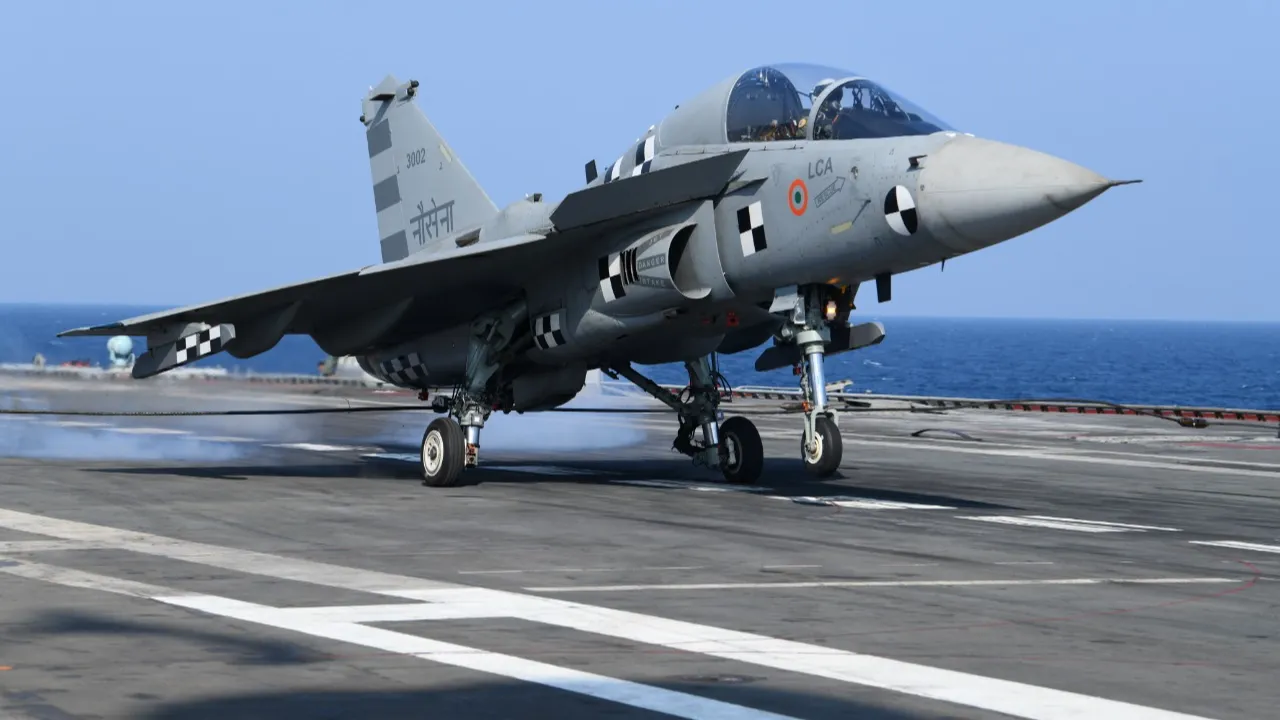
How will the recent Tejas deal shape the Indian Air Force?
The Ministry of Defence highlighted the Tejas Mk1A as an important part of India’s push toward greater self-reliance in defence manufacturing. The aircraft incorporates the Uttam active electronically scanned array (AESA) radar, Swayam Raksha Kavach and indigenous control actuators, with more than 64% of its content sourced domestically and 67 new indigenous components.
The program is supported by 105 suppliers and is expected to generate around 11,750 jobs annually over six years. Deliveries are scheduled to begin in 2027-28, strengthening the Indian Air Force’s capabilities while supporting the government’s Atmanirbhar Bharat initiative and wider defence preparedness.
Mod’s buoyancy on the recent procurement of the deal comes a month after the Cabinet Committee on Security (CCS) approved the production of the an upgraded variant Tejas Mk1A. This aircraft type is expected to help offset the decline in the Indian Air Force’s combat squadron strength. This clearance followed an earlier approval granted by the Defence Acquisition Council (DAC) in November 2023.
This latest procurement of 97 Tejas aircraft comes at a time when the IAF’s fighter strength is rapidly declining: after all, the last MiG-21 unit, No. 23 Squadron, was phased out yesterday, dropping the total number of active fighter squadrons to below 30.
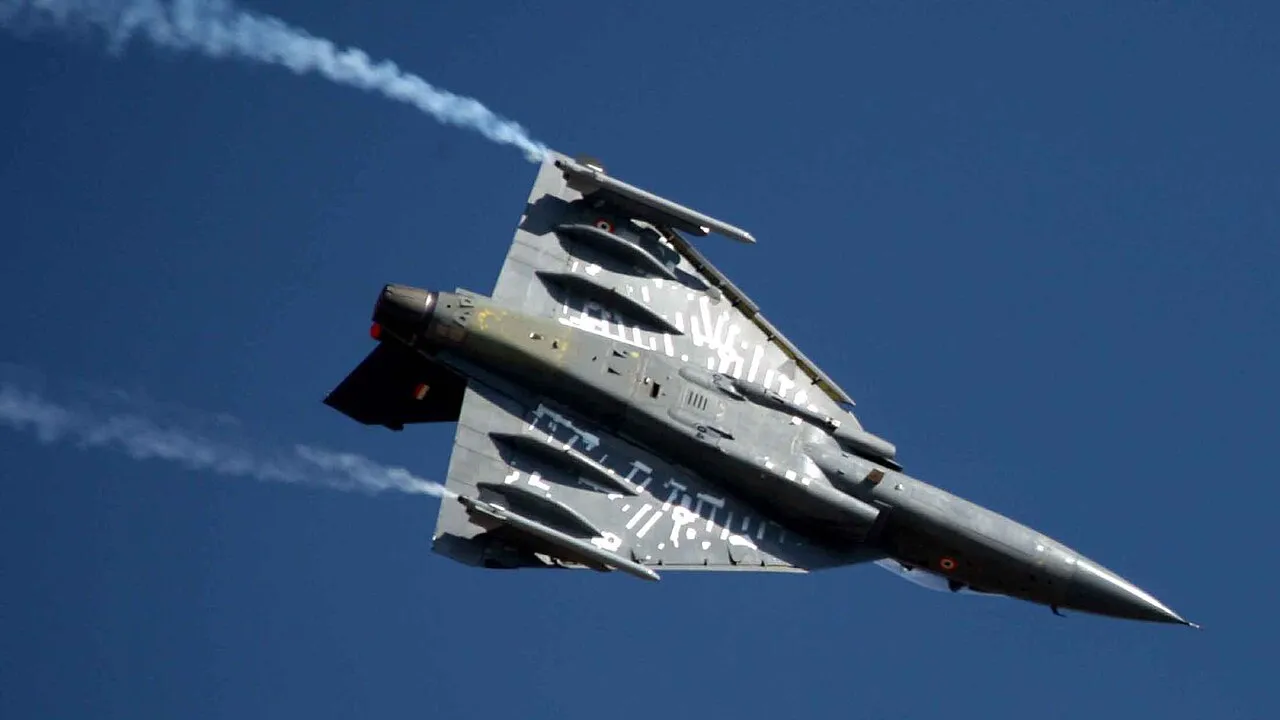
HAL’s Chairman and Managing Director, Dr. D.K. Sunil, described the signing as a “red-letter day” for India’s indigenous fighter programme, highlighting the ₹66,500 crore contract as both a major commercial milestone and a recognition of the country’s growing ability to design and manufacture advanced fighter aircraft domestically. He also pointed to the Tejas programme and the broader industrial ecosystem being developed around it as examples of the government’s push for Atmanirbharta, or self-reliance.
However, the programme’s dependence on foreign components, particularly engines, continues to raise questions about how self-reliant the Tejas Mk1A actually is. Reuters reported that deliveries under the earlier 83-aircraft contract signed with HAL in 2021 had yet to begin because of delays in GE Aerospace’s supply of engines.
GE attributed the delays to difficulties in restarting production and re-establishing global supply chains following the COVID-19 pandemic. The company delivered the first engine for the Mk1A in March, while Indian officials have indicated that engine production and aircraft deliveries are expected to stabilize during the current financial year. This reliance on an overseas engine supplier remains one of the key vulnerabilities in India’s effort to build a truly self-sufficient fighter aircraft industry.
However, the avionics, radar, weapons, and other systems are manufactured in India, which offsets the engine-dependency concern to a significant extent. As HAL and the IAF work to stabilize GE Aerospace’s engine deliveries, the Tejas Mk1A program remains a genuine milestone in India’s defense-manufacturing ambitions — even if true self-sufficiency, in the fullest sense, remains a work in progress.