A production number of 18,400 (between 1940 and 1945 across several variants) might not be enough to ensure that the Consolidated Aircraft B-24 Heavy Bomber is one of the most impressive planes to have been produced. After all, around 20,000-30,000 units of the Polikarpov Po-2, which is the tenth most-produced plane ever, were also manufactured.
The B-24 was produced and the years when “the unmentionable odour of death” (to borrow Auden’s phrase) hit Europe in the form of World War II. It might also not take too much imagination to come to the conclusion why this aircraft was given the epithet “Liberator”. This aircraft had gone one to be the most-produced bomber in military history.
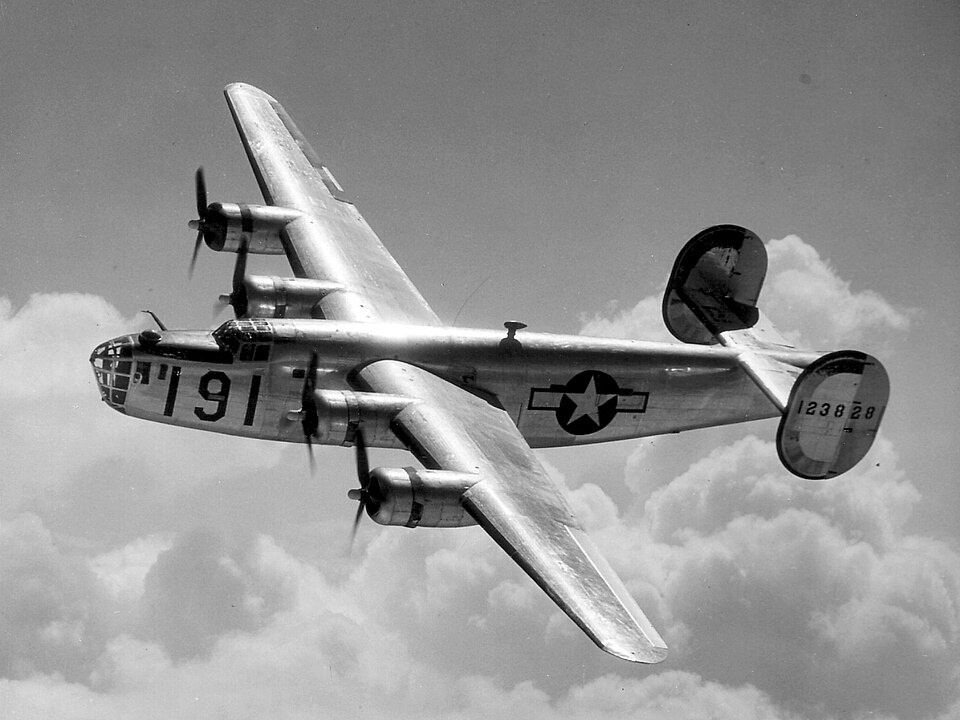
Only thitreen of this aircraft type survive today, two of which, surprisingly, are airworthy. The distinctions held by the aircraft include participating in the first attack on German soil, being produced at a rate of more than one per hour at the Ford plant in Michigan (at its zenith, of course), among others. Let’s take a look at the top five facts about the Consolidated Aircraft B-24 Heavy Bomber.
5. A liberator that was (also) a flying Coffin
The Mig-21 has also earned the same epithet
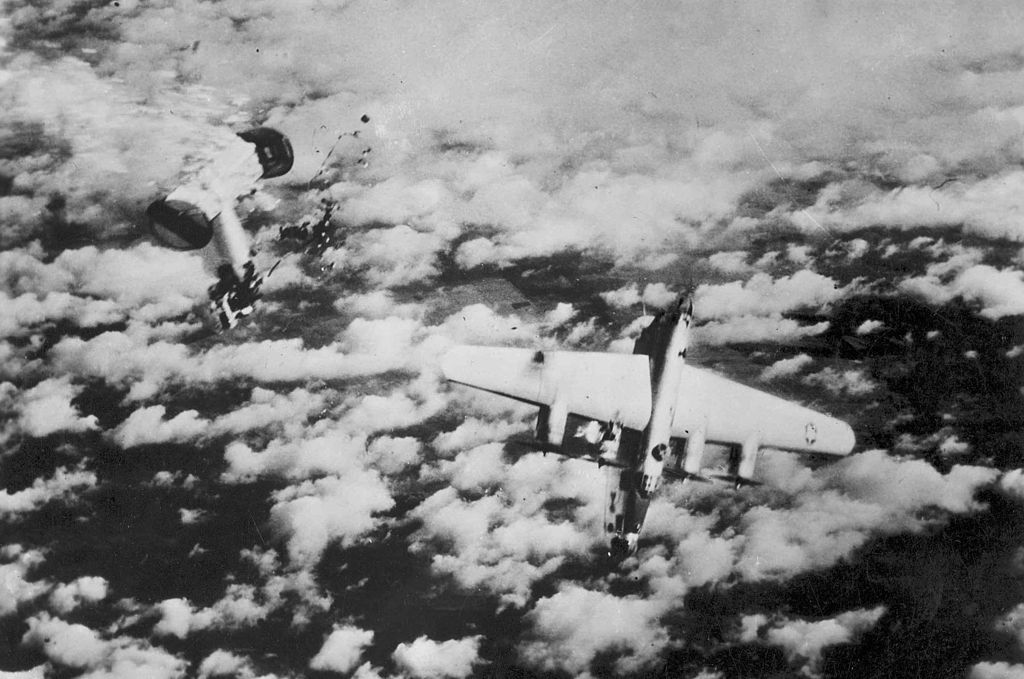
Liberator was one of a few aircraft in the world to be dubbed a “Flying Coffin”. The biggest reason behind it was the almost impossibility to get to the exit of the aircraft in case of an emergency. The only entry point to the aircraft was near its rear.
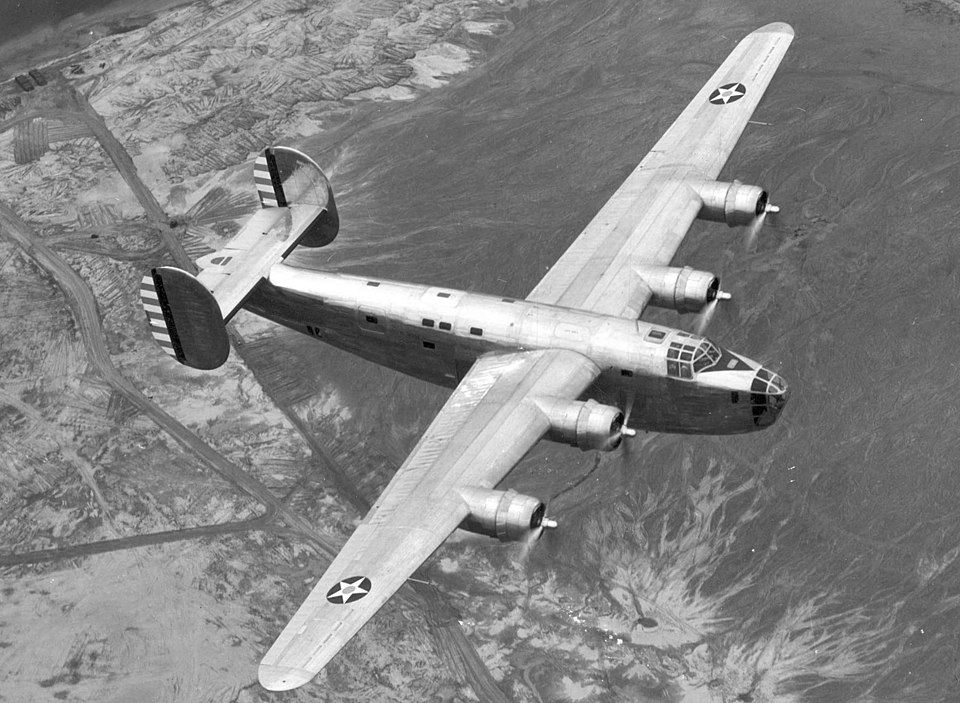
Some other reasons why the B-24 was might have earned it the monikers such as a Flying Coffin, “Lumbering Lib”, and “Widow-Maker” are:
- A relatively low service ceiling made it susceptible to being downed, with Encyclopedia Brittanica quoting that this disadvantage as: “the B-24 was more exposed to German antiaircraft artillery; this and the B-24’s greater vulnerability to battle damage (the leaky fuel system was a particular problem) made the B-17 the preferred strategic bomber in the European theatre.”
- Pilots reported difficulty in flying at altitudes above 20,000 feetwith some saying, “In the air it was like a fat lady doing a ballet.”
- Its twin tails rendered it unstable.
4. Turned the tide against the World War II
At the heart of the D-Day invasion and others
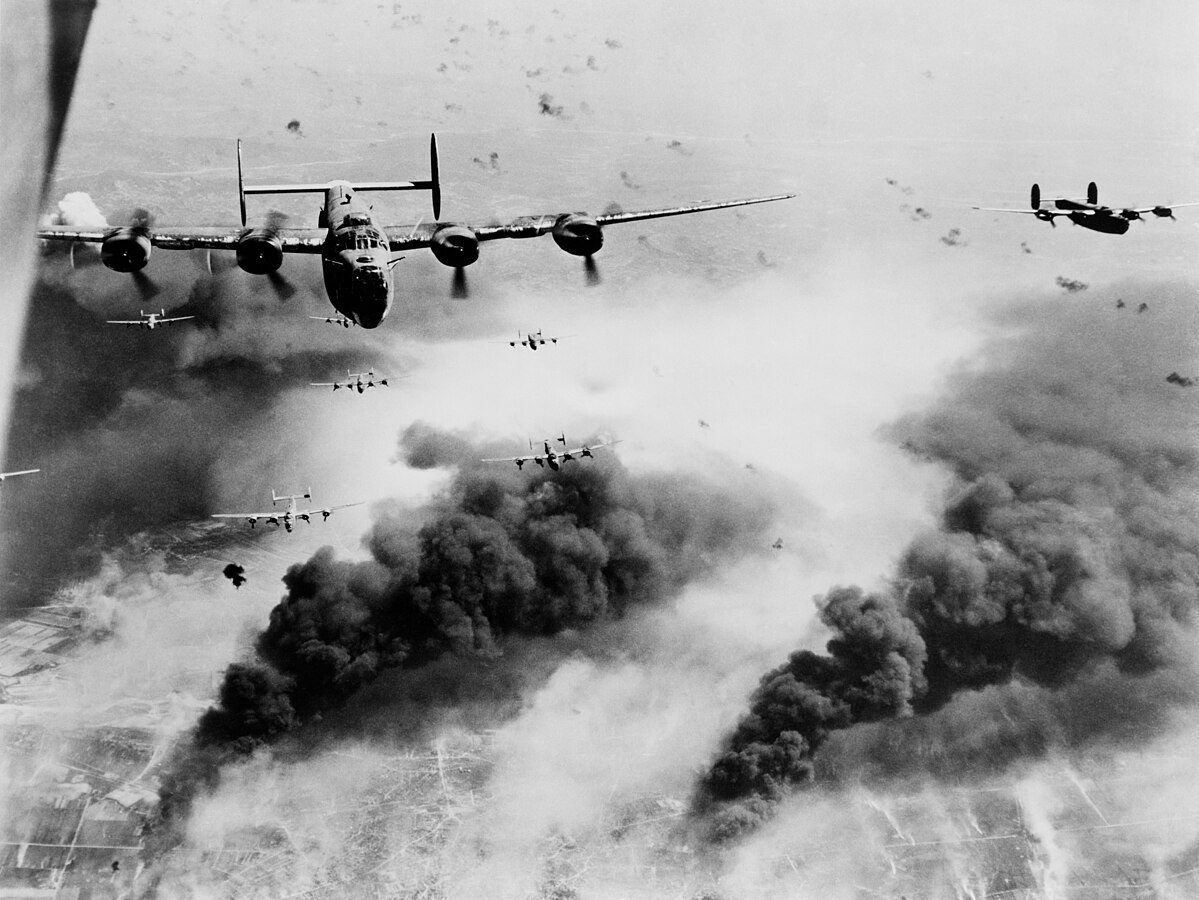
On January, 1943, B-24s performed their first attacks on German soil, as they bombed a submarine yard in Wilhelmshaven. On February 24, 1943, the B-24 Liberators targeted Luftwaffe’s production facility in the town of Gotha. According to Lockheed Martin, the B-24s dropped 98 percent of their bombs in Gotha on target, and regarded it as “one of the best examples of precision bombing of the war”.
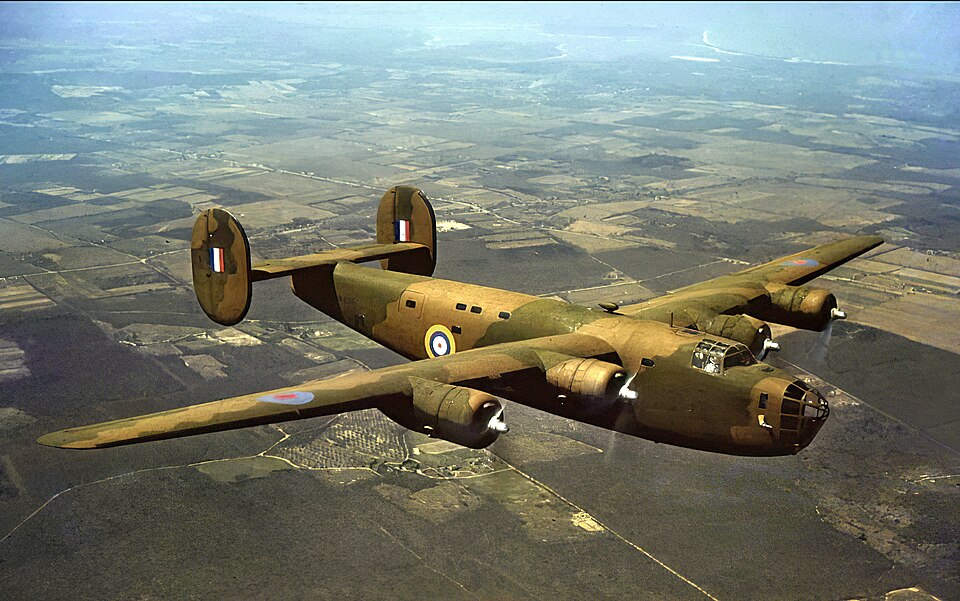
A few other notable operations involving the B-24 liberators include:
- The B-24 was seminal in the destruction of the German U-boats, ultimately leading to a safe passage for transporting weapons for the Allies across Europe.
- This aircraft that could carry a 5,000-pound bomb load for 1,700 miles bombed German oil refineries. Coupled with its critical attacks on targets in Italy, the Liberators were pivotal in Allies’ Mediterranean campaign.
- On the day of the Normandy landings, the B-24s were “at the heart of the D-Day invasion, softening Nazi positions behind the lines before ground forces stormed the Normandy beaches.”
3. The B-17 was the B-24’s progenitor
Not a major improvement from its predecessor, though
A year before the start of World War II, the United States Air Arms Corps (USAAC) requested Consolidated Aircraft (later to become Convair) to build the B-17 under license. However, Imperial War Museum suggests that “Consolidated took one look at the B-17 and decided they could do better. They responded with a proposal for a new aircraft which could fly faster, further, higher, and carry more bombs”, and this lay the seeds to the development of the Consolidated B-24.
| Features | Boeing B-17 Flying Fortress | Consolidated B-24 Liberator |
| Maximum Take of Weight | 65,500 lb (29,700 kg) | 65,000 lb (29,484 kg) plus |
| Wingspan | 103 ft 9 in (31.62 m) | 110 ft (34 m) |
| Cruise Speed | 182 mph (293 km/h) | 215 mph (346 km/h) |
| Maximum Speed | 287 mph (462 km/h) | 297 mph (478 km/h) |
| Engines | four Wright R-1820-7 | four Pratt & Whitney R-1830 |
One might have a sense of irony when we now look upon history and reflect on the fact that the B-17 is referred to as a “Flying Fortress”, while the “betterment” of the B-17 that was the B-24 was dubbed a “widow-maker”. Both the B-17 and the B-24 were a part of the USAAF’s daylight strategic bombing campaign. The Boeing B-17 Flying Fortress, however, has cemented its name as an aircraft that “dropped more bombs than any other US aircraft in the Second World War”.
2. The fifth-most produced aircraft of World War II
US’ arch nemesis tops the list
The US and the USSR, especially during the Cold War were in absolute loggerheads in terms of the aviation and space race. The fact that the USSR came up with some of the more unique aircraft, such as the Caspian Sea Monster, the Kalinin K-7 metal monster, among others is a testament to the (flawed) engineering prowess of the nation. It was the Cold War between these two nations that led to America’s first spacewalk, too.
An area where the USSR trounces the US is in terms of the number of military aircraft it produced in World War. Let’s take a look at the list of the most produced aircraft in the World War II period (in descending order):
| Most-produced military aircraft in World War II | Number of aircraft prodcued | Country |
| Ilyushin Il-2 | 36,183 | USSR |
| Messerschmitt Bf-109 | 33,984 | Germany |
| Supermarine Spitfires | 20,351 | Britain |
| Focke-Wulf Fw 190 | 20,000 | Germany |
| B-24 liberator | 18,400 | USA |
Despite the claims that the Consolidated Aircraft B-24 Heavy Bomber was often referred to be “a death trap in the European theatre”, more than 18,400 B-24s were built. If we are to take the figures published in commemorativeairforce.org, 19,267 aircraft of this type (inclusive of all the variants) were made. This number is almost twice as less than the USSR’s Ilyushin Il-2.
At the end of World War II, the Royal Air Force (RAF) had abandoned the Liberator. After all, the great war had propelled aviation technology forward, and along came the Boeing B-29 Superfortress, a $3 billion project that was to supplant the Liberator and establish itself as one of the most formidable incendiary bombers.
1. Getaway Gertie: An unsolved aviation mystery
The B-24 that was never recovered
The crash of a B-24 into Lake Ontario on February 18, 1944 is an aviation mystery that has not been solved. A B-24 with eight crew members had taken off from Syracuse Army Air Base (now known as Syracuse Hancock International AirportHancock Field Air National Guard Base) only to have never been discovered till date. If we had the technical prowess (and perhaps the collaborative international effort) that we possess now to conduct the vanishing of an aircraft back then, perhaps we’d have known the details of this case that is known as ‘Getaway Gertie’.
A few facts about the Getaway Gertie incident include the fact that the crew had
- Contacted the Westover Air Reserve Base before the crash.
- Noted that bad weather had rendered them unable to land at SYR.
While there have been books such as “Vanishing Point” that have covered the incident, pointing out the details have been notoriously difficult.

.jpg)


