Dubai Airports has announced a bold new plan: over the next decade, both Dubai International Airport (DXB), which is one of the busiest in the world in 2025, and Dubai World Central – Al Maktoum International Airport (DWC), which is set to have a projected annual capacity of 260 million travelers, constitute of 400 passenger gates, and become the largest aerodrome in the world, will be transformed into the world’s most accessible and inclusive aviation hubs.
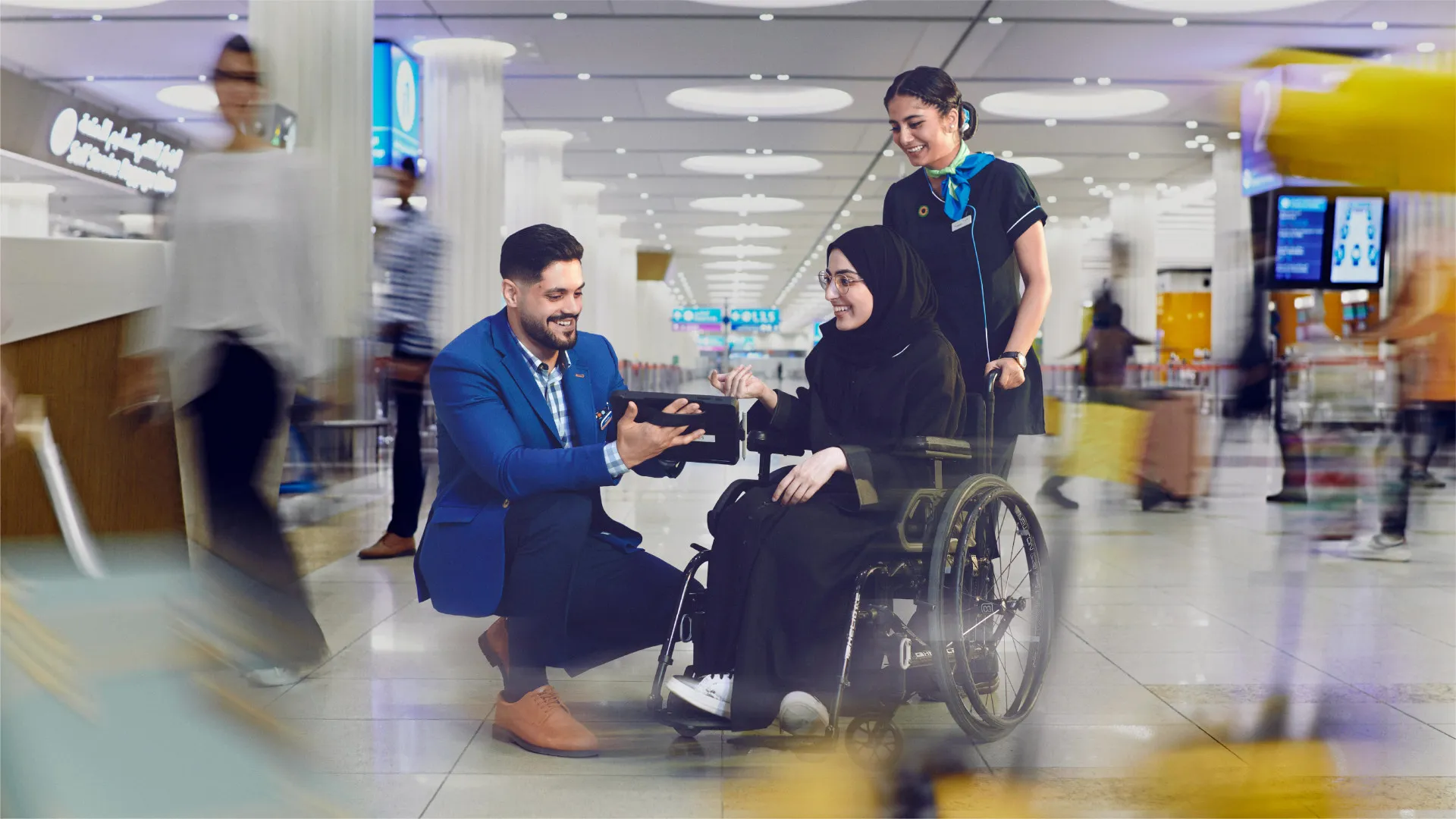
Accessibility is set to become the anchor that will hold the element of Dubai’s future in air travel, and it will be driven by alignment with global best practices and the UAE’s commitment to the rights of People of Determination (PoD).
The strategy emphasizes enhancing guest experience across every touchpoint, reinforcing strong foundations, and repositioning DXB and DWC as global leaders in inclusive travel by 2035. It also seeks to embed cultural and operational change across Dubai’s aviation ecosystem, making accessibility not just a goal but a default standard.
Why this accessibility push for Dubai….Now?
DXB serves as a hub for Emirates (EK), which is Middle East’s busiest airline by fight hours in 2025, and flydubai (FZ). This aerodrome handles tens of millions of international passengers annually and functions as a global gateway.
With growing scrutiny of accessibility in transportation, Dubai’s pledge signals both leadership and risk: those expectations will be measured. In United States, for example, some airports already have:
- Wheelchair Assistance and Guided services inside the airport, at the terminals, and in security checks.
- Sensory-friendly areas such as Quiet/meditation spaces or chapels that can either stimulate or calm (depending upon the travelers’ requirements). These are designed to help autism and special needs. I.e, neuro-divergent travelers.
- The FAA even mandates “At least one ambulatory accessible toilet compartment in restrooms with at least 6 toilet compartments or where the combined total of toilets and urinals is at least 6 fixtures”.
In order to catch up with airports that provide such facilities, DWC, which is located in the Jebel Ali area of Dubai, already has ambitious expansion plans.
For many disability advocates and frequent travellers with special needs, the promise is long overdue. The gulf between infrastructure that is technically “accessible” and one that is truly inclusive is wide.
In Chicago O’Hare Airport, for instance, “All shuttle buses from the ATS (Air Traffic Service) to the Remote Parking Lots kneel to the curb and offer securement systems for passengers with wheelchairs. Each bus can accommodate two passengers riding in wheelchairs.”
Eligible passengers can also use the paratransit services at ORD. The ADA Paratransit program offers transportation for individuals with disabilities who are unable to use standard fixed-route public transit either partially or entirely.
In light of such developments around the world, Dubai is also integrating empathy, training, and universal design at scale.
What Dubai’s 2035 vision for a super accessible airport includes?
The 10-year strategy for the aforementioned two airports to become the most accessible in the world includes physical, digital, and cultural enhancements such as:
- Terminal Layouts
- Pathway guidance
- Signage
- Ease of navigation
It will also mean that the airport will focus on support services such as wheelchair access, hearing loops, tactile guidance, and staff training to ensure both visible and hidden disabilities are accommodated.
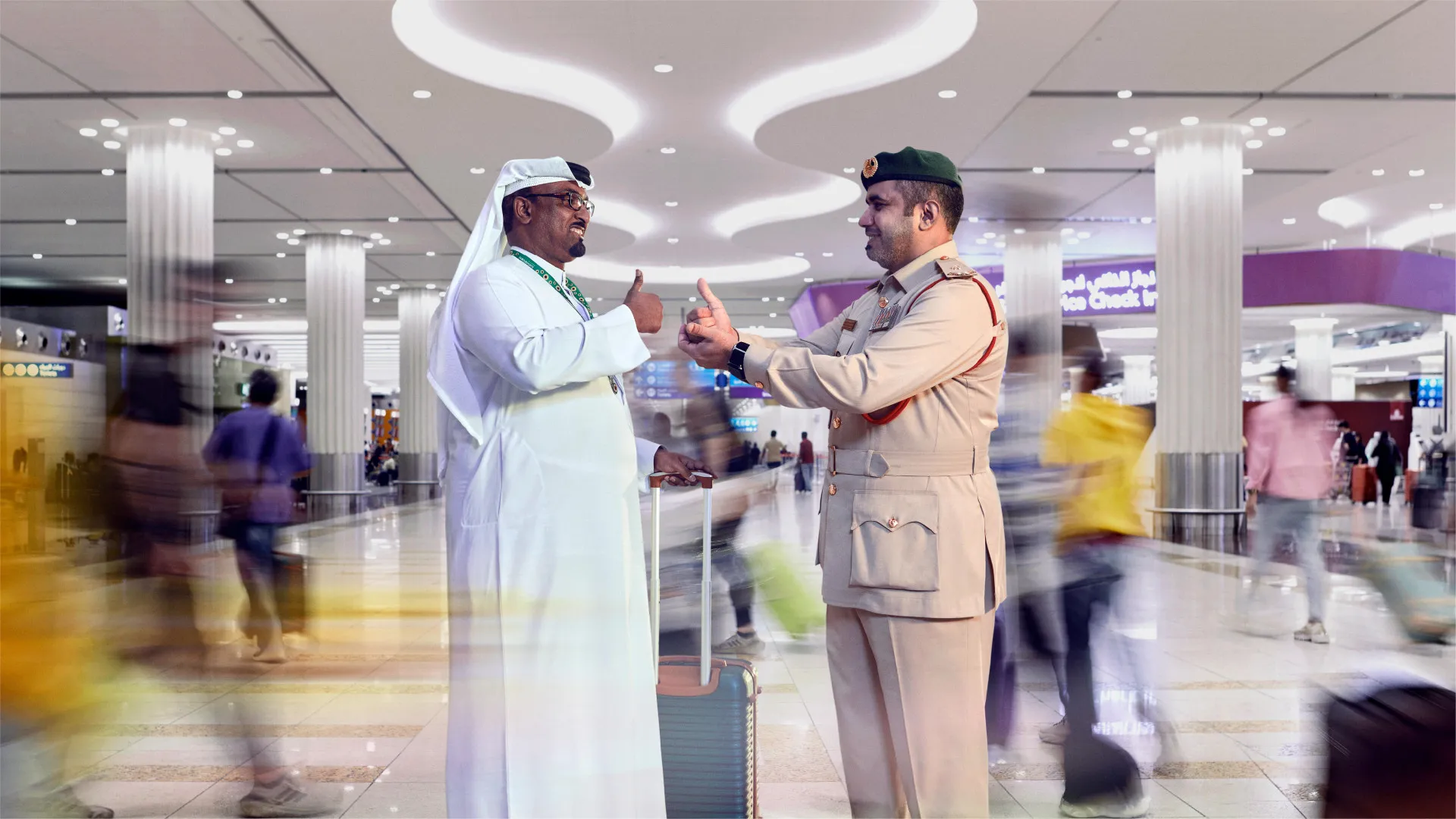
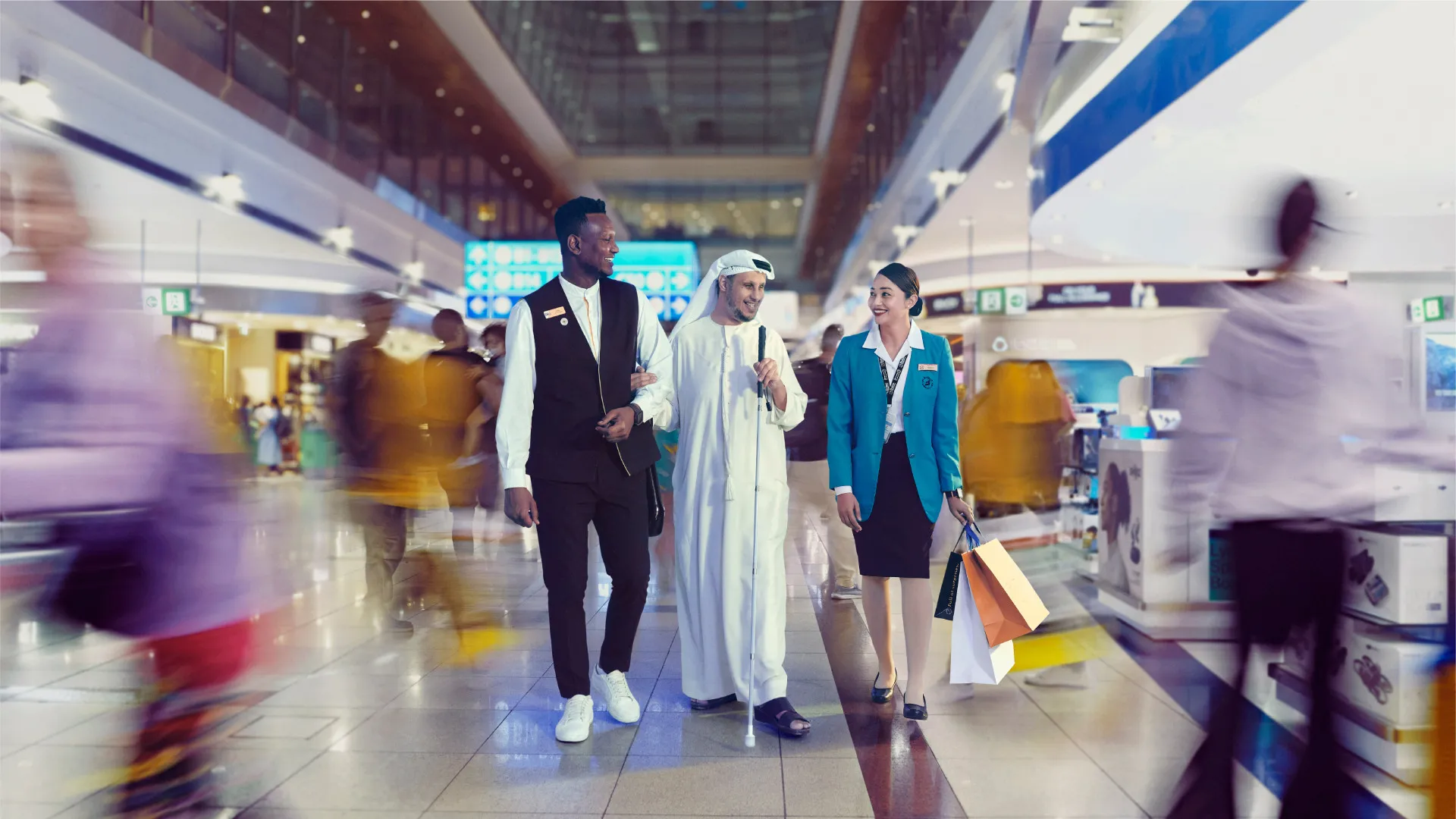
Alongside its renewed accessibility strategy, Dubai Airports has launched the “DXB for All” public awareness campaign in collaboration with the People of Determination (PoD) community. The initiative is designed to highlight the experiences of travelers with different accessibility needs and ensure their perspectives influence how the airport is designed and operated.
Majed Al Joker, Chief Operating Officer at Dubai Airports, said accessibility is a core part of the airport’s mission to provide an inclusive travel experience. He added that working directly with the PoD community would help Dubai Airports improve the entire passenger journey while setting higher standards for accessible travel.
The campaign features six stories showing how people with different needs navigate Dubai International Airport (DXB), including travelers with sensory sensitivities, hearing impairments, visual impairments and mobility challenges. Dubai Airports said the initiative goes beyond physical infrastructure by encouraging greater awareness, empathy and inclusion among employees, passengers and the wider community.
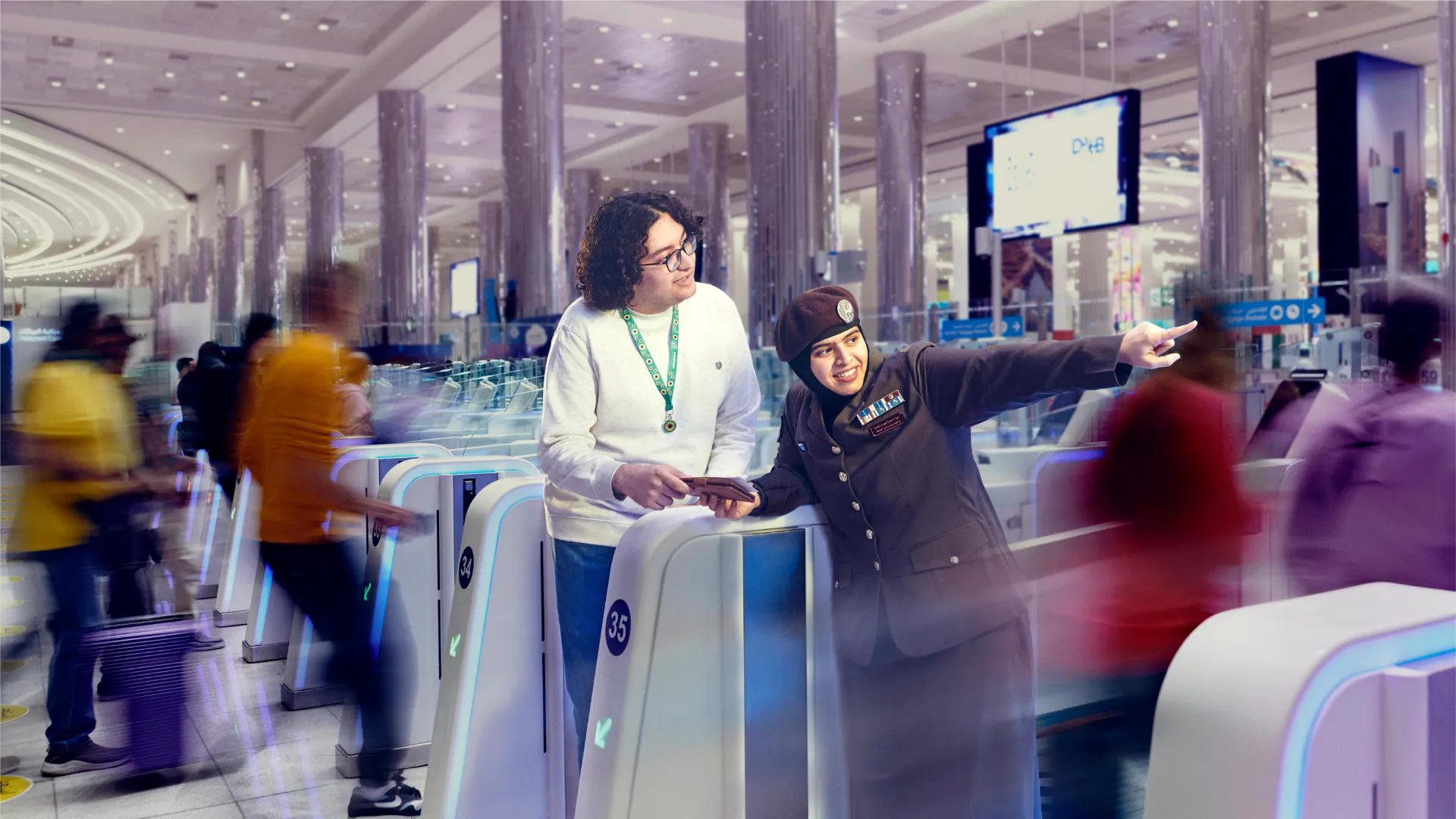
The airport’s broader accessibility measures include visual travel-planning tools, the Sunflower Lanyard program, wheelchair services, hearing loops across more than 520 touchpoints and a sensory-friendly Assisted Travel Lounge at Terminal 2.
Six personal stories that cover sensory sensitivity, visual impairment, hearing challenges, mobility issues, autism, and more will be shared to humanize the journey and inspire mindset shifts among staff and the public. Here is a list of all people whose stories will be shared:
| Name | Description |
| Fatma Al Jassim | Emirati accessibility pioneer |
| Jessica Smith | Award-winning disability inclusion consultant; former Paralympic swimmer |
| Yasmin Carey & Ellis | Dubai-based mother and her son Ellis, who is on the autism spectrum |
| Layth Kamal | Lives with autism and ADHD |
| Mohammed Alghafli | Advocate for the visually impaired |
| Ahmed Butti | Representative of the deaf community |
To support implementation, the oneDXB partner ecosystem will include the following:
- dnata
- Dubai Corporation for Ambulance Services (DCAS)
- Dubai Customs
- Dubai Duty Free
- Dubai Health
- Dubai Police
- Dubai Taxi Company (DTC)
- Emirates
- flydubai
- General Directorate of Identity and Foreigners Affairs (GDIFA)
- Serco
- Other airlines
All in All: Can DXB and DWC Succeed?
Dubai Airports’ ambition to become the world’s most accessible airports by 2035 is bold, yet credible but it will require an amalgamation of infrastructure upgrades, cultural transformation, stakeholder collaboration, and legal alignment provides a strong foundation.
Overpromising and underdelivering is a risk many airports have faced. If DXB and DWC benchmark progress, and stay accountable to PoD voices, they may indeed reset the standard for inclusive air travel.
The real test for Dubai Airports to become the most accessible airport in the world in the next decade will be consistent execution across all terminals and services.