I first flew to Lukla Airport (LUA) on a rather unassuming day during the second flush of Covid restrictions in Nepal. There were conflagrations around the nation that had disrupted schools and canceled flights, and if you walked without a mask, your phlegm was bound to be befouled. I was heading out as a teacher supported (financially) by the Himalayan Trust to teach in the gloriously located Khumjung School, which takes the shape of a painting when enveloped in glorious Khumbu snow as the village limns across a staggering mountain called Khumbiulaa- the protector God of the Khumbu region.
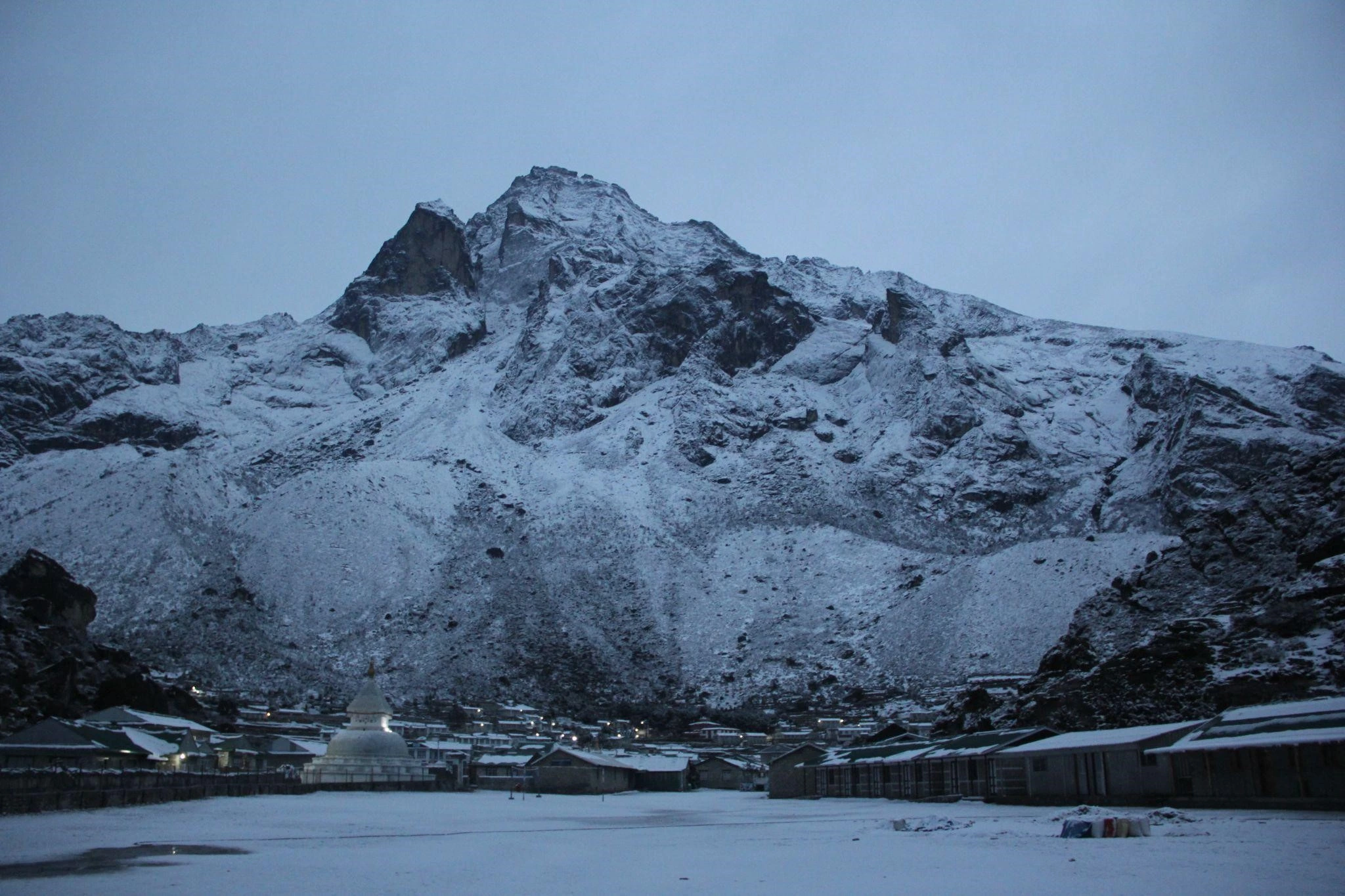
The towring Khumbuilaa as it towers over the frigid grounds of Khumjung School
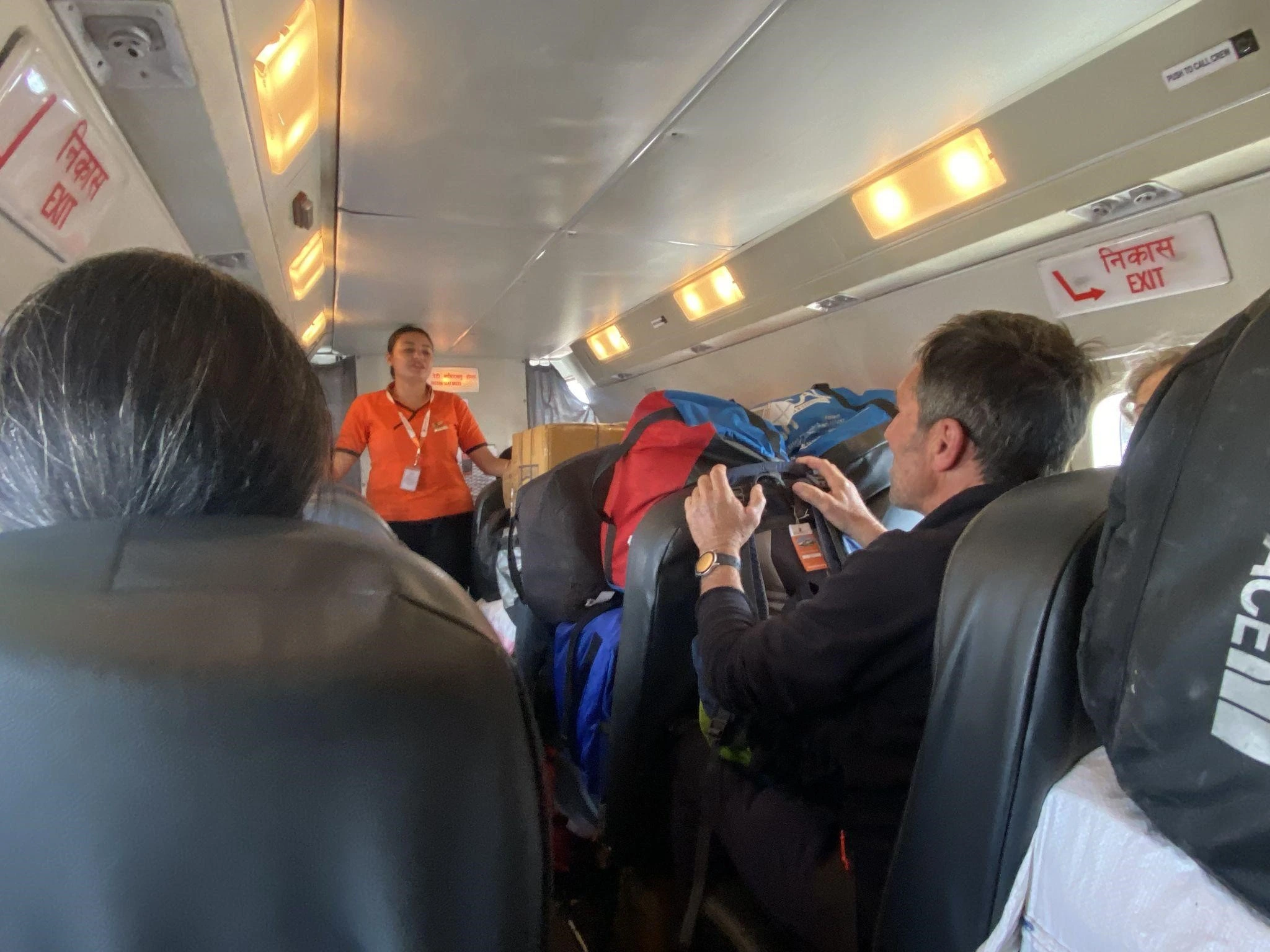
I was told by the principal of Khumjung school (who had arranged my travel) that I was to head home quietly in case the flight was canceled. The flight took to the skies when it was a tad foggy and I couldn’t quite catch a drift of what was going on the outside. The flight was conducted by Sita Air and with the constant ebbs and flows and turbulence, I wondered if I was on a flight or a bus ride along potholes.
I didn’t quite see the runway nor did I have an inkling the plane was approaching the airstrip. And in next to no time the pilot had braked it to a halt. I was only confounded, “This is it?? Is the supposed scariest flight in the world?” I have to admit I believed that I had been cheated for I hadn’t screamed or howled myself to land. I just was there, in a dream of an airport, but without the struggle that so often comes when you’re pursuing one.
That was the first time. It was not the last time the flight would test my patience — only the drama, the second time round, had nothing to do with turbulence.
The Counter That Broke a Stranger
When I went to the airport, not for the purposes of teaching at Khumjung school but as an aviation journalist, I had booked tickets with Sita Air itself. I arrived at the airport in the check-in counter of Sita Airlines only to be told that my flight was non-existent. Further, the person at the counter said that I had to check with whoever issued the tickets about what could be done about the flight. A person from Brazil living in the US had the same flight ticket as I did. Her initial fate was the same as mine. She was told that the flight was non-existent too, and that travel arrangements could be made for “tomorrow”.
She revealed to me that she had planned the trip six months in advance and that a flight to Lukla ‘tomorrow’ was not an option she’d consider. She started crying at the counter. No respectable airline in the world would have gotten away with such an act. A personnel from a helicopter operator, who was sitting behind the counter of Sita Airlines, came up to console her and offered her a helicopter flight to Lukla. The person offered something similar to me – the only difference was that I had to pay the price of the refunded airline ticket and an additional $50.
I spent the next hour calling in every favour I had — airline staff, maintenance engineers, pilots I knew from other assignments — until Summit Air, the carrier that moves the largest share of Lukla’s passenger traffic, found me a seat.
Buji, and the Weight of an Unwritten Law
I believed that people who took regular passenger flights to and from Lukla must consider this flight a banaility. In Buddhist philosophy, things are often regarded with a sense of “buji” or “nothing special”-ness. An old Buddhist poem encapsulates the feeling:
Misty rain on Mount Lu,
Waves surging at Che-chiang.
When you have not been there,
No rest from the pain of longing.
But you go there and come back—
It was nothing special.
Misty rain on Mount Lu,
Surging waves at Che-chiang.
It is worth naming what actually happened at that counter, stripped of the poetry: two passengers were sold tickets for flights that were cancelled with no advance notice, offered no meaningful alternative besides a paid upgrade to a helicopter, and left to solve their own problem through tears or a phone full of favours. There was no compensation.
There was no obligation on the airline beyond a refund. That is not a Lukla problem, or a Sita Air problem — it is the entire architecture of domestic aviation in this country, running on goodwill and improvisation instead of enforceable rights. And this was “buji”, too, Chhewang Jangbu, a resident of TokTok confided to me.
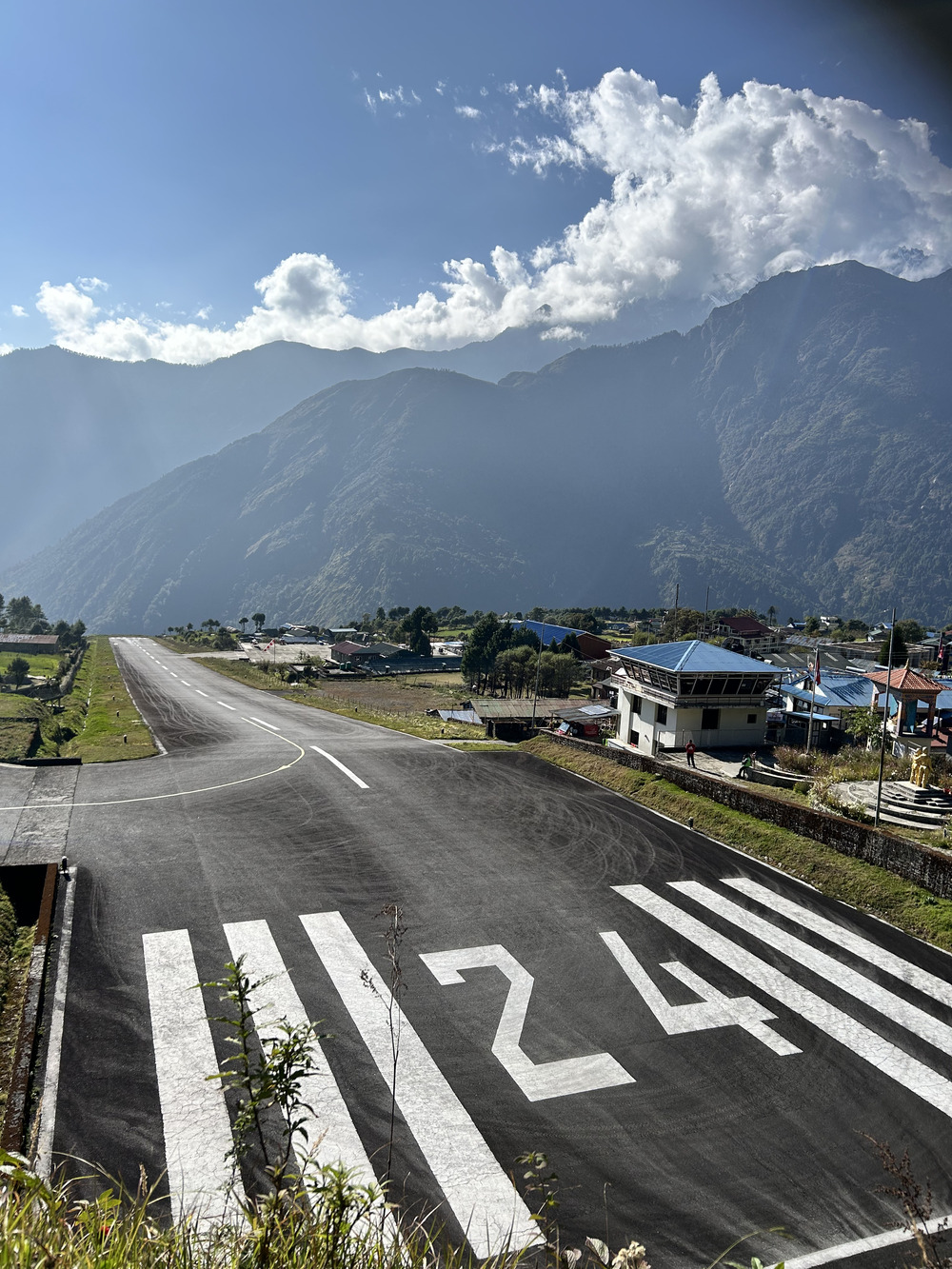
Photo: Karan Bhatta | aviospace.org
This is exactly the gap that lawmakers in the National Assembly’s Law Management Committee were pointing at this week, as they discussed the proposed Bill on Liability of Domestic Air Services, 2083.
According to RatoPati, CPN-UML lawmaker Prem Prasad Dahal noted that Nepal’s aviation infrastructure has expanded fast — nearly three dozen airports now operating, night flights running at half a dozen of them — but argued that passenger safety, service regularity, and quality haven’t kept pace, and that the law needs to catch up by making compensation for cancellations and delays an actual entitlement, not a courtesy. Nepali Congress lawmaker Anand Prasad Dhungana went further, pointing out that airlines routinely leave passengers with no alternative arrangement when a flight doesn’t fly, even though those same passengers chose the plane over the bus or the jeep precisely because their time mattered enough to pay for it.
He didn’t mince his comparison either — noting that Nepal’s national carrier and Thai Airways were founded around the same era, and asking, in effect, why the outcomes diverged so completely. A third lawmaker, Jhakku Prasad Subedi, raised the quieter fear this whole system runs on: that passengers, still shaken from past accidents, are voting with their absence, with many domestic flights flying well under capacity. This is a confidence problem no compensation clause alone will fix, but one that scheduling reliability and real accountability might begin to repair.
Read against the Lukla counter, none of this is abstract. The bill’s language about “alternative arrangements and compensation” for cancellations is, almost word for word, a legal answer to what I watched happen to a crying stranger and to myself — refunded fares, a helicopter upsell, and a phone full of borrowed favours standing in for what should have been the airline’s job in the first place.
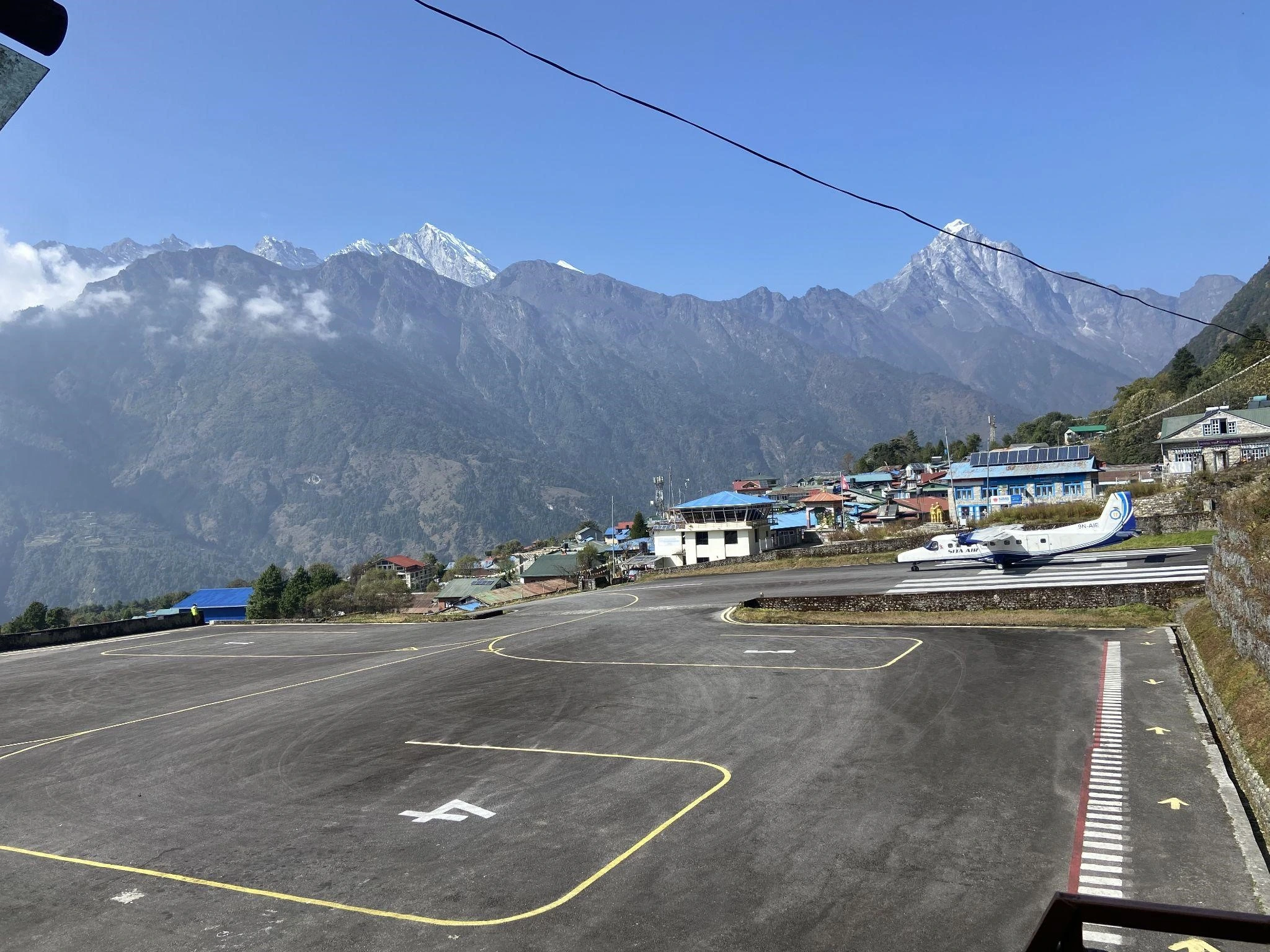
The Mountain Doesn’t Owe You Anything — The Airline Does
“Let’s get off this damn rock”, an exasperated traveler who, in my submission, had completed the Everest Base Camp Trek and during his return was having dinner in one of the hotels of Namche Bazaar, said. This was a few days after I had been to Lukla on Summit Airlines’ Let L-410UVP-E20 Turbolet.
Getting a ticket for an aircraft flight to and from Lukla can be quite a hassle, especially in a busy trekking season. Given the congestion of travelers in Khumbu, trekkers and porters alike don’t even have enough room to sleep in the lodges of the Khumbu region. “You’ll find porters sleeping on rocks”, confided a lodge owner.
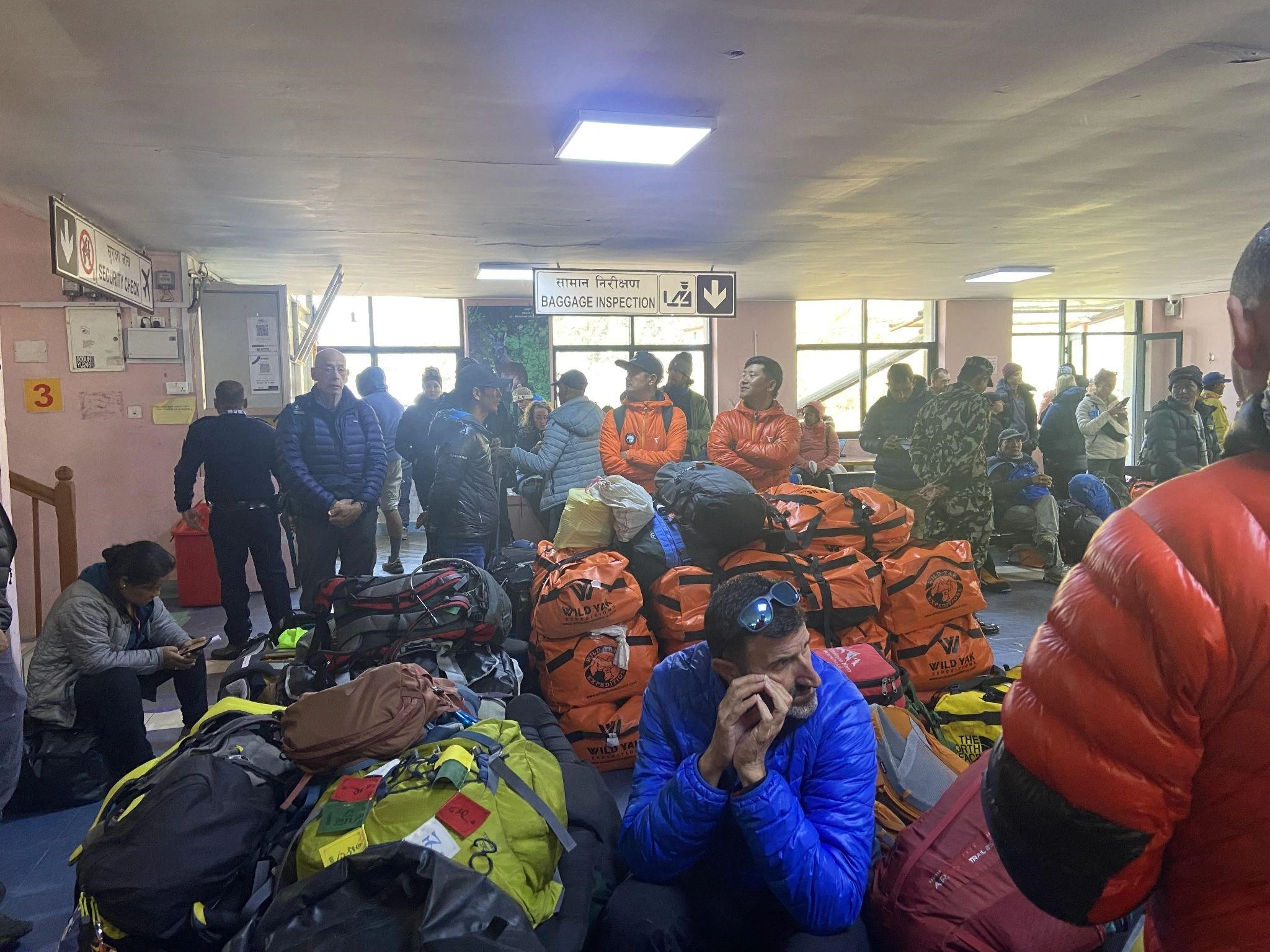
If you throw flight cancellation in the mix, Lukla’s lodges won’t be capacious enough for everyone. The baggage inspection area in the check-in counter of the airport when there’s a flurry of backlogs of cancellations gives us an impending sense of resignation about finding flight tickets from Lukla.
A general rule of thumb is that anyone looking to secure a flight ticket from Lukla goes to the check-in counters of one of the three airlines operating scheduled passenger operations in Lukla, and asks for the airlines to hand out a ticket. For some reason, the check-in counter of Summit Airlines is the busiest of them all, with lodge owners clinging desperately to the station manager of the airline.
I was foolish enough to think that I could get to the airport and just ask for a ticket. After all, trekkers to the region often meticulously plan their travels months and sometimes years ahead of their voyages. I, on the other hand, just wanted to walk in, and try my luck.
I knew I had to pull a few strings if I had to go through, and called an acquaintance working in one of the airlines. He gave me a booking reference number to the tickets the same day, and asked me to go to the respective airline office in Lukla and pay for tickets. When I presented my booking number, the respective airline personnel at Lukla airport sniffed at me and said, “ We don’t have bookings here. Two days of flight cancellations, and you expect to book a ticket? Here are people who’ve booked their flights months in advance and you expect to just show up and get tickets so easily? Go away”.
I was reminded of Christopher Hitchens’ memorable words in his autobiography Hitch 22: “I was abruptly recognized as nonthreatening, brusquely advised to f**k off, and off I duly and promptly f***ed.”
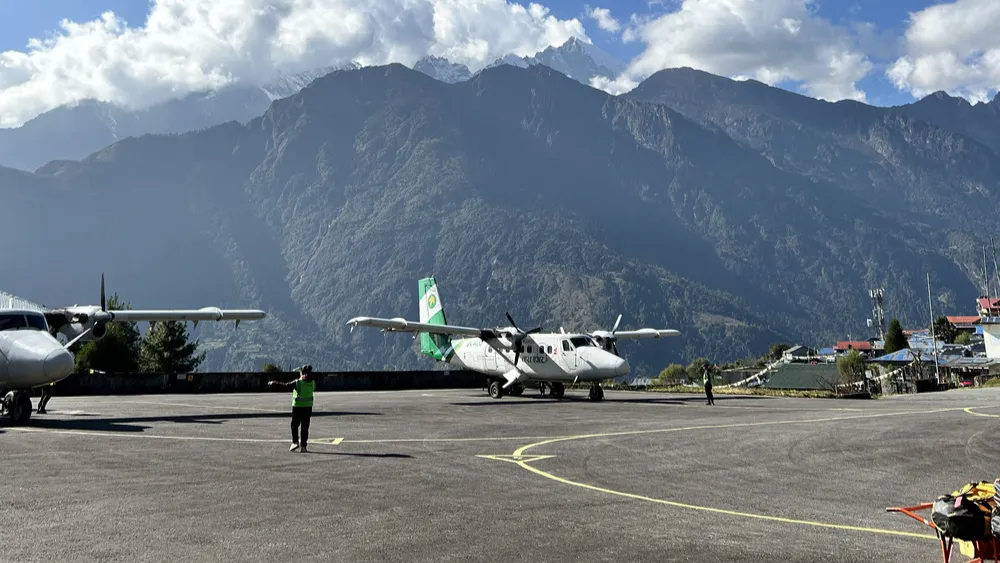
The weather was getting shadier and we wouldn’t be able to catch any flights that day. In the evening, I called my friend (let’s call him John Doe, for simplicity)- an aircraft maintenance professional for one of the three airlines in Lukla- to check whether he could arrange tickets. John Doe gave me the number of one central figure responsible for managing the flights for the airline. When I called this flight manager in the evening, he said he’d be able to get me through, given I arrived early in the morning.
Next morning, I arrived at the airport to meet him and I told him that I was the person with the reference of John Doe and that we’d had a conversation last evening. The flight manager, much to my chagrin says, “I don’t remember. I can’t quite tell if I know any John Doe”.
I walk to one of the eateries near Lukla Airport, and Nepali porters and trekkers alike are trying out their luck to secure a passenger flight. The foreign tourists they were guiding (and portering for) had hopped on flights that day but they were waiting. I was rumbling about the lack of options at Lukla Airport, and Tashi Sherpa, a guide for Explore Dolpo put things in a different shade:
“ There’s plenty of options. You can walk your way to Thamdanda and catch a bus. Yes, you’d have to walk for a day but you have an option. Alternatively, there are plenty of helicopters you can hop on as well. It is as if all the helicopters of Nepal are concentrated in Khumbu. Compared to getting to certain places in Dolpa, where none of these options are existent, I wouldn’t say there are no options.”
The owner of a lodge who was eavesdropping on my conversation with Tashi comes up to me and suggests that going to the check-in counter of one airline at Lukla Airport making myself visible to the airline staff would increase my chances of securing flights. If I was to be on the outskirts of the airport, I might as well forget about a flight ticket, he said.
So, I went to the counter of Summit Airlines and waited for the station manager to arrange flight tickets for me. He said that I needed to be patient. The airline had to clear a backlog of passengers who had tickets scheduled yesterday and the day before. More Nepalese like me come to the airline counter and ask the station manager to arrange for flight tickets. There are people from Khumjung, Namche, and other villages.
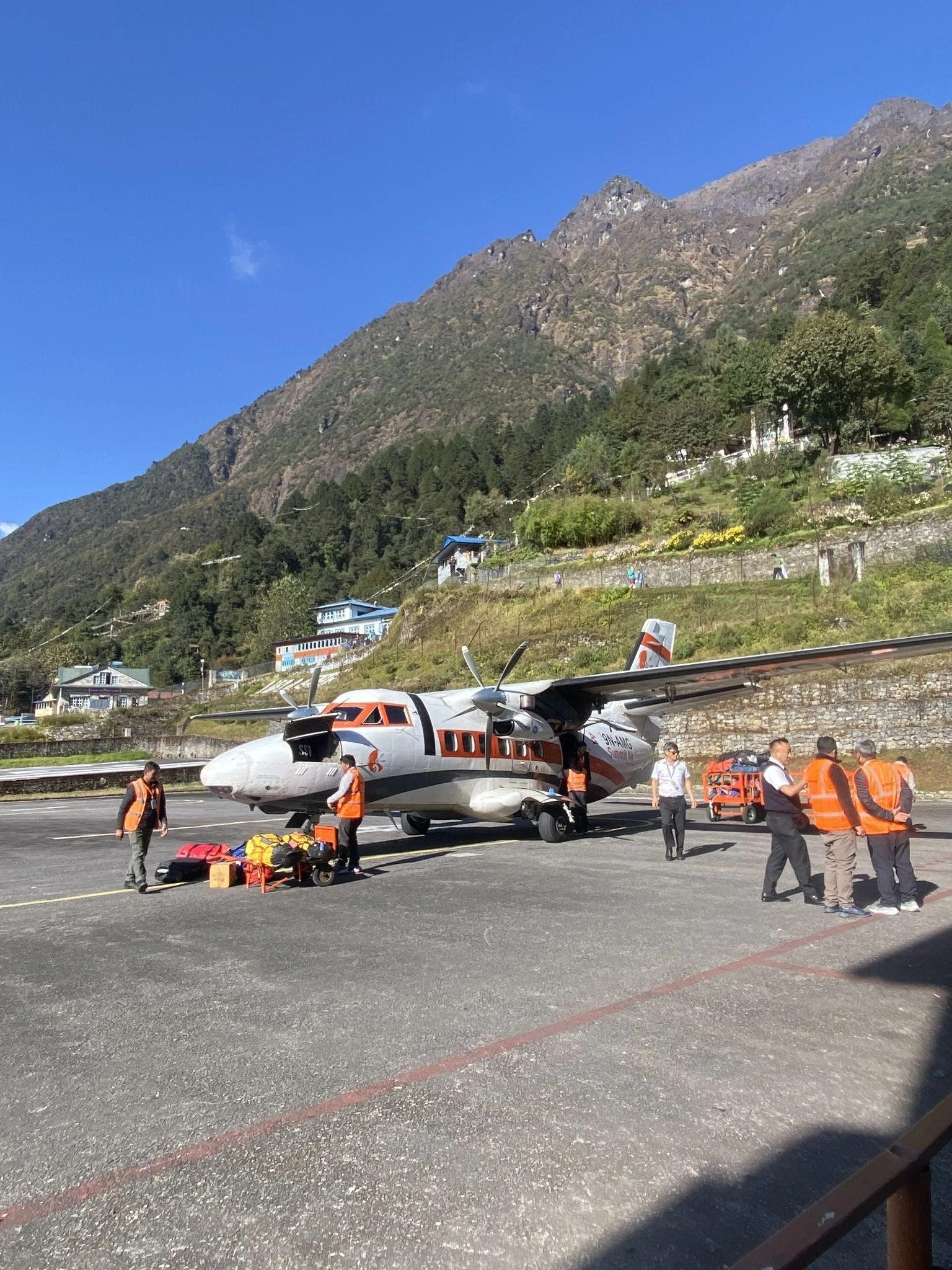
The station managers were under immense pressure. They had to clear the backlog of flights from previous days, listen to the grievances of passengers stuck in the airport, take the considerations of their villagers and see how they could manage flights for them, and take in the considerations of travelers like me. And they are accommodating to all of us.
I waited for a station manager for hours to give me a soft signal about the flight. He read through the pages of information about the flight status. During this time, I called another aviation veteran of the nation to see if he could arrange for the flights. He refers me to the same station manager. Around the same time, the station manager gets a call from a personnel from CAAN to arrange flight tickets. He keeps his Zen-like composure amidst a flurry of these calls, all pleading him to arrange tickets for someone else.
During my wait, I recall the conversation I had the previous evening with the owner of the lodge where I was staying. “You should have got a ticket for the way back too. An open ticket (without a specific departure time) would have worked if you were unsure about the date of the return”.
Well I did have firm, printed tickets for a specified date and time on my way to Lukla but I was told that flights were non-existent, so I was sceptical about open tickets anyhow. Plus, when I saw the great flurry of travelers who just hopped in the check-in counter of airlines and waited for station managers to get them through on a flight, I thought that my approach was the simplest way to secure a ticket.
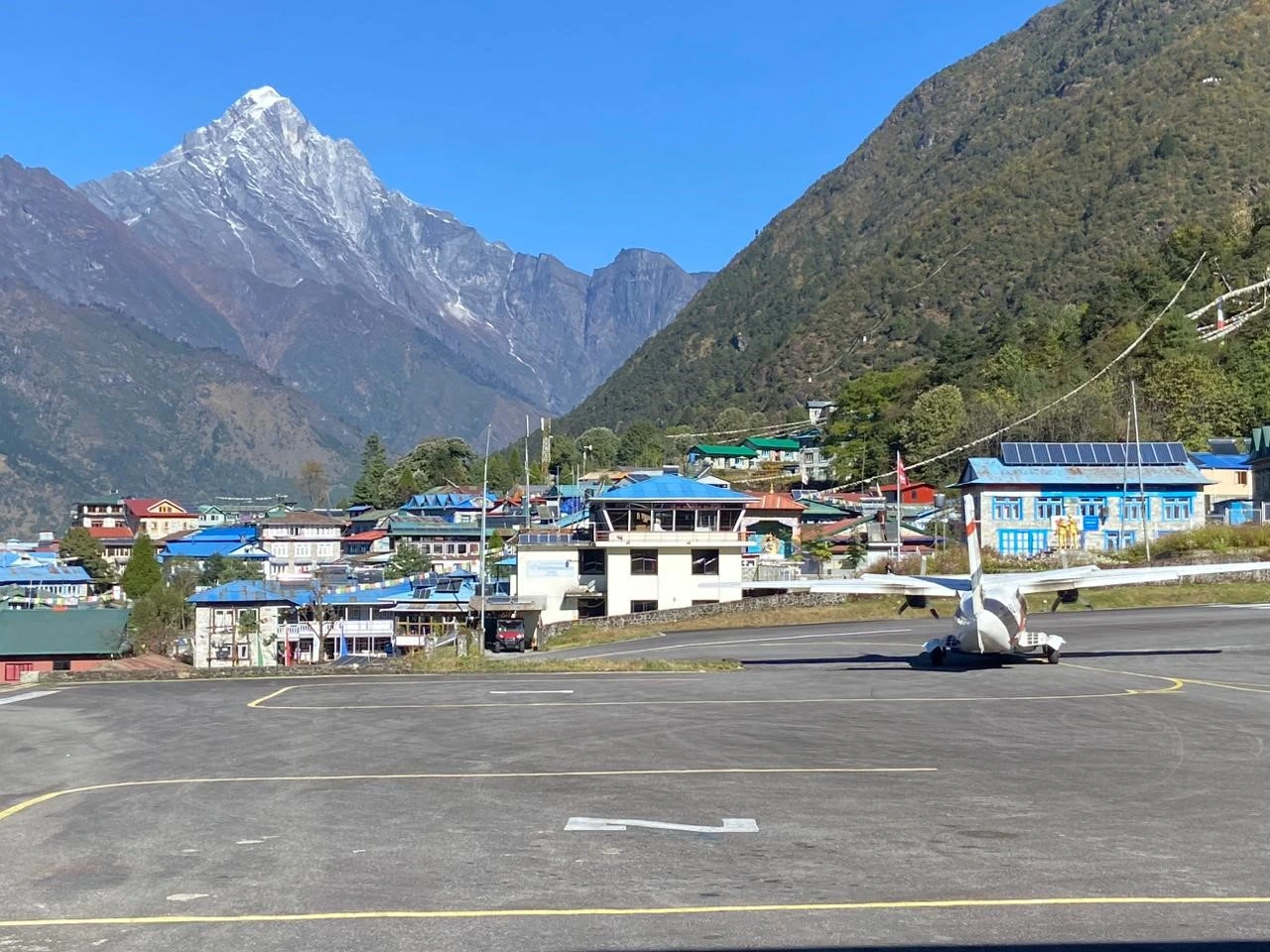
After I had waited for more than six hours, the station manager told me, “Your time is nigh. Buckle up for the flight to Ramechhap”. Almost simultaneously, station managers of various airlines received the message that given the poor visibility at Kathmandu, the flights to the capital were cancelled. Upon hearing this, a group of travelers from Germany (headed to Kathmandu, and probably stuck at Lukla for days) were incensed. For consolation, the station manager had to offer them flights (which he had so neatly proffered to me, albeit unofficially,) to Ramechhap instead. The station manager looked at me , and said in the most humbling way, “I’m sorry”. He had nothing to be sorry about.
In a couple of hours, the weather in Lukla deteriorated, and almost a day and a half of trying to secure scheduled airline tickets to Lukla were wasted. As I headed to a cafe for a hard-earned cappuccino after the days’ scramble, I tried to align myself with the words of the lodge owner who had suggested that I should have secured open tickets, “This airport has its own rules. It is not quite like any other place”.
Late at night, one of my contacts said that I could get to Phaplu on a chopper. Various helicopter operators were having ceiling operations, and there was a chance I could get through. However, the flight would take off early in the morning, perhaps at 6 am. When I confided this to a friend who was traveling with me, he said, “Let’s get off this damn rock.”
No Amount of Frustration of Cancelation Will Take Anything Away from Lukla’s Majesty
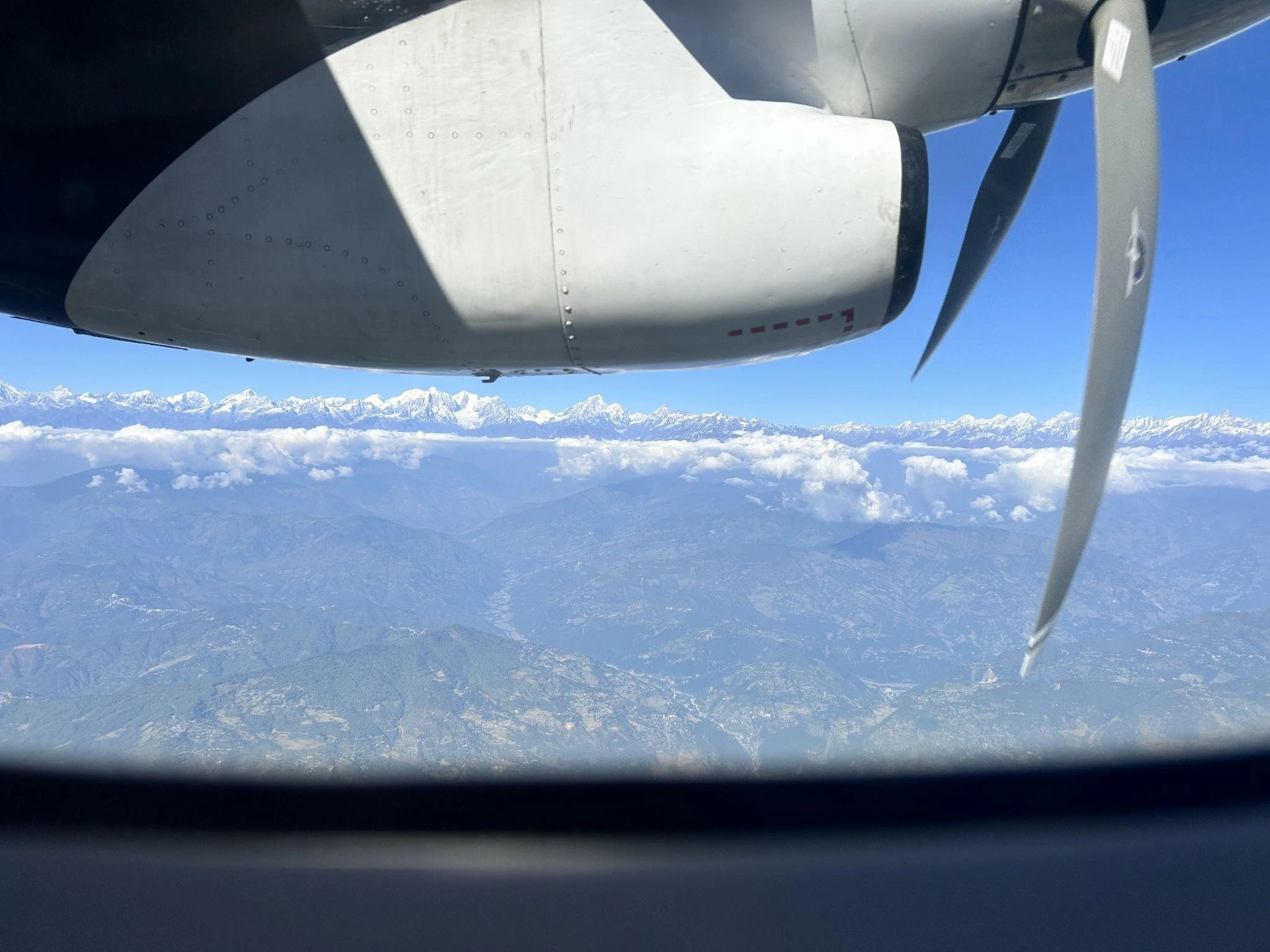
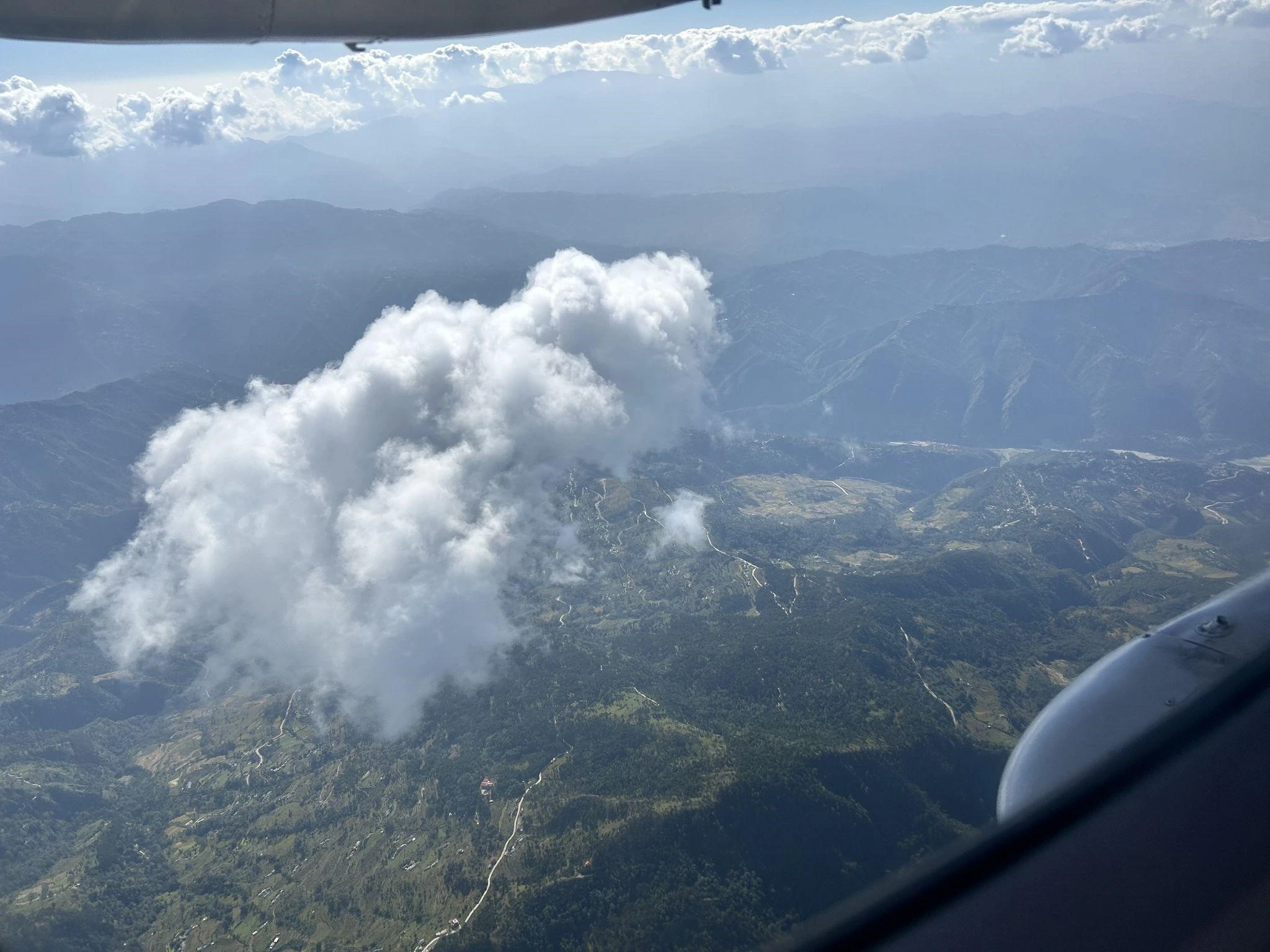
None of this diminishes what Lukla’s flight itself gives you, once you’re actually on it and the ticket has held. Half an hour in, the aircraft seems to freeze mid-air as the captain lines up with Lukla’s short runway, and whatever anxiety you walked in with turns into something closer to what the Swedes call resfeber — the restless tangle of dread and anticipation that arrives right before a threshold is crossed.
The runway is just 520 metres of bituminous asphalt, tilted at 11.8 degrees, sitting in front of Mera Peak. When the wheels touch down on runway 06, the aircraft stops almost as soon as it starts — and the sighs of relief turn into applause, every single time, because after three major crashes and an airspace still called “treacherous,” the applause is earned.
Captain Sanjib Kunwar, who flies the Lukla route regularly for Sita Air, once told me he resents the word “dangerous” applied to the airport: if he believed that, he said, would he really fly there four times a day? “Tricky,” he called it instead — not dangerous. I believe him about the flying.
What I don’t believe is that “tricky” should be allowed to cover for what happened at that check-in counter, which had nothing to do with mountain weather or a short runway, and everything to do with an industry that has never had to write down what it owes the people who trust it with their time and their fare.
Nan Shepard wrote, of mountains, that they gave themselves most completely when you have no destination and want nothing from them but company. That’s true of Khumbila and of Mera Peak. But an airline is not a mountain.
It owes you a schedule, and if it breaks that schedule, it owes you something in return. (In Europe, for example, there are compensation laws secured by EU 261 passenger rights.) For as long as that debt exists only as an unwritten courtesy — a helicopter seat for $50 more, a “tomorrow” with no guarantee — every stranded passenger crying at a counter in Kathmandu will keep discovering, the hard way, what the mountain itself never has to promise.
Buji is real, and so is resfeber. But so, this week, is a bill sitting in front of Nepal’s lawmakers that might finally decide whether either of those feelings comes with a receipt.