
The European Parliament and the Council of the European Union adopted Regulation (EC) No 261/2004 on 11 February 2004, establishing common rules on compensation and assistance for air passengers in the event of denied boarding, flight cancellations, or long delays. The regulation entered into force on 17 February 2005, applying to all flights departing from EU airports and to all flights arriving in the EU operated by EU-based carriers. It replaced the older Regulation (EEC) No 295/91, which had only covered denied boarding on scheduled services, and introduced far broader protections for passengers across the 27 EU member states.
The law — commonly referred to as EU 261, EC 261, or EU261/2004 — entitles passengers to monetary compensation of between €250 and €600, depending on flight distance, when their journey is disrupted by factors within the airline’s control. After more than two decades in force and over 80 rulings by the Court of Justice of the European Union (CJEU) interpreting its provisions, EU 261 has become one of the most consequential consumer protection laws in global aviation. On 15 June 2026, the European Parliament and the Council reached a provisional political agreement to reform the regulation for the first time since its adoption — a process that took more than 13 years of negotiation.
The Origins of EU 261
The EU adopted Regulation (EC) No 261/2004 in response to persistent passenger complaints across European aviation. The European Commission observed that, despite the earlier Regulation (EEC) No 295/91, the number of passengers denied boarding against their will remained too high, and those affected by cancellations without prior warning continued to rise. The Commission also noted that long delays caused serious inconvenience that the previous rules did not adequately address.
The regulation built upon the 1999 Montreal Convention, which established international rules on airline liability for damage caused by delays. However, the Montreal Convention addressed individual financial loss, whereas EU 261 created standardised entitlements applicable to all passengers regardless of personal circumstances. The regulation aimed to ensure that both full-service carriers and low-cost airlines treated passengers consistently when disruptions occurred.
Scope And Eligibility of the EU 261
EU 261 applies to passengers who hold a confirmed reservation and have presented themselves for check-in at the required time. The regulation covers three categories of disruption: denied boarding due to overbooking, flight cancellations, and long delays.
The regulation applies in the following situations:
- All flights departing from an airport within an EU member state, regardless of the airline operating the service.
- Flights arriving in the EU that are operated by an EU-based carrier, even when departing from a non-EU country.
- Flights covered by the European Common Aviation Area (ECAA), which includes Switzerland, Norway, and Iceland.
The regulation does not apply to passengers travelling on free tickets or special fares not available to the general public, to passengers who arrive at the terminal after the required check-in deadline, or to disruptions caused by extraordinary circumstances. Non-EU citizens are fully covered by EU 261 as long as their flight meets the applicable route criteria.

How Much Compensation Passengers Can Claim Under EU 261
EU 261 sets fixed compensation amounts based on flight distance. The amounts have remained unchanged since 2005. Airlines cannot legally offer passengers less than the statutory amounts. The compensation structure is as follows:
- €250 for flights of 1,500 km or less (short-haul, e.g., London to Edinburgh or Berlin to Paris).
- €400 for intra-EU flights over 1,500 km and for all other flights between 1,500 km and 3,500 km (e.g., London to Athens or Manchester to the Canary Islands).
- €600 for flights over 3,500 km (long-haul, e.g., London to New York or Frankfurt to Singapore).
For long-haul flights where the airline offers an alternative that reduces the delay to under four hours at the final destination, airlines may reduce the compensation by 50 percent. A 2023 academic study found that EU 261 had a measurable positive effect on punctuality, reducing average delays by approximately 4.92 minutes per flight.
What European Airlines Must Provide During Disruptions
In addition to financial compensation, EU 261 establishes a “duty of care” that airlines owe to passengers whenever a disruption occurs. This obligation applies even when the disruption is caused by extraordinary circumstances and the airline owes no financial compensation.
Airlines must provide the following when a disruption triggers a delay of two hours or more:
- Meals and refreshments in reasonable proportion to the waiting time.
- Access to two free telephone calls, fax messages, or emails.
- Hotel accommodation and transport to and from the airport if an overnight stay becomes necessary.
If the flight is delayed by five hours or more, passengers have the additional right to abandon the journey entirely and receive a full refund of the unused ticket. If an airline fails to provide care at the airport, passengers may arrange meals or accommodation themselves and later submit receipts to the airline for reimbursement, provided that the expenses are reasonable.
Specific Passenger Protections During Cancelations and Denied Boarding
When an airline denies boarding due to overbooking, it must first seek volunteers who are willing to give up their seats in exchange for negotiated benefits. Only if insufficient volunteers come forward may the airline involuntarily deny boarding to remaining passengers. Those involuntarily denied boarding are entitled to the same compensation structure that applies to cancellations.
For flight cancellations, passengers have the right to choose between a full ticket refund or re-routing to their final destination at the earliest opportunity or at a later date of their convenience. If an airline cancels a flight less than 14 days before departure without offering a comparable alternative, passengers are entitled to the fixed monetary compensation in addition to a refund or re-routing. If the airline informs passengers of a cancellation 14 days or more in advance, no compensation is owed, though care and refund rights still apply.

What Counts As ‘Extraordinary Circumstances’ Under EU 261
The regulation exempts airlines from paying financial compensation if they can prove that the disruption was caused by extraordinary circumstances that could not have been avoided even with all reasonable precautions taken. The law does not define extraordinary circumstances exhaustively, and this ambiguity has generated a large body of case law.
Events widely accepted as extraordinary circumstances include:
- Severe or unexpected weather conditions.
- Political instability or security threats at the destination.
- Air traffic control restrictions not within the airline’s control.
- Natural disasters.
European courts have consistently ruled that technical or mechanical failures are generally not extraordinary circumstances, as they are considered inherent to the normal operation of an airline. In a 2018 CJEU ruling, the court determined that airline staff strikes do not constitute extraordinary circumstances, opening the door to compensation claims from passengers affected by industrial action. The right to care and assistance remains in force regardless of whether extraordinary circumstances apply.
The 2009 Sturgeon Ruling: Expanding EU 261 To Flight Delays
When EU 261 was originally adopted in 2004, its compensation provisions explicitly covered only cancellations and denied boarding — not flight delays. This changed significantly in November 2009. The CJEU issued its landmark ruling in the joined cases of Sturgeon v. Condor Flugdienst GmbH and Böck and Lepuschitz v. Air France, determining that passengers who experience a delay of three hours or more at their final destination are entitled to the same compensation as those whose flights are cancelled.
The court held that Articles 5, 6, and 7 of Regulation (EC) No 261/2004 must be interpreted as meaning that delayed passengers may rely on the right to compensation laid down in Article 7 of the regulation when they suffer a loss of time equal to or in excess of three hours. The ruling caused considerable controversy within the airline industry, as it significantly expanded financial obligations that the original text of the regulation did not expressly impose.
The Sturgeon ruling was reconfirmed on 23 October 2012 by the CJEU in the joined cases of Nelson v. Deutsche Lufthansa AG (LH) and R (TUI Travel, British Airways (BA), easyJet (U2), and IATA) v. Civil Aviation Authority. The Grand Chamber confirmed that passengers on delayed flights are entitled to compensation under Articles 5–7 of the regulation when they suffer a loss of time of three hours or more at their final destination. The confirmation resolved remaining uncertainty about whether the Sturgeon decision would be revisited, and it remains the binding interpretation of the regulation to this day.

EU 261 and the CJEU
The CJEU has delivered more than 80 rulings interpreting various provisions of EU 261 since 2005. These judgments have defined how the regulation operates in practice and have repeatedly resolved disputes between passengers and airlines over the scope of the law.
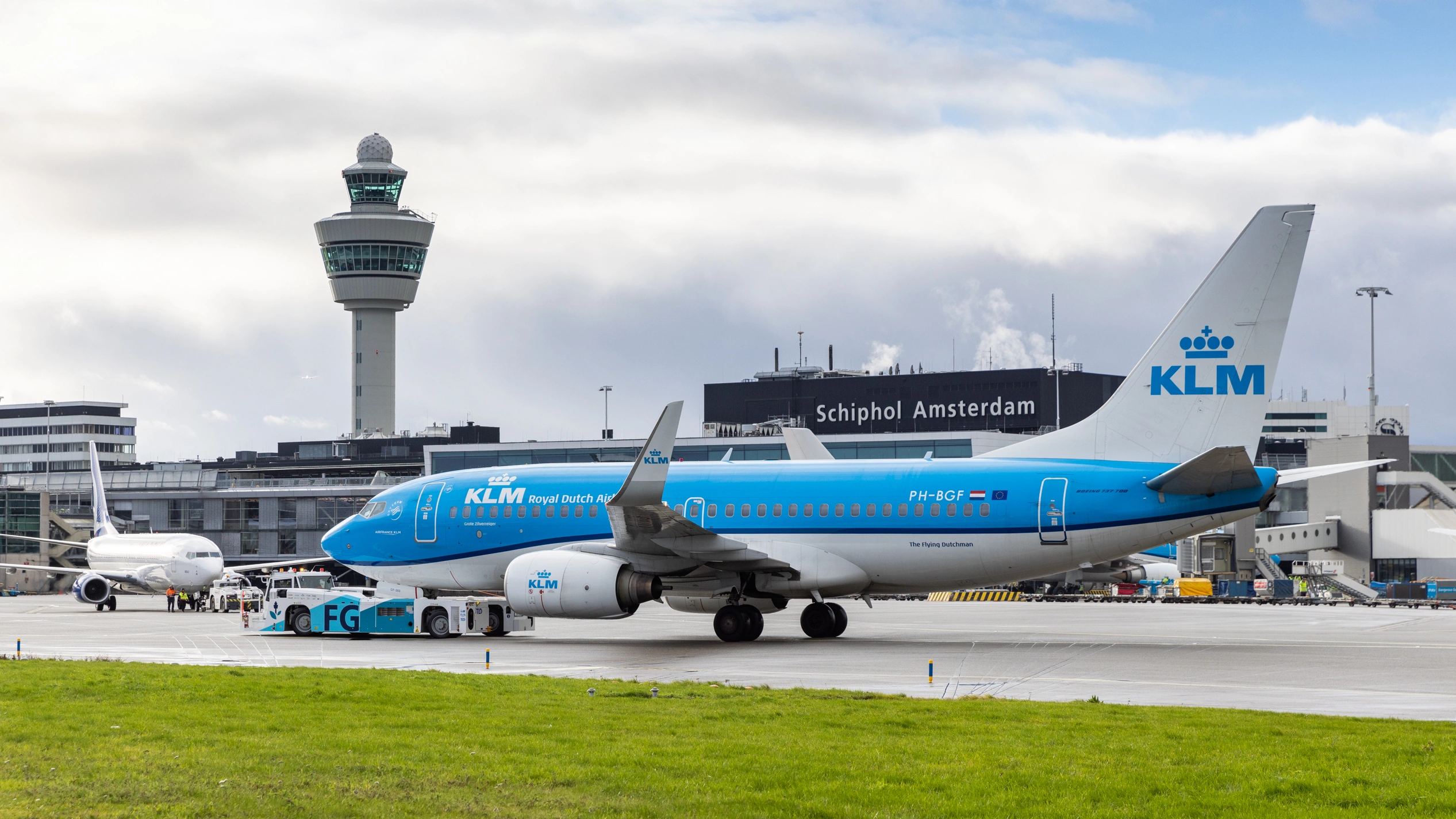
One significant recent judgment came in January 2026, when the CJEU ruled on a case involving KLM Royal Dutch Airlines (KL) and passengers who had booked through the online travel agency Opodo. Two passengers had purchased a return itinerary through the platform and, after a Vienna-to-Lima flight was cancelled during the COVID-19 pandemic, sought a full refund of the €2,053 they had paid. KLM refunded €1,958 but excluded the €95 booking fee charged by the intermediary.
The CJEU ruled that airlines must refund the full amount paid by passengers for cancelled flights, including booking fees charged by third-party online travel agencies. Airlines face the risk of double payment if they transfer the refund to the intermediary within the required seven-day period, but the intermediary either delays reimbursing the customer or fails to do so altogether.
The court found that an airline’s lack of knowledge about the commission amount charged by an authorised agent does not absolve it from its refund obligation.

How does EU 261 Compare with the UK Law
Following the United Kingdom’s withdrawal from the European Union, the UK government incorporated EU 261 into domestic law as part of the Brexit transition process. The UK version of the law is formally titled Regulation (EC) No 261/2004, as amended by The Air Passenger Rights and Air Travel Organisers’ Licensing (Amendment) (EU Exit) Regulations 2019, and is commonly referred to as UK261.
UK passengers retain the same substantive rights as under EU 261, including the right to compensation for delays of three hours or more, for cancellations with less than 14 days’ notice, and for involuntary denied boarding. Compensation under UK261 is paid in pounds sterling rather than euros, with amounts ranging from approximately £220 to £520 per passenger. Certain flights are covered by both UK261 and EU 261 simultaneously, in which case UK passengers should bring claims to a UK court. Flights departing from EU airports not involving the UK continue to fall under EU 261 regardless of the passenger’s nationality.

The EU 261 Reform Process Includes 13 Years of Negotiation
EU 261 remained without formal amendment for over two decades. The European Commission first proposed a revision on 13 March 2013 to address ambiguities that had accumulated through case law, to define extraordinary circumstances more clearly, and to introduce rights relating to rerouting on other carriers or modes of transport. The 2013 proposal stalled in the EU Council for years due to disputes over multiple aviation files, including a longstanding disagreement between Spain and the United Kingdom over Gibraltar’s airport.
Progress resumed in November 2019. The COVID-19 pandemic then refocused attention on passenger rights, particularly around refunds and the use of travel vouchers. In its 2022 and 2023 work programmes, the European Commission listed the revision as a priority pending proposal. On 5 June 2025, the Council of the European Union reached a political agreement on its position, describing the moment as a “historical milestone.” The Council’s position included over 30 new passenger rights and proposed raising the delay threshold for compensation to four or six hours, depending on flight distance — a proposal that drew immediate pushback from the European Parliament.

The European Parliament’s Position while Defending Passenger Rights
The European Parliament’s Committee on Transport and Tourism (TRAN) voted on 12 January 2026 to update EU 261, rejecting the Council’s proposals to weaken existing passenger protections. The vote passed with 36 votes in favour and two abstentions.
MEPs maintained that the three-hour delay threshold for compensation must not be extended. They also rejected the Council’s proposal to cap compensation at €500 for long-haul flights, insisting that the existing range of €300 to €600 be preserved. Vicent Marzà MEP, Greens/EFA shadow rapporteur in the TRAN committee, stated: “Today the European Parliament chose to stand with its citizens, not with corporate greed. This vote allows air passenger rights to move forward despite the Council’s attempt to roll them back.”
On 21 January 2026, the full European Parliament adopted its position by 632 votes to 15 with nine abstentions, sending a clear signal that it would not accept a weakening of the existing rights framework. MEPs called for airlines to provide passengers with free carry-on baggage, simpler refund procedures, and an exhaustive and regularly updated list of extraordinary circumstances maintained by the European Commission.
The June 2026 Provisional Agreement
After more than 13 years of negotiations, the European Parliament and the Council of the European Union reached a provisional political agreement on 15 June 2026. EU Transport Commissioner Apostolos Tzitzikostas described it as “a great day for travellers and airlines” after negotiators confirmed the deal. The agreement represents the first overhaul of EU 261 since it entered into force in 2005.
The key outcomes of the provisional agreement include:
- The three-hour delay threshold for compensation is preserved in full. Passengers retain the right to compensation between €250 and €600 for flights delayed by three hours or more.
- Compensation amounts remain at €250, €400, and €600 for short-, medium-, and long-haul flights respectively.
- Airlines are banned from charging for hand luggage, with fare transparency requirements mandating one price that includes hand luggage and one that excludes it.
- Children under 14 must be seated next to their accompanying adult at no additional charge.
- A ban on no-show policies for return flights — the practice of cancelling a passenger’s return leg because they missed the outbound flight — is introduced.
- Stronger care obligations include refreshments every two hours beyond the scheduled departure, a meal after three hours, and a cap of three nights for hotel accommodation during long disruptions.
- Improved rights for passengers with reduced mobility are incorporated into the updated framework.
The provisional agreement requires formal adoption by both the full European Parliament and the Council. The European Parliament is expected to vote in July 2026. If adopted, the revised regulation is anticipated to enter into force in the second half of 2027.

Adam Moreira (AEMoreira042281) | Wikimedia Commons
Airlines Warn of Rising Costs of Imposing EU 261
The airline industry has consistently raised concerns about the financial burden imposed by EU 261. Airlines for Europe (A4E), the trade association representing major European carriers, warned ahead of the June 2026 deal that the existing EU 261 regime costs carriers around €8 billion per year, based on figures cited by the European Commission. A4E stated that proposals being debated in Brussels could push the annual cost to €15 billion.
The International Air Transport Association (IATA) expressed strong concern that the reform proposals would “entrench and worsen” the existing flaws in EU 261. IATA cited its own passenger survey conducted in May 2025, in which 72 percent of respondents indicated they prefer to pay the lowest available fare and purchase additional services as required, rather than receive bundled protections. These industry positions contrast sharply with the Parliament’s stance and reflect the fundamental tension between consumer protection and airline operating costs that has defined the EU 261 reform debate since 2013.
A report by the Air Passenger Rights Association (APRA) noted that EU 261 has delivered measurable benefits, both to passengers and to aviation system performance. The report found that the regulation shifts disruption risk from individual passengers — who are risk-averse — to airlines, which are better placed to price and manage such risk efficiently.

How Passengers Can File A Claim Under EU 261
Passengers who believe they are entitled to compensation under EU 261 should follow a clear process to pursue their claim:
- Gather documents: Retain the booking confirmation, boarding passes for the original and any replacement flights, and all receipts for out-of-pocket expenses such as food, accommodation, and transport.
- Contact the airline directly: Most airlines provide an online claims form. Passengers should submit a written claim referencing EU 261 and specifying the compensation amount they are seeking.
- Contact a national enforcement body (NEB): Each EU member state designates an NEB responsible for enforcing EU 261. If an airline refuses a valid claim, passengers may file a complaint with the relevant NEB.
- Seek alternative dispute resolution: The EU’s 2013 ADR Directive established mechanisms for resolving passenger complaints without going to court.
- Use a claims management company: Third-party firms offer to pursue claims on a no-win, no-fee basis. Passengers should note that these companies typically retain a commission of 20 to 30 percent of the compensation awarded.
Airlines must inform passengers of their EU 261 rights at the point of disruption. This information must be provided in writing, either at the check-in desk or at the boarding gate. A 2020 Eurobarometer survey found that only 43 percent of European citizens were aware that these passenger rights regulations existed — a figure that underscores significant gaps in public knowledge of a law that has been in force for over two decades.