United Airlines (UA) , the carrier that increased the checked baggage fees by $10 due to the Iran War, on the will operate its latest-generation ‘Polaris 2.0’ Business Class cabin on both of its daily flights between Singapore Changi Airport (SIN) and San Francisco International Airport (SFO) from August 2, 2026 — meaning all 14 weekly frequencies between the two cities will feature the new product from that date, Mainly Miles reported.
The same source revealed that schedule data loaded into airline reservation systems confirms that the second daily rotation, operating as UA28/UA29, will join the existing UA1/UA2 service in receiving the new cabin, with the westbound UA29 departure from San Francisco picking up the product one day earlier, from August 1. This rollout delivers on a trajectory signalled when Polaris 2.0 first debuted on the SIN–SFO route barely three months ago.
With 64 Polaris Business Class seats aboard each of these Boeing 787-9 Dreamliners — including eight premium Studio Suites — United will offer 1,792 Business Class seats per week on the Singapore–San Francisco corridor from August, a 17% premium capacity lead over Singapore Airlines (SQ), which provides 1,526 Business Class seats weekly across its two competing daily A350 services.
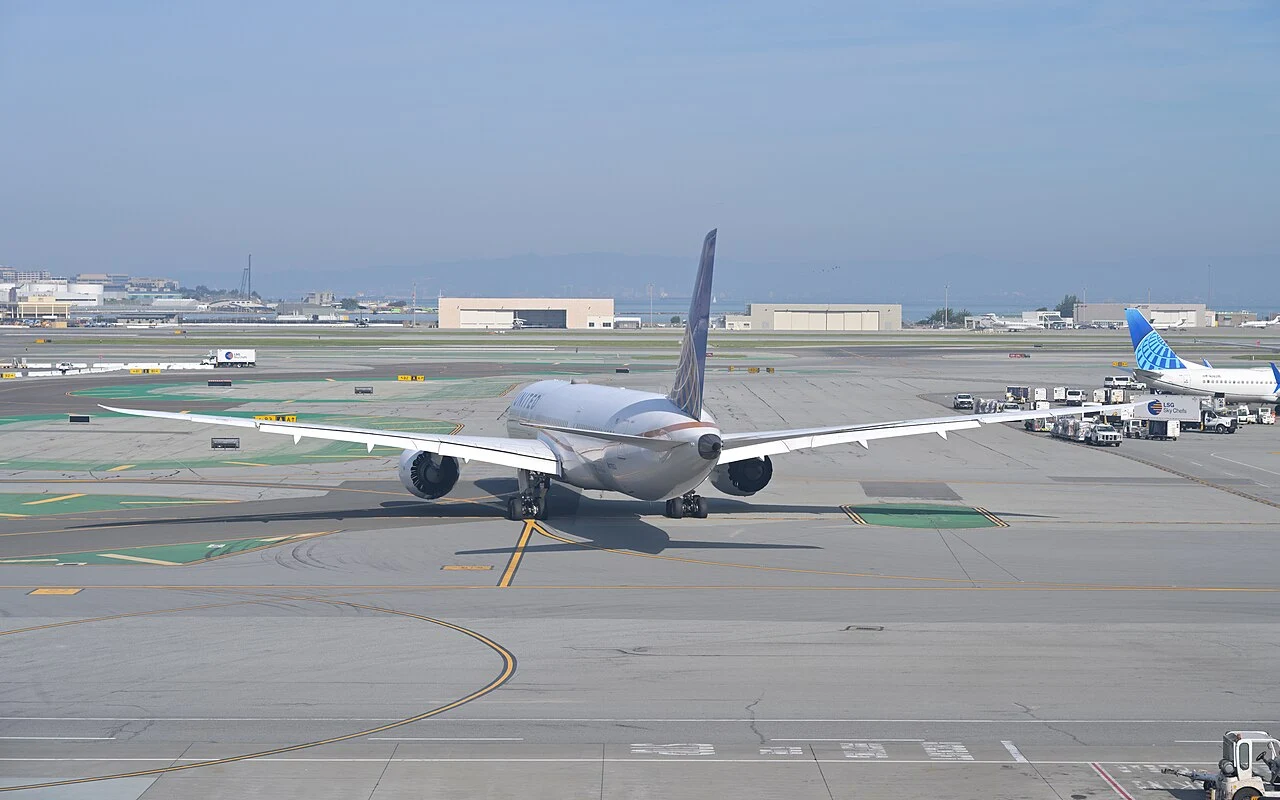
https://commons.wikimedia.org/wiki/File:United_Airlines_Boeing_787-9_N17963_taxiing_at_San_Francisco_February_2026.jpg
United’s Full Singapore Schedule from August 2, 2026
From August 2, 2026, both of United’s daily Singapore–San Francisco departures will operate aboard Boeing 787-9 aircraft fitted with the airline’s new ‘Elevated’ interior. The morning UA2 departs Singapore Changi at 08:45 and arrives in San Francisco at 09:30 the same day, with a block time of 15 hours and 45 minutes.
The evening UA28 departs at 20:35, arriving at 21:20 local, also a 15-hour and 45-minute journey. In the opposite direction, UA29 departs San Francisco at 11:10, arriving in Singapore at 18:35 the following day (16 hours and 25 minutes), while UA1 departs at 22:50, touching down two days later at 06:15.
As Mainly Miles reported, the UA28/UA29 frequency had retained the older-generation Polaris seats when the new cabin made its route debut in late April on UA2/UA1. The pace of Boeing 787-9 deliveries under United’s ‘Elevated’ fleet programme has made this a short-lived split. Aviation A2Z confirmed that United currently has four Elevate-configured 787-9s in active service — registered N21102, N51104, N61101, and N61103 — all based at San Francisco, with a fifth delivery imminent and a further 66 aircraft in the pipeline at near-term delivery rates of approximately one per month.
The same new product already features on United’s daily UA900/901 San Francisco–London Heathrow Airport (LHR) service, with the second London frequency, UA930/939, set to receive the cabin from mid-May 2026. By September 2026, every daily United flight from San Francisco to London, Singapore, and Zurich Airport (ZRH) will feature the Elevated cabin product.
Inside ‘Polaris 2.0’: What the New Cabin Delivers
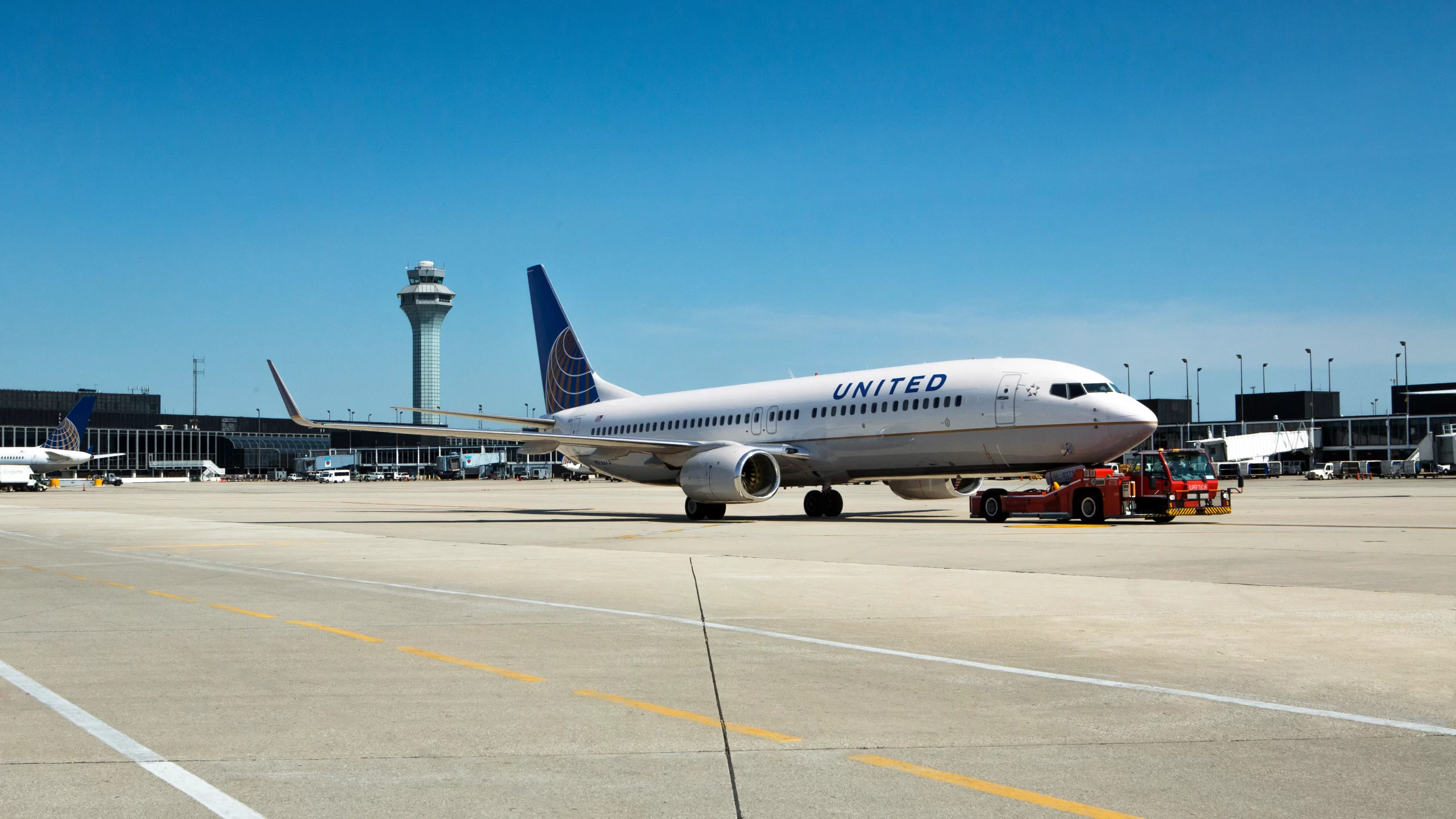
United’s new Business Class is a substantial departure from the original Polaris product that launched in 2016, and the aircraft housing it represents the most premium long-haul configuration ever fielded by a US carrier.
One Mile at a Time reported that the ‘Elevated’ Boeing 787-9 carries just 222 total seats — the least-dense configuration of any American airline widebody — including 64 Polaris Business Class seats in a 1-2-1 layout with direct aisle access for all passengers, 35 Premium Plus premium economy seats, and 123 economy seats. Less than half the aircraft is configured in standard economy, a deliberate skew toward high-yield passengers.
The new Polaris seat is a customized version of the Adient Aerospace Ascent model in a 1-2-1 configuration and includes sliding privacy doors — though these remain locked open pending FAA regulatory approval at the time of writing.
Each seat features a 19-inch 4K seatback screen, wireless charging, USB-C and traditional power outlets, Bluetooth audio pairing, and custom mood lighting. Free Starlink Wi-Fi is available across all cabins on these aircraft, a meaningful differentiator on a flight exceeding 16 hours.
The eight Studio Suites, occupying the front row of each Business Class cabin section, constitute a distinct tier within the cabin. Simple Flying reported that the Studio features 27-inch 4K OLED screens — the largest fitted in any US carrier’s business class — additional suite area, an ottoman seat permitting companion dining, and a supplementary service featuring Ossetra caviar and Laurent-Perrier Cuvée Rosé Champagne. Access to the Studio Suites carries a surcharge of US$499–599 over a standard Polaris fare.
The Points Guy, which reviewed the product on the inaugural UA1 departure from San Francisco, noted that a frequent flyer — a United million-miler — paid half a million miles for a standard Polaris seat on the inaugural flight, then paid an additional US$600 to upgrade to a Studio Suite, describing the investment as befitting United’s ambition to close the gap with its rivals’ premium offerings.
United Now Leads Singapore Airlines on Premium Capacity
The capacity arithmetic on the Singapore–San Francisco route has shifted in United’s favour, and the August expansion consolidates that lead. Singapore Airlines currently offers 1,526 Business Class seats per week on the SIN–SFO route, divided across a daily Airbus A350 Long Haul with 42 seats and a daily Airbus A350 Ultra Long Range (ULR) with 67 seats. From August 2, United’s two daily 787-9 flights will together supply 1,792 Business Class seats per week in each direction — a premium of 266 seats, or 17%, over Singapore Airlines.
Singapore Airlines continues to operate its 2013-generation Business Class on both SIN–SFO services (SQ32/31 and SQ33/34). While that product retains the fundamentals of a competitive long-haul seat, it lacks the following features:
- closing privacy doors
- wireless charging
- Bluetooth audio connectivity
- modern 4K inflight entertainment
- speed of Starlink connectivity that United already offers.
Mainly Miles noted that the site’s author Andrew assessed that for passengers who prioritize sleep quality, the latest IFE, and reliable high-speed connectivity, United now holds a clear hardware edge, though Singapore Airlines retains an advantage in soft product — service, food, and beverage — on this route.
United’s Business Class passengers departing San Francisco also benefit from access to the United Polaris Lounge at SFO, a facility widely regarded as among the finest domestic premium lounges operated by any US carrier. Singapore Airlines Business Class passengers transiting SFO currently use the Air India Maharaja Lounge, following changes to lounge access arrangements at the airport — a further distinction that several frequent flyers flagged in discussions on the Mainly Miles article.

Singapore Airlines’ New Cabin Delay Extends United’s Hardware Advantage
Singapore’s long-awaited next-generation Business Class will not enter service until Q1 2027. Bloomberg reported that Singapore Airlines cited “chronic global supply chain constraints and certification issues affecting one of the seat types” in an emailed statement, pushing the debut back from its original Q2 2026 target by at least six months.
The delay is part of a broader pattern. According to Travel and Tour World, when the new Business Class eventually enters service, it will have been 14 years since Singapore Airlines’ current product debuted. The airline’s S$1.1 billion retrofit programme, announced in November 2024, covers 41 Airbus A350-900 aircraft across long-haul and ULR variants.
The new Business Class for the A350 long-haul fleet will feature 42 seats in a 1-2-1 layout with direct aisle access. A spokesperson confirmed that entry-into-service is now subject to regulatory approvals and that a full product unveil will take place later in 2026.
The SFO route specifically carries additional complexity. Mainly Miles explained that Singapore Airlines requires its longer-range A350 LH+ aircraft — the newer frames in its fleet — on the SQ32/31 services to reach San Francisco without payload restrictions, and newer aircraft are unlikely to be the first candidates for cabin retrofit.
The airline’s plan during the retrofit process is for San Francisco to temporarily operate with two A350 Long Haul aircraft rather than the current pairing of one A350 LH and one A350 ULR — meaning San Francisco may be among the last routes to receive the updated product. Analysts tracking SIA’s programme suggest the San Francisco route could see the new cabin as late as late 2027 or beyond.

United’s ‘Elevated’ Fleet: A Rapid Expansion With 66 Aircraft Still to Come
The pace of United’s ‘Elevated’ 787-9 programme is central to understanding how quickly Polaris 2.0 will colonise the carrier’s long-haul network. One Mile at a Time reported that United expects to take delivery of 20 new Dreamliners with the ‘Elevated’ cabin in 2026 alone — a figure the airline itself described as the highest annual widebody intake of any US carrier since 1988.
With a further 66 aircraft in the order pipeline beyond the current four in service, the rollout trajectory points to rapid and systemic network coverage across United’s most competitive international routes.
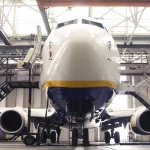
The Singapore and London Heathrow routes are the current proving grounds, and both have now been confirmed for full fleet standardisation ahead of the northern hemisphere summer travel season.
The inaugural commercial operation of the first ‘Elevated’ 787-9 (registration N61101) to Singapore on April 22 encountered an unspecified technical issue in Singapore that necessitated a ferry flight back to San Francisco, without passengers, under a non-routine flight number. Engineers in Singapore were unable to clear the aircraft in time, and the passenger service was cancelled. United has since operated the routes without recurrence.
In a broader 2026–2027 wave of new 787-fitted business class products across the industry, American Airlines, Alaska Airlines, and Riyadh Air are all introducing closed-door business class suites on new 787-9 deliveries.
| Airline | Product Name | Layout | Special Premium Seat | IFE Screen | Key Differentiator |
|---|---|---|---|---|---|
| United Airlines | Polaris “Elevated Interior” / Polaris 2.0 | 1-2-1 | Polaris Studio | Up to 27-inch 4K OLED | One of the most premium-heavy US cabins with 99 premium seats |
| All Nippon Airways | THE Room FX | Alternating forward/rear-facing | None announced | Not specified | Radical lounge-style concept inspired by living room seating |
| Riyadh Air | Safran Unity Suites | 1-2-1 | Business Elite | 32-inch 4K OLED (Elite) / 22-inch 4K OLED | Extremely private suites with 52-inch walls |
| Alaska Airlines | New International Business Class Suites | Not specified | None announced | 18-inch HD screen | Strong soft product focus with Starlink WiFi and destination-inspired dining |
| LOT Polish Airlines | RECARO CL6720 Business Class | 1-2-1 | None announced | New IFE system (size not specified) | Major upgrade from outdated 2-2-2 cabins |
| American Airlines | Flagship Suite | Not specified | Flagship Suite Preferred | Not specified | Premium-focused redesign across long-haul fleet |
Data: Simple Flying
In all of the six airlines’ premium products, there is a privacy door, and has a full lie-flat suite.

All in All
For frequent flyers in Singapore’s KrisFlyer ecosystem, United’s Singapore–San Francisco service is redeemable as a Star Alliance partner award. Mainly Miles published the current redemption rate table showing that a KrisFlyer Saver award for United Business Class on the SIN–SFO corridor costs 112,500 miles one-way, compared to 131,000 miles for Singapore Airlines’ own Business Class Saver award on the same route — a saving of 18,500 miles for choosing the partner product.
An Advantage tier award for United Business Class is priced at 148,000 miles one-way. Taxes and fees payable for Singapore-originating redemptions stand at S$88.30, while the San Francisco–Singapore direction carries fees of approximately S$7. The gap in award pricing between the two carriers means a traveller opting to experience Polaris 2.0 via KrisFlyer miles can do so at a meaningful discount relative to the flag carrier’s own Saver rate.