The world’s largest operator of the Airbus A380, Emirates (EK), has again deferred the superjumbo’s scheduled return to two major international routes: Dubai International Airport (DXB) to Perth Airport (PER) in Western Australia, and Václav Havel Airport Prague (PRG) in the Czech Republic. According to schedule data filed with aviation analytics platforms Cirium Diio and OAG that was cited by Simple Flying, the revised plan now places the A380’s return to Perth no earlier than July 1, 2026, a full month behind the previously announced June 1 reinstatement date. Prague’s timeline has shifted in a near-identical fashion.
The deferral is a direct consequence of the war in Iran that has led carriers as far as Korea to slash some of their routes. Emirates, which in response to the war also only a days ago donned the colors of UAE in its A380, has not flown its iconic double-decker quadjet to Perth in over two months; Flightradar24 data indicates the aircraft last operated the Dubai–Perth corridor on March 14, 2026. Week over week, the carrier continues to trim its A380 schedule: the latest filing reflects a further 7% reduction in A380 operations for May and June, compounding already significant cuts that have left the airline operating 43% fewer superjumbo departures than it did in April 2025.
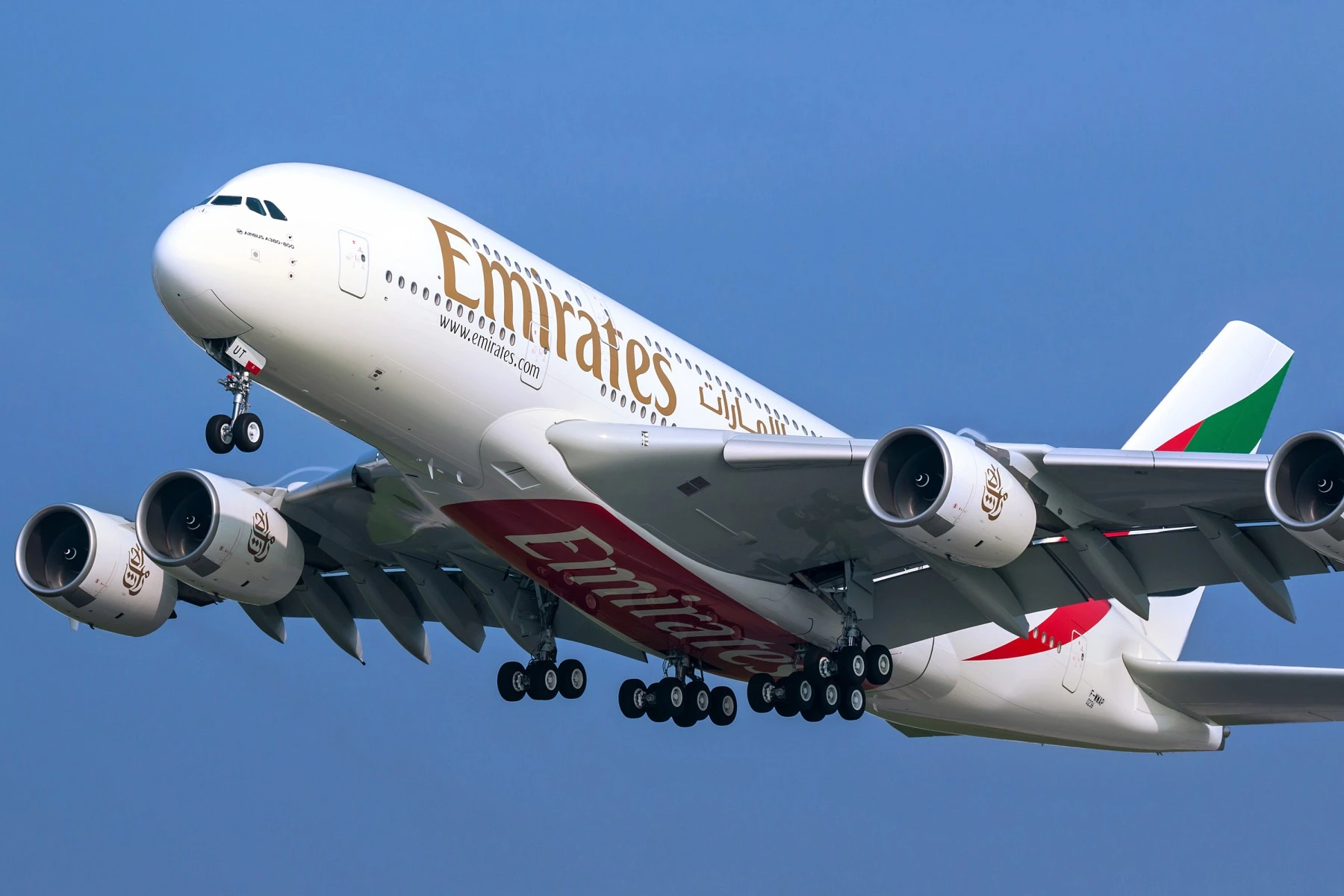
Emirates Pushes Back Perth A380 Return to July 1
Perth is one of Emirates’ most historically significant A380 markets. The airline first introduced the A380 to Perth on May 1, 2015, upgrading one of three daily services from a Boeing 777-300ER and adding 136 seats per flight and 1,904 seats per week in the process. The aircraft deployed on the route carries the 468-seat, four-class configuration — Emirates’ lowest-capacity but highest-premium A380 layout, featuring First Class Private Suites, Business Class flatbeds, Premium Economy, and Economy.
When reinstated on July 1, that same 468-seat configuration remains planned, with a daily service operated as flights EK420 departing Dubai at 02:45 local and EK421 returning from Perth at 22:20 local. The flight covers approximately 7,400 miles (11,900 km) and takes around 11 hours and 15 minutes. The scheduled return is contingent on prevailing conditions.
In the interim, Emirates has deployed its Boeing 777-300ER on the route to maintain continuity of service. The 777 in its 354-seat configuration carries significantly fewer passengers per rotation than the superjumbo it has temporarily replaced. This is quite a reduction on a route that carried nearly six million passengers between 2002 and 2022 across more than 24,000 flights.
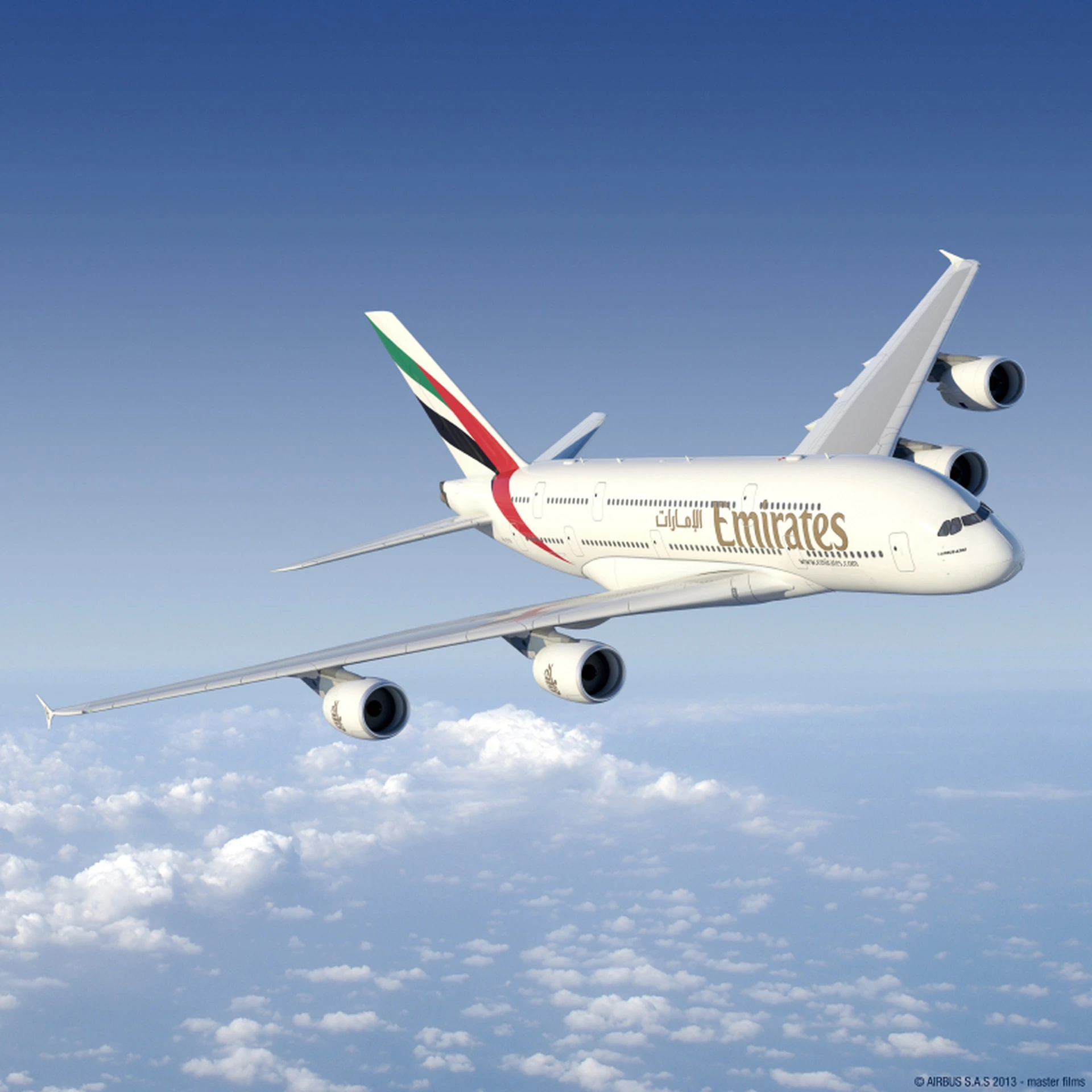
Prague’s Superjumbo Window Narrows Amid Broader European Cuts
Flightradar24 data cited by Simple Flying also shows the A380 last operated to Václav Havel Airport Prague on March 23, 2026, after which Emirates reverted to the Boeing 777-300ER. The 360-seat configuration of the 777-300ER has since been the primary aircraft on the route, with the 332-seat layout (which includes Premium Economy) also scheduled to appear.
Emirates operates the Prague route during the winter season, as it has done in recent years, and the carrier does plan to return the A380 to Prague in time for the upcoming winter schedule. Meanwhile, flydubai will increase its frequency to Prague to 10 weekly services, with three additional weekly departures from DXB at 01:55, boosting aggregate connectivity between the Czech capital and Dubai even as the flagship aircraft remains absent. The two carriers’ coordinated scheduling model means the Czech market retains considerable onward connectivity through Dubai’s hub network.
The Prague route had previously been assigned Emirates’ high-density, two-class, 615-seat A380 — a configuration without First Class.
Broader A380 Cuts: How the Perth and Prague Suspensions Compare
The deferrals affecting Perth and Prague must be read against a wider pattern of A380 retrenchment that predates and now compounds the Iran war’s impact. Simple Flying’s updated route analysis identified 23 routes that will no longer see Emirates’ double-decker from June 2026 onward — though the Perth and Prague suspensions remain classified as temporary rather than permanent at this stage.
One of the more structurally significant changes in Emirates’ A380 network involves Copenhagen Kastrup Airport (CPH). As Simple Flying reported, the carrier had already announced — independently of the Iran war — that its A380 service to Denmark would end permanently on May 31, 2026, after barely a year of resumed service following the COVID-19 hiatus.
From June 1, Emirates transitions Copenhagen to a twice-daily operation pairing the Airbus A350-900 and Boeing 777-300ER, a move that will actually increase total daily seat availability from around 615 to 1,438 — a 17% uplift — while introducing Premium Economy to the route for the first time. The Prague and Perth suspensions stand in contrast to Copenhagen: neither route carries signals of a structural downgrade; both are framed as war-related deferrals.
Meanwhile, it was also reported that in May 2026, Emirates also halted A380 services to Glasgow Airport (GLA) and Osaka Kansai International Airport (KIX), with the 777-300ER stepping in across all four routes. A380 frequencies between Dubai and Milan Malpensa, Munich, and Zurich have been halved to once daily in May — while, inversely, London Gatwick has seen its A380 operations increase to three daily rotations, the highest level since December.