Kalitta Air Cargo Jet Transports Hantavirus-Positive Passenger From Cruise Ship

A U.S. government-chartered Boeing 747 freighter, operated by Michigan-based cargo airline Kalitta Air, has transported 17 American citizens and one British national who resides in the United States from Tenerife, Spain, to Offutt Air Force Base in Omaha, Nebraska, following their evacuation from the MV Hondius — a Dutch expedition cruise ship at the centre of a deadly Andes hantavirus outbreak.

The U.S. Department of Health and Human Services (HHS) confirmed late on Sunday, May 11, 2026, that one of the American passengers has tested mildly positive for the Andes virus via PCR test, and that a second passenger is displaying symptoms consistent with infection. Both were transported within sealed biocontainment units installed aboard the aircraft for the repatriation mission.

The outbreak has claimed three lives since it was first identified in early April 2026, when the MV Hondius was sailing through the South Atlantic following its departure from Ushuaia, Argentina. The Andes virus, which the World Health Organisation (WHO) has confirmed as the causative strain, is the only known hantavirus documented to spread between humans and carries a case fatality rate estimated at approximately 35–50% for its most severe form — hantavirus cardiopulmonary syndrome (HCPS). The CDC has classified the outbreak as a Level 3 emergency response, while the WHO has sought to temper public alarm, with Director-General Tedros Adhanom Ghebreyesus stressing that the pathogen is “not another Covid-19” and that the risk to the general public remains low.
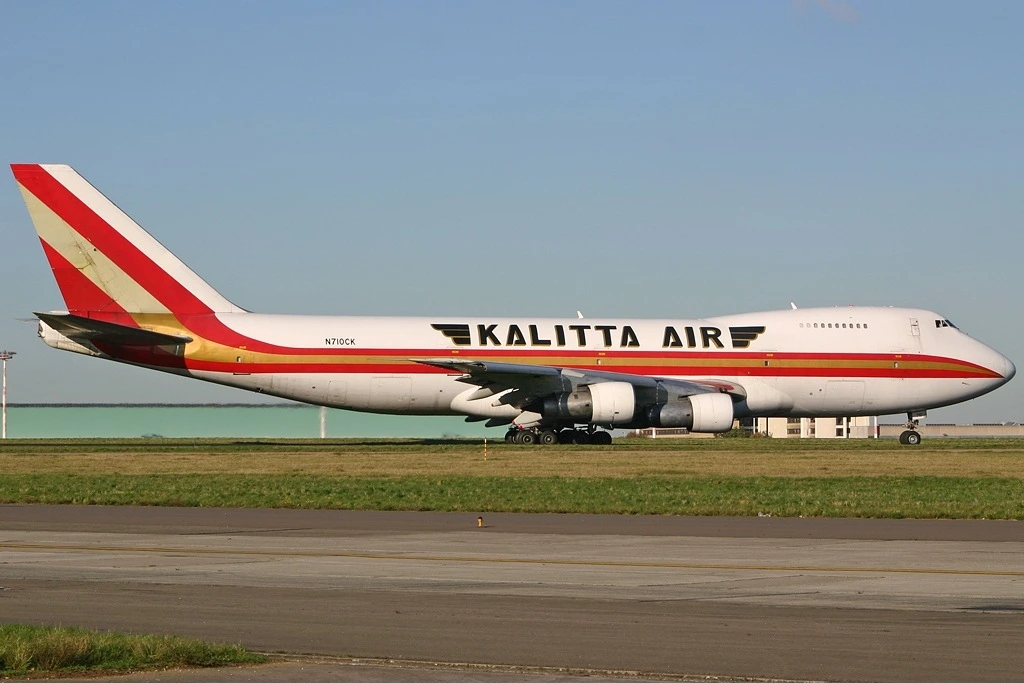
Photo: planepictures.net | Wikimedia Commons

A Kalitta Air 747 Freighter Configured for Biocontainment

The aircraft selected by the U.S. government for this sensitive humanitarian airlift is a 20-year-old Boeing 747 freighter belonging to Kalitta Air, a Ypsilanti, Michigan-based cargo carrier known primarily for charter and commercial freight operations.

As reported by Paddle Your Own Kanoo, the aircraft arrived in Tenerife on May 10, just hours after the MV Hondius moored at the port of Granadilla de Abona in the Canary Islands for its long-anticipated international evacuation operation.

The HHS, in a statement issued during the flight, confirmed that two passengers were “travelling in the plane’s biocontainment units out of an abundance of caution,” describing their conditions as follows: “One passenger currently has mild symptoms and another passenger tested mildly PCR positive for the Andes virus.” The aircraft landed at Offutt Air Force Base at approximately 3:30 a.m. local time on Monday, May 11.

American Almanac reported that upon arrival, one passenger was immediately transferred to the Nebraska Biocontainment Unit after testing positive without showing symptoms, while two others — a passenger and a close contact — were separately transported to Emory University Hospital in Atlanta, Georgia, where they are being treated at its Serious Communicable Diseases Unit.

Travel blogger Jake Rosmarin, who was among the passengers aboard the repatriation flight, posted a photograph from his quarantine room at the University of Nebraska Medical Center shortly after landing. NBC News reported that Rosmarin wrote:

“The repatriation flight was smooth, and I safely made it to the National Quarantine Unit in Omaha. It’s been a very long few days, but hopefully I can start giving more updates again soon.”

His photograph showed a furnished room with a desk, a spin bike, and a smart television — the standard amenities of the National Quarantine Unit, which functions, according to the medical centre’s own doctors, closer to a specialized hotel room than a clinical ward.
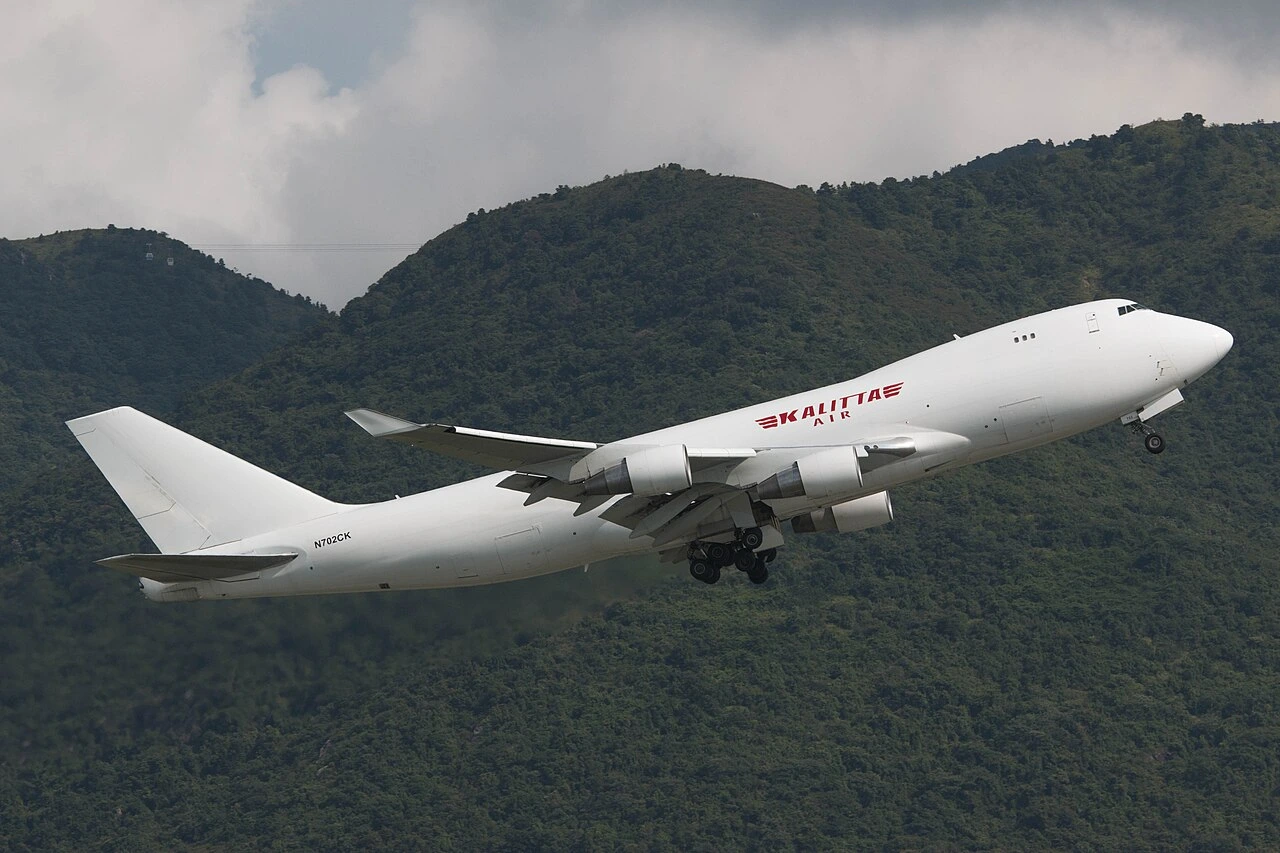
Photo: km30192002 | Wikimedia Commons

The American Passengers Are Now at Nebraska and Atlanta Facilities

The 18 American-bound evacuees have been distributed across two specialist facilities. According to reporting by CNN, 16 of the passengers are now being monitored at the Regional Emerging Special Pathogen Treatment Center (RESPTC) at the University of Nebraska Medical Center (UNMC) in Omaha, while two individuals — including one symptomatic person — are at Emory University Hospital in Atlanta.

As of Monday, all 16 in Nebraska are reported as asymptomatic, and symptoms are being assessed twice daily by the UNMC medical team. Dr. H. Dele Davis, the interim chancellor of UNMC, told CNN that upon arrival, passengers would be checked for early-stage symptoms including fever, muscle aches, and diarrhoea.

Dr. Michael Wadman, director of the National Quarantine Unit, said at a Monday press briefing that there is no agreed standard for how frequently asymptomatic individuals should be tested, and that individual physicians would direct testing decisions on a case-by-case basis.

NBC News quoted DHS Assistant Secretary for Health Dr. Brian Christine as stating:

“Let me be crystal clear — the risk of hantavirus to the general public remains very, very low. The Andes variant of this virus does not spread easily, and it requires prolonged close contact with someone who is already symptomatic.”

Nine additional Americans with possible exposure had already returned to their home states independently, prior to the formal repatriation operation. Their monitoring is being conducted through state and local health departments, following guidance distributed by the CDC to public health departments and clinicians nationwide.


Photo: Nicky Boogaard | Wikimedia Commons

What Is the Andes Hantavirus, and Why Does It Concern Health Authorities?

The Andes virus (ANDV), first identified in Argentina and Chile in 1995, occupies a singular position in virology: it is the only hantavirus confirmed to spread between humans. According to the WHO’s own fact sheet, the Andes variant can cause hantavirus cardiopulmonary syndrome, a rapidly progressive condition affecting the lungs and heart with a case fatality rate of up to 50% in the Americas.

The CDC’s Health Alert Network advisory on the MV Hondius outbreak placed the fatality rate for patients with severe respiratory symptoms at approximately 38%. The UK Health Security Agency’s own guidance, as cited by Newsweek, sets the mortality range for the key complication of Andes infection at approximately 35–50%. There is no approved treatment or vaccine; physicians can offer only supportive care, including hydration, mechanical ventilation, and dialysis in the most severe cases.

According to WHO, preventing hantavirus infection depends primarily on “reducing contacts between people and rodents” and effective measures include:

  • keeping homes and workplaces clean

  • sealing openings that allow rodents to enter buildings

  • storing food securely

  • using safe cleaning practices in areas contaminated by rodents

  • avoiding dry sweeping or vacuuming rodent droppings

  • dampening of contaminated areas before cleaning

  • strengthening hand hygiene practices.

Human-to-human transmission of the Andes virus, while documented, is not efficient by the standards of respiratory pathogens. A peer-reviewed paper published in the National Institutes of Health archive noted that such transmission relies principally on close and prolonged contact, and that secondary spread among healthcare workers, though previously recorded, remains rare.

The WHO’s disease outbreak notice confirmed as of May 8 that the spread aboard the Hondius is “at least partially attributed to human-to-human transmission,” though the primary vector for Andes virus in its natural environment is the long-tailed pygmy rice rat, endemic to Argentina and Chile.

Let’s have a look at some other information about the virus:

Category Key Information
Viral Family & Classification Hantaviruses belong to the Hantaviridae family within the Bunyavirales order. Each virus is usually linked to a specific rodent host species that carries the virus without becoming ill.
Human Disease Types In the Americas, hantaviruses cause Hantavirus Cardiopulmonary Syndrome (HCPS). In Europe and Asia, they cause Haemorrhagic Fever with Renal Syndrome (HFRS).
Global Disease Burden An estimated 10,000 to over 100,000 hantavirus infections occur globally each year. Asia and Europe account for the highest number of cases.
Fatality Rate Fatality rates range from less than 1% to 15% in Asia and Europe, and can reach up to 50% in the Americas. HCPS commonly has a fatality rate between 20% and 40%.
Main Transmission Route Humans typically become infected through exposure to infected rodent urine, saliva, or droppings. Rodent bites can also transmit infection, though less commonly.
High-Risk Activities Cleaning enclosed or poorly ventilated spaces, farming, forestry work, and sleeping in rodent-infested areas increase exposure risk.
Human-to-Human Transmission Confirmed only with Andes virus in the Americas. Transmission is rare and mainly occurs through close, prolonged contact during the early stage of illness.
Incubation Period Symptoms generally appear between one and eight weeks after exposure.
Common Symptoms Fever, headache, muscle aches, abdominal pain, nausea, and vomiting are common early symptoms.
Severe HCPS Symptoms HCPS may progress rapidly to coughing, breathing difficulties, fluid buildup in the lungs, and shock.
Severe HFRS Symptoms HFRS can lead to low blood pressure, bleeding disorders, and kidney failure.
Diagnostic Challenges Early symptoms resemble influenza, COVID-19, viral pneumonia, leptospirosis, dengue, and sepsis, making diagnosis difficult.
Diagnostic Methods Diagnosis relies on antibody testing (IgM/IgG) and RT-PCR testing during the acute stage of illness.
Laboratory Safety Patient samples are considered biohazards and must be handled under maximum biological containment with triple-packaging protocols for transport.
Treatment There is no approved antiviral treatment or vaccine. Care focuses on supportive treatment and management of respiratory, cardiac, and kidney complications.
Intensive Care Importance Early intensive care support significantly improves outcomes, especially in HCPS cases.

Critically, the Andes virus has an incubation period of one to eight weeks. PBS News, citing medical epidemiologist Daniel Pastula of the University of Colorado Anschutz Medical Campus, noted that because of this extended incubation window, additional cases may continue to emerge among passengers long after they have returned home, complicating surveillance. WHO Director-General Tedros warned on Monday that he expects “more cases” to materialise for precisely this reason.

Photo: Fedor Leukhin | Wikimedia Commons

Other International Responses to the Outbreak

The United States was not alone in mounting a formal repatriation operation, though the use of a cargo aircraft with biocontainment units is notable among the international responses. A couple of days ago, CNN reported that a French passenger displayed symptoms during her commercial repatriation flight, prompting all five evacuees on that flight to enter isolation protocols upon landing — a development confirmed by the French Prime Minister.

French Health Minister Stephanie Rist subsequently announced that the passenger had tested positive and was being treated in a specialist hospital, with her condition deteriorating overnight. By contrast, 30 passengers disembarked at Saint Helena during the ship’s earlier call there, and all have since been contact-traced by the UK Health Security Agency. The WHO’s outbreak notice confirmed that as of May 8, passengers were hospitalised in South Africa, the Netherlands, Germany, Saint Helena, Spain, and Switzerland — making this a genuinely multinational public health response, coordinated in part through WHO channels.

The CDC deployed a dedicated team of epidemiologists and medical professionals to Tenerife ahead of the American evacuation to conduct individual exposure risk assessments, with a parallel team dispatched to Offutt Air Force Base in Omaha to manage arrivals.

The broader public health posture is one of controlled vigilance rather than alarm. CNBC reported that from 1993 through 2023, only 890 laboratory-confirmed hantavirus cases were ever reported in the United States — a figure that underlines the extreme rarity of the pathogen in domestic circulation. Maritime attorney Jason Margulies of Lipcon, Margulies & Winkleman told CNBC that expedition cruise passengers often assume a premium price guarantees premium emergency infrastructure: “What they actually get is a cruise that has a lot of risky activity in remote areas without easy access to medical care.”

Interest in evacuation insurance has grown accordingly: Squaremouth’s chief marketing officer noted that “Cancel for Any Reason” and “Interruption for Any Reason” travel protection purchases nearly doubled from 10% in the first four months of 2025 to 19% in the same period of 2026.

Leave a Comment

Your email address will not be published. Required fields are marked *

Scroll to Top