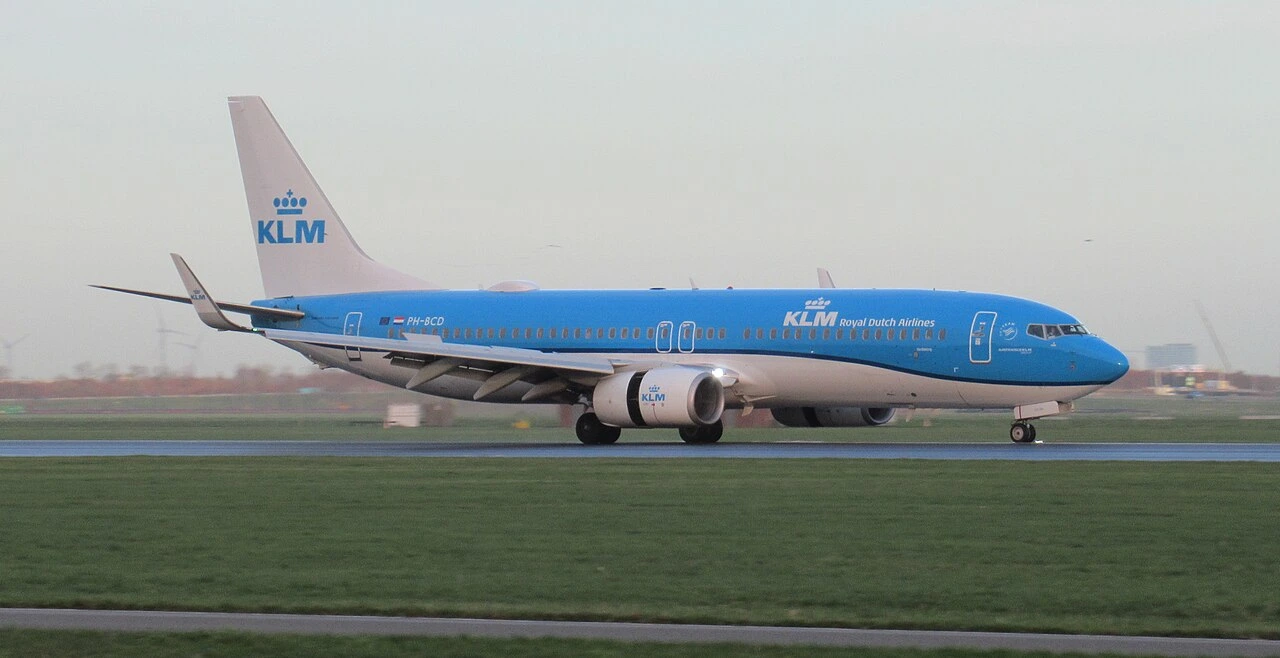
A KLM Royal Dutch Airlines (KL) Boeing 737-800, registered PH-HSE and operating as flight KL1548, was fully evacuated and subjected to an exhaustive security search at Málaga-Costa del Sol Airport (AGP) on the evening of Saturday, May 10, 2026, after a passenger set up a personal Wi-Fi hotspot bearing the name “Allahu Akbar — there is a bomb on board”, the NL Times reported.
The aircraft, scheduled to depart for Amsterdam Airport Schiphol (AMS) at 20:30 local time, did not clear Spanish security protocols until 00:42 the following morning, ultimately landing in Amsterdam at approximately 03:00 — three and a half hours behind schedule. No explosive device or suspicious material of any kind was found aboard the aircraft or in the passengers’ checked baggage.
KLM confirmed the incident in a statement to Dutch regional broadcaster NH, saying the carrier had “always take[n] such reports extremely seriously” and had “implemented the appropriate safety measures in close cooperation with the local authorities.” The airline has not publicly identified the passenger responsible for the hotspot name, nor disclosed whether formal charges have been pursued.
Under Dutch law, making a hoax bomb threat carries a maximum custodial sentence of up to four years and a financial penalty exceeding €25,000. In addition, separate Spanish criminal statutes governing offences committed on Spanish soil may also apply. Some passengers aboard the aircraft were reportedly so shaken by the incident that they declined to continue on the flight once clearance was granted.
“There is a Bomb on Board” Wi-Fi and the Four-Hour Delay
The incident unfolded during the pre-departure phase at AGP, just minutes before the planned boarding call. Security services learned of the threatening message just before boarding on the night of Saturday to Sunday, triggering an immediate activation of anti-terror measures. KLM crews, upon noticing the incendiary Wi-Fi network name visible to any passenger scanning for available connections, immediately alerted the Spanish security authorities rather than attempting to handle the matter internally.
All passengers were instructed to leave the aircraft while security teams carried out a full inspection of the plane. Specialist TEDAX agents from the Guardia Civil arrived at the scene and performed exhaustive searches inside the plane as well as on all checked baggage belonging to those about to board. Passengers stayed on the ground for several hours while teams examined every compartment, bag, nook and cranny. Extra verification procedures were also conducted in close coordination with airport staff and KLM personnel to confirm that no risk existed for anyone on board or in the terminal buildings.
The flight KL1548 was scheduled to depart from Málaga for Amsterdam Airport Schiphol, but was unable to leave following the security alert. Guardia Civil officers moved quickly to isolate the Boeing 737-800, which had been scheduled to depart at 8.30pm but finally left at 12.42am once all checks had concluded.
A German-language account of the incident, reported by De Telegraaf and summarised by Headtopics, noted that some passengers praised the KLM crew for their composure throughout: one traveller was quoted as saying crew members “calmed people down, gave regular updates, and looked after us well” during the prolonged standby period.
KLM’s Statement and the Possible $25,000 Fine
In a terse statement to Dutch regional broadcaster NH, KLM said it had acted in accordance with established safety procedures:
“We always take such reports extremely seriously and implemented the appropriate safety measures in close cooperation with the local authorities.”
The airline did not address the question of whether it was seeking compensation from the responsible individual, nor whether Spanish authorities had made any arrest at the time of publication.
The legal consequences facing the individual responsible — once identified — are potentially severe under multiple jurisdictions. Making hoax bomb threats is a crime in the Netherlands that can be punished by up to four years in jail or a fine of more than €25,000, and passengers found responsible are also likely to be banned from flying again.
The incident occurred on Spanish territory, however, meaning Spanish criminal law governing aviation security offences will take precedence. Spanish authorities can prosecute individuals who make bomb threats on aircraft, and similar cases in recent years have resulted in fines exceeding €100,000 and potential prison sentences.
Civil liability for the costs of the security response — encompassing TEDAX deployment, airport lockdown operations, and the airline’s own operational disruption — represents an additional financial exposure that courts in comparable cases have imposed upon convicted offenders.