Korean Air (KE) will restore daily service between Seoul Incheon International Airport (ICN) and Soekarno-Hatta International Airport (CGK) in Jakarta from June 2026, bringing its weekly frequency on the route back to seven rotations after a period of enforced contraction to just twice weekly, Miami Herald reported. This will mean that from June, the route will see three South Korean carriers operating simultaneously: Korean Air at seven weekly frequencies, T’way Air at five, and Asiana Airlines at a daily service.
Korean’s previously reduced frequency of twice weekly was a direct consequence of the regulatory remedies attached to Korean Air’s US$1.3 billion acquisition of Asiana Airlines (OZ), which was completed in December 2024: the Korea Fair Trade Commission (KFTC) mandated that Korean Air and Asiana transfer airport slots and traffic rights on 34 routes — including Incheon–Jakarta — to third-party carriers in order to prevent a combined market dominance exceeding fifty percent on those corridors.
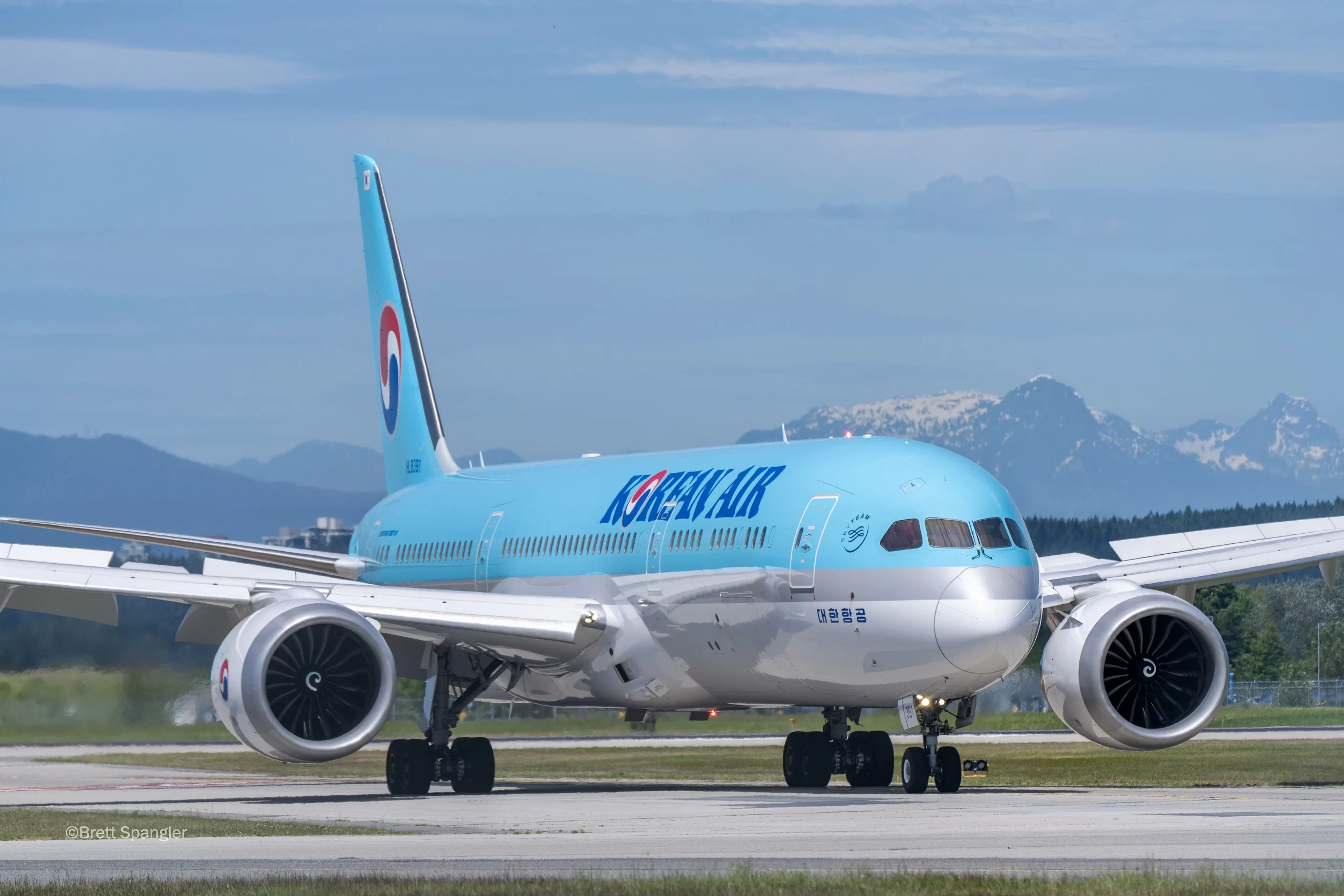
Korean Air’s ICN-GCK Route: Timings, Aircraft, and Codeshares
Under the revised schedule confirmed by Korean Air, the carrier’s Incheon–Jakarta flights will depart ICN at 19:40 and arrive in Jakarta at 00:45 the following morning local time. Return flights will depart CGK at 02:15 and arrive at Incheon at 11:30.
The early-morning departure from Jakarta and the red-eye arrival in the Indonesian capital are characteristic of long-haul schedule patterns that prioritise the maximisation of aircraft utilisation — minimising ground time at the overnight station — while offering corporate travellers arriving in Incheon a morning arrival that permits same-day onward connections across Korean Air’s domestic and international network at ICN.
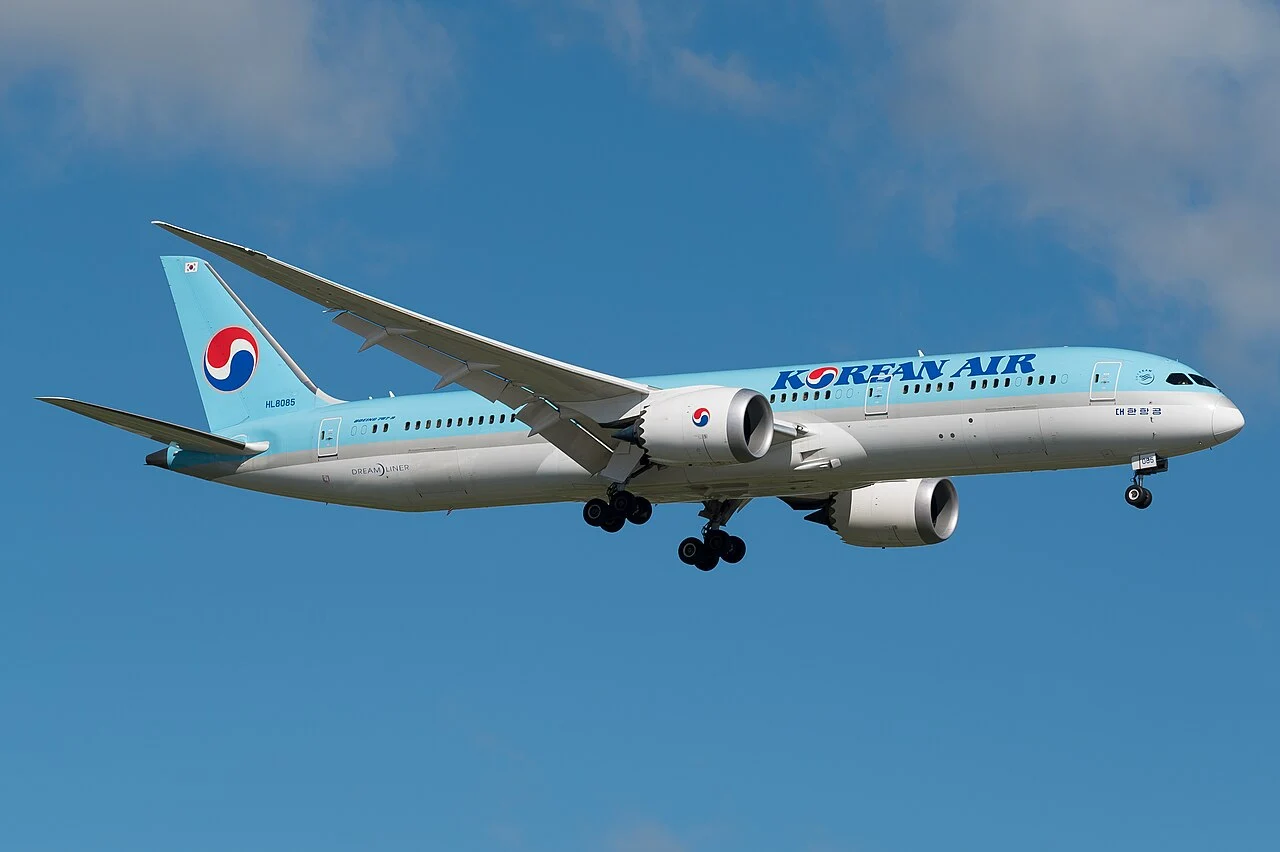
Korean Air is deploying Boeing 787-10 Dreamliner aircraft on the restored daily service, a widebody configured in the carrier’s standard long-haul layout with Prestige Class (business class) flatbeds and Economy seating.
The 787-10 is a natural fit for the approximately 6,600-kilometre sector: its GE9X-powered fuel profile and extended range capability are well-matched to the route’s block time of approximately seven hours and twenty minutes:

Why the Jakarta Route for Korean Air?
Unlike leisure-heavy destinations such as Bali or Bangkok, Jakarta is primarily a business travel market driven by the substantial Korean commercial presence in Indonesia, which is one of the world’s largest economies by purchasing power parity and a major recipient of South Korean foreign direct investment in sectors including:
- automotive manufacturing
- petrochemicals
- consumer electronics
The Korea Times reported that the Jakarta route was specifically flagged by the KFTC as a competition-sensitive corridor, precisely because the combined Korean Air–Asiana entity would have commanded a dominant share of Korean capacity into Indonesia — a market generating the kind of high-yield, recurring corporate traffic that full-service carriers depend upon for premium cabin revenues.
The demand data corroborates the route’s commercial significance. UPI reported that passenger volumes on Incheon–Jakarta reached 121,642 in Q1 2026, a 4.5% increase year-on-year.
The Jakarta route’s profile contrasts sharply with more leisure-oriented corridors where Korean Air has shown greater willingness to cede ground to low-cost carriers. Business Traveller, in an interview with Korean Air Senior Vice President Jin Ho Lee, quoted him as saying the merged entity would offer “more flight options, improved schedules, and enhanced service — all under the trusted Korean Air brand” to business travelers in cities including Jakarta.
T’way is Korean’s Competitor and the South Korea’s First LCC on the Route
T’way Air’s April 29, 2026 launch on the Incheon–Jakarta route marked a historic inflection point in Korean aviation: it was the first time any South Korean low-cost carrier had operated a scheduled service between Incheon and Indonesia’s capital. The Seoul Economic Daily reported that the carrier began accepting reservations for the route on February 10, 2026, with the service operating five times weekly on Mondays, Wednesdays, Fridays, Saturdays, and Sundays.
T’way Air is deploying Airbus A330-300 widebody aircraft configured with 347 seats — 12 in business class and 335 in economy — a layout that blends the seat density of a low-cost carrier with the medium-haul widebody capability required for a seven-hour sector.
T’way Air’s Jakarta flights depart ICN at 15:10 and arrive at CGK at 20:10 local time, with return flights leaving Jakarta at 21:50 and arriving at Incheon at 07:05 the following morning. The daytime outbound schedule represents a meaningfully different offering from Korean Air’s 19:40 departure, and analysts expect the two carriers to occupy distinct passenger segments rather than cannibalise each other directly as T’way would cater to budget travelers while Korean Air would be focused on travelers that like legacy airlines.

.jpg)
