Qatar Airways (QR) passengers connecting through New York no longer need to collect their checked bags and hand them back to an agent before boarding their next flight. U.S. Customs and Border Protection (CBP) confirmed on Friday, July 24, 2026, that it has activated remote baggage screening for the airline’s nonstop route between Hamad International Airport (DOH) in Doha and John F. Kennedy International Airport (JFK) in New York. The new program, called International Remote Baggage Screening (IRBS), reviews checked bags before the aircraft lands so officers can clear them without a manual recheck step at JFK.
The change was first reported by Paddle Your Own Kanoo, which noted that connecting passengers will no longer have to collect their baggage at the carousel just to hand it straight back for their onward flight. It applies only to bags that pass remote inspection, and it forms part of a wider modernization drive at JFK’s New Terminal One, where CBP, Qatar Airways, and terminal operators have been jointly rebuilding how international connections work.
The change is narrow in scope but useful in practice. Eligible travelers on the Doha-JFK sector can now move from arrival to their next gate without a detour to the baggage hall, a shift that CBP and outside reporting describe as saving up to 45 minutes on a tight connection.
How International Remote Baggage Screening Works at JFK
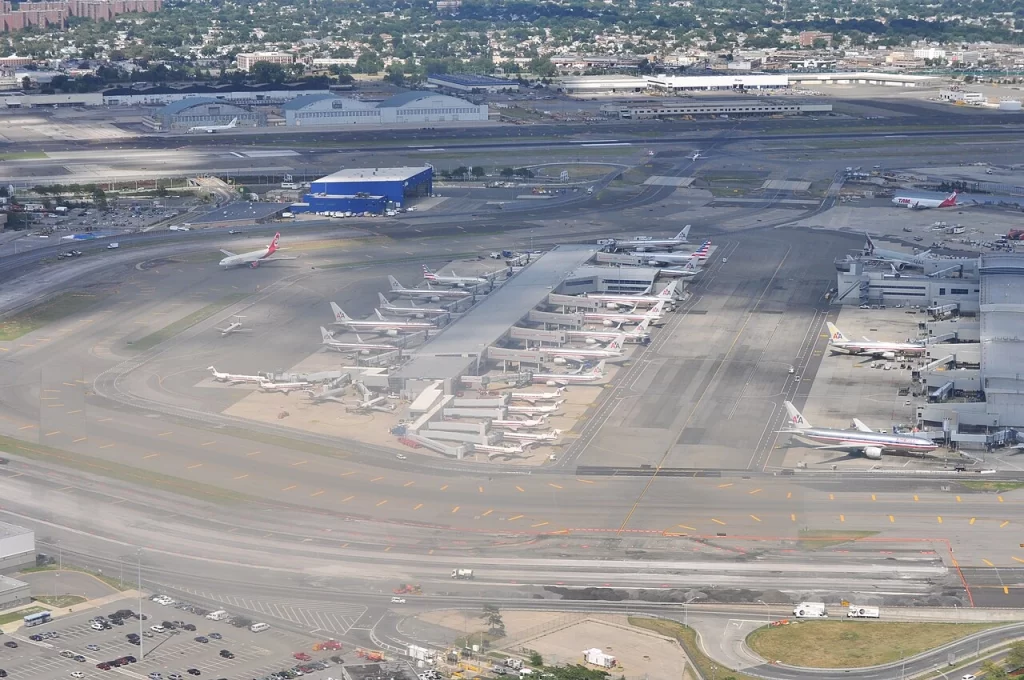
Under the older process, passengers connecting onward within the United States had to clear immigration, collect their checked bags at the carousel, present them for customs inspection if selected, and then recheck the bags before heading to their next gate. That sequence exists because checked baggage must stay available for CBP inspection once it reaches the country.
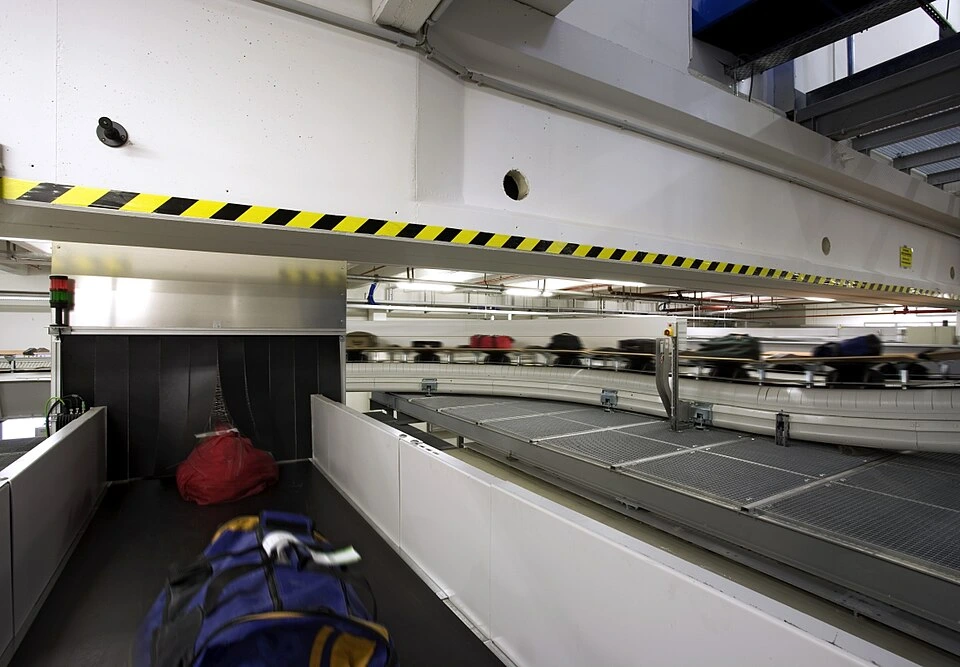
IRBS removes most of that friction. Bags checked in at Doha are X-rayed before the flight departs, and CBP officers review those images remotely while the aircraft is still in the air. Bags that clear inspection stay inside the airport’s baggage system and move automatically toward the connecting flight instead of reaching the carousel.
Passengers still complete the usual immigration, customs, and TSA screening steps. Only bags flagged for closer inspection get pulled aside, and those travelers follow the normal claim-and-recheck routine.
Why CBP Picked the Doha to JFK Route First
CBP built the new process together with Qatar’s Ministry of Interior, Qatar Airways, and New Terminal One, according to the agency’s own release. Executive Assistant Commissioner Diane Sabatino said the initiative reflects CBP’s commitment to “advancing innovative solutions that enhance both security and the traveler experience.”
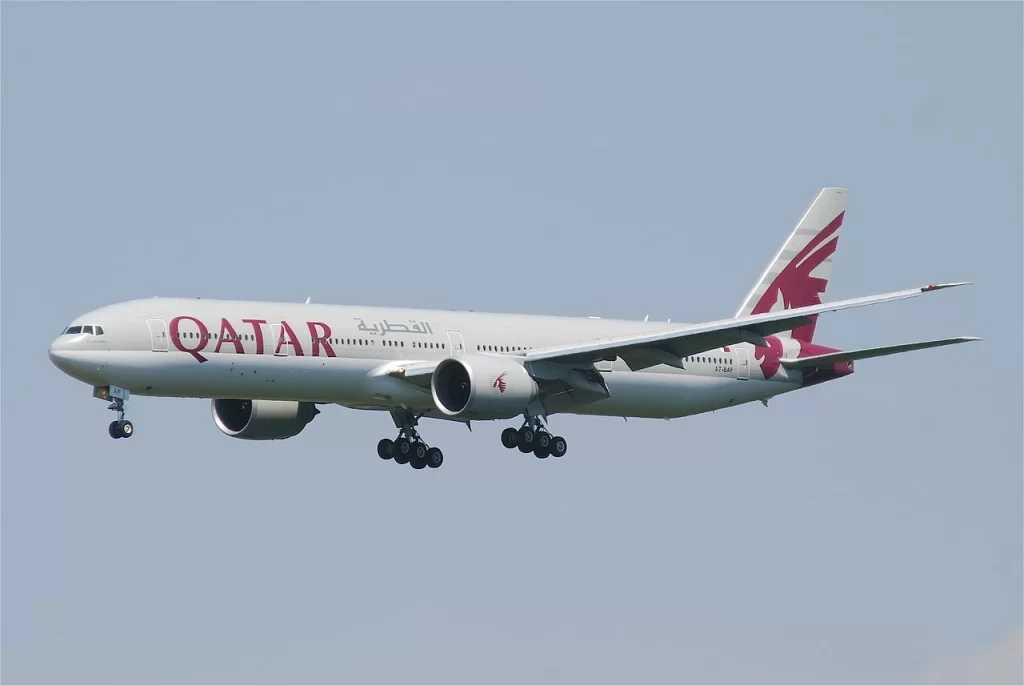
Doha to JFK was a natural starting point. Qatar Airways already flies the nonstop widebody route daily, and Gulf carriers have a track record of piloting passenger-facilitation technology with US authorities. IRBS is currently running on this single route only.
The Doha-JFK launch is not CBP’s first attempt at remote screening. United Airlines piloted a similar process on Sydney to San Francisco flights in September 2025, and American Airlines extended it to Sydney to Los Angeles the following April. Qatar Airways is the first Middle Eastern carrier to join the program.
CBP has not published passenger volumes or performance data for the Doha-JFK deployment, and it has not confirmed which route joins next.
New Terminal One’s $19 Billion Tech Push Behind the Program
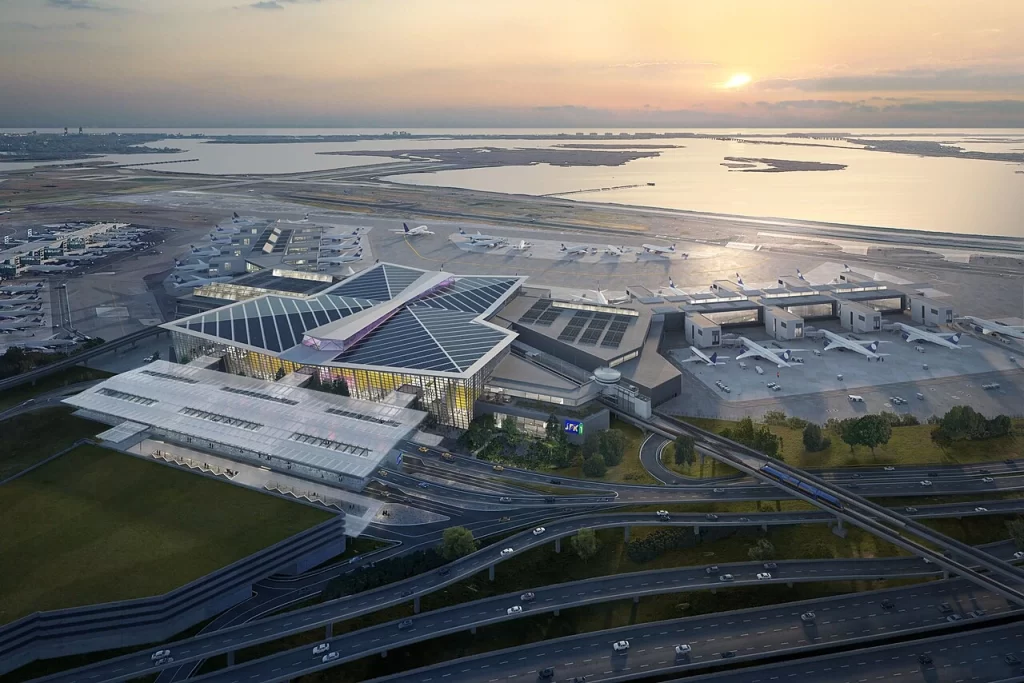
The Doha-JFK flights land at New Terminal One, the newest building inside the Port Authority of New York and New Jersey’s broader rebuild of JFK. That rebuild is a $19 billion plan covering two new terminals, two modernized terminals, and a redesigned roadway network, part of a technology partnership that named Tata Consultancy Services as the facility’s strategic innovation partner.
That partnership covers passenger processing, baggage handling, and cybersecurity systems. New Terminal One also rolled out Enhanced Passenger Processing with CBP in February 2026, a biometric system for verifying returning citizens.
Qatar Airways itself is part of that physical shift. The carrier is moving its JFK operations out of the older Terminal 8 and into New Terminal One, whose first phase covers 14 gates as part of a wider rollout that will eventually reach 23. IRBS was deployed alongside that transition rather than as a standalone add-on.
Timing is also a factor, since JFK expects record international volumes in 2026 as New York co-hosts matches for the FIFA World Cup. IRBS fits the terminal’s wider pattern of investment in automated, data-driven processing rather than one-off upgrades to older systems.
Qatar Airways’ Wider Network Bets from Libya to Damascus
The JFK baggage change lands during an active stretch for Qatar Airways’ network planning team. The carrier received approval in July 2026 to open a local branch in Libya, a step toward ending a 12-year suspension of flights to Tripoli. No resumption date for that route has been confirmed yet.
Qatar Airways has also pushed into other fragile markets this year, switching to larger 777 widebody jets on its Damascus service. At the same time, the airline has cut or suspended 13 destinations from Doha, with six carrying no confirmed return date. Group CEO Hamad Al-Khater, who took the role in December 2025, told the IATA Annual General Meeting in June 2026 that demand was recovering faster than expected, pointing to “rising flows across China and Africa.”
How JFK Baggage Rules Now Differ Across Airlines
JFK has seen more than one baggage-related change this year, and not all of them make travel easier. Delta Air Lines (DL) introduced a no-bag policy inside the dining area of its Delta One Lounge at JFK in March 2026, requiring guests to check larger carry-on items before entering the restaurant, following what staff described as a “very serious incident”.
The Qatar Airways change moves the opposite way, since it removes a step rather than adding one. It also differs from fare-based baggage changes elsewhere in the industry, such as IndiGo (6E)‘s new cabin-baggage-only fare, IndiGo Lite, which lets passengers pay less by giving up checked baggage entirely.
What Eligible Passengers Should Expect on Arrival
Qatar Airways has not published detailed eligibility rules for which passengers or bags qualify for the bypass. Based on how CBP has described the program, connecting travelers can expect the following:
- Standard immigration, customs, and TSA screening steps still apply to every passenger
- Only bags cleared by remote X-ray review skip the claim-and-recheck step
- Bags selected for further inspection still follow the normal claim process
- The bypass currently applies only to the nonstop Doha-JFK route
Travelers with tight connections should still build in a time buffer. CBP has not disclosed what share of bags typically get pulled aside for inspection, and the 45-minute estimate is a general figure rather than a guarantee for every passenger. Those flying on separate tickets, rather than one itinerary booked through Qatar Airways, should confirm with the airline whether their bags are checked through to the final destination.

.jpg)


.jpg)


