Nepal’s domestic airlines lost more than 335,000 passengers in the first half of 2026, according to data reported by New Business Age. The drop came after Nepal Oil Corporation (NOC) raised aviation turbine fuel (ATF) prices to historic highs starting in April, pushing fares up by as much as 40 percent on some routes. The main carriers involved are Buddha Air (U4), Yeti Airlines, and Shree Airlines (SHA), all of which fly out of Tribhuvan International Airport (TIA), Kathmandu.
The fuel spike traces back to the war between the United States, Israel, and Iran, which disrupted oil shipments through the Strait of Hormuz. Nepal, a landlocked country with no fuel reserves of its own, felt the shock almost immediately. While domestic travel fell through the spring and early summer, international arrivals told a different story: after a two-month lull, foreign visitor numbers bounced back strongly by June 2026, buoyed by demand from India, the United States, and China.
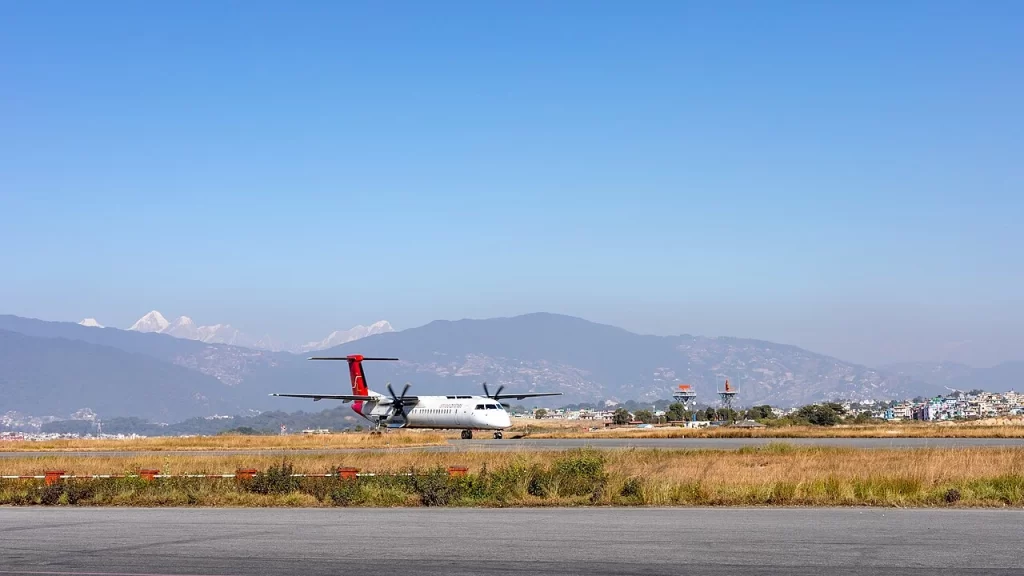
Domestic Passenger Traffic Falls By 335,000 In The First Half Of 2026
Nepal’s domestic airlines and the Civil Aviation Authority of Nepal (CAAN) compiled data showing that internal air travel slid steeply between January and June 2026. The decline forms part of a larger annual drop, since domestic passenger numbers across the full 2025-26 fiscal year, which ended on July 16, fell by more than 540,000 compared to the previous year.
Monthly figures show how sharply the slide accelerated once fuel costs spiked. Passenger volume fell 10 percent in mid-February to mid-March, then 17 percent the following month, then 33 percent and 34 percent in the two months after that. Yubaraj Bista, chief business officer at Yeti Airlines, said the direct shock of the international energy crisis hit the domestic sector squarely during this period.
Almost every domestic airport recorded a drop. Simara saw the steepest decline at 24 percent, and Bhairahawa followed close behind at 22 percent. Pokhara, Nepalgunj, Dhangadhi, and Surkhet all posted double-digit declines too.
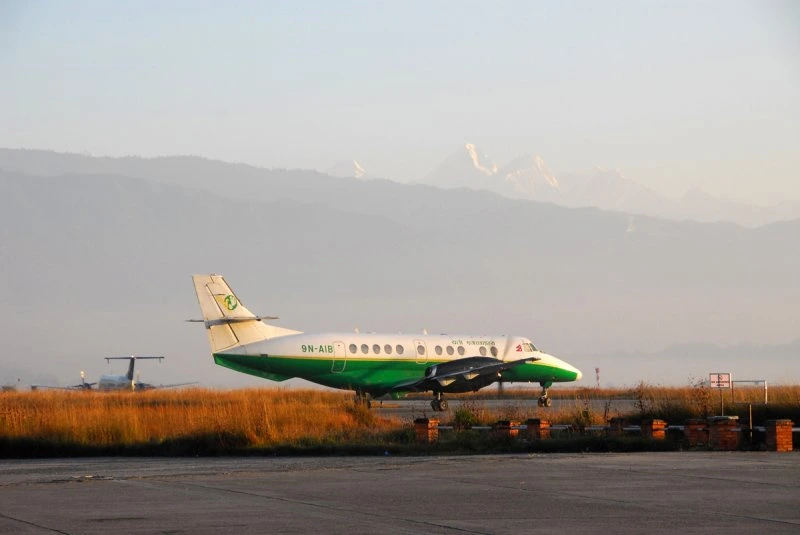
Jet Fuel Prices Surge as Iran War Disrupts Nepal’s Fuel Supply
The root cause of the passenger slump lies in the fuel market. NOC raised aviation fuel prices for domestic carriers by 97.6 percent in April, taking the rate to Rs 257 per litre, while international jet fuel in Kathmandu jumped 77.6 percent to $1,716 per kilolitre. Both figures marked new historic highs, surpassing the previous records set in 2022.
Nepal’s fuel crisis followed the outbreak of war in Iran, which cut into global supply routes and drove up prices worldwide. Manoj Kumar Thakur, spokesman for NOC, explained the country’s exposure this way: “Aviation fuel prices have increased. We are a landlocked country and we are fully dependent on India for petrol, diesel and LPG. The only way out is reducing consumption.”
By May, the situation had worsened further. Fuel and related operating costs climbed to 55-60 percent of total airline expenses, well above the roughly 29 percent that fuel typically makes up for airlines worldwide, according to IATA figures. Domestic carriers warned they could be forced to suspend some services if the government did not step in with relief.
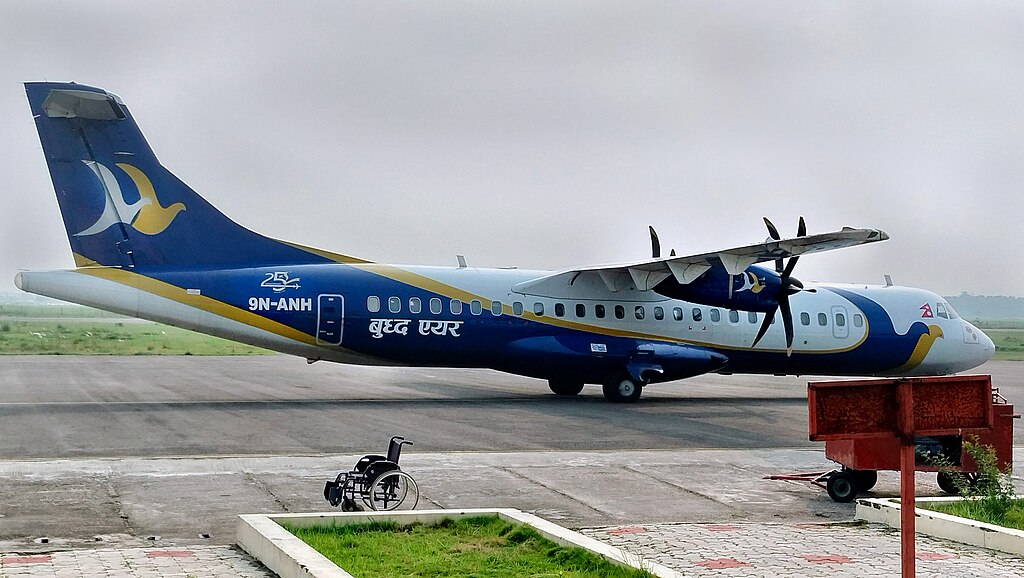
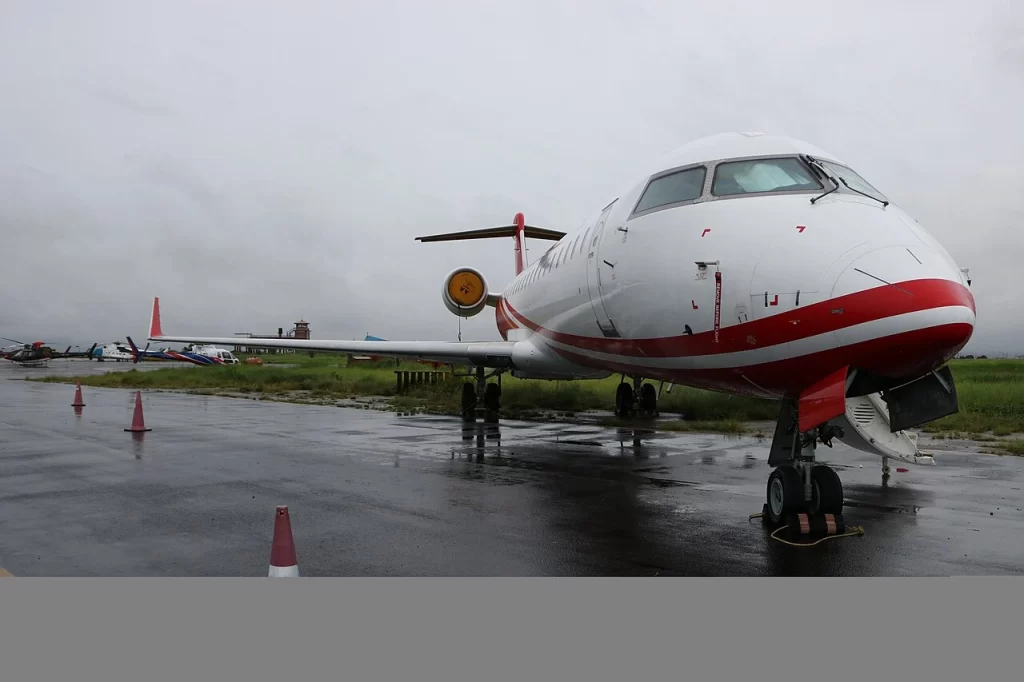
Photo: Suyash Dwivedi |Wikimedia Commons
Buddha Air and Other Carriers Cut Flights at Tribhuvan International Airport
Buddha Air (U4), Nepal’s largest private carrier, absorbed the biggest share of the damage. The airline’s daily passenger count fell by roughly 1,500 from its usual 8,000, and it cut at least 25 percent of its scheduled flights due to weak demand. Birendra Bahadur Basnet, the airline’s managing director, said fuel had gone from a quarter of costs to half: “Fuel alone used to account for 25-30 percent of the airline’s total costs. Now, it’s 50 percent.”
Despite the drop, Buddha Air still held onto the largest share of the domestic market, at 58.3 percent. Yeti Airlines lost roughly 93,000 passengers, a 9 percent decline, while Shree Airlines (SHA) proved more resilient with only a 6 percent drop, even as its daily traffic fell from about 3,000 to 2,000 passengers.
The strain has not stayed confined to domestic operations. Nepal Airlines (RA) cancelled its scheduled Kathmandu-Doha rotations in late April, citing an abrupt closure of Middle Eastern airspace linked to the same conflict driving up fuel costs. The cancelled flights connected Tribhuvan International Airport (TIA), Kathmandu with Hamad International Airport (DOH), Doha, a route that serves thousands of Nepali migrant workers heading to the Gulf.
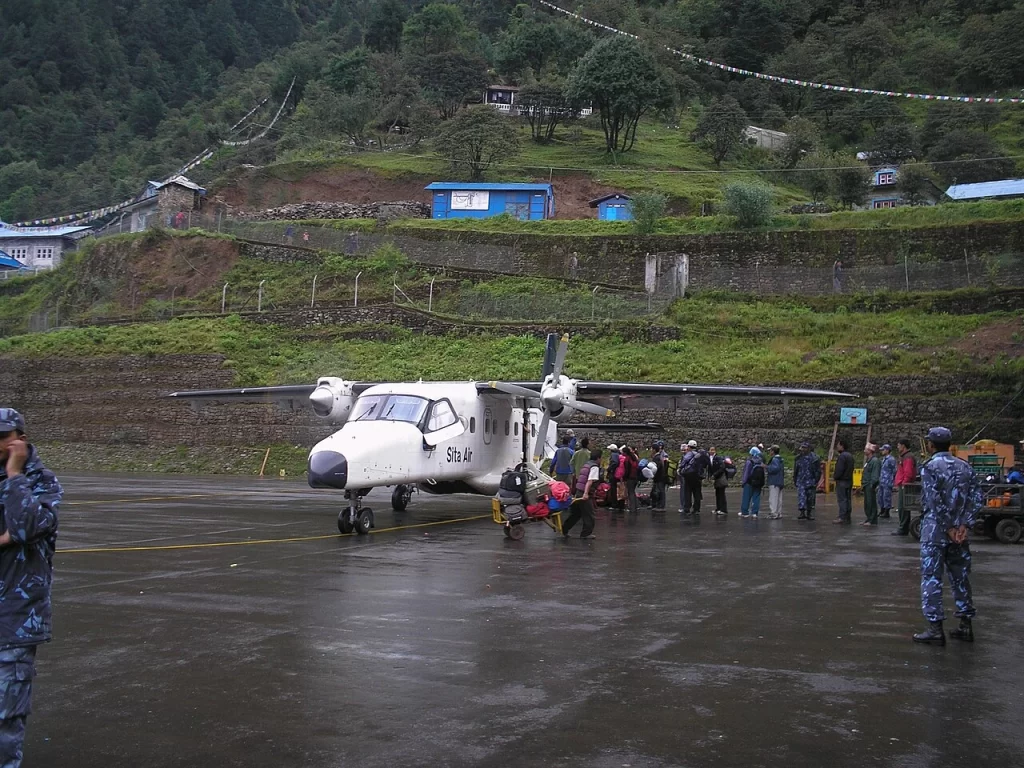
International Travel Rebounded After a Two-Month Slowdown
While domestic travel weakened, international arrivals followed a different curve. Nepal recorded a 7.3 percent drop in foreign tourist arrivals in April 2026 compared to the same month a year earlier, reflecting the same global travel disruption tied to the Middle East conflict. That slowdown extended through much of the spring.
By the second quarter, the trend reversed. Nepal welcomed 620,453 international tourists between January and June 2026, a 7.4 percent increase over the same period in 2025, according to Nepal Tourism Board figures. June alone brought in over 91,000 visitors, a 19.5 percent jump year-on-year, with South Asian travelers making up more than half of all arrivals.

Government Responded with Fuel Surcharge Cuts and Airport Fee Waivers
CAAN adjusted domestic fuel surcharges multiple times as NOC’s prices moved. By July 1, NOC had cut aviation fuel prices by Rs 40 per litre, a 14.87 percent reduction from Rs 269 to Rs 229 per litre, and CAAN passed the savings through to fare ceilings the same day.
The government has also tried to support the aviation sector through other channels:
- Renewing fee waivers for landing, parking, and air navigation charges at Pokhara International Airport (PHH) and Gautam Buddha International Airport (BWA) through mid-September 2028
- Maintaining a 50 percent discount on ground handling charges at both airports
- Considering the Airlines Operators Association’s request for a 20 percent income tax exemption for airlines classified as a special industry
The extension of airport fee waivers is tied partly to hopes that Flydubai’s new Dubai-Pokhara route, launching in September 2026, will finally give Pokhara its first sustainable scheduled international service. Rajkumar Chhetri, a former CAAN Director General, cautioned that fee discounts alone rarely decide an airline’s route map, since operational costs and commercial sustainability weigh more heavily on such decisions.


_Taking_off_from_Tribhuvan_International_Airport_(TIA)-070A2292.jpg)


-070A2336.jpg)