
The United States of America tops the list of the nation with the highest number of fatal civil airliner accidents from 1945 until now – the nation has seen 870 accidents and 10846 fatalities (133 are ground fatalities). Next in line is Russia, the nation with which the United States of America was at loggerheads with, during the Cold War, sparring a space race, of the kind we’ve not seen. Yet, when US News produced a list of the most dangerous nations for flying, the US was nowhere to be seen, while Russia was draped with glaring red hue. Russia was lumped alongside Nepal, a country that houses the most dangerous airport in the world.
The Global Count: Total Inflight Passenger Fatalities to Date
The last major passenger civil airliner crash in Nepal took place in 2022 when an ATR-72 operated by Yeti Airlines crashed on its way to Pokhara Airport. This took the lives of all on board. In 2024, a crash of Saurya Airlines’ Bombardier CRJ 200 took the lives of eighteen professionals. In Nepal’s neighboring country of India, the crash of Air India Flight 171 led to 241 fatalities. India also saw the worst mid-air collision in history, the ChakrDadri mid-air collision that took the lives of 349 passengers – a number that Nepal amassed in all its air accidents in the past fifteen years. So, assessing whether flying is safe right now, statistically, tends to give a multiplicity of answers: the safety of air travel varies from country to country, and also according to the type of aircraft you choose to fly with. To make matters more complex, the last two years have seen an extraordinary rise in the number of fatalities in air travel.
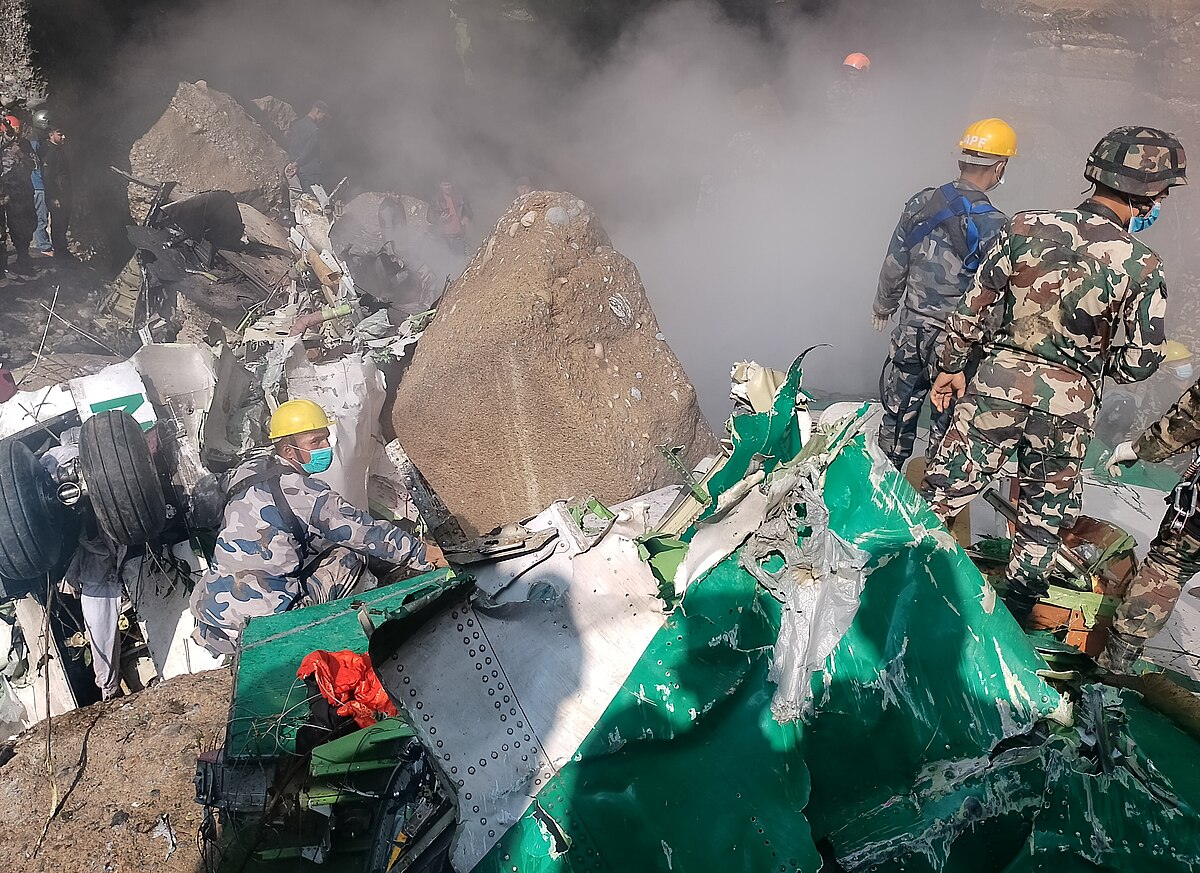
Photo: Bhupendra Shrestha | Wikimedia Commons

2023 was the safest year in air travel, but the subsequent years have proved to be less so
IATA’s review of air accidents in 2023 showed that the year was the safest-ever since flying began, as there were no hull losses or fatal accidents involving passenger jets that year. In the thirty-seven million aircraft movements in 2023, there was only a single fatal accident (involving 72 fatalities) involving a turboprop aircraft. Here are a couple of statistics posted by IATA that highlight the safety that year:
-
The all accident rate was 0.80 per million sectors in 2023 (one accident for every 1.26 million flights), an improvement from 1.30 in 2022 and the lowest rate in over a decade. This rate outperformed the five-year (2019-2023) rolling average of 1.19 (an average one accident for every 880,293 flights).
-
The fatality risk improved to 0.03 in 2023 from 0.11 in 2022 and 0.11 for the five years, 2019-2023. At this level of safety, on average a person would have to travel by air every day for 103,239 years to experience a fatal accident.
Photo: NASA
But the two years that succeded it weren’t capable of replicating the success. 2024 turned out to be the deadliest in commercial aviation in six years. There were 244 on-board fatalities, and the fatality risks doubled (compared to 2023 numbers). The accident rate that year was 1.13 per million flights (one accident per 880,000 flights), as it saw seven fatal accidents in 40.6 million flights, with the number of accidents greater than the five-year average. One thing to note is that two of these fatal accidents took place in conflict zones – Kazakhstan with 38 fatalities and Sudan (a nation under Civil War) with five fatalities.
| Accident Type | 2023 | 2024 | 5-Year Average (2020–2024) |
| Total flights (million) | 38.6 | 40.6 | 31.8 |
| Total accidents | 42 | 46 | 39 |
| Fatal accidents | 1 (0 jet, 1 turboprop) | 7 (5 jet, 2 turboprop) | 5 |
| On-board fatalities | 72 | 244 | 144 |
| Fatality risk | 0.03 | 0.06 | 0.10 |
| Fatality risk – IATA members | 0.00 | 0.08 | 0.03 |
| All accident rate (per 1M flights) | 1.09 (1 every 0.92M flights) | 1.13 (1 every 0.88M flights) | 1.25 (1 every 0.81M flights) |
| All accident rate – IATA members | 0.97 (1 every 1.03M flights) | 0.90 (1 every 1.11M flights) | 0.79 (1 every 1.24M flights) |
| Jet hull losses (per 1M flights) | 0.06 (1 every 17.50M flights) | 0.14 (1 every 7.40M flights) | 0.15 (1 every 7.12M flights) |
| Turboprop hull losses (per 1M flights) | 0.83 (1 every 1.20M flights) | 1.12 (1 every 0.89M flights) | 1.37 (1 every 0.74M flights) |
After two high-profile crashes in the US at the beginning of 2025, the number of fatalities of air accidents became 67- an infinite rise from the previous year, as the nation with the largest number of airports didn’t have a fatal crash the previous year. The crash of Air India compounded the woes, as the crash of AI 171 was almost on par with the number of fatalities in all flights across 2024. And there are four strong months to go.

Photo: NTSB | Wikimedia Commons

Measuring safety of flights through the aircraft type: helicopter vs fixed wing
If someone had asked whether flying was safe during Covid-19, the answer would have been different. After all, the safety of flights would have been correlated to the adoption of distancing, whether sanitary options were well put into place, the access of travel with the use of vaccination cards etc, but in 2025, this has all changed.
But what doesn’t really change is that whether flying is safe or not depends on what type of aircraft you are choosing to fly in and out of. The following data was compiled by AOPA for general aviation operations:
| Category | Number of Accidents | Number of Aircraft | Fatal Accidents | Lethality (%) | Fatalities |
| Non-commercial fixed-wing | 902 | 912 | 136 | 15.1 | 232 |
| Non-commercial helicopters | 69 | 70 | 8 | 11.6 | 17 |
| Commercial helicopters | 35 | 35 | 7 | 20.0 | 16 |
Helicopters, generally, are less safe for flying
Helicopters are often used for much riskier operations, and therefore see a higher crash rates than commercial fixed-wing operations. Take, for example, the fact that many Airbus A350B3 helicopters are deployed for rescue operations in the Everest region of Nepal, with the highest rescue operation being conducted at an altitude of 7,800 meters by an Italian pilot. Helicopters generally have a service ceiling of 7,000 meters, and pilots don’t fly at 7,800 meters. Surendra Paudel, a rescue pilot in Nepal, said that the engine performance of helicopters declines sharply after crossing 7,000 meters, and refrains from operations that are higher than the altitude constraints.
Photo: Alexander Makarov | RIA Novosti archive | Wikimedia Commons

However, helicopter pilot Didier Delsalle landed an Airbus A350B3 at the top of Everest, showcasing the fact that the chopper could fly to almost 30,000 ft, when its altitude ceiling is merely 23,000 ft. Airbus was reticent to allow Delsalle to take the chopper to the top of Everest, for a crash would have plummeted the sales of the chopper.
After helicopter pilot Jean Boulet took an Aerospatiale Lama to an altitude of almost 42,000 ft, setting a record for the highest altitude reached by a chopper, the helicopter suffered an autorotation. AS helicopters undertake such missions, they are bound to suffer greater crashes. The numbers by ExecutiveFlyers reifies this point:
“ The crash rate for helicopters is 9.84 per 100,000 hours, which means that for every hour in the air, helicopters crash approximately 35 percent more often than an average aircraft… There are 12.69 accidents per 100,000 hours when learning to fly a helicopter, compared to 6.08 accidents per 100,000 hours when learning to fly a plane.”

Photo: 자연속으로 into nature | Wikimedia Commons

Helicopters that undergo emergency medical service operations bear the worst brunt of all helicopter operations. Here’s what a report analyzing the crash of EMS helicopters from January 1, 1983, to April 30, 2005, reveals:
“There were 182 helicopter EMS crashes during the 22.3-year study period; 39% were fatal. One hundred eighty-four occupants died: 45% of the 44 patients and 32% of the 513 crewmembers. Fifty-six percent of crashes in darkness were fatal compared with 24% of crashes not in darkness. Seventy-seven percent of crashes in instrument meteorological conditions were fatal compared with 31% in visual conditions. Thirty-nine percent of all deaths occurred in crashes with postcrash fires; 76% of crashes with post crash fire were fatal compared with 29% of other crashes.”
Whether flying is safe right now also depends on the countries you are flying to
In the Himalayan nation of Nepal, there was an esoteric airport by the name of Mingbo. This airstrip was located at an altitude of 15,000 ft and only saw operations for a few months – and that too without the knowledge of, or consent from, the Nepalese government. When a civil aviation inspector flew to this airport (to check its feasibility), he was so shaken that as soon as he got out of the flight, he vomited noisily. The Mingbo airstrip was one of the cheapest aerodromes to have been constructed, and flying in and out of such unrecognized airfields can pose a danger. If you are flying in and out of nations without strict aviation regulations, flying might not be safe. Lukla Airport, which is considered to be the most dangerous aerodrome, also saw crashes in the past when the officers in Lukla didn’t shut down the airport, despite bad weather.
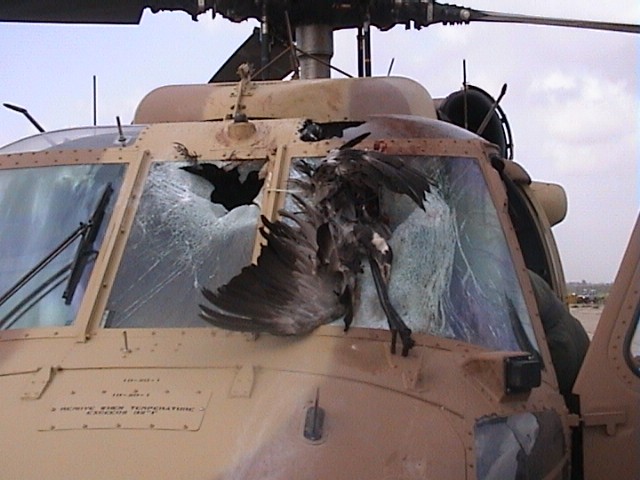

IAF UH-60 after birds strike outside
In the former USSR, many aircraft were not deemed safe. For example, despite the fact that the USSR developed the first supersonic airliner by the name of Tupolev Tu-144, it was prone to a greater number of accidents than its western counterpart, the Concorde. Another of the nation’s groundbreaking marvel, the Tupolev Tu-104, saw almost a thousand fatalities. Reports claim that 2015 was the only year since 1946 that Russia hasn’t seen a fatal air accident, with the most pronounced of the recent one being “a non-commercial plane crash that took the life of “Yevgeny Prigozhin, the head of a Russian mercenary group that was rebelling against military leadership in Moscow”. After the Ukraine-Russia war, EU has imposed a sanction on all aircraft headed to the EU from this nation.
5 most wonderful aircraft destroyed in the Russia-Ukraine war
The European Union has barred several carriers around the globe from flying into European Union, citing safety concerns. One of the other nations that was barred from operating in and out of the EU was Sao Tome and Principe, with the vice-president of the European Commission echoing the following words: “We cannot accept that airlines fly while not complying with international safety standards. This endangers all of us who unknowingly could be on an unsafe plane.”
The United Kingdom also has a list of nations that it has barred from operating in its airspace. One such nation is Iran, which has a partial ban, as Iran Aseman Airlines and Iran Air (with the exception of their Fokker 100 and B747 aircraft) can fly in and out of the UK.
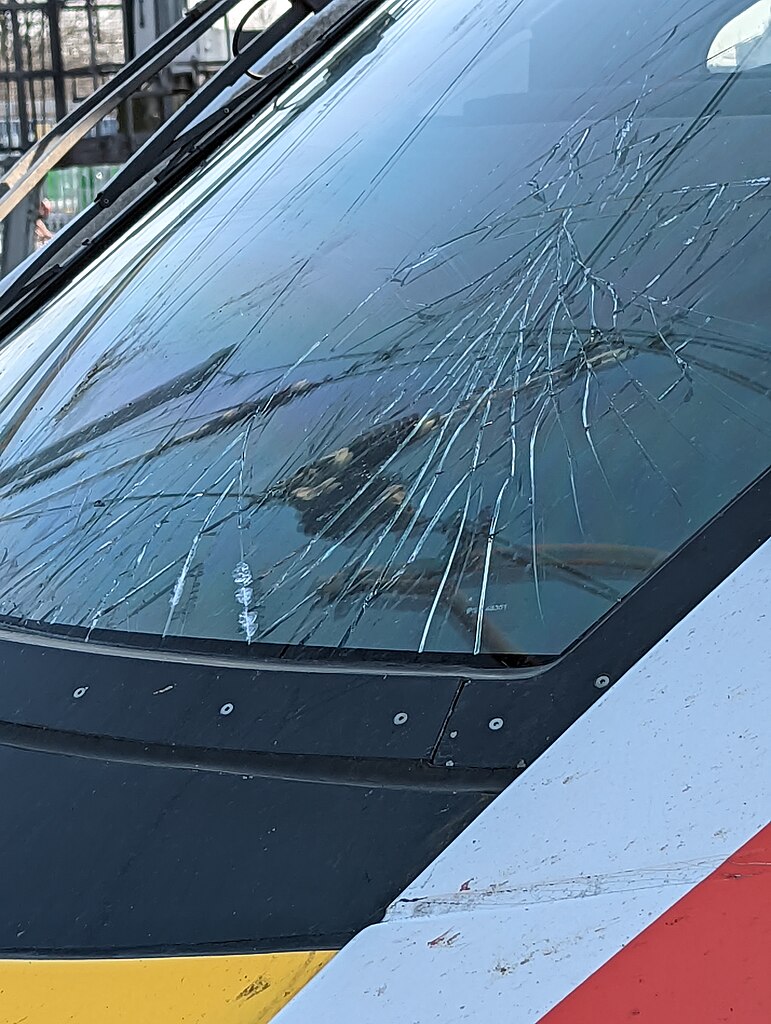
Photo: Bob Harvey | Wikimedia Commons

Countries that are affected by war
One of the lesser talked about issues in the present day about the safety issues related to flying is the fact that many parts of the nation are witnessing some terrible wars. The Israel-Palestine conflict has put the Ben Gurion Airport under a lot of strife. Any aircraft that fly over the airspace of Israel, Palestine, and the Middle East region that is afflicted with conflict might not be safe.
In March 2025, a senior general from Sudan, which is undergoing a civil war and one which is barred by the European Union, was quoted in the BBC to have declared that it would attack an airport in Chad. Violence erupting in such nations is always a threat to safety while traveling via air. And if one is foolish enough to follow the footsteps of Treor Jacobs, a YouTuber who crashed his plane intentionally for a YouTube video, flying might simply not be safe, but put you behind bars.
The other parameters of judging safety of flights
There is research indicating that clear air turbulence is increasing. This phenomenon also led to the death of a person on flight in Singapore Airlines SQ321. Such weather phenomena might also lead to an aircraft experiencing a Dutch Roll, which has led to the crash of an aircraft. The safety of flights is also compromised if an aircraft encounters bird strikes, which can damage the engine severely, so much so that an aircraft might be forced to belly land on the water. As air routes expand into unchartered territories, such incidents might increase. There are a lot of factors that affect aviation safety. But if we are to take historical data, there is absolutely no doubt that air travel has gotten extremely safe over the years, so much so that statistics hinted that if we were to take a flight every day for 55,000 years, only then would an aircraft crash.