On November 12, 1996, at 3:55 PM, a chartered Kazakhstan Airlines aircraft (an Ilyushin Il-76) took off from Shymkent, Kazakhstan, to New Delhi. At the same time, at Delhi’s Indira Gandhi International Airport, a Saudi Airlines Boeing 747 with 312 people on board (passengers and crew combined) was preparing for takeoff.
Air Traffic Controller VK Dutta was on duty that day. He was communicating with both the Saudi and Kazakhstan planes, guiding them. He was the one who gave clearance for the Saudi’s Queen of the Skies to take off. Like on other working days, Dutta saw the two aircraft as blinking dots. However, over the course of his duty, he was to observe the two dots coalesce and ultimately disappear.
This was the worst aircraft accident that took place in India, and the only mid-air collision in the nation’s history. As the airplanes collided in Chakri Dadri, a city that is approximately 60 miles from Delhi, it is also referred to as the 1996 Chakri Dadri mid-air collision. After the collision, the residents of the city saw a bright flash of light in the sky, similar to lightning, followed by the sound of thunder alongside the fall of iron debris.
Little did they know at that time that workers would bury a Muslim victims of the disaster in a mass grave. whilst also preparing 70 funeral pyres for Hindu cremations.
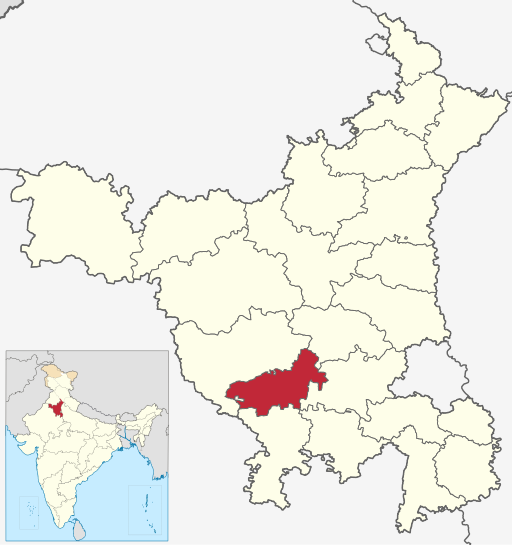
Photo: Ankit2 | Wikimedia Commons
India’s worst plane crash: History and background
According to the International Civil Aviation Organization’s standards, there should be at least 1,000 feet of separation between two planes, with a 14 km safety radius. However, this separation distance was not maintained during the flight. Generally, Air Traffic Controllers (ATCs) get information about the position of the flight from radar systems, which detect objects at a distance using radio waves.
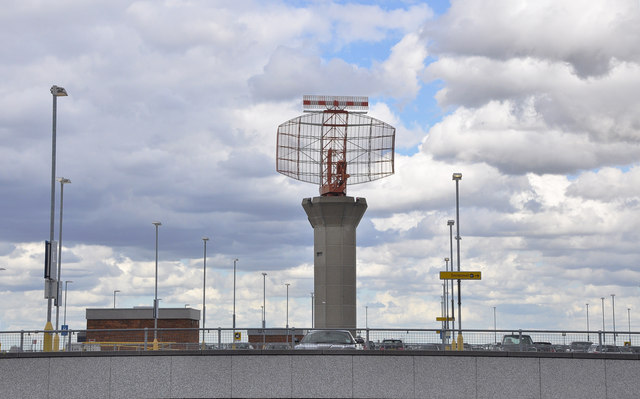
Photo: Mick Lobb | Wikimedia Commons
At the time of the Chakri Dadri mid-air collision, the ATCs relied solely on the primary radar, which wasn’t as reliable as a secondary radar. As primary radar only gave approximate distances between planes, ATCs communicated constantly with pilots, who reported their altitudes. The ATCs then manually calculated and charted the flight paths. As Delhi is an airport where 20-30 aircraft take off in an hour, calculating flight paths was stressful for ATCs. This was also true for ATCs in other busy airports around the world.
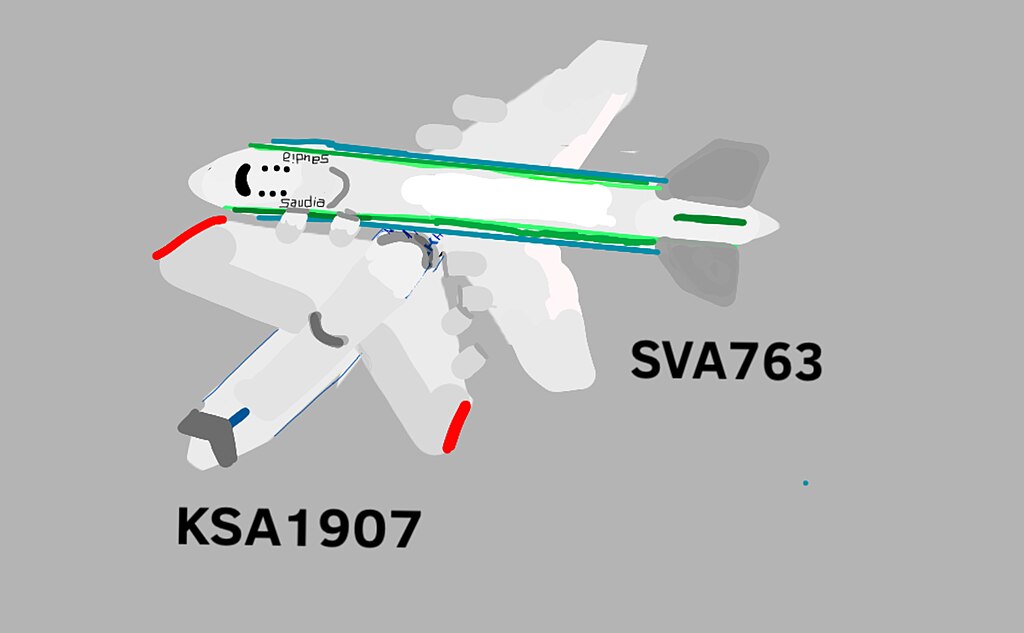
Photo: Ziongarage | Wikimedia Commons
India’s Only Mid-Air Collision in History: Causes and Analysis
There were mistakes from the aircraft of Saudi Airlines as well as Kazakhstan Airlines that led to the collision. Indian officials believed the Saudi airplane had not followed the instructions properly. Even though air traffic controllers instructed them to stay at 14,000 ft, the plane might have climbed to 15,000 ft and crashed into the Kazakh airplane, reported the New York Times.
But Why did Kazakh Airplane Descend below 15,000 ft?
VK Dutta had told the pilots of the Kazakh airplane to not descend below 15,000 ft. The audio recording from the black box showed that the pilots in the Kazakh airplane weren’t even listening (and to add more to it, understanding) properly to what the ATC was saying. A radio operator on the plane was translating the messages from the ATC from English to Russian so that the pilots could understand. It was also found that the pilots in Kazakh Airlines were complaining to each other about the traffic congestion in Delhi.
A 2021 article by The Week noted that the Charkhi Dadri mid-air collision exposed serious communication difficulties involving the Kazakh aircraft. The crew failed to correctly follow the air traffic controller’s instructions in English, causing the aircraft to descend progressively from its assigned altitude of 15,000 feet to 14,500 feet, then 14,000 feet and lower.
The accident also highlighted limitations in the air traffic system of the 1990s. Unlike today, where departing and arriving aircraft generally use separate vertical or lateral traffic flows, the system at the time did not provide the same level of separation.
Communication was further complicated by differences in measurement systems. While most international aviation operations used feet and nautical miles, former Soviet states commonly used the metric system, creating additional opportunities for misunderstandings between flight crews and controllers. Clear, slow and precise communication was therefore particularly important when aircraft from different aviation systems operated in the same airspace.
Not having a secondary Radars
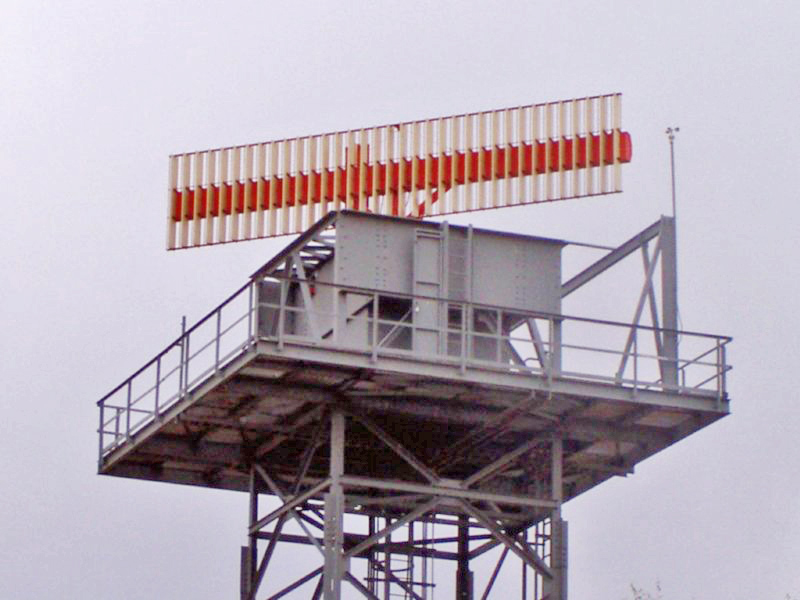
Photo: c.w. | Wikimedia Commons
secondary radars weren’t used at the time, so the ATCs had to rely on communication with the pilots. After this horrific air disaster happened, the Indian government, Indian officials, and aviation experts all around the world learned from this. They implemented many significant changes to the system to prevent such an accident from happening again. And thankfully, till now, such a mishap hasn’t occurred in India again. Since then, airplanes haven’t collided mid-air.
Why mid-air collisions haven’t been observed after this incident?
One of the biggest changes in modern aviation is that there are now separate air corridors for incoming and departing planes. This has contributed greatly to aviation safety. The other reason is the installation of secondary radar in India. For a number of years before the accident, The Directorate General of Civil Aviation, which also has policies on bird strikes, had been recommending to the Indian government to install secondary radars, only for the request to fall to deaf ears.
The Charkhi Dadri collision prompted India to introduce mandatory Traffic Collision Avoidance System (TCAS) requirements for aircraft operating in its airspace. In April 1997, FlightGlobal reported that India planned to require aircraft to carry TCAS II following the November 1996 collision between a Saudi Arabian Airlines Boeing 747 and a Kazakhstan Airlines Ilyushin Il-76 near New Delhi.
Under the initial rules, aircraft with more than 30 seats were required to be equipped with approved TCAS II by December 31, 1998. The regulations also restricted the import of aircraft with more than 30 seats if they did not have the required collision-avoidance equipment.
The requirements were subsequently strengthened. India’s Aeronautical Information Publication specified that aircraft with more than 30 passenger seats or a maximum payload exceeding three tonnes could not operate in Indian airspace without approved TCAS II after December 31, 1998. From January 1, 2003, the requirement was upgraded to TCAS II with Change 7, equivalent to ACAS II.
The rules also applied to aircraft imported after January 1, 2002 for registration and operation within, to or from India, as well as aircraft taken on wet lease by Indian operators. These aircraft had to be equipped with TCAS II with Change 7, reflecting the evolution of India’s collision-avoidance requirements after the Charkhi Dadri disaster.
Aftermath of the Chakri Dadri mid-air collision
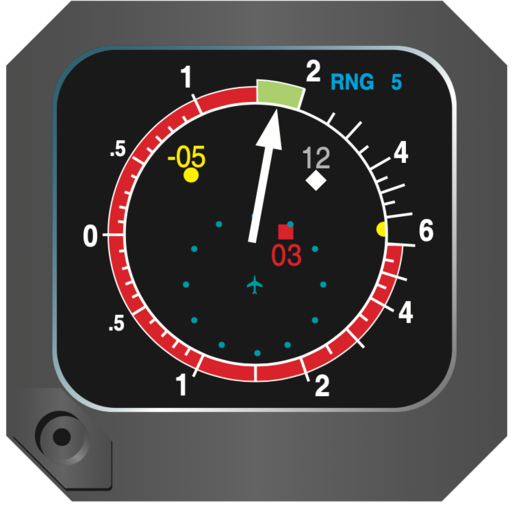
Photo: Federal Aviation Administration | Wikimedia Commons
Implementing the TCAS
TCAS rings an alarm in the airplane if any aircraft gets closer than 1,000 ft of vertical distance. Here are a few of its features:
- TCAS incorporates aircraft’s altitude, bearing, and range, and creates a three-dimensional map that helps identify the presence of other aircraft nearby.
- It has Traffic Advisories, which “are issued to help pilots visualize the imminent threat of an intruder aircraft” and Resolution Advisories that are “issued to ensure avoidance maneuvers are recommended to the pilot“.
- Each aircraft that is equipped with the TCAS system replies to interrogations via 1090 MHz radio frequency, while determining the presence of other aircraft within select ranges via the 1030 MHz.
English language Mandatory for Pilots
The other issue raised by this accident was the language and its nuances. AS mentioned in David Gero’s book “Aviation Disasters”:
“The failure of the Air Kazakhstan transport to maintain its assigned height was attributed to poor command of the English language by its pilots, which caused the misunderstanding between them and the controller, coupled with what the investigative report described as the crew’s ‘lack of professionalism’ and their poor cockpit discipline”
After this accident, In 1998, India raised this issue in front of the international community, in front of the ICAO to “take steps to ensure that air traffic control personnel and flight crews involved in flight operations in airspace where the use of the English language is required, are proficient in conducting and comprehending radiotelephony communications in the English language.” Eventually, India’s plea meant that English was chosen as the international language for aviation communication.
Today, if any pilot wants to fly an aircraft internationally, they must be well-versed in English. The rule is that to fly internationally, English is a must, but if it’s a domestic flight within the country, the rule might be subject to domestic rules.