Initially, it was estimated that construction of Navi Mumbai International Airport would be around $2 billion but by 2021, the cost had risen by $1 billion. Similarly, the cost of building Jewar Airport in Noida has been estimated to be over $3.6 billion. Such exorbitant costs come about because construction of an aerodrome factors in location, size, facilities, infrastructure, and land acquisition costs.
The construction of what was later to be the emptiest airport in the world – Mallata Rajapaksha Airport – was around $200m. Even in the small landlocked country like Nepal, an audacious project called Nijgadh International Airport, which had the construction been complete would have been the third largest airport in the world, was $.5 billion. Had the Mingbo Airport been constructed, it would have been the most dangerous airport in the world, and the one of the cheapest too, as the construction cost merely $900.
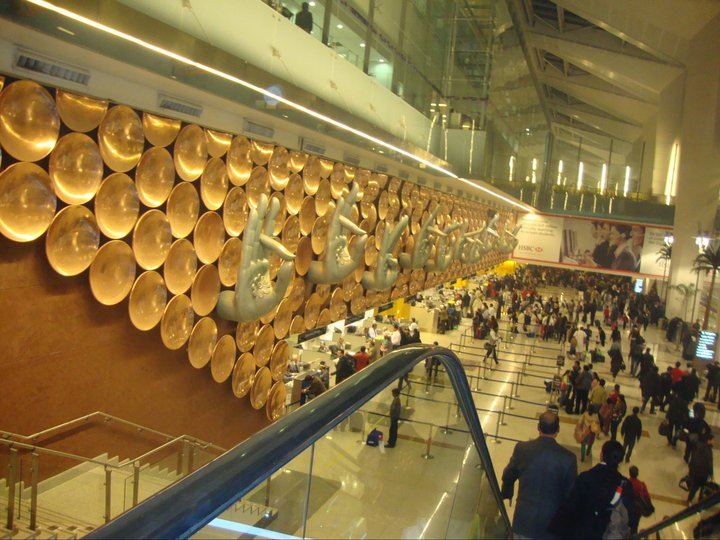
Photo:Vibhor97|Wikimedia commons
But the busiest airports in the world have more than tens of millions of passengers flying through them. And these necessitate world-class facilities. Also, there would be steps taken to reduce the instances of bird strikes, getting the carbon footprint down, among others.
Such technology demands huge investments, making it difficult for private players to fund airports entirely. That’s why, in India, airports are primarily built by the government. However, in some cases, the government introduces Public-Private Partnerships (PPP Model), where a private company collaborates with the government to develop the airport. Under this model, the government retains ownership, while private companies handle operations to facilitate modernization
New Delhi’s Indira Gandhi International Airport (DEL) handles 67 million passengers each year, is owned by the government but operated by “Delhi International Airport Limited.”
Apart from the costs related to building an airport, running an airport also requires significant investment as expenses would include:
- Air Traffic Control Operations
- Airport infrastructure
- Employee salaries
- Runway maintenance and repair
- Utility bills like water, electricity, and gas
- Security, safety provisions, and adherence to environmental regulations
- Marketing, administration, and management
All airports in India operate under the Airport Authority of India (AAI), a government organization to which airports must pay fees. AAI also manages air traffic control, communications, and navigation services. Even airports built under the PPP Model must share revenue with AAI.

Photo: kawanet | Wikimedia Commons
Assessing the Airport Operating Costs in New Delhi Airport
The exact expenditures of the private airport operator are not always publicly available, but people have tried to estimate costs based on revenue and profit figures:
- In 2020, DEL had a profit of ₹13.1 crore. It also generated ₹4,243.62 crore in revenue. We can, therefore, estimate the total annual expenses to be approximately ₹4,230.5 crore.
- Each year, approximately 3.5 crore (35 million) passengers pass through Delhi Airport. Based on these figures, the airport spends an estimated ₹1,200 per passenger*.
*Please note that this is an approximation, as factors like loans and interest payments can slightly affect the data.
Given the exorbitant investments required—both in construction and ongoing operations—airports need to recover costs and generate profits. Let’s explore how they do that.
Getting to the crux of how airports make money?
Airports generate revenue in two primary ways:
Aviation-related revenues of an airport
The fact that around 19 lakh (1.9 million) people traveled abroad from India in 1991 and by the year prior to Covid-19,this number had grown to over 2.5 crore (25 million) annually, shows the massive aviation boom in India.
All airlines operating in and out of an airport need to pay a fee – something that is to your ticket price. These fee would include:
- Landing charges based on the weight of the aircraft
- Parking fee, which depends upon how much time the aircraft has spent on the ground in an airport. [Additional charges for any airplane parked overnight in an airport]. Parking fee depends on the airport’s location, aircraft size, and how long it was at the airport.
- Passenger service fee per passenger [includes the airport security fee, terminal service fee, and fees for passenger facilities. Apart from user development fees, fuel surcharges are also applicable.]
To better understand, let’s take an example. If an Air India Boeing 787 Dreamliner on a domestic lands at Delhi Airport, how much would it be charged? A Boeing 787 Dreamliner (which is deployed on the longest non-stop flights in the world, as well as the longest one-stop flights in the world) has a seating capacity of 250 and weighs 115 metric tons. Let us breakdown the charges on this aircraft:
- Landing charges Rs. 68,945 [landing charge per metric ton of an aircraft is Rs. 599.52]
- Parking fees: Rs. 2,500
- Aerobridge [ to provide a path for passengers to enter the plane] charge Rs. 3,080.
- Passenger Charge: Rs. 1,37,500 [Rs. 550 per passenger on this aircraft that has a 250 x 550**(irrespective of whether the seats are sold out or not)]
- User development fees: Rs. 100 to Rs. 400
- Aviation Security Fee: Rs. 200 per passenger
- Sporadically, some other type of fees are also introduced. For example, DEL introduced “Fuel Throughput Charges,” of Rs. 65.98 per ticket in 2021.
** The figure is rounded off to 250.
Estimates have it that half of the amount an airport spends per passenger is recovered through these charges. Also, the charges for the passengers are the same – irrespective of whether they are economy flyers or are traveling in business class.