
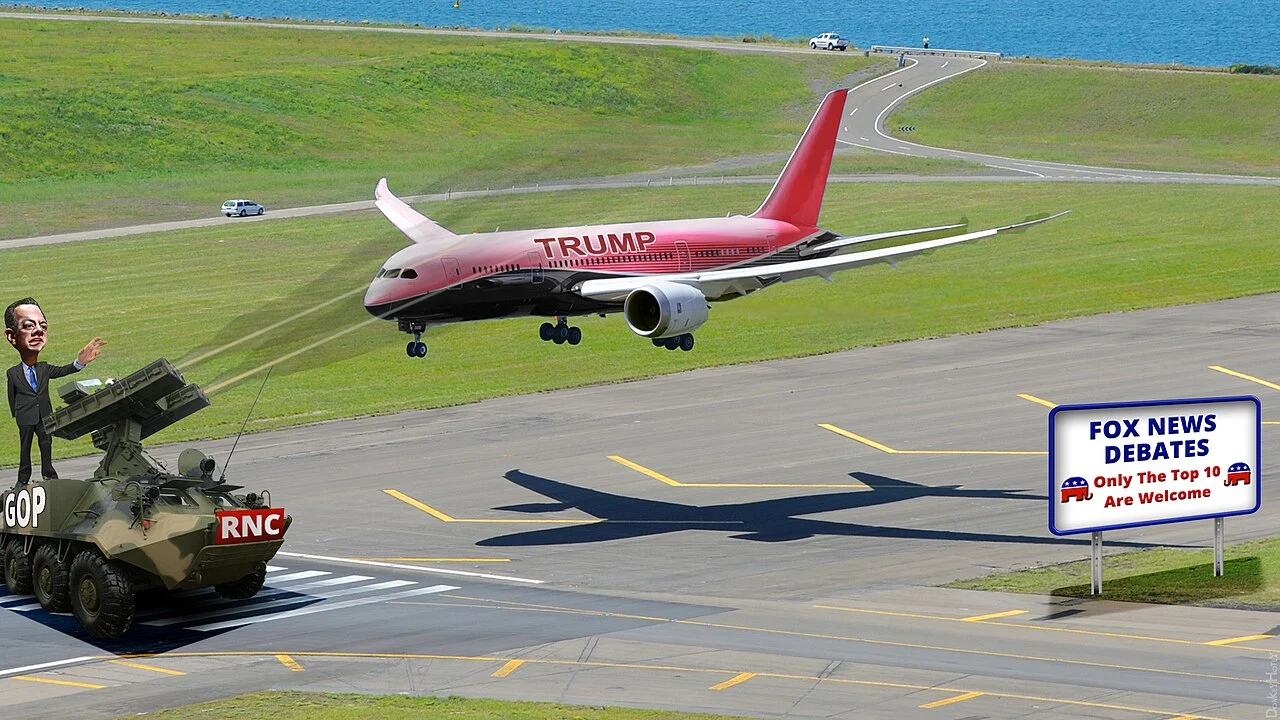
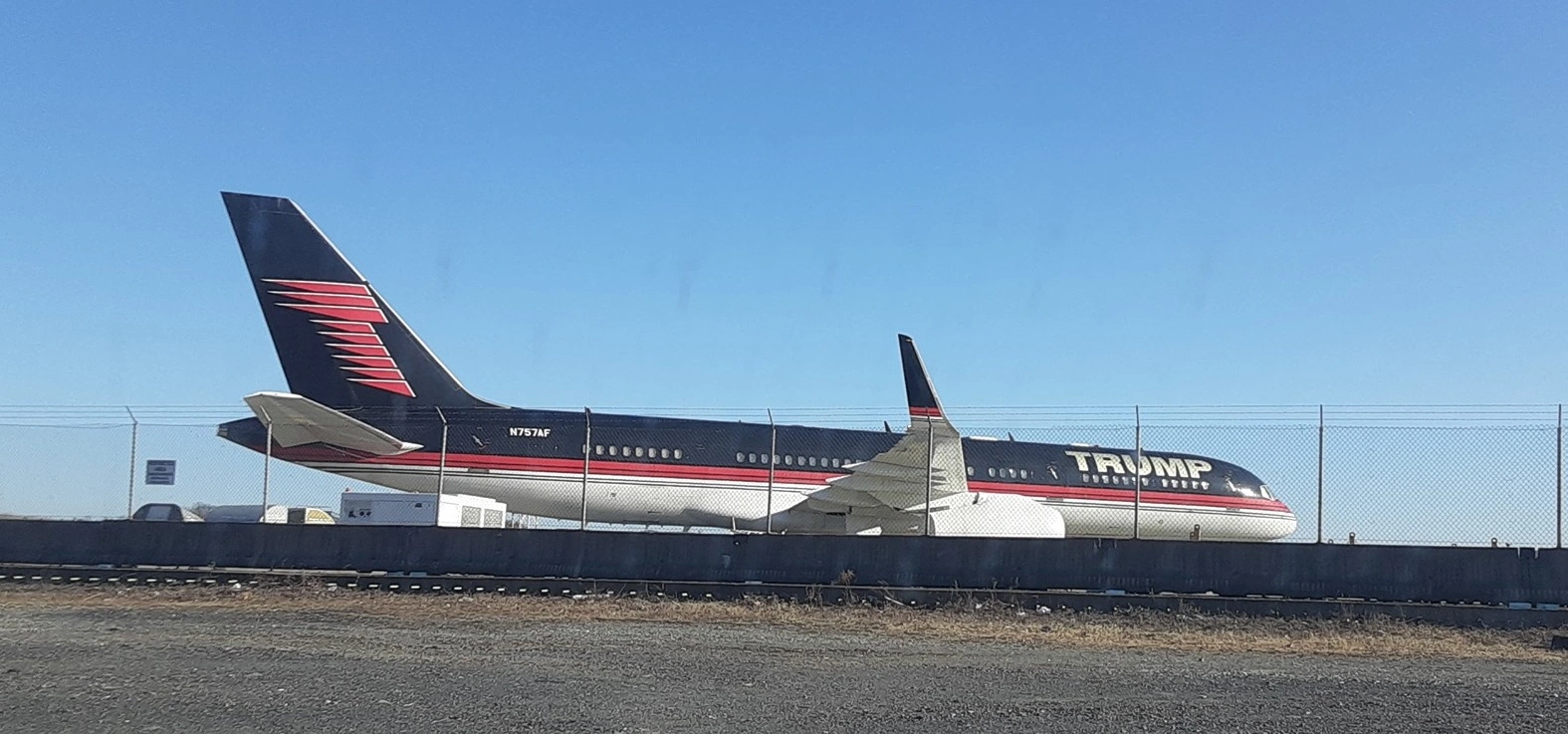
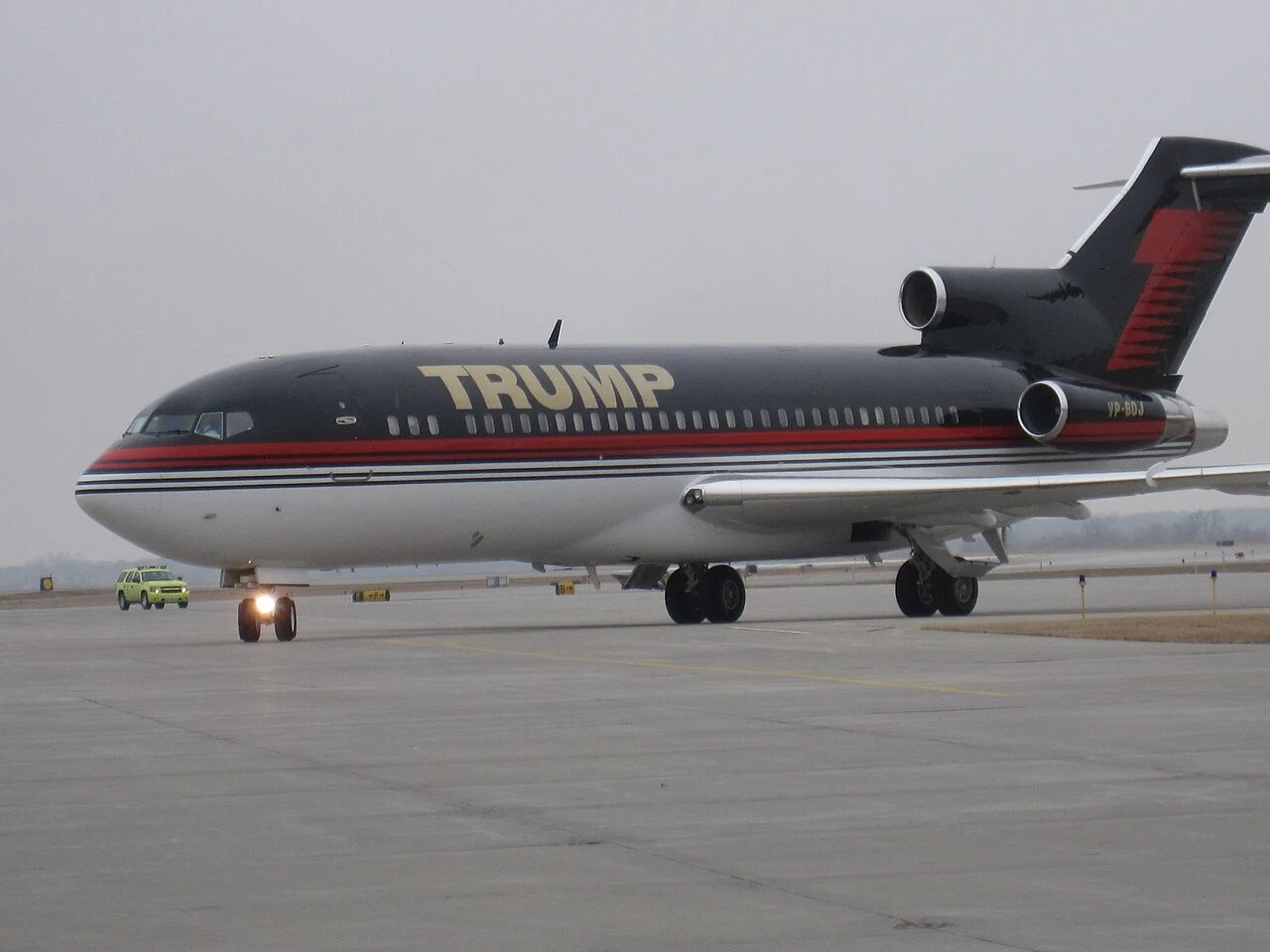
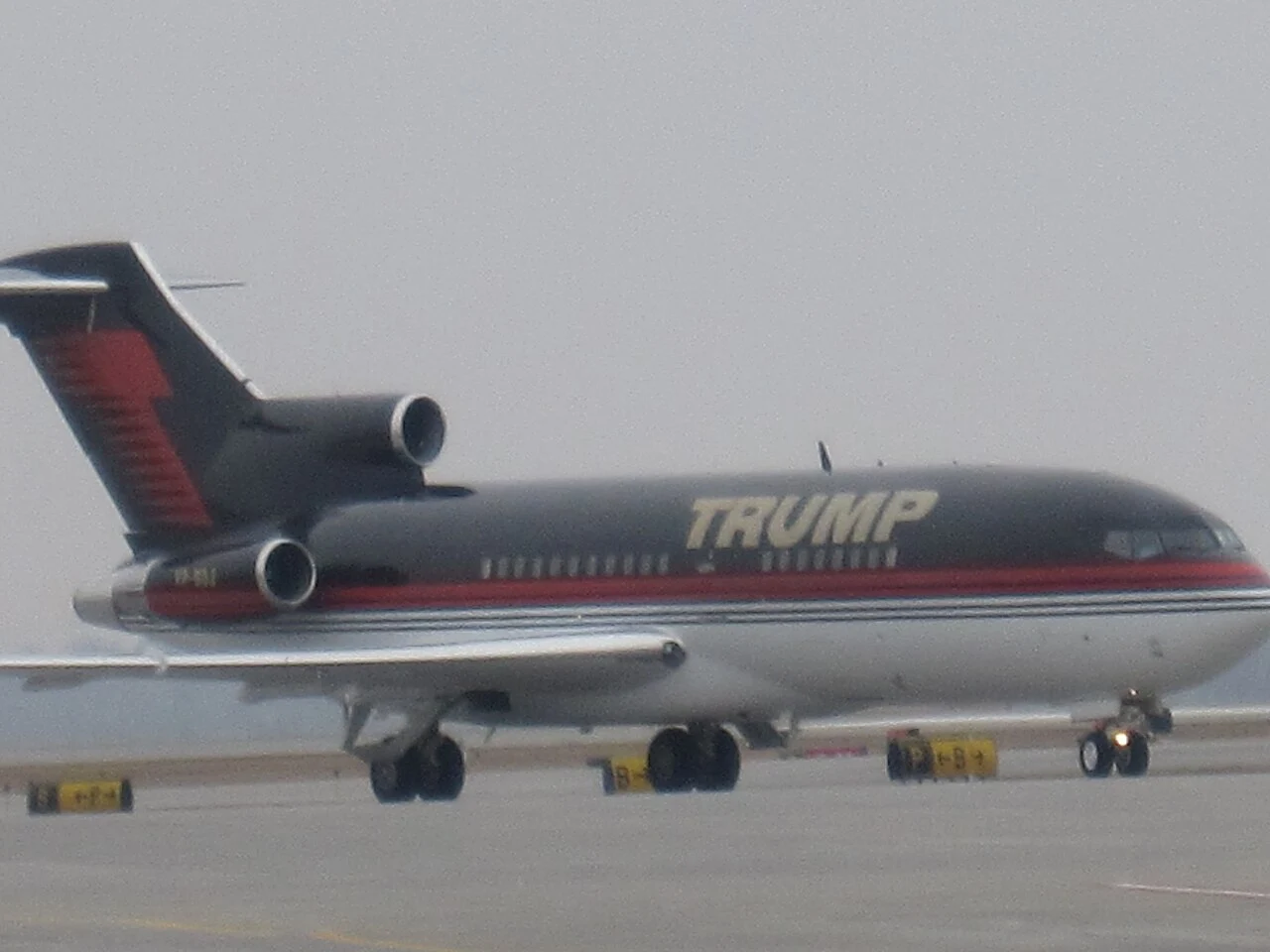
Donald Trump owns one of the most recognizable private jets in the world. His aircraft is a Boeing 757-200, registered under the tail number N757AF and informally called “Trump Force One.” The jet was purchased in 2011 from Microsoft co-founder Paul Allen for a reported total cost of $100 million, including a sweeping interior renovation that transformed the aircraft into a gold-accented airborne palace. It replaced Trump’s older Boeing 727-100, which he had sold in 2009.
The aircraft carries 43 passengers in a fully customized cabin and operates out of Palm Beach International Airport (PBI), West Palm Beach, Florida. It has served Trump as a business tool, a campaign symbol, and a personal statement of wealth across more than a decade. The jet’s distinctive gold “TRUMP” lettering on its fuselage has made it one of the most photographed private aircraft in aviation history.
Trumps Jet Was Manufactured Before the Turn of the Millenium
The Boeing 757-200 now known as Trump Force One was manufactured in Seattle in early 1991. Its serial number is 25155/371. The aircraft was originally delivered to Denmark’s Sterling Airways, where it flew passengers under the registration OY-SHA. Sterling Airways went bankrupt in September 1993, and the aircraft passed through several owners.
In late 1994, it flew for approximately six months with Mexican airline TAESA, registered as XA-SPG. A company called Vulcan Northwest Inc later acquired the jet and converted it with a VIP interior, giving it the registration N115FS. In 1995, the aircraft became the personal transport of Paul Allen, co-founder of Microsoft. It also served as the team plane for Allen’s Portland Trail Blazers basketball team before Allen re-registered it as N757AF in 1996.
By 2008, Trump was looking to upgrade his Boeing 727. According to Simple Flying, he initially considered a Boeing 767, but aviation broker Ben Sirimanne advised that a widebody would be impractical at many smaller executive airports. The broker then approached Allen, and the deal was finalized. DJT Operations I LLC, a subsidiary of the Trump Organization, purchased the aircraft in 2011 and has held title since, with no recorded transfers or sales.
How Trump Redesigned the Interior with $37 Million
Once Trump took ownership, he immediately commissioned a top-to-bottom interior renovation. He hired Eric Roth, a specialist in VIP jet interiors, to lead the redesign. Roth drew inspiration from Trump’s penthouse at Trump Tower on Fifth Avenue in New York. The renovation ultimately cost $37 million and was carried out by International Jet Interiors.
The gold-plating alone cost approximately a quarter of a million dollars. As CNN reported, Roth has said: “Anything metal on that plane’s interior — lights, seat buckles, handles, latches, knobs — we did in 24-karat gold plating.” The seat headrests feature the Trump family crest embroidered with fabric imported from Paris. The renovation took six months to complete.
Cabin Features and Luxury Amenities of Trump Force One
The cabin of N757AF is a purpose-built luxury environment, configured for approximately 43 passengers instead of the aircraft’s commercial capacity of over 200. Key features include:
- Gold-plated fixtures: Every metal surface inside the cabin — seat buckles, door handles, faucets, and light fixtures — is coated in 24-karat gold. According to one account, the amount of gold used was enough to gold-plate a Greyhound bus if melted down.
- Master bedroom: A private suite with a king-size bed, silk linens, a flat-screen television, and a private bathroom with a spacious shower.
- Guest suite: A separate guest room for additional passengers, along with three bathrooms total.
- Living and dining areas: A lounge with leather sofas, a large flat-screen television, and a state-of-the-art entertainment system. The dining area allows gourmet meals prepared in the aircraft’s galley.
- Entertainment system: A 52-inch flat-screen television and an advanced cinema-quality audio system.
- Connectivity: Wi-Fi, multiple communication systems, and advanced avionics that allow Trump to work, communicate, and hold meetings in the air.
- Glass cockpit: The aircraft features a modern “glass” cockpit, a design feature considered highly desirable by pilots.
- Leather seating: Cream-colored Italian leather seats embroidered with the Trump family crest.
The Trump Organization has described the aircraft as featuring “an extensive entertainment system that rivals any private theater”.
The Jet’s Role in Trump’s 2016 Presidential Campaign
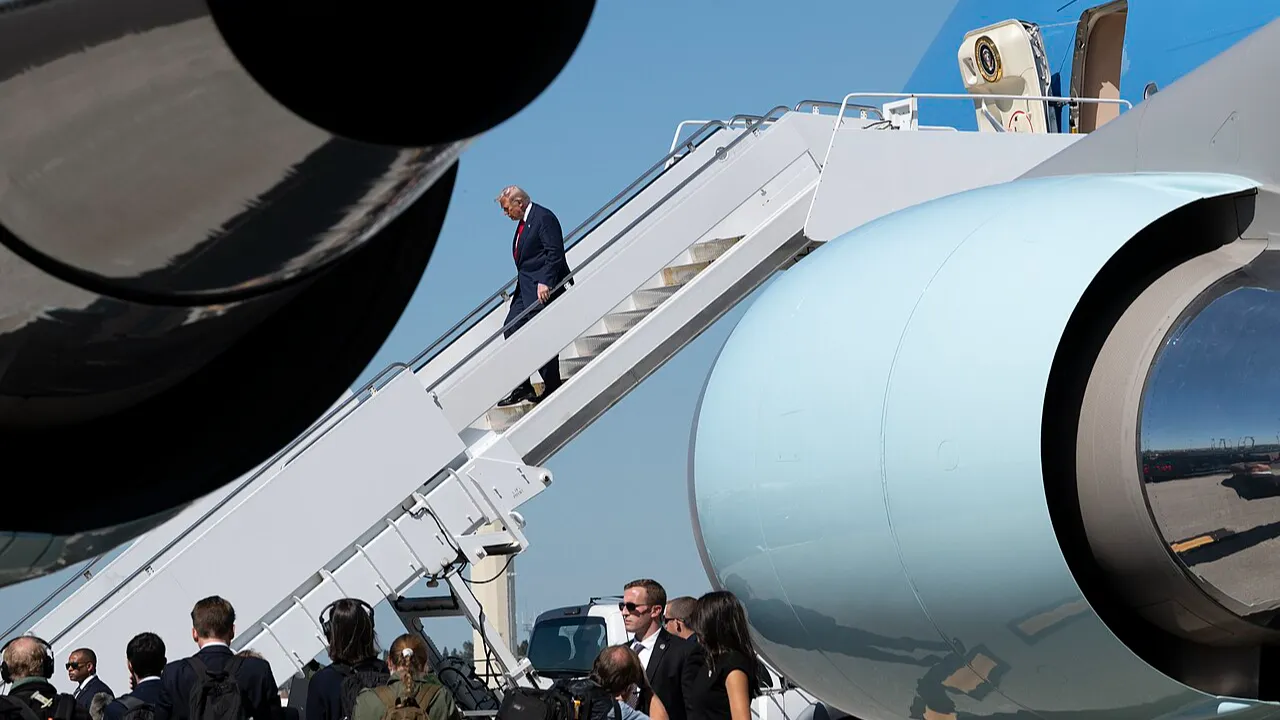
Trump Force One played a central role in Trump’s 2016 presidential campaign. The aircraft served as a literal backdrop to dozens of airport hangar rallies across the United States, with the gold “TRUMP” branding on the fuselage visible to tens of thousands of supporters. The aircraft’s nickname “Trump Force One” gained currency during this period, coined informally by Trump’s supporters.
The jet’s presence at rallies became a signature campaign visual. At one rally in Ohio in March 2024, a voice announced over the public address system: “Trump Force One, you are cleared for landing,” according to Reuters. The aircraft was also featured multiple times on Trump’s reality television show The Apprentice before the campaign, building public familiarity with the jet’s distinctive interior.
After Trump won the 2016 presidential election, N757AF was placed into storage. As president, Trump was required to travel aboard Air Force One, and the 757 spent several years idly at Stewart International Airport (SWF), approximately 60 miles north of Manhattan. During this storage period, one of the jet’s engines was removed, and CNN reported in March 2021 that repairs could reach into the high six-figures.
Restoration and the Return of N757AF
On May 21, 2021, Trump issued a press release announcing plans to restore and upgrade the aircraft at a maintenance facility in Lake Charles, Louisiana. The aircraft was taken to Chennault International Airport (CWF) in Lake Charles for an extensive overhaul.
In July 2022, Trump’s son Eric Trump posted a video on social media showing the aircraft receiving a new paint job at a hangar in Louisiana. In the caption, the former president was quoted saying Trump Force One would be “back to the skies in the Fall of 2022, or maybe sooner.” The updated livery showed a fresh gold “TRUMP” inscription on the fuselage and replaced the original tail “T” marking with a U.S. flag on the tail fin.
According to CNN’s analysis of flight data, the jet ran test pattern flights above Lake Charles before returning to service. It arrived at Palm Beach International Airport in October 2022, just weeks before the U.S. midterm elections. The aircraft was recommissioned and has remained active since, serving Trump’s travel needs through his 2024 presidential campaign and into his second term as president.
On May 12, 2024, Trump’s Boeing 757 was involved in a ground collision while taxiing at Palm Beach International Airport (PBI) at approximately 1:20 a.m. local time. The winglet of the 757 struck a parked and unoccupied corporate jet belonging to VistaJet. The FAA confirmed it was investigating the incident. The collision occurred in an area of the airport where the FAA does not direct aircraft. No injuries were reported.

.jpg)
.jpg)
Leave a Reply