Vietnam Airlines (VN), the national flag carrier of Vietnam, inaugurated its first-ever nonstop service between Noi Bai International Airport (HAN), Hanoi, and Amsterdam Airport Schiphol (AMS) on June 16, 2026. The inaugural flight, VN83, departed HAN at 3:50 AM and carried nearly 300 passengers aboard an Airbus A350 wide-body aircraft, landing in Amsterdam after a flight of more than 12 hours, Vietnam News reported. In the opposite direction, flight VN82 departed Amsterdam at 2:00 PM local time on the same day.
The launch makes Vietnam Airlines the first Vietnamese carrier to operate a direct route connecting Vietnam and the Netherlands. With the addition of Amsterdam, the airline now operates 12 nonstop routes linking Vietnam with eight major European destinations: Paris, London, Frankfurt, Munich, Milan, Copenhagen, Moscow and Amsterdam. The service is also significant from a commercial standpoint — the Netherlands is Vietnam’s largest trading partner among the 27 EU member states, with bilateral trade reaching $14.3 billion in 2025.
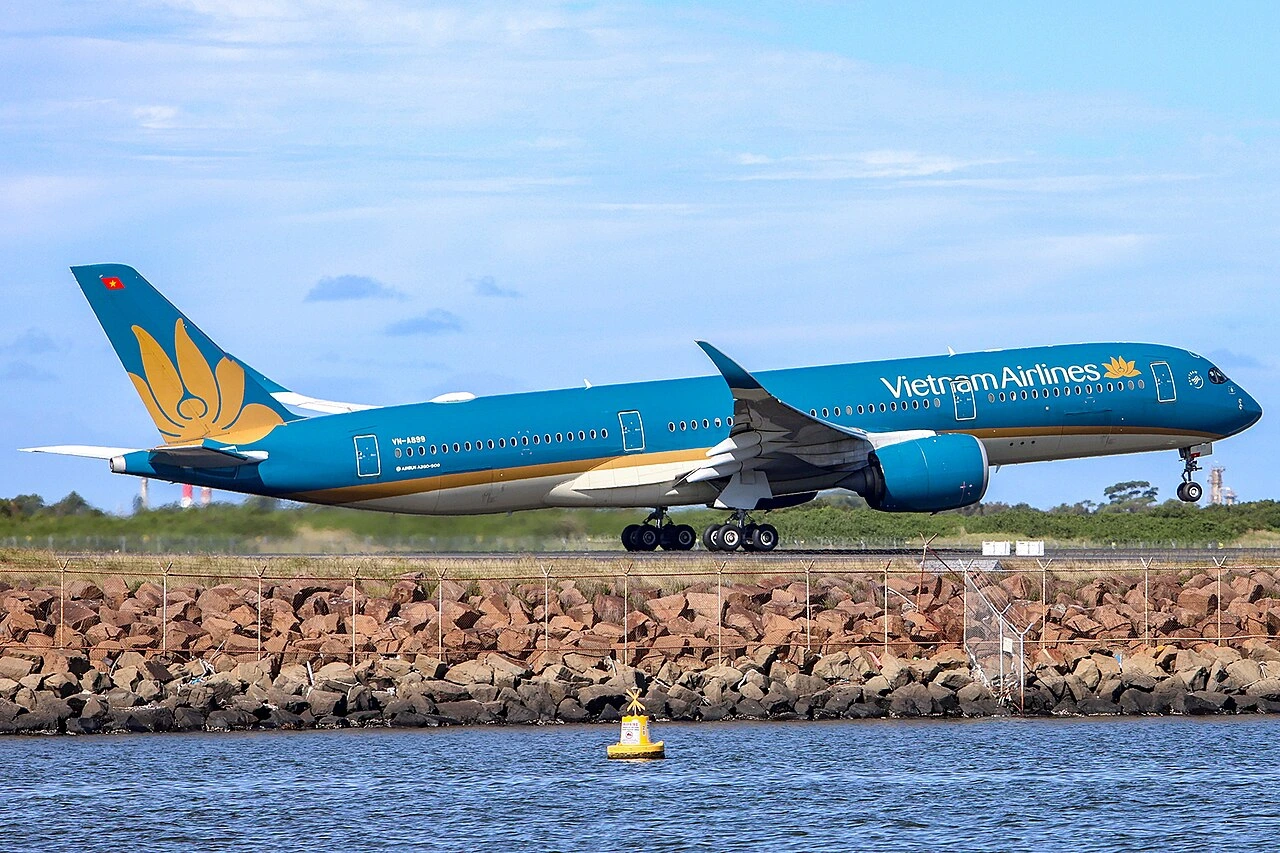
Schedule, Frequency and Aircraft Type of Vietnam Airlines’ New Route
Vietnam Airlines will operate three round-trip flights per week on Tuesdays, Thursdays and Saturdays on the Hanoi–Amsterdam route. The service uses the Airbus A350-900, a modern wide-body aircraft built for long-haul operations.
The published schedule has flight VN83 departing Hanoi in the early hours and arriving at Amsterdam Schiphol late morning. The return flight, VN82, departs the Netherlands in the afternoon and lands in Hanoi the following morning. The same-day outbound and return design means Vietnam Airlines operates a same-day turnaround on this route.
The new route shortens travel time and improves connectivity between Vietnam and one of Europe’s key economic, logistics and aviation transit hubs. Before this service launched, passengers travelling between Hanoi and Amsterdam had to connect in Paris, where Vietnam Airlines already operates its Charles de Gaulle service. Both Hanoi and Amsterdam are SkyTeam alliance hubs, yet the two cities previously had no direct connection within the alliance.
Nguyen Quang Trung, Executive Vice President of Vietnam Airlines, made a statement at the time of the launch. Trung said:
“The inauguration of the Hanoi–Amsterdam service reflects Vietnam Airlines’ continued commitment to expanding its international network and strengthening Vietnam’s connectivity with key global markets. This new route not only offers Vietnamese travellers more convenient access to Europe, but also facilitates greater travel to Vietnam for international visitors. As the national flag carrier, we will continue investing in service excellence and network development to meet evolving customer demand and further reinforce our role as an air bridge linking Vietnam with the world.”
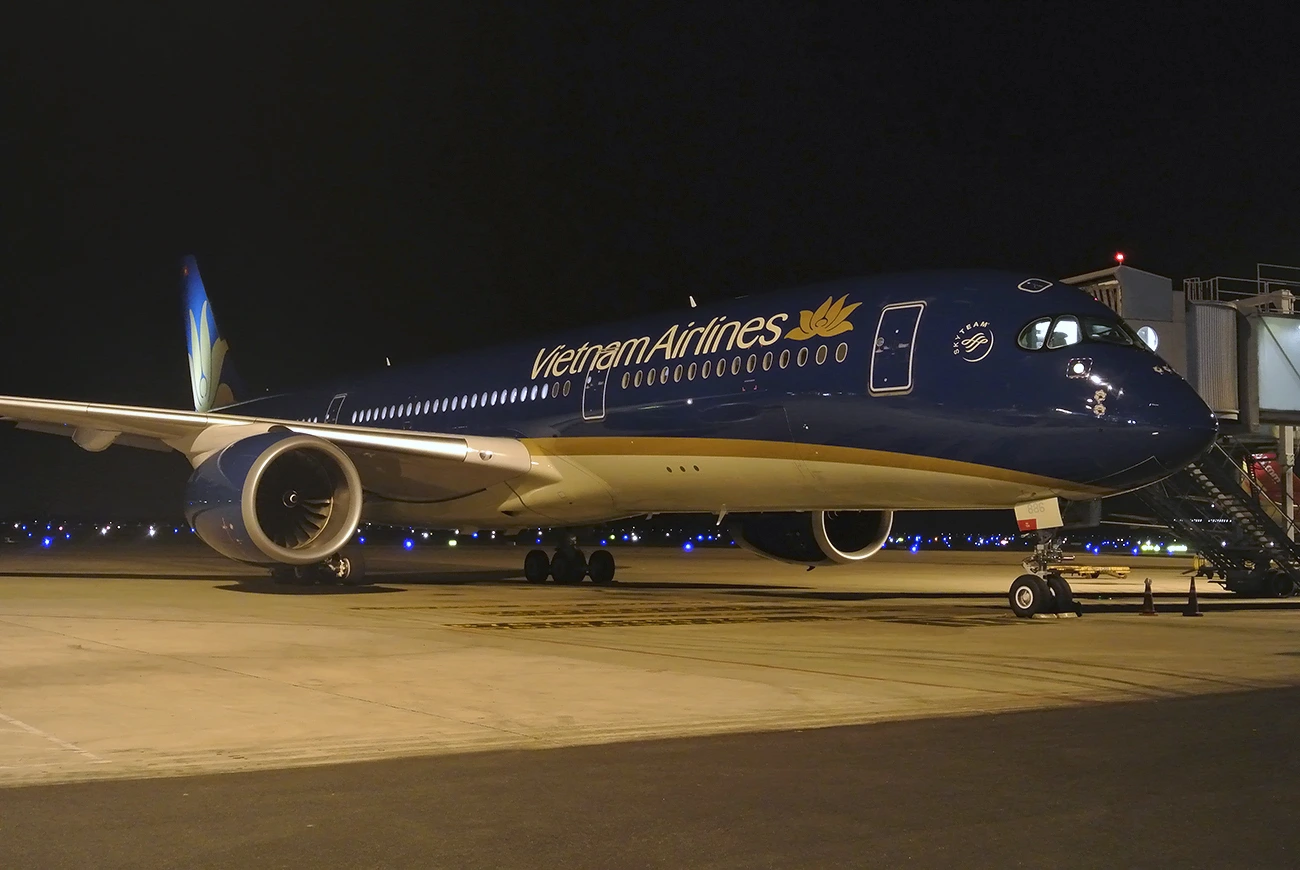
Cabin Configuration on VN’s A350 on the Hanoi–Amsterdam Route
Vietnam Airlines deploys its Airbus A350-900 on the Hanoi–Amsterdam route. Note that the Airbus A350 is deployed on the longest non-stop routes in the world, as well as the longest one-stop routes. The A350-900 used on European long-haul services features a three-cabin layout totalling 305 seats. Vietnam Airlines operates two distinct A350-900 configurations; long-haul European routes such as Paris use the version fitted with Safran Cirrus III business class seats.
The cabin breakdown on the long-haul configuration is:
- Business Class: 29 seats in a 1-2-1 reverse-herringbone layout with 42 inches of seat pitch and 21 inches of seat width. The Safran Cirrus III seats offer a nearly lie-flat bed, direct aisle access, and a 15.4-inch retractable touchscreen entertainment system. Each seat includes a coat hook, storage bin, extendable armrests and a minibar-style storage space
- Premium Economy: 36 seats offering 38 inches of pitch, providing a middle tier between the full-flat business cabin and standard economy
- Economy Class: 240 seats at a standard 32-inch pitch. All seats feature personal inflight entertainment systems and power outlets for charging personal devices
The A350-900’s improved fuel efficiency, lower noise levels and enhanced cabin pressure and humidity systems make it well suited for the 12-plus hour Europe–Southeast Asia corridor.
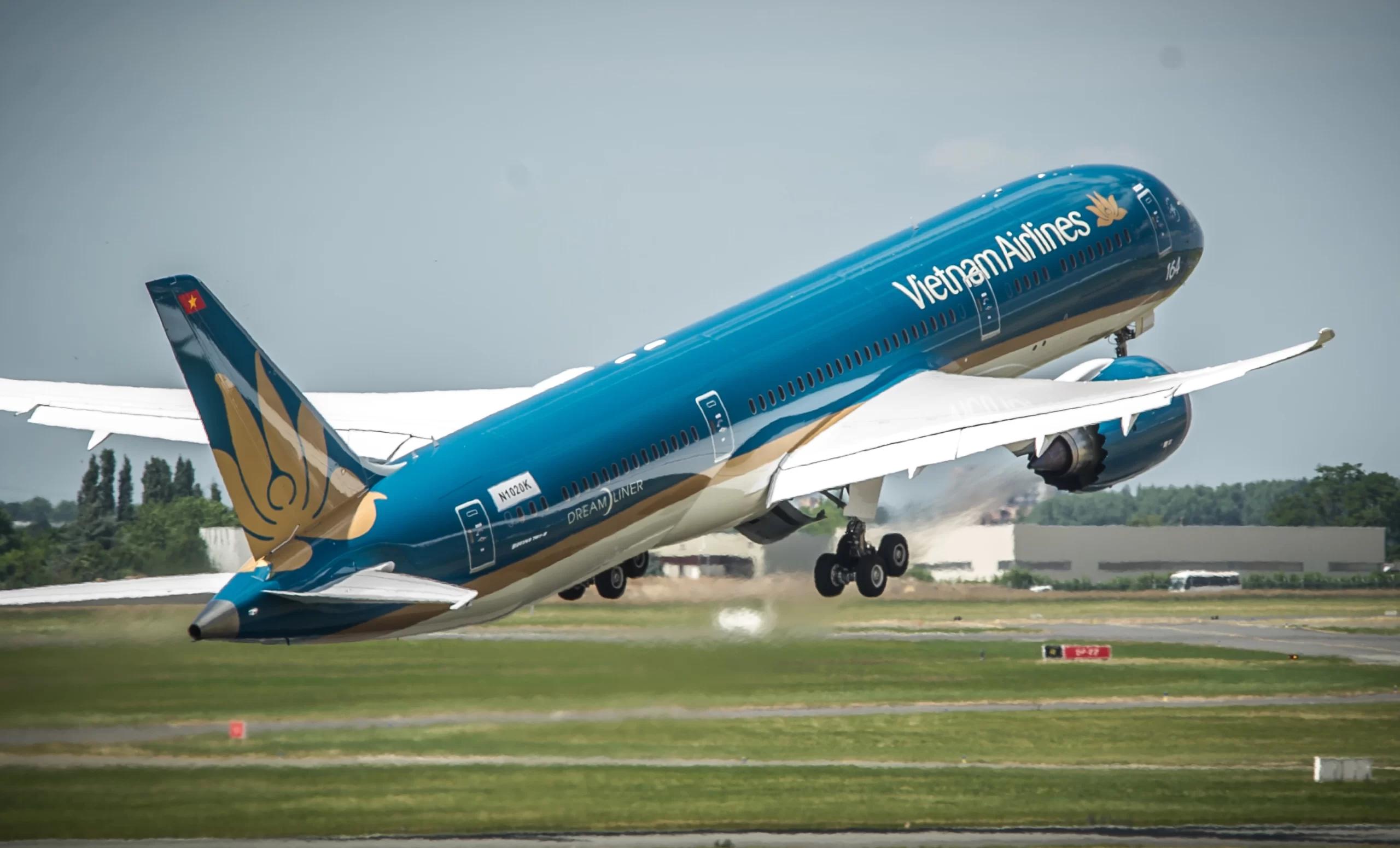
The Trade and Diaspora Case for the Hanoi–Amsterdam Route
The commercial rationale for the route is anchored in deep bilateral economic ties. The Netherlands is Vietnam’s largest trading partner in the EU for the second consecutive year, with total bilateral trade reaching $14.3 billion in 2025, up 3.8% year on year. Vietnam recorded a trade surplus of $12.7 billion with the Netherlands — the highest surplus among all of Vietnam’s European trading partners.
Vietnam’s exports to the Netherlands totalled $13.5 billion in 2025, driven largely by agricultural, forestry and fishery products. On the investment side, the Netherlands is the largest EU investor in Vietnam, with cumulative investment of $14.938 billion across 466 active projects, ranking ninth among all countries with investment in Vietnam.
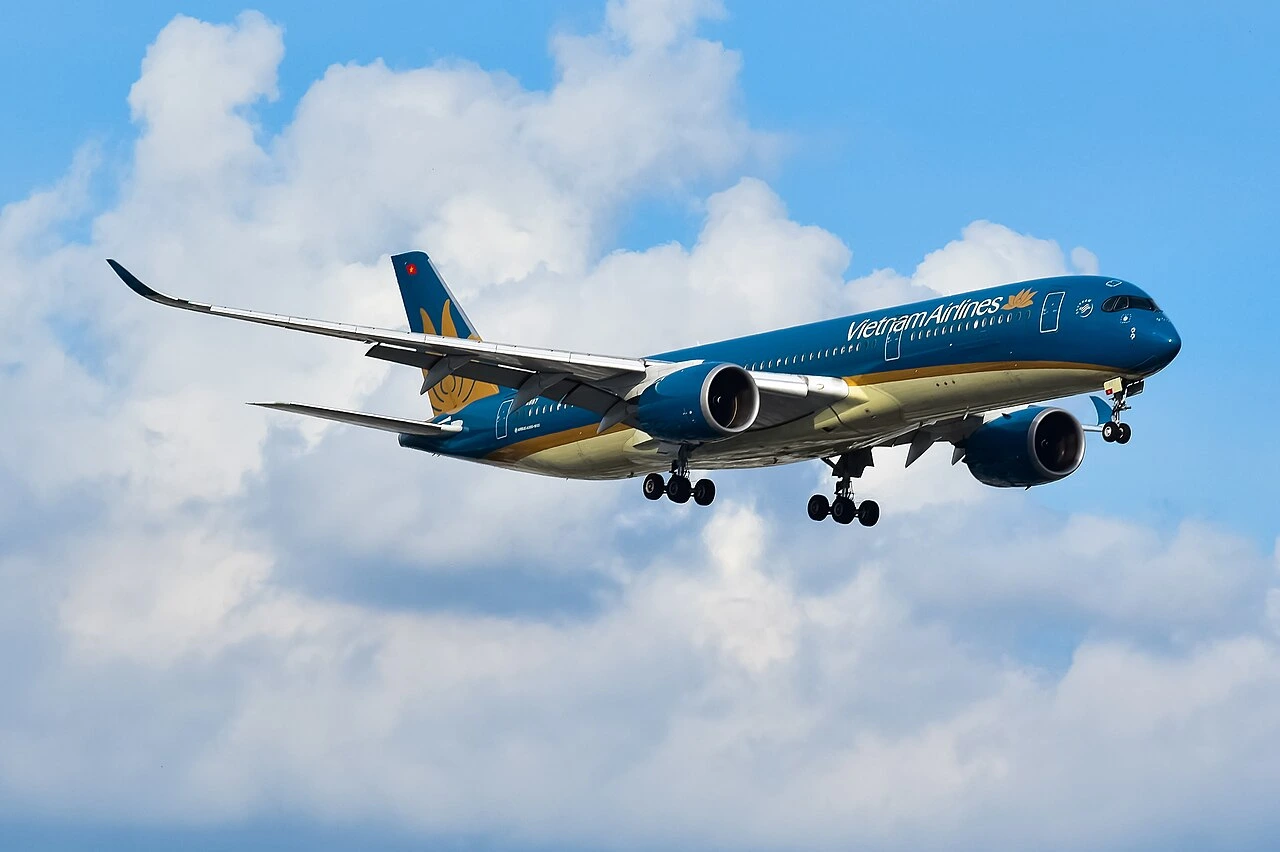
Amsterdam Completes Vietnam Airlines’ Eight-City Map
The Hanoi–Amsterdam service is the latest step in a systematic expansion of Vietnam Airlines’ European footprint. The airline has been building out its European network since the mid-2000s, starting with Paris and Frankfurt before adding London and Munich.
In 2025, Vietnam Airlines added Milan and Copenhagen to its European portfolio. The Hanoi–Milan service launched on 1 July 2025 as the airline’s first direct connection between Vietnam and Italy. A Ho Chi Minh City–Copenhagen service followed on 15 December 2025, representing the airline’s first flight to Denmark. Amsterdam now brings the total to eight European cities across 12 nonstop routes.
The airline uses Airbus A350 and Boeing 787 aircraft across its European operations. As noted by Aviation Week, both Hanoi and Amsterdam are SkyTeam hubs, meaning that onward connections through Amsterdam Airport Schiphol give Vietnam Airlines passengers access to KLM’s extensive European domestic and regional network. Industry analysts noted that the route complements Vietnam Airlines’ recent expansion into Milan and Copenhagen, positioning Hanoi as an increasingly important Southeast Asian hub for northern and central European markets.


_taking_off_from_SYD.jpg)
.jpeg)

