54 Years After Split, Singapore Airlines and Malaysia Airlines Unite on 184-Mile Route

Singapore Airlines (SQ) and Malaysia Airlines (MH) have officially launched joint fare products for travel between Singapore Changi Airport (SIN) and Kuala Lumpur International Airport (KUL), marking the operational start of their long-planned strategic joint business partnership. The launch was formalised in January 2026, following regulatory green lights from both the Civil Aviation Authority of Malaysia (CAAM) and the Competition and Consumer Commission of Singapore (CCCS), which had given its approval in July 2025.

What makes this partnership historically significant is that SIA and Malaysia Airlines are not simply two foreign competitors striking a deal. They are sister airlines that were once literally the same carrier. Both are direct descendants of Malaysia-Singapore Airlines (MSA), the binational flag carrier that split into two separate national airlines on 1 October 1972. More than half a century after that split, the two airlines are now coordinating fares, schedules, and eventually lounge access on one of the world’s five busiest international air routes.
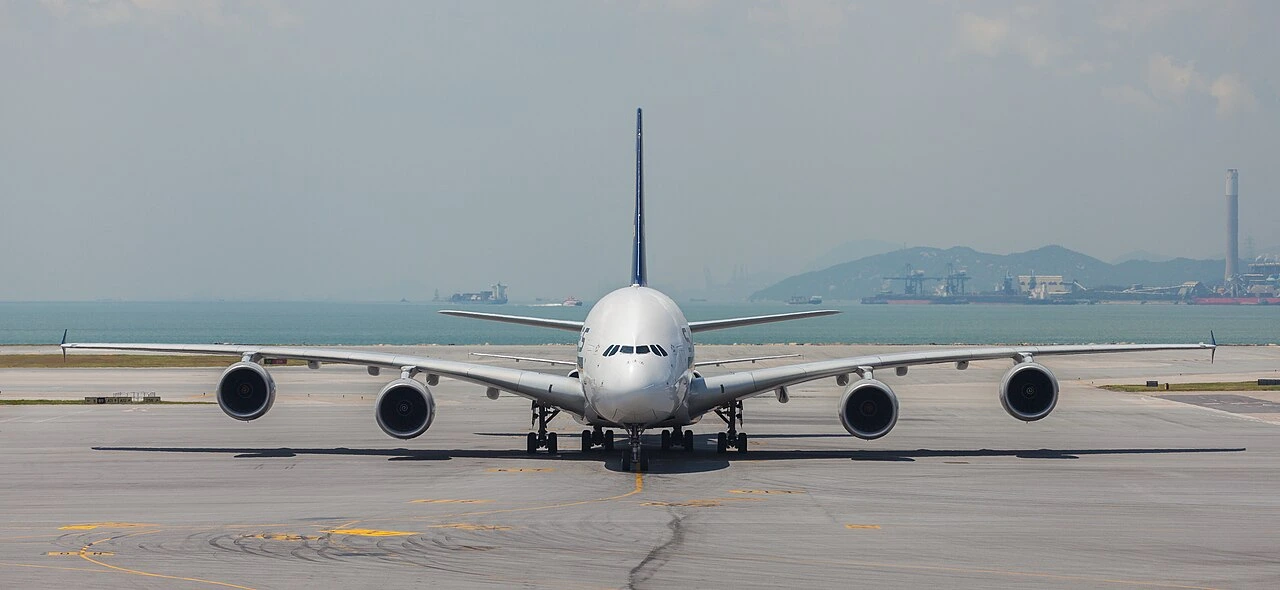
Photo: Diego Delso | Wikimedia Commons

The Common Origin of Singapore Airlines and Malaysia Airlines

The story of SIA and Malaysia Airlines begins not in 1972, but in 1937. Malayan Airways Limited (MAL) was incorporated on 12 October 1937 through a collaboration between the Straits Steamship Company of Singapore and two British firms, the Ocean Steamship Company and Imperial Airways. The airline launched its first commercial passenger flight on 2 April 1947, operating between Singapore and Kuala Lumpur.

When the Federation of Malaysia formed in 1963, the airline was renamed Malaysian Airways. In 1966, following Singapore’s separation from Malaysia, the carrier was rebranded Malaysia-Singapore Airlines (MSA) and began a period of rapid expansion. MSA introduced Boeing (BA) 707 and Boeing 737 jets, grew its network to 22 cities across 18 countries, and built a 16-storey headquarters in Singapore. Both governments jointly held ownership. For six years, the airline operated as a shared national carrier serving two countries that had once been a single political entity.

The 1972 Breakup Came from Differing Visions, Divided Assets

By 1971, the partnership inside MSA had become irreconcilable. Singapore’s government wanted MSA to become a commercially viable international airline focused on long-haul routes. Malaysia, on the other hand, wanted to prioritise domestic connectivity before expanding internationally. “The differences have become irreconcilable, and parting unavoidable,” Singapore’s Finance Minister Hon Sui Sen told Parliament in 1971.

On 1 October 1972, MSA ceased operations and its assets were divided. Singapore absorbed over S$180 million worth of assets, including the entire Boeing fleet of five 707s and five 737-112s, the international route network, the Robinson Road headquarters, and the Kriscom IBM computer reservation system.

Malaysia took the domestic routes and a fleet of Fokker F27 Friendships and Britten-Norman BN-2 Islanders. Singapore Airlines launched that same day with its first flight, SQ 108, bound for Kuala Lumpur. The two airlines initially competed on the same airport-to-airport sector where they had once co-operated as one carrier. Even the choice of initials became a minor diplomatic dispute: Singapore proposed the name Mercury Singapore Airlines to keep the MSA initials, but Malaysia objected and the matter was settled out of court.
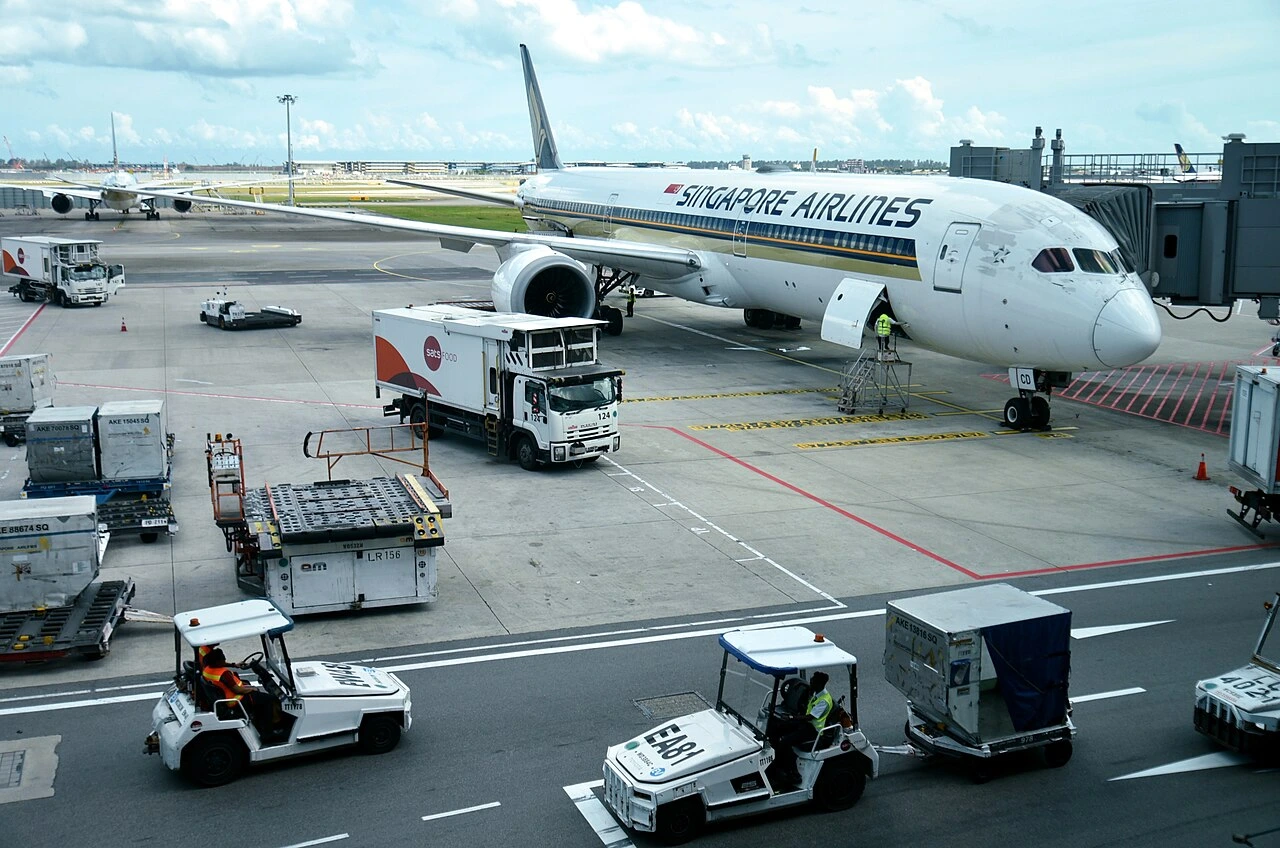
Photo: Bahnfrend | Wikimedia Commons

The Post-Split Shuttle

After the 1972 split, the two airlines did not immediately become pure competitors. They operated a joint Kuala Lumpur–Singapore shuttle from August 1982 until 2008, under a bilateral agreement between the two governments. The arrangement effectively functioned as a shared walk-up product: both airlines charged a common fare of S$400 roundtrip, split revenues equally, and coordinated their schedules. Singapore Airlines operated 42 weekly flights on the route, while Malaysia Airlines operated 50.

The shuttle arrangement ended when low-cost carriers entered the market. Tiger Airways and Jetstar Asia launched four daily flights in February 2008 and gained full unrestricted access to the route in December 2008. The KUL–SIN corridor was fully liberalised, bringing in multiple carriers and driving fares far below the legacy shuttle price. It remains one of the most competitive short-haul international routes in the world, with seven airlines competing for approximately 421,000 monthly seats as of June 2026, and an average one-way economy fare of around USD 62 — the lowest among the world’s ten busiest international routes.

The Route The Two Carriers Now Share

The Kuala Lumpur–Singapore route is not a minor regional hop. According to Aviation Week, the corridor climbed from fourth to third place among the world’s busiest international routes in 2025, with annual capacity growing 3.2% year-on-year. OAG’s real-time data for June 2026 places KUL–SIN at fifth globally, with 421,000 seats scheduled in the month, behind Hong Kong–Taipei, Seoul–Tokyo, Cairo–Jeddah, and Seoul–Osaka.

We previously covered the route’s long-standing position in the global top ten busiest international corridors, noting that it regularly changes ranking depending on the season. The 184-mile sector serves a dense mix of business travellers, transit passengers, and regional tourists. It links Singapore Changi Airport (SIN), consistently ranked among the world’s best airports, with Kuala Lumpur International Airport (KUL), which climbed to second busiest airport in Southeast Asia in 2025 with 3.32 million departing seats per month. The two airports together form the central axis of Southeast Asian aviation.

Photo: Md Shaifuzzaman Ayon | Wikimedia Commons

How The Partnership Evolved From 2019 to 2026

The current joint venture did not emerge overnight. It is the result of nearly seven years of incremental commercial integration. In October 2019, SIA and Malaysia Aviation Group (MAB) signed a wide-ranging commercial agreement that proposed revenue sharing, joint fares, coordinated schedules, and expanded codeshares between the two airline groups. The agreement also covered SIA’s subsidiaries SilkAir and Scoot, as well as MAB’s Firefly. Regulatory approval was required before its deepest provisions could be activated.

Following the reopening of borders after the Covid-19 pandemic, the codeshare arrangements expanded significantly from November 2021, timed with the launch of the Vaccinated Travel Lane between Malaysia and Singapore. SIA began codesharing on Malaysia Airlines’ services to 15 domestic Malaysian destinations, while Malaysia Airlines began codesharing on SIA flights to European and South African cities. In February 2024, the airlines linked their loyalty programmes, allowing Enrich members and KrisFlyer members to earn and redeem miles or points on selected flights operated by either carrier. The formal joint business partnership was then confirmed in January 2026 after CAAM completed its regulatory review, and the joint fare products were commercially launched on 22 June 2026.

Photo: Mhashan | Wikimedia Commons

What The Joint Fare Partnership Actually Means for Passengers

The June 2026 launch is centred on joint fare products for the KUL–SIN route, which now offer passengers a wider range of fare options than were previously available through either airline independently. The airlines describe the new structure as building on their existing codeshare, enabling coordinated pricing that improves both booking flexibility and fare variety. According to the joint SIA and MAB press release issued on 22 June 2026, the following enhancements are either live or in development:

  • Joint fare products on the Kuala Lumpur–Singapore corridor, offering greater variety and pricing flexibility
  • Reciprocal lounge access for eligible premium passengers, currently being phased in
  • Coordinated flight schedules to improve connection times and reduce transfer gaps at both hub airports
  • Joint corporate travel arrangements targeting business travellers on the corridor
  • Revenue-sharing flights between Malaysia and Singapore, subject to further phased rollout

The scope of the existing codeshare network is already broad. SIA currently codeshares on Malaysia Airlines’ services between Kuala Lumpur and Singapore, London Heathrow, and 15 domestic Malaysian destinations. Malaysia Airlines codeshares on SIA services to Kuala Lumpur, Penang, Barcelona, Brussels, Cape Town, Copenhagen, Istanbul, Johannesburg, London Heathrow, Rome, and Zurich.

What The Executives Said

The joint venture has attracted executive commentary from both carriers. Bryan Foong, Chief Executive Officer of Airline Business at Malaysia Aviation Group, described the commercial significance directly. In the joint 22 June 2026 press release, he stated:

“This joint business partnership with Singapore Airlines marks a significant milestone in the expansion of our commercial collaboration. By introducing joint fare products, we are giving our customers greater choice, improved flexibility, and a more seamless travel experience. This collaboration also lays the foundation for deeper integration across our networks, ultimately benefiting both leisure and business travellers.”

The sentiment was echoed by Lee Lik Hsin, Chief Commercial Officer of Singapore Airlines, who underlined the broader strategic purpose:

“The introduction of joint fare products with Malaysia Airlines expands the range of fare options available to customers travelling between Singapore and Kuala Lumpur, offering more flexibility and convenience when planning their journeys. As we deepen our collaboration, we will continue to combine our strengths to enhance both airlines’ offerings and deliver greater value to customers, while strengthening the long-standing people-to-people connections and trade links between Singapore and Malaysia.”

Earlier, at the January 2026 formalisation, Malaysia Aviation Group’s Group Managing Director Izham bin Ismail had framed the competitive rationale:

“This collaboration brings together complementary frequencies and aligned schedules, enabling deeper connectivity between Malaysia and Singapore. Over time, it reinforces Malaysia Airlines’ competitive position by enhancing scale, relevance, and network resilience across key markets.”

Photo: Riik@mctr | Wikimedia Commons

Comparing With Other Major Regional Airline Partnerships

The SIA–MAB structure is part of a broader trend of bilateral joint businesses between national carriers in Asia. The model is similar to the joint ventures that SIA already holds with other partners. SIA has a well-established joint business with Lufthansa Group on European routes and operates within Star Alliance, which it joined in 2000. Malaysia Airlines operates within the oneworld alliance.

The SIA–MAB tie-up is therefore notable partly because it crosses alliance lines. Malaysia Airlines is a oneworld member, while SIA is part of Star Alliance. Formal joint businesses between carriers from different alliances are relatively rare. The closest regional parallel is the relationship between rival Southeast Asian carriers — AirAsia and its affiliates — which have pursued their own network integration models.

The SIA–MAB structure is, however, more directly comparable to bilateral joint ventures in North America and Europe, such as the transatlantic joint businesses between United Airlines, Lufthansa, and Air Canada, or the oneworld transatlantic tie between American Airlines and British Airways. What distinguishes the SIA–MAB deal is its geographic focus: a single short-haul corridor of 184 miles, albeit one that anchors both carriers’ international connectivity through their respective hubs.

Separately, Singapore Airlines has continued expanding its global footprint. We reported in June 2026 that SIA opened commercial bookings for a new Singapore–Madrid route via Barcelona starting October 2026, marking the airline’s return to the Spanish capital for the first time since 2004 and adding its 15th European destination.

Why Approval Took Years

The partnership required clearance from two separate competition authorities before the revenue-sharing and joint fare elements could be activated. The CCCS approved the partnership in July 2025, and CAAM followed in January 2026. The six-year gap between the initial 2019 agreement and the 2026 operational launch reflects the complexity of bilateral regulatory review for a joint business that spans two sovereign jurisdictions. Both regulators concluded that the partnership would strengthen regional connectivity without materially reducing competition on the corridor, given the continued presence of multiple low-cost carriers including AirAsia, Scoot, and Batik Air.

The approvals specifically allow the two airlines to progressively implement measures including revenue-sharing services, joint fares, coordinated schedules, and joint corporate travel arrangements. Additional details will be announced as each initiative is rolled out.

Photo: Malaysia Airlines

This is a Partnership with Strategic Logic on Both Sides

The partnership serves different but complementary strategic purposes for each carrier. For Singapore Airlines, it consolidates its access to Malaysia’s domestic network — a market SIA cannot serve directly. By codesharing on Malaysia Airlines’ 15 domestic destinations, SIA can offer its international passengers seamless onward connections to cities including Penang, Kuching, Kota Kinabalu, and Langkawi without operating those routes itself.

For Malaysia Airlines, the value runs in the opposite direction. Malaysia Airlines’ CEO Izham bin Ismail described it as reinforcing the airline’s “network resilience” and expanding its “scale and relevance” across key markets. By codesharing on SIA’s long-haul network — particularly European routes to Barcelona, Brussels, Copenhagen, Istanbul, Johannesburg, London Heathrow, Rome, and Zurich — Malaysia Airlines effectively extends its global reach without the cost of operating those sectors independently. The partnership also positions both carriers as preferred choices for corporate travellers on the KUL–SIN corridor, a segment that historically carried premium-class passengers at high load factors before the low-cost carrier disruption of 2008.

Leave a Comment

Your email address will not be published. Required fields are marked *

Scroll to Top