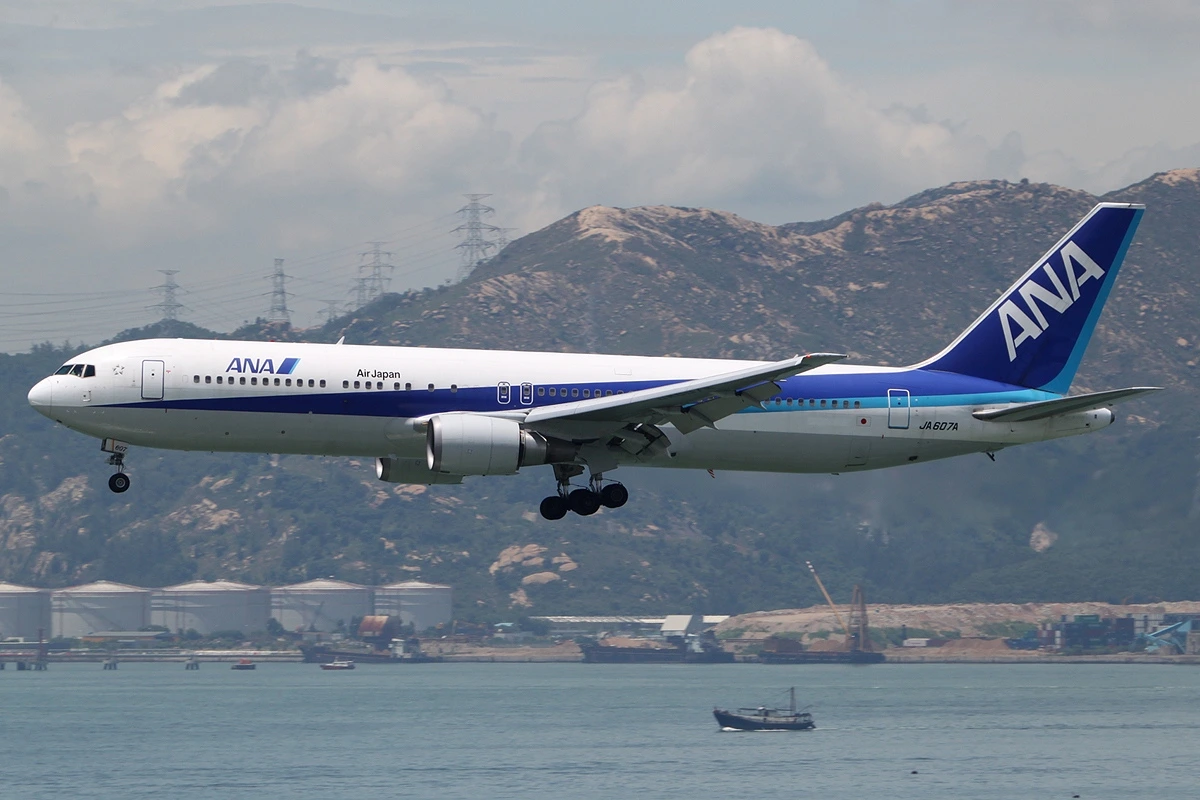
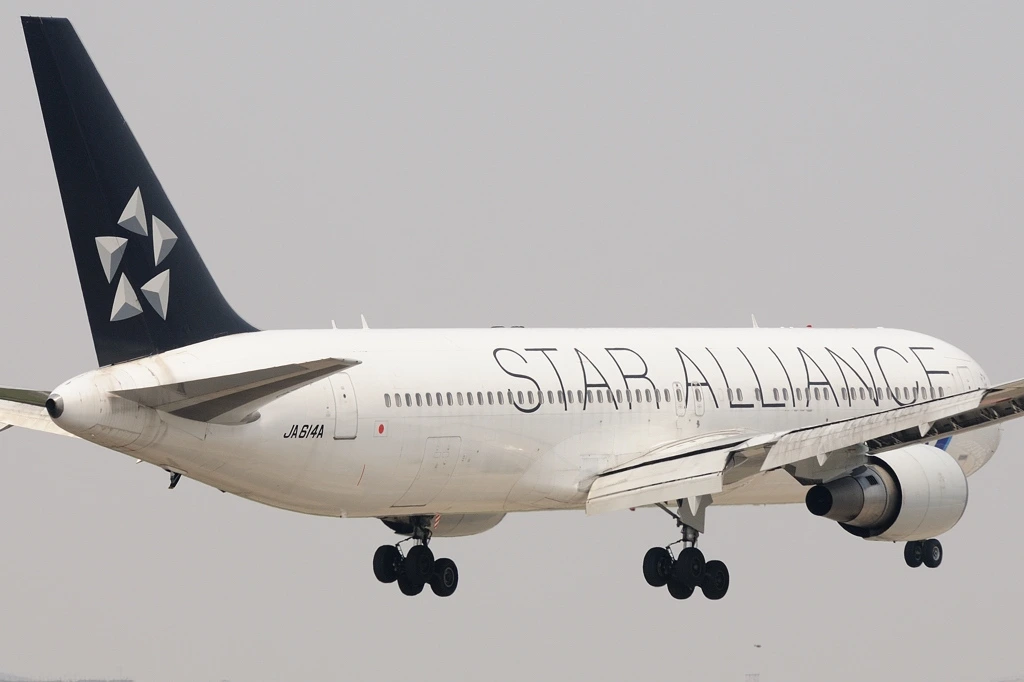
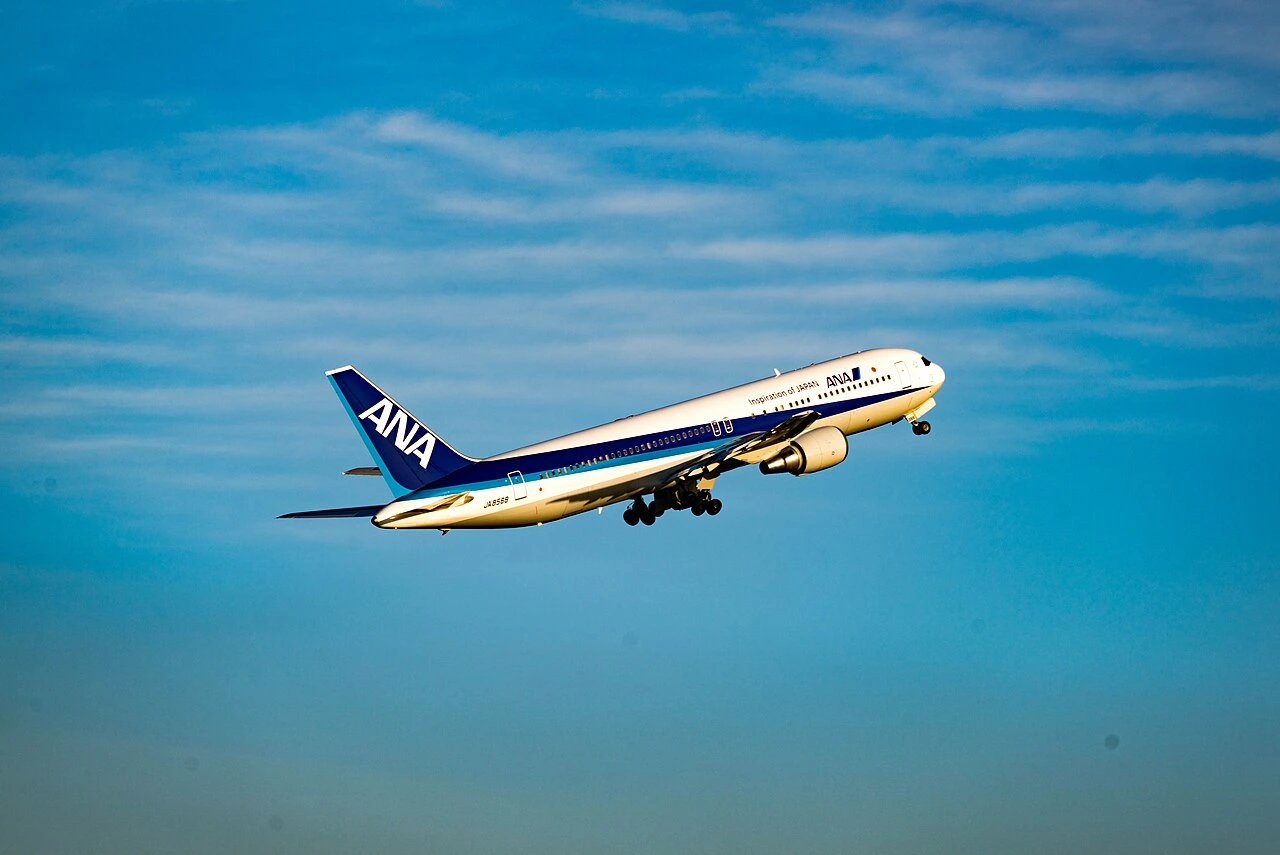
An All Nippon Airways Boeing 767-300ER carrying 197 people on board nearly collided with a Japan Civil Aviation Bureau Cessna Citation CJ4 while landing at Tokyo Haneda Airport on Tuesday, August 4, 2026. The two aircraft closed to within roughly 70 feet, or 20 meters, of each other as both passed through 1,000 feet over Tokyo Bay. Flight NH968 was arriving from Shanghai when its onboard collision avoidance system commanded an immediate climb, forcing the crew to abandon the landing and go around.
The Japan Civil Aviation Bureau (JCAB) aircraft had just taken off on a routine flight to check the airport’s navigation and lighting systems when its climb-out path crossed the ANA jet’s approach path. Both aircraft landed safely a short time later, and nobody on either flight was hurt.
How The Near-Miss Unfolded Over Runway C And Runway D
Flight NH968, operated by All Nippon Airways (NH), departed Shanghai Pudong International Airport (PVG) shortly before 2:30 a.m. According to Simple Flying, it was the first of ANA’s two daily services on the route and was flying into Tokyo Haneda Airport (HND), lining up for Runway C at around 5:40 a.m. local time. At the same moment, the JCAB inspection jet had just lifted off from Runway D and banked sharply onto a path that carried it directly across the arriving 767’s flight track.
Air traffic control audio captured an approach controller calling out urgently as the two aircraft converged. Radar and flight-tracking data show the gap closed to about 70 feet as both jets passed through 1,000 feet, a separation far below what controllers normally maintain between aircraft at that altitude. Pilots on Flight NH968 confirmed over the radio that they had “received a TCAS RA,” the automated Resolution Advisory that instructs crews to climb or descend immediately when a collision is predicted.
That warning is widely regarded as the last line of defense against a midair collision, since it operates independently of ground controllers. The ANA crew pulled the 767 into a steep climb and banked away from the airport before circling back to land roughly 15 minutes later. The JCAB aircraft briefly leveled its own climb and dipped to 900 feet, passing beneath the 767 before continuing on its inspection route across Tokyo Bay.
What The Flight Inspection Aircraft Was Actually Doing
The aircraft involved was a Cessna Citation CJ4, registered JA010G and flying under the call sign “Checkstar 10.” It belongs to a small fleet that the Japan Civil Aviation Bureau uses to verify that an airport’s electronic navigation aids are transmitting accurate signals. These flights are essential to keeping instrument approaches certified, but they follow unusual profiles that differ sharply from normal airline traffic, which makes coordination with controllers critical.
During a typical mission, the inspection jet flies precise approaches, departures, and missed-approach patterns while onboard equipment measures the accuracy of ground-based systems. A single flight can involve checks including:
- Instrument Landing System localizer and glideslope accuracy
- Approach lighting alignment and intensity
- Visual glide path indicators such as PAPI and VASI
- VOR and DME radio navigation signals
- Satellite-based RNAV and GNSS approach procedures
- Runway and taxiway lighting systems
The CJ4 had reportedly been in JCAB’s flight inspection program for over a decade before Tuesday’s incident. Its purpose that morning, calibrating the very safety systems meant to keep Haneda’s approaches accurate, makes the near-collision a particularly uncomfortable irony for Japanese aviation authorities.
Flight inspection jets typically operate under different air traffic control handling than scheduled airliners because their flight paths are deliberately irregular. A localizer check might require repeated climbs, descents, and course reversals along the same runway centerline that a passenger jet would only fly once, straight through, on approach. That mismatch in flight behavior is precisely why controllers must build in extra separation whenever an inspection aircraft is airborne near active arrival and departure corridors.

How ANA And Japanese Authorities Responded
All Nippon Airways confirmed the go-around within hours of the incident and said the 767’s collision avoidance system triggered as the aircraft neared Haneda, prompting the crew to follow the climb instruction. The airline reported that none of the 197 passengers and crew on board were injured and that no problems were found with the aircraft afterward.
Japan’s Ministry of Land, Infrastructure, Transport and Tourism, which oversees JCAB, confirmed that its inspection aircraft had taken off from Runway D and was flying nearby to check:
- radio
- lighting
- other airport facilities
..when the encounter occurred. The ministry said the exact circumstances were still being investigated. Local broadcaster Kyodo News reported that the ANA crew’s climb happened at around 6 a.m. local time, matching the timeline described by ANA and flight-tracking data.
Separate reporting citing Japan’s JX News Agency described the sequence in similar terms, noting that the JCAB jet lifted off from Runway D just as NH968 was lining up to land on Runway C, bringing the two aircraft into unusually close proximity. A recording said to capture the exchange between Haneda’s area control center and the tower circulated online, appearing to show a controller reacting with visible urgency to the converging flight paths.
How This Near-Miss Compares to Haneda’s Deadlier 2024 Runway Collision
Tuesday’s event differs in one crucial respect from the accident that continues to shape safety debate at Haneda. The January 2024 collision destroyed a Japan Airlines Airbus A350 after it struck a Japan Coast Guard Dash 8 that had entered an active runway, killing five of the six people aboard the smaller aircraft. Investigators later found that flight crew confusion combined with a controller’s failure to recognize the Coast Guard aircraft’s runway entry caused that accident.
There have also been comparisons with the January 2025 collision between American Airlines Flight 5342, a regional jet operating as PSA Airlines, and an Army Black Hawk helicopter on approach to Ronald Reagan Washington National Airport (DCA). That crash killed all 67 people aboard both aircraft after the helicopter flew into the jet’s landing path.
Mid-air proximity failures are not new to commercial aviation, and history holds far graver examples. The deadliest, the 1996 collision between a Saudi Arabian Airlines Boeing 747 and a Kazakhstan Airlines Ilyushin Il-76 near Charkhi Dadri, India, killed all 349 people aboard both aircraft after one flight strayed into the other’s altitude in uncontrolled airspace. Tuesday’s Haneda encounter, by contrast, ended with two intact aircraft and a rattled but unharmed passenger cabin, a gap that separates a serious mid-air safety event from a catastrophic one.
,_All_Nippon_Airways_(ANA)_JP6918983.jpg)
,_All_Nippon_Airways_(ANA)_JP6668831.jpg)
_at_Tokyo_Haneda_Airport.jpg)
.jpg)