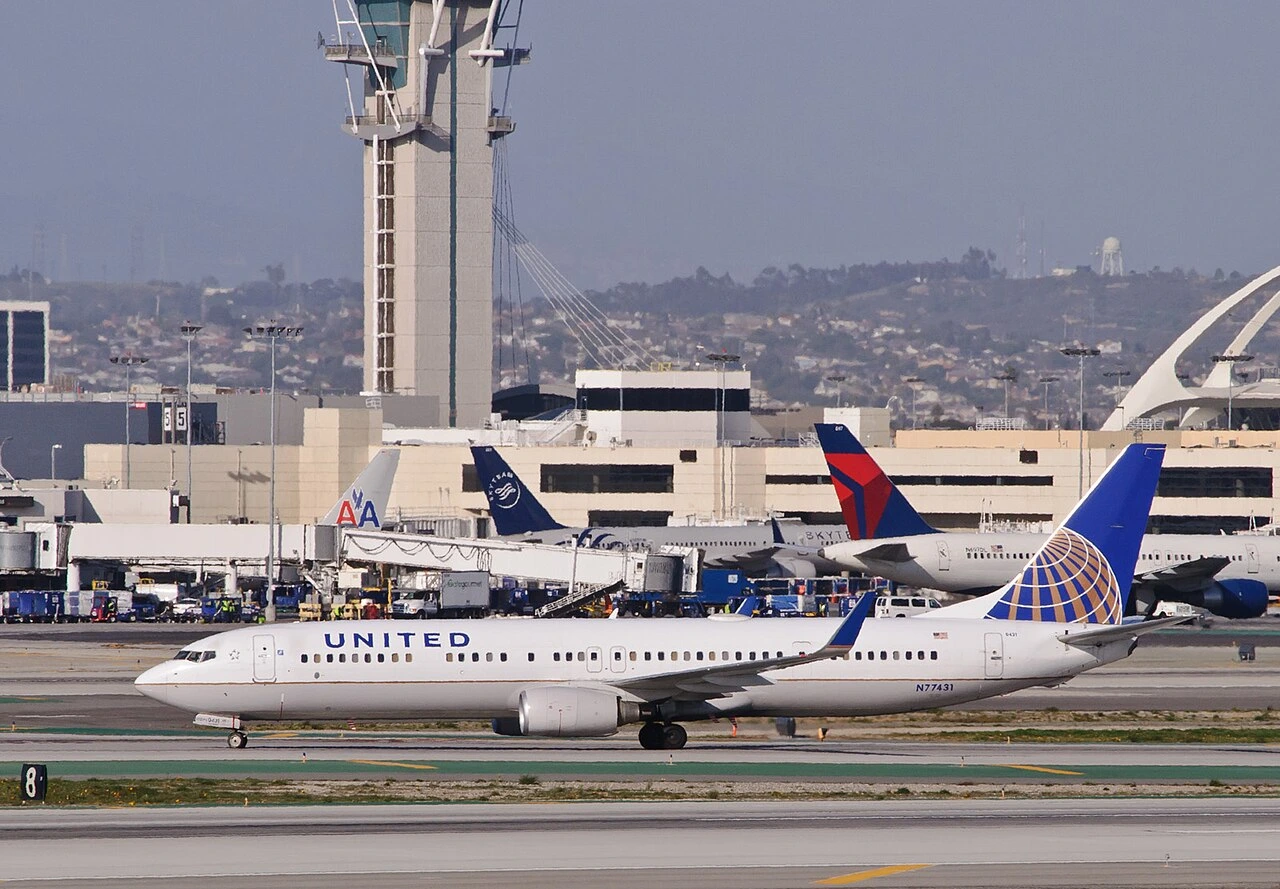
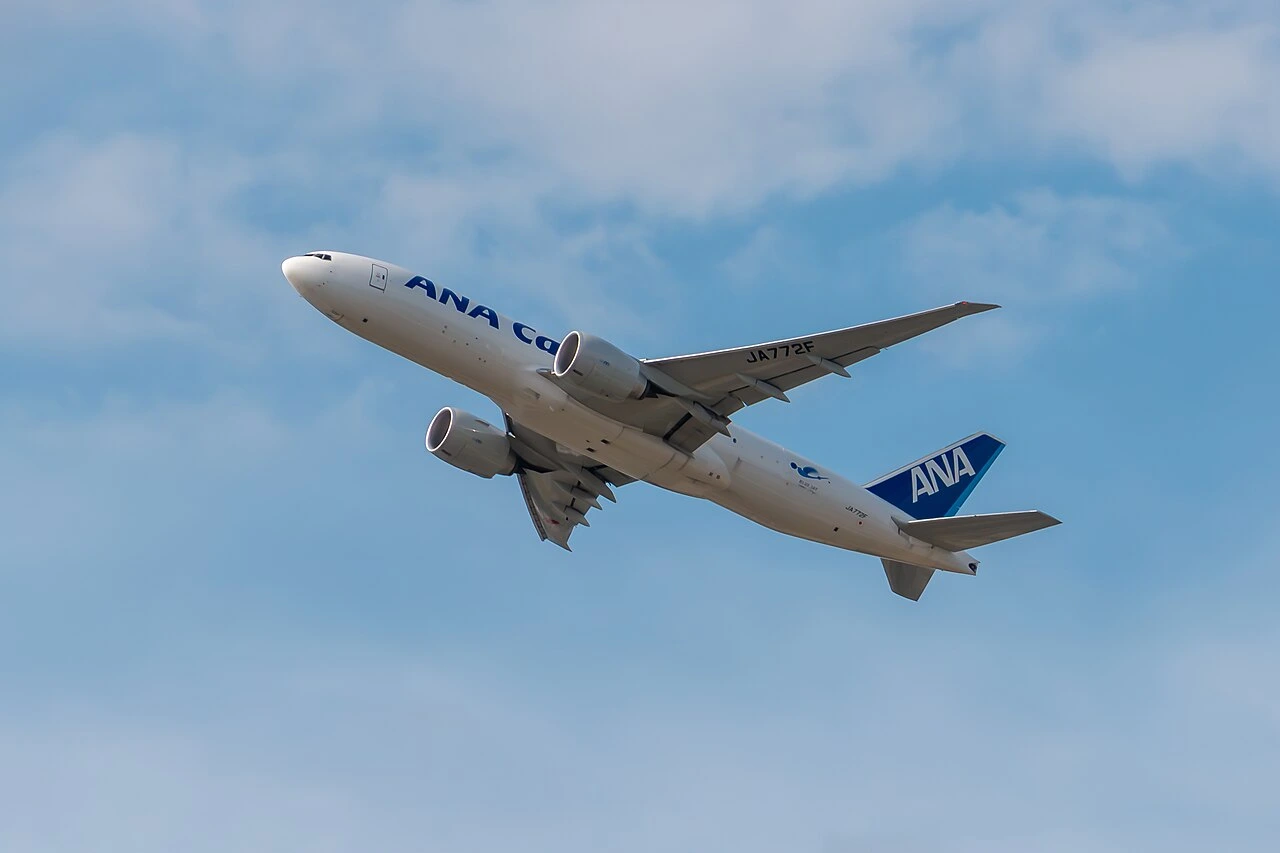
A United Airlines (UA) Boeing 737-900ER clipped the tail of an All Nippon Airways (NH) Cargo Boeing 777F while taxiing to the gate at Chicago O’Hare International Airport (ORD), Chicago, on Thursday, May 21, 2026. The United flight, UA1834, had just arrived from Boston Logan International Airport (BOS), Boston, when its winglet made contact with the tail of ANA Cargo flight NH8421, which was stationary and awaiting clearance to depart for Tokyo Narita International Airport (NRT), Tokyo. Aviation safety protocols immediately mandated that both aircraft be grounded pending structural inspections.
No injuries were reported among the 154 passengers and 7 crew members aboard the United flight, and passengers deplaned normally at the gate. ANA Cargo confirmed the incident in a statement, noting that it is actively working with the relevant authorities to verify the extent of the damage. The contact is believed to have been a light scrape, but standard airworthiness procedures require a thorough inspection before either aircraft can return to service — a process that could ground both jets for several days.
Air Traffic Control Transcripts Reveal How The Incident Unfolded
The granular sequence of events emerged from air traffic control (ATC) recordings published by LiveATC.net. Controllers at O’Hare directed ANA flight NH8421 to hold position immediately after they suspected contact had occurred. The ATC then instructed the ANA crew to vacate the runway and taxi to taxiway Mike while the situation was assessed.
The transcript, widely circulated among aviation observers, captures the exchange in its entirety:
ATC: “All Nippon 8421 Heavy, just hold position please.”
Pilot: “Okay.”
ATC: “All Nippon 8421 Heavy, I have to taxi you off of the runway. So, uhh, another aircraft might have clipped your tail. So I need you to taxi forward down the runway and then turn left at taxiway Mike, and I will have more for you there. Taxi forward, turn left on Mike, and I will have more for you.”
Pilot: “Did we get any damage to the aircraft?”
ATC: “I’m not sure, we’re gonna find that out, but there’s a possible uhh, aircraft winglet that might have struck your tail. We’re not sure just yet, we’re gonna find out what’s up.”
Pilot: “Okay.”
The exchanges reveal a textbook application of surface incident protocol, with the controller prioritising the physical clearance of the runway before committing to a damage assessment. Aviation insider JonNYC confirmed on social media that the initial assessment pointed to a light scrape with very minor damage.
Both Airlines Confirmed the Incident in Separate Statements
ANA was prompt in its public acknowledgement of the event. The Japanese carrier issued a statement to Simple Flying confirming awareness of the incident without speculating on causation or damage severity, noting:
“All Nippon Airways (ANA) is aware of an incident involving flight NH8421 and a United aircraft at Chicago O’Hare International Airport (ORD). We are working with relevant authorities to verify information.”
United Airlines followed with its own brief confirmation, characterising the contact as minimal and noting that its passengers were unaffected:
“While taxiing to the gate, a United 737 lightly scraped the tail of another aircraft. Customers deplaned normally at the gate.”
Both statements, while deliberately measured, confirm the sequence that ATC transcripts had already outlined. Neither airline disclosed a projected return-to-service timeline, which is standard practice when damage assessments are still ongoing.
Aircraft Specifications and Fleet Context for Both Jets
Both aircraft involved in the incident are owned outright by their respective airlines. The United aircraft involved was a Boeing 737-924ER registered as N75433, with the manufacturer serial number (MSN) 33527. It performed its first test flight on March 10, 2009, was originally delivered to Continental Airlines on March 20, 2009, and transferred to United Airlines following the Continental merger in November 2011, planespotters.net reported. At 17.2 years of age, it is among the older narrowbodies in United’s fleet.
The ANA Cargo aircraft was a Boeing 777-F registered as JA771F, with MSN 65756. It is the same aircraft that made history as the first ANA Boeing 777F to operate transpacific cargo services to Chicago O’Hare, launching that Narita–Chicago route in October 2019. The aircraft conducted its first flight on November 12, 2018, and entered ANA’s fleet on May 23, 2019, making it 7.5 years old. Notably, JA771F was the first ANA aircraft to receive Lufthansa Technik’s AeroSHARK riblet film modification, a sharkskin-inspired surface treatment applied to the fuselage to reduce aerodynamic drag and improve fuel efficiency.
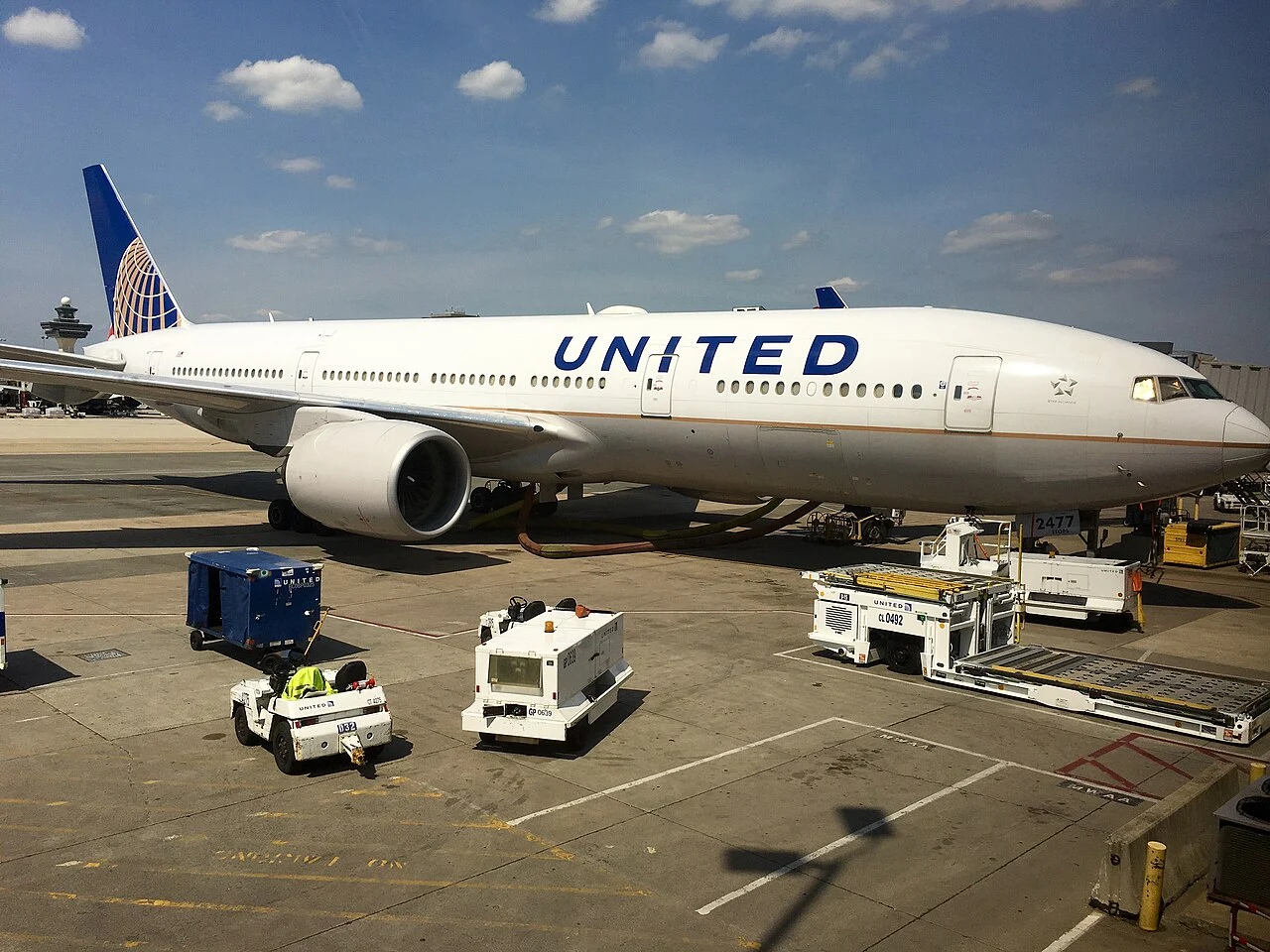
The Boeing 777F carries a maximum payload capacity of approximately 102 metric tonnes, roughly double that of the 767F models that ANA previously operated on transpacific sectors. The aircraft is particularly suited to carrying semiconductors, aircraft engines, and temperature-sensitive pharmaceutical cargo on the Narita–Chicago corridor.
Standard Post-Contact Procedures Now Govern Both Grounded Aircraft
When a moving aircraft makes contact with a stationary one on the ground, established international aviation safety norms — as outlined in guidance from bodies such as the FAA — mandate an immediate halt to operations for both aircraft. Ground crews first conduct a visual inspection to confirm structural integrity, then a more detailed engineering assessment follows. Runways and taxiways involved in or adjacent to the contact point are swept by ground vehicles to confirm that no foreign object debris (FOD) has been shed, which could damage other aircraft operating in the vicinity.
Depending on the depth of structural compromise found during inspection, repairs can extend an aircraft’s ground time from a matter of hours to several weeks. Both airlines will need to deploy replacement aircraft on the affected routes for as long as the inspections and any subsequent repairs continue.
The ANA Cargo 777F’s grounding is operationally significant given the high cargo volumes that the Narita–Chicago route supports, particularly in automotive components, electronics, and perishable goods moving between Japan and North America.

United Airlines’ Ground Safety Record Under the Microscope — Again
United Airlines has accumulated a well-documented series of ground incidents and airborne mishaps since 2024, drawing sustained attention from regulators, safety analysts, and the travelling public alike. AirlineRatings.com has catalogued a pattern of incidents spanning dropped components, runway incursions, and engine failures across United’s fleet:
| Date | Aircraft | Flight | Route | Incident |
|---|---|---|---|---|
| March 7, 2024 | Boeing 777-200 | UA35 | San Francisco → Osaka Kansai | Dropped a main wheel on departure |
| March 15, 2024 | Boeing 737-800 | UA433 | San Francisco → Medford | Landed missing an external panel |
| April 10, 2024 | Boeing 737-800 | UA1960 | Los Angeles → Las Vegas | Landed with a panel missing in flight |
| June 20, 2024 | Airbus A320 | UA325 | Hartford → Denver | Dropped engine parts on departure |
| July 8, 2024 | Boeing 757-200 | UA1001 | Los Angeles → Denver | Dropped a main wheel on departure |
| August 24, 2024 | Boeing 737-900 | UA759 | Denver → Seattle | Lost a nose tyre on departure |
| January 18, 2026 | Airbus A321neo | UA2323 | Chicago O’Hare → Orlando | Dropped a nose wheel on touchdown |
On October 17, 2025, a United Boeing 737-700 (flight UA2652, arriving from Jackson Hole) struck the left horizontal stabilizer of a stationary Boeing 767 while taxiing to its gate — also at Chicago O’Hare. That incident prompted an FAA investigation. In a separate collision at San Francisco International Airport (SFO) in September 2025, two United aircraft made contact during pushback operations, and in May 2025, two other United flights at SFO had their wings strike while pushing back from adjacent gates. Each of those events also fell under FAA review.
In January 2025, an American Airlines Boeing 737-800 struck a United Airlines Boeing 787-10 Dreamliner while both aircraft were taxiing on different taxiways at O’Hare, further illustrating that ORD’s complex taxiway network presents recurring challenges across multiple carriers. United’s most serious recent airborne incident occurred on May 3, 2026, when a Boeing 767-400ER (UA169) struck a light pole and a truck while making a visual approach to Newark Liberty International Airport (EWR).
AirlineRatings.com recorded 118 incidents across United’s operation through 2024 and 2025, equating to roughly 0.11 incidents per aircraft across the carrier’s fleet of 1,053 jets. Following a string of incidents in early 2024, United CEO Scott Kirby wrote directly to customers, stating:
“Unfortunately, in the past few weeks, our airline has experienced a number of incidents that are reminders of the importance of safety. While they are all unrelated, I want you to know that these incidents have our attention and have sharpened our focus.”
A subsequent FAA audit found no systemic safety failures within the airline’s operations, and United retains its Seven Star safety rating from AirlineRatings.com — the highest classification available. The rating reflects the carrier’s compliance with IOSA standards, its three-decade fatality-free record, and its authorisation to operate within and over the European Union.
O’Hare’s Taxiway Complexity Is a Recurring Operational Challenge
Chicago O’Hare International Airport consistently ranks among the world’s busiest airports by operations, and its sprawling, multi-runway layout presents navigational challenges that few airport environments can match. Ground incidents at O’Hare are not anomalous but have become a recurring feature of coverage in aviation safety journalism.
The airport handles hundreds of daily movements across an intricate network of taxiways, ramps, and runway crossings — a configuration that demands acute situational awareness from flight crews, ramp controllers, and ground handlers alike.
A report by AeroTime noted that an earlier Delta Air Lines collision at O’Hare occurred in an area not under direct traffic control — underscoring how even the margins of the controlled environment at ORD carry risk. The United–ANA incident appears to have occurred in a controlled zone where ATC involvement was immediate, which allowed for rapid response and may have prevented a more consequential outcome.
Broader concerns about the adequacy of staffing levels at US ATC facilities also bear on discussions of ground safety; a shortage of air traffic controllers across the United States has been documented as an ongoing systemic pressure that elevates workload and narrows the margins for error.
What Comes Next for Both Aircraft
The immediate priority for both United and ANA Cargo engineering teams is to complete the structural assessment of the contact zone — the winglet of the 737-900ER and the tail section of the 777F. Engineers will examine for cracks, deformations, or any compromise to control surfaces or structural frames. Repair timelines depend entirely on what that assessment reveals; a superficial scrape to a composite winglet tip may require only a brief inspection and cosmetic repair, while damage to primary structure demands a far more extensive intervention.
ANA Cargo will need to evaluate the operational impact on its Narita–Chicago freight corridor and determine whether a substitute freighter can be deployed. United, for its part, will work through its standard insurance and incident reporting processes and file the necessary disclosures with the FAA. Both carriers are currently coordinating with relevant authorities, as confirmed in their respective statements. The FAA has not yet issued a formal statement on whether it will open an investigation, though the agency typically does so for ground contact events of this nature.