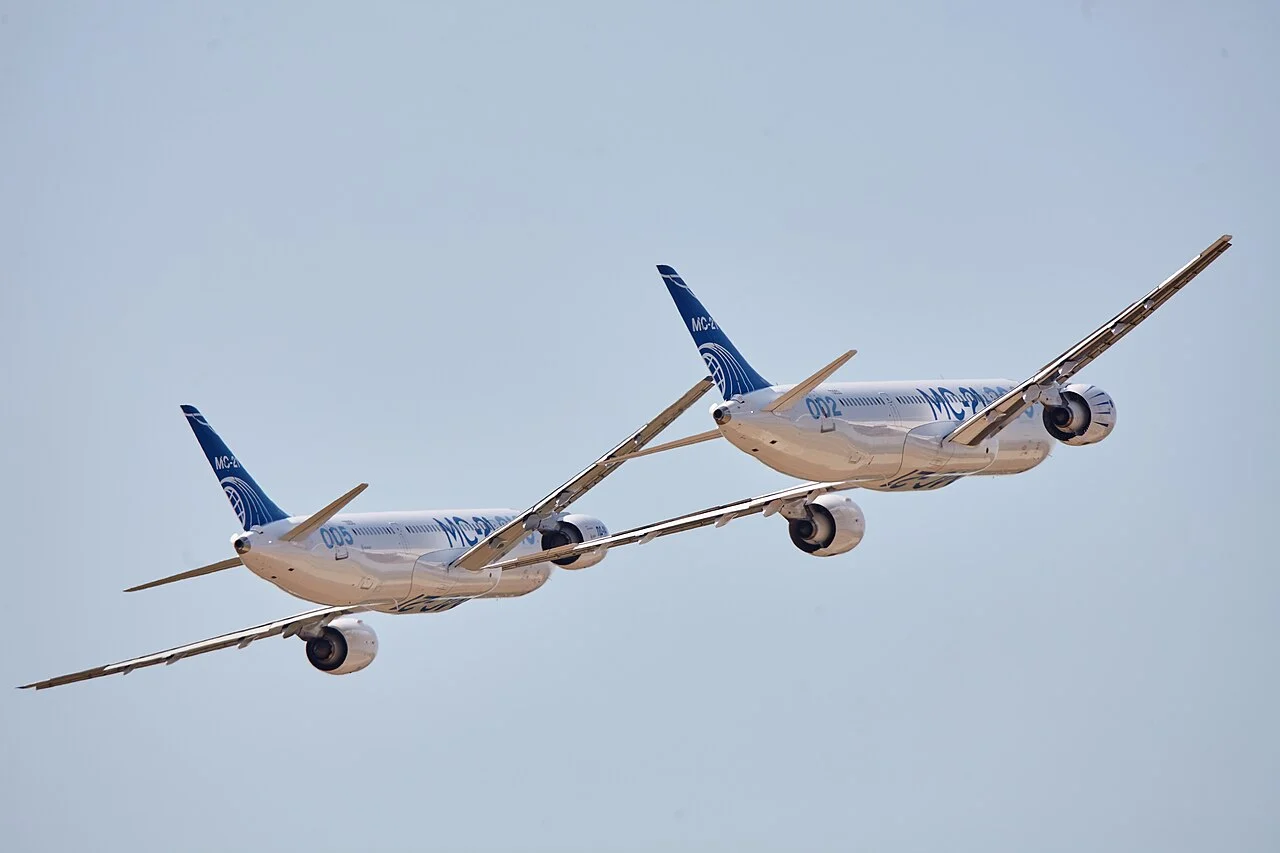
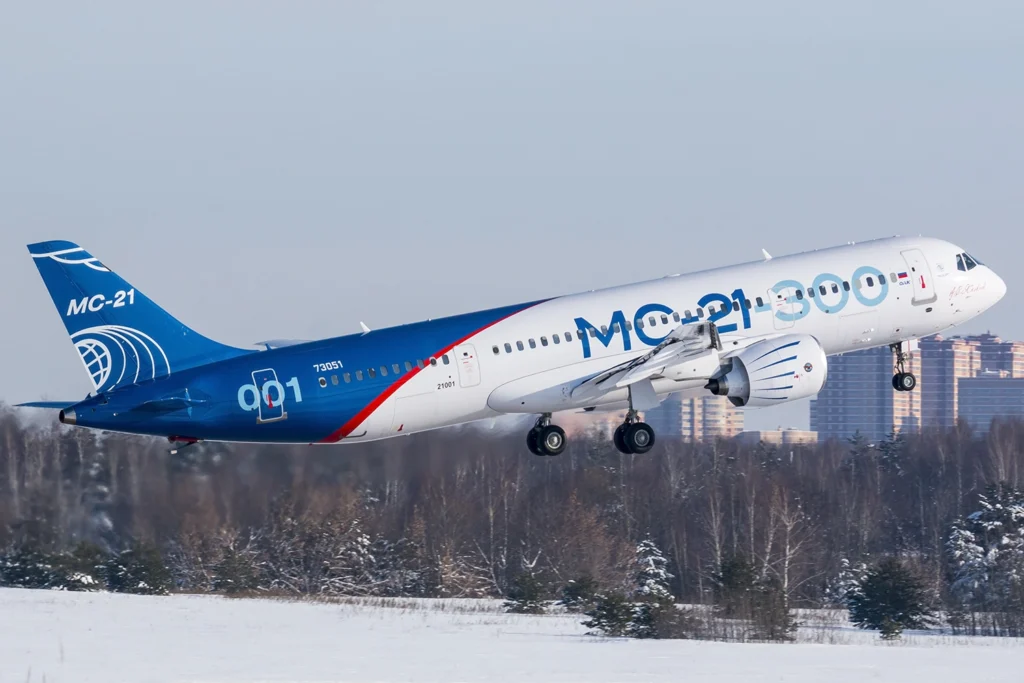
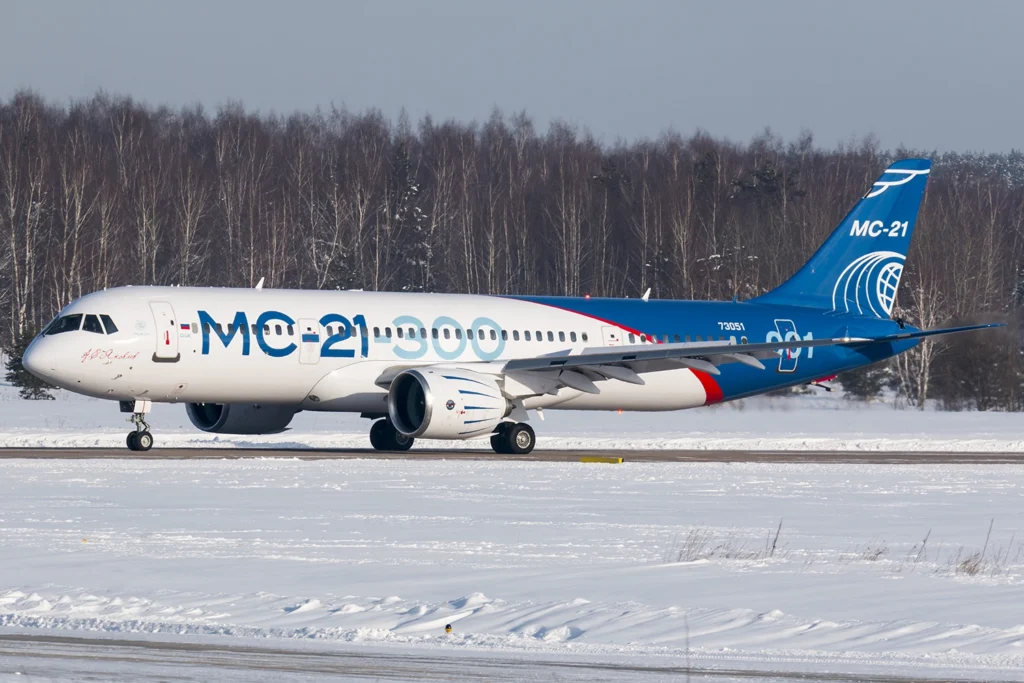
The first serial production example of Russia’s Yakovlev MC-21 jet completed its maiden flight on Monday, taking off from the Irkutsk Aviation Plant and staying airborne for one hour and 23 minutes. The aircraft, designated the MC-21-310, is meant to compete with the Boeing 737 MAX and Airbus A320neo, and it now runs on Russian-built engines instead of the Western powerplant originally planned for the jet.
Manufacturer United Aircraft Corporation (UAC) said the flight came days after Russian President Vladimir Putin made a surprise visit to the Irkutsk factory. The test forms part of a broader push to build a domestic airliner industry cut off from Boeing and Airbus by Western sanctions, one that also includes new turboprops, a proposed widebody, and a state airline fleet already showing signs of strain.
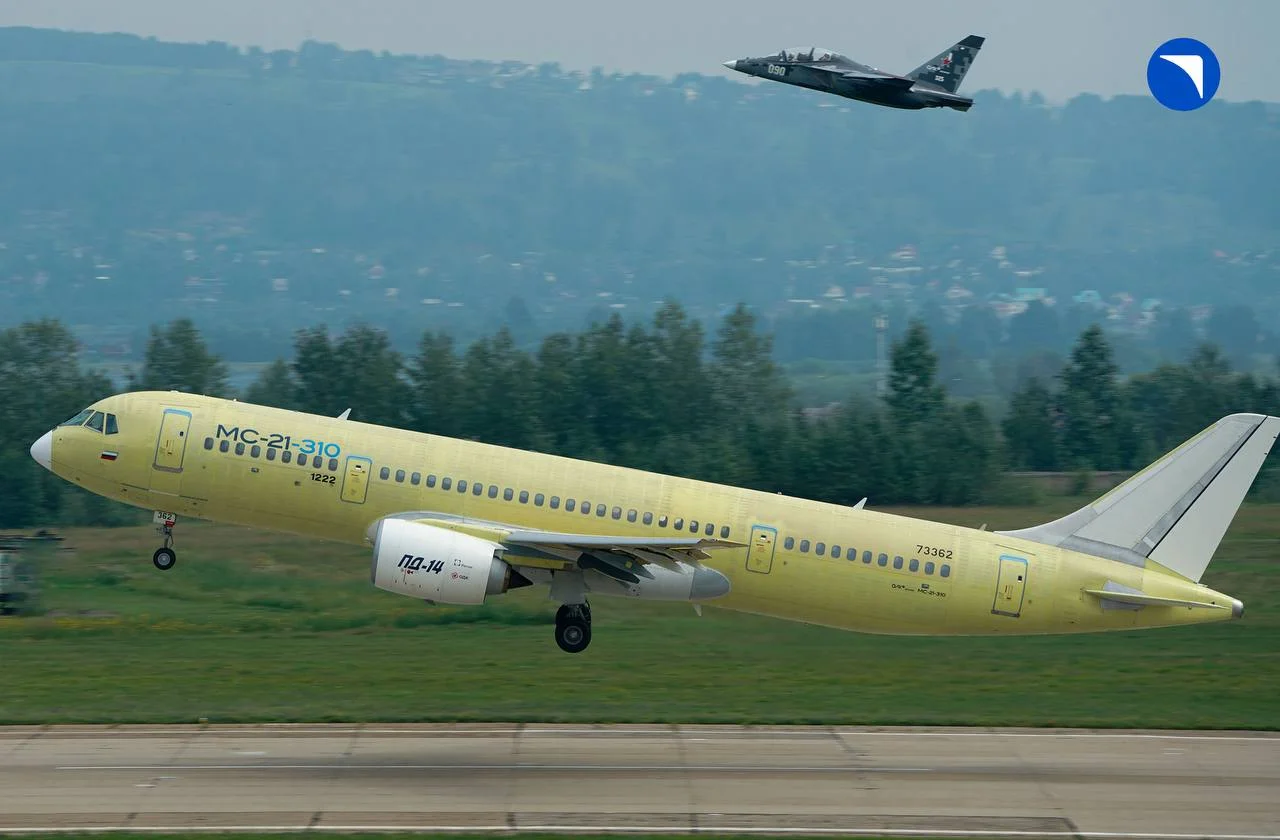
MC-21-310 Completes 83-Minute Maiden Flight from Irkutsk
The MC-21-310 took off from an airstrip at the Irkutsk Aviation Plant and climbed to 6,000 meters, or 19,700 feet, during its test flight. It reached a top speed of 600 kilometers per hour, or 372 miles per hour, before landing safely back at the plant, The Moscow Times reported in its coverage of the flight.
Test pilot Roman Taskayev summed up the flight afterward. “The first assembly line produced aircraft performed well, and the flight plan was completed in full,” he said.
| Specification | MC-21-310 (Updated) |
|---|---|
| Aircraft Type | Medium-haul narrow-body airliner |
| Passenger Capacity | 175 passengers (two-class configuration) |
| Flight Range | 3,830 km (2,380 miles) |
| Maximum Takeoff Weight (MTOW) | 85 tonnes |
| Engine | 2 × Aviadvigatel PD-14 turbofan engines |
| Airframe | Composite-wing narrow-body aircraft |
Data: Pravda
UAC CEO Vadim Badekha said the Irkutsk factory is now preparing an initial batch of 18 airliners. He added that the government approved additional production orders following Putin’s visit to the plant of the aircraft that Times if India describes as “Putin’s Boeing Killer”, on July 24.
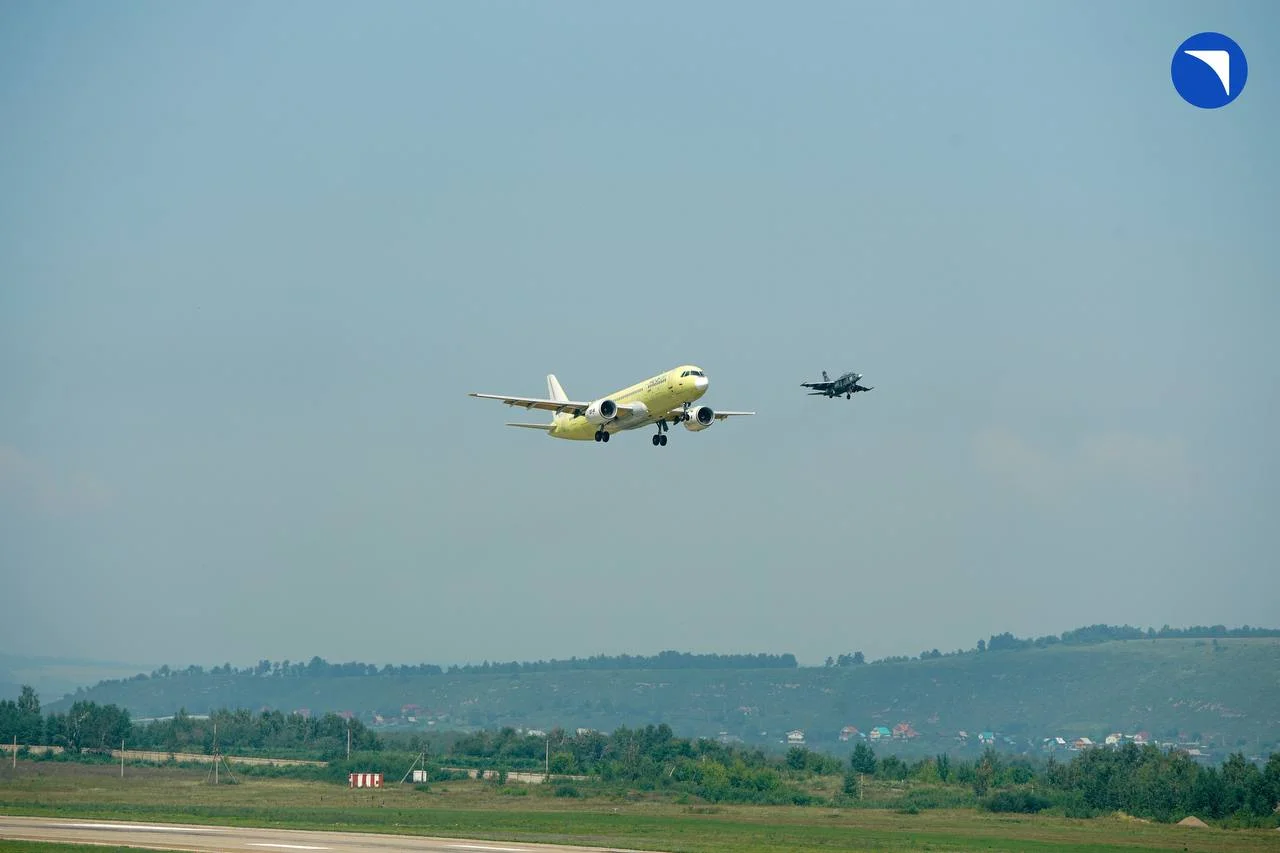
Why the MC-21 Had to Drop Its Western Engines
The MC-21 program launched in 2009 under the Irkut name and was originally designed around the Pratt & Whitney PW1000G engine. Russia certified that Western-powered version, the MC-21-300, in late 2021. A year later, Russia launched a war against Ukraine and ever since sanctions have followed.
Around 40%–50% of the MC-21 was originally designed with imported Western components. However, the Pratt & Whitney PW1000G engines could no longer be fitted because sanctions cut off access. This meant that Russia was forced to “Russify” the aircraft by replacing Western parts with domestically produced alternatives. The substitute Russian components added 5.75 tonnes (almost 6 tons) to the aircraft’s weight, resulting in:
- Reduced range (possibly below 2,800 km, with some estimates below 2,000 km)
- Lower maximum payload
- Reduced altitude performance
The production model now flying is powered instead by the Russian-built Aviadvigatel PD-14 engine. Aviation outlet Air Data News describes the switch as one of several Russian-made systems replacing the imported equipment originally selected for the program.
Chief designer Vitaly Naryshkin said running production alongside ongoing testing should help the manufacturer close the gap between certification and deliveries. Rostec, the state conglomerate that oversees UAC, aims to complete certification by late 2026, with commercial flights following months later.
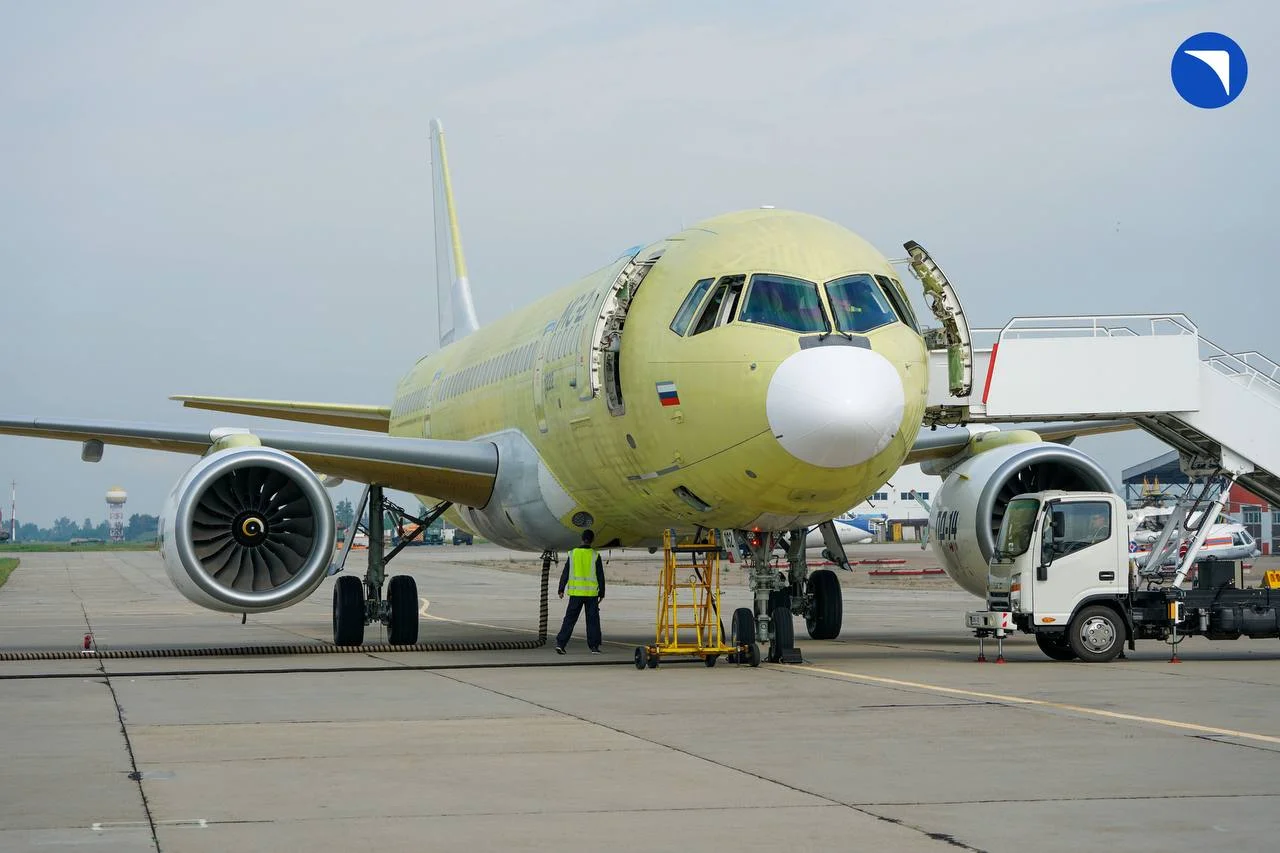
Fresh Government Funding Keeps 18 MC-21-310 Jets on Track
Around the end of 2025, it was reported that the largest portion of funding for the aircraft was 9,941 million roubles (approx. £92.2 million) and was “is allocated to the first phase, commencing from the date of contract award – 4th to 19th December 2025”:
“The second phase, running from 15th November 2025 to 18th December 2026, will receive 6,962 million roubles (approx. £64.6 million). The final phase, covering the period from 15th November 2026 to 20th December 2027, will be funded to the tune of 4,8 billion roubles (approx. £44.6 million)..”
A few days before the maiden flight, Russian Prime Minister Mikhail Mishustin approved new money on July 30 to keep the 18 in-progress MC-21-310 airframes moving through final assembly. That funding is meant to secure deliveries to launch customer Aeroflot through 2035. Russia has set a longer-term target of building 36 MC-21 jets a year by 2032 with the intention of making its domestically manufactured aircraft the backbone of Aeroflot’s narrowbody fleet as its Airbus A320 and Boeing 737 jets age out of service.
Industry Minister Anton Alikhanov said airlines flying the MC-21, along with the Tu-214 and IL-114-300, will get state support for the first five to six years after each aircraft enters service. The subsidies are meant to cover airworthiness and maintenance costs while manufacturers work through early production issues.
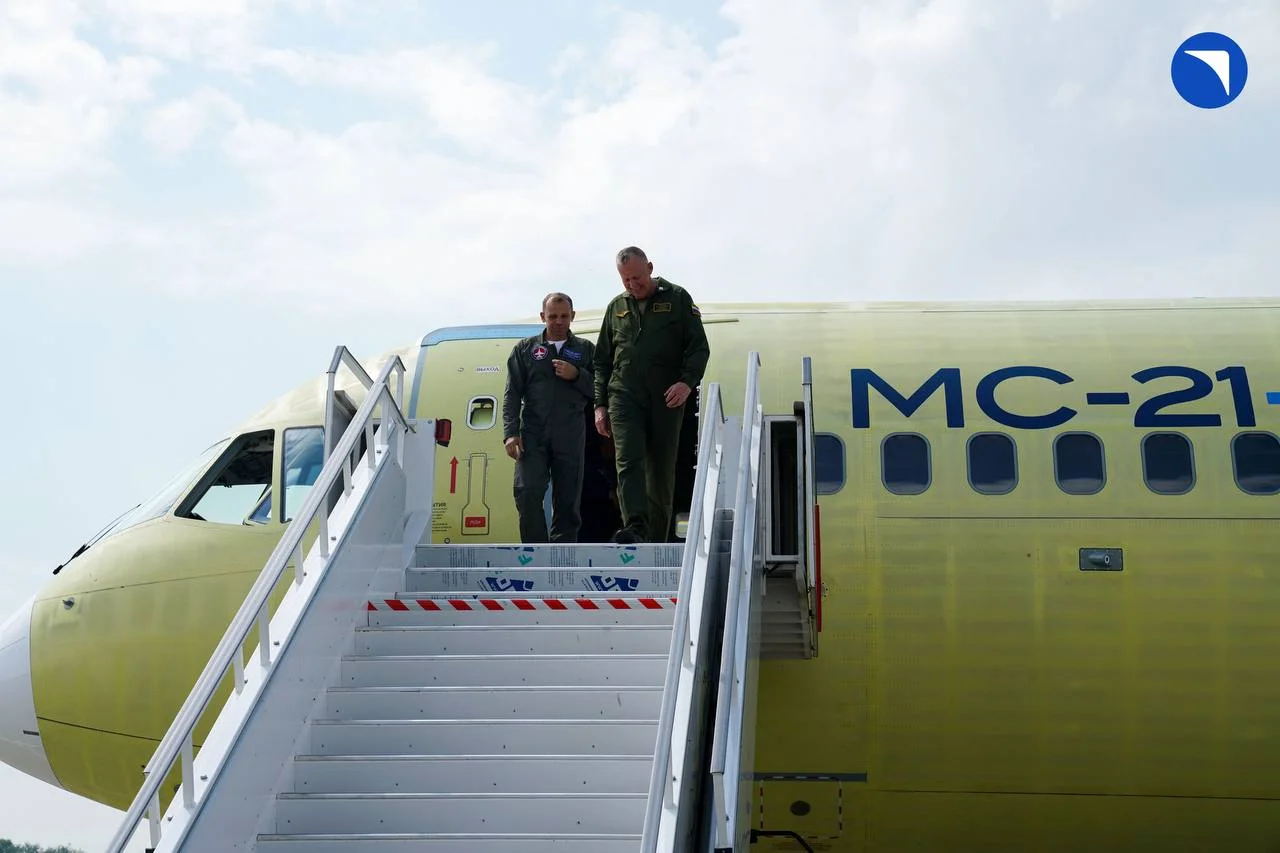
Personnel and Parts Shortages Still Cloud the Program
Despite Monday’s milestone, Russia’s aircraft programs face real structural problems. A shortage of trained workers, imported components, and financing has slowed output across both the MC-21 and the smaller SJ-100 regional jet program.
By late 2024, roughly 40 unfinished MC-21 and SJ-100 fuselages had piled up at factories in Irkutsk and Komsomolsk-on-Amur, missing parts needed for final assembly. GTLK, the state leasing company that finances deliveries of the MC-21, IL-114-300, and SJ-100, also posted a 6 billion ruble loss in the first quarter of 2026.
Yakovlev, the manufacturer behind the MC-21, has historically focused on Sukhoi combat aircraft rather than civil jets. That defense workload competes with civil production for the same factory floor space and skilled labor.
Ilyushin’s IL-114-300 Turboprop Moves Forward Alongside the MC-21
The funding round that supported the MC-21 also released $32.8 million, or 2.6 billion rubles, to finish the first three IL-114-300 turboprops. Ilyushin, another UAC subsidiary, builds the aircraft, and the first three units are earmarked for Arkhangelsk Aviation Enterprise.
The IL-114-300 received its type certificate in June 2026 and is designed to replace aging An-24 turboprops on short regional routes. Its specifications include:
- Seating for up to 68 passengers
- A range of just over 1,000 nautical miles
- Twin TV7-117ST-01 turboprop engines
- An upgraded TsPNK-114M2 avionics suite
- The ability to operate from short, unpaved runways in Arctic conditions
Russia wants close to 100 IL-114-300s in service by 2030, split between commercial airlines, government customers, and a small number of export buyers.
Aeroflot Leads 384 Firm Orders for the MC-21
Fleet data from ch-aviation puts total firm orders for the MC-21 at 384 aircraft. National carrier Aeroflot accounts for more than half of that total with 198 units on order, while 99 orders belong to undisclosed customers.
Rossiya, another Russian carrier, has ordered 61 examples, and smaller operators Red Wings and IrAero have ordered 16 and 10 aircraft respectively. One prototype aircraft carries a 16-seat business class cabin in a four-abreast layout alongside 147 economy seats arranged six abreast, according to ch-aviation.
Tupolev’s Tu-454 Shows Russia’s Wider Widebody Ambitions
The MC-21 sits inside a broader Russian effort to rebuild aerospace capacity beyond narrowbody jets. Tupolev, another UAC division, unveiled a conceptual widebody aircraft called the Tu-454 at the Russian Venture Forum in Kazan in April 2026, positioning it as a future rival to the Boeing 787 Dreamliner and Airbus A350.
Unlike the MC-21, the Tu-454 has no confirmed timeline, engine, or seating configuration. Tupolev’s project manager Alexey Shadanov said the company remains focused on “scaling up serial production of the Tu-214” while continuing early design work on new aircraft, a comment that echoes the pattern seen with the MC-21 and IL-114-300.
Russia previously tried to build widebody capacity through the CRAIC CR929 joint venture with China, a program that has faced repeated delays. China’s own narrowbody rival to the 737 MAX, the COMAC C919, has already moved further into commercial service than the MC-21, giving Moscow an additional benchmark to measure its own progress against.