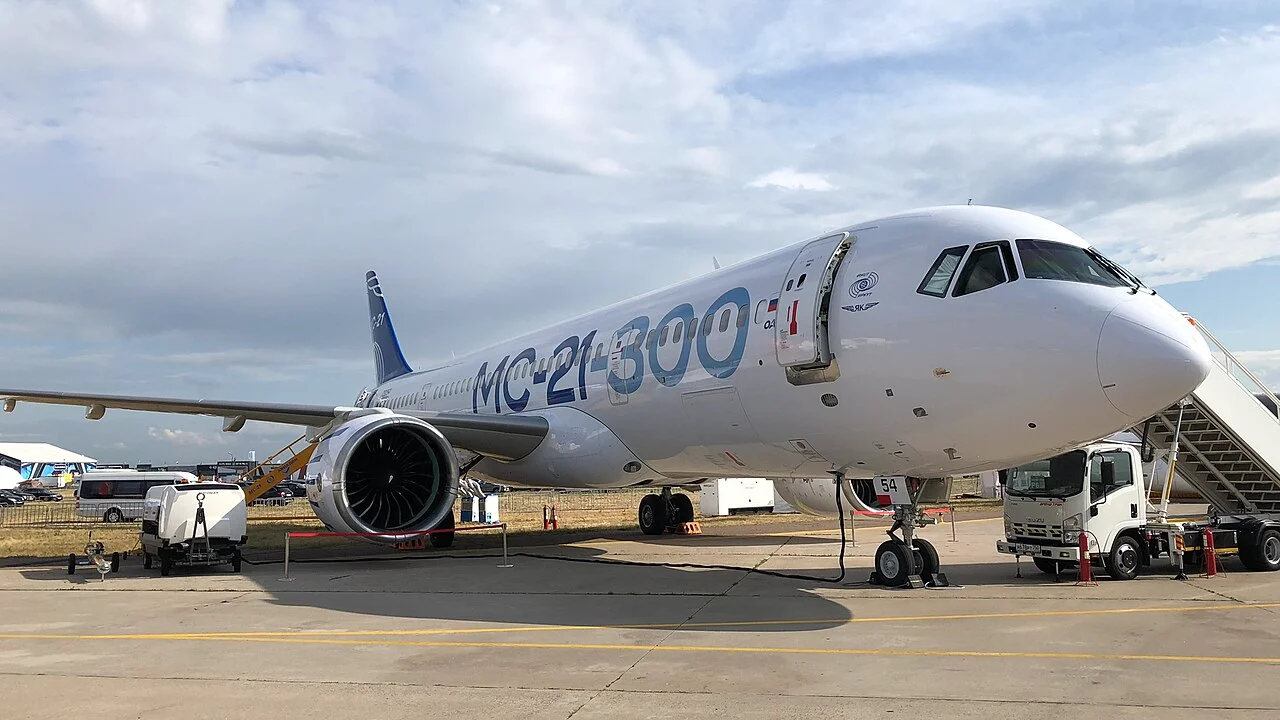
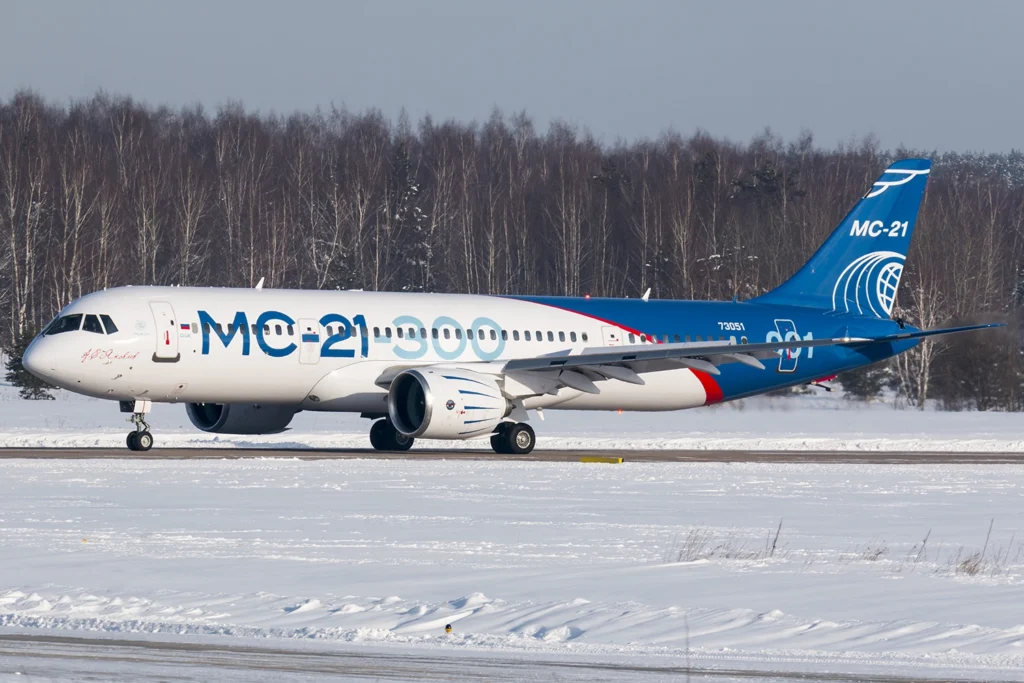
Russia’s government has committed new funding to keep its MC-21 jet program moving and to finish the first three IL-114-300 turboprops. Prime Minister Mikhail Mishustin announced the funding on July 30, 2026, saying it would stop the production line from stalling, according to a report by AeroTime. The money covers 18 MC-21-310 aircraft currently in production at Yakovlev’s plant in Irkutsk, Russia, and is meant to secure deliveries to launch customer Aeroflot (SU) through 2035.
The funding push comes as Russia tries to rebuild a domestic aircraft industry cut off from Western suppliers. Sanctions imposed after Russia’s invasion of Ukraine blocked access to Airbus and Boeing jets and parts, pushing Moscow to lean on home-built aircraft such as the MC-21, the Tu-214, and the IL-114-300. Aeroflot alone is waiting on 198 MC-21-310 jets, based on data from ch-aviation, which makes the new funding critical to the airline’s fleet renewal plans.
Mishustin Secures Funding to Keep 18 MC-21-310 Jets on Schedule
Mishustin’s announcement targets the 18 MC-21-310 airframes now at various stages of assembly at the Irkutsk Aircraft Plant. He said the funding exists to “prevent the conveyor belt from stopping” and to meet the delivery schedule through 2035.
The MC-21-310 uses only Russian-made parts and systems. It runs on the Russian-built PD-14 engine, which replaced the Western PW1000G engine originally offered on export versions of the jet.
Russian President Vladimir Putin toured the Irkutsk plant earlier in July 2026 to inspect the aircraft in person. Certification for the MC-21-310 is expected to close out in June 2027, while Yakovlev is also developing a smaller variant, the MC-21-210.
Russia aims to build 36 MC-21 jets a year by 2032. That pace would make the MC-21 the backbone of Aeroflot’s narrowbody fleet as older Airbus A320 and Boeing 737 jets age out of service.

$32.8 Million Secures First Three IL-114-300 Turboprops for Arkhangelsk
Mishustin also released $32.8 million, or 2.6 billion rubles, to complete the first three production IL-114-300 turboprops. Rostec’s United Aircraft Corporation subsidiary Ilyushin builds the aircraft, and the first three units will go to Arkhangelsk Aviation Enterprise.
The IL-114-300 received its type certificate in June 2026, clearing the way for commercial service. Regulators designed the aircraft to replace the aging An-24 and other Soviet-era turboprops on short regional routes.
The IL-114-300 comes with the following specifications:
- Seats up to 68 passengers
- Range of just over 1,000 nautical miles
- Powered by twin TV7-117ST-01 turboprop engines
- Fitted with the upgraded TsPNK-114M2 avionics suite
- Built to operate from short, unpaved runways in Arctic conditions
By 2030, Russia wants close to 100 IL-114-300s in service. Planners expect 50 aircraft to go to commercial airlines, 35 to government customers including the defense ministry, and 15 to export buyers.
State Support Extends to Five or Six Years After Entry into Service
Russia’s funding push for the MC-21 and IL-114-300 fits inside a wider support program. Industry Minister Anton Alikhanov said at a forum in Zhukovsky that airlines flying the MC-21, Tu-214, and IL-114-300 will get state support for the first five to six years after each aircraft enters service.
The subsidies target airworthiness and maintenance costs while manufacturers work out early production issues. Alikhanov said the goal is to give Yakovlev and Ilyushin room to refine the aircraft without discouraging airlines from adopting them early.
The Ministry of Industry and Trade separately funded seven equipment projects worth 6.7 billion rubles in 2025. One of those projects covers a five-axis machining center built specifically to produce composite wing panels for the MC-21.
Personnel And Parts Shortages Still Cloud the Production Timeline
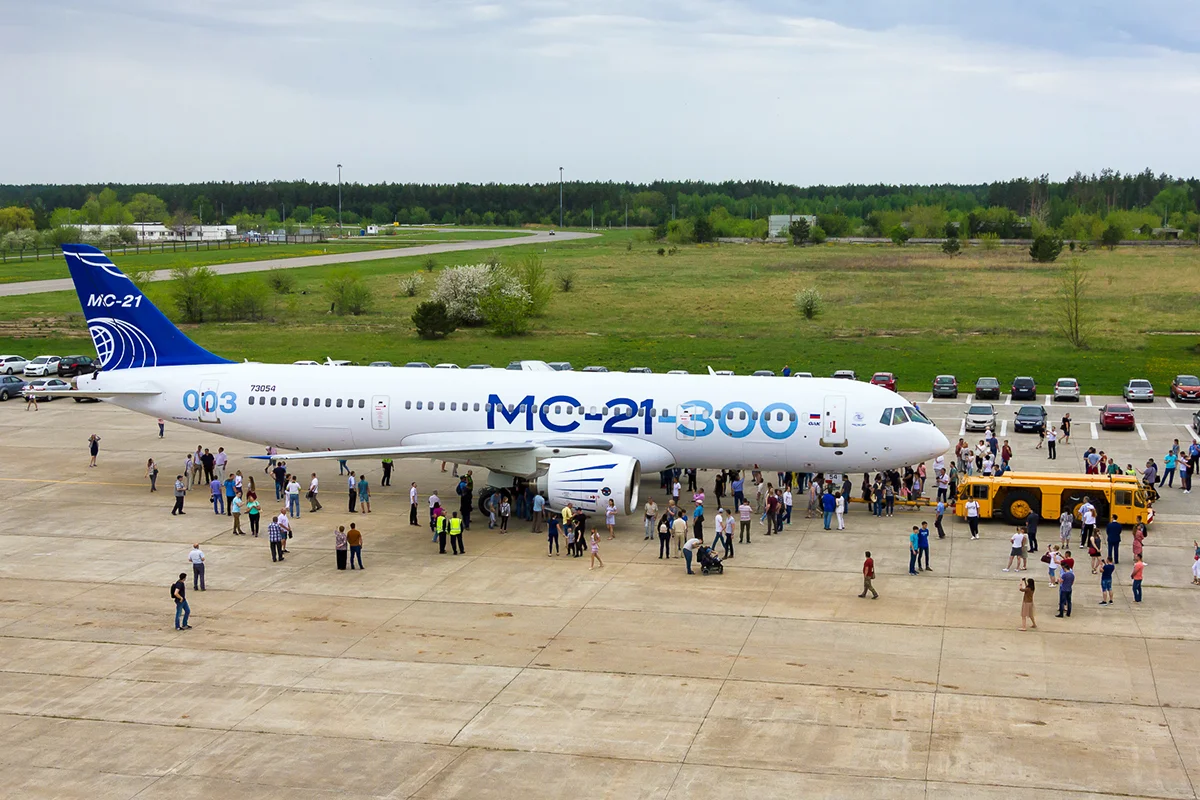
Despite the new funding, Russia’s aircraft programs still face structural problems. Vedomosti reported that a shortage of trained workers, imported components, and financing has slowed output across both the MC-21 and SJ-100 programs.
Yakovlev, the manufacturer behind the MC-21, has historically focused on combat aircraft from the Sukhoi design bureau. That defense workload competes with civil aircraft production for the same factory floor space and skilled labor.
By late 2024, roughly 40 unfinished MC-21 and SJ-100 fuselages had piled up at factories in Irkutsk and Komsomolsk-on-Amur, missing parts needed for final assembly. GTLK, the state leasing company that finances deliveries of the MC-21, IL-114-300, and SJ-100, also posted a 6 billion ruble loss in the first quarter of 2026.
How The Funding Fits into Russia’s Wider Aviation Push
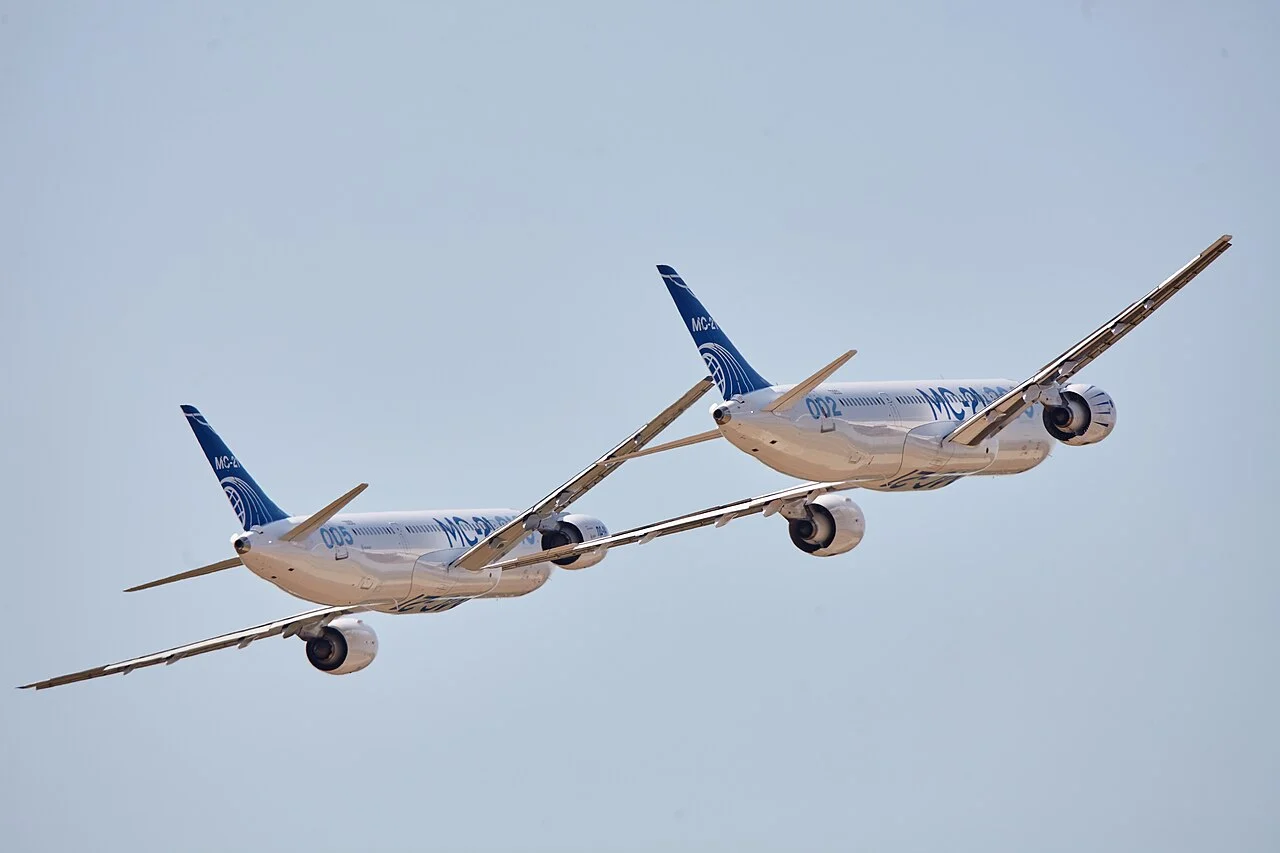
The MC-21 and IL-114-300 funding is one piece of a broader Russian effort to rebuild aerospace capacity while fighting a war in Ukraine. Tupolev unveiled a conceptual widebody jet, the Tu-454, at the Russian Venture Forum in Kazan in April 2026, positioning it as a future rival to the Boeing 787 and Airbus A350. Unlike the MC-21, the Tu-454 has no confirmed timeline, engine, or seating configuration.
Tupolev’s project manager Alexey Shadanov said the company remains focused on “scaling up serial production of the Tu-214” while continuing early design work on new aircraft. That statement mirrors the pattern seen with the MC-21 and IL-114-300, where Moscow is funding near-term production while sketching out longer-term ambitions.
Russia’s military aviation sector has moved faster than its civil programs in some areas. The Russian Aerospace Forces already took delivery of their first batch of Yak-130 trainer jets from Rostec, an aircraft built by Yakovlev and Aermacchi for pilot training and light attack duties.
Sanctions have also strained Russia’s existing carriers even as new jets take shape on the assembly line. Red Wings, one of four aviation businesses Rostec is folding into a single holding company, can currently run scheduled flights with only one of its three Boeing 777 aircraft, according to Ukrainian intelligence findings. 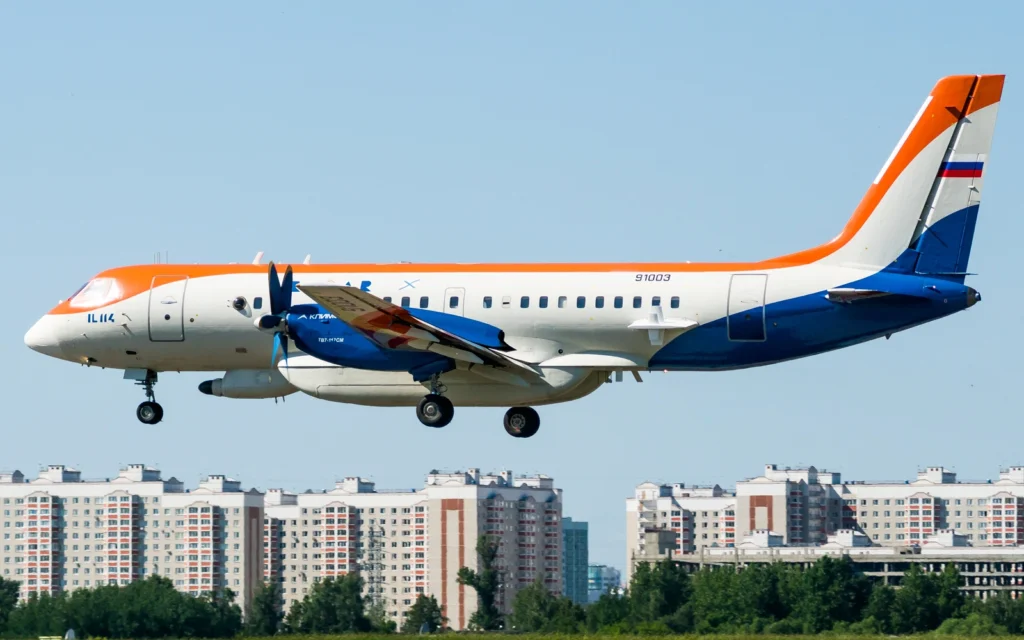
Photo: By Papas Dos from Moscow, Russia – 91003 I114(LL) NPP RADAR OSF UUMO, CC BY 2.0, Wikimedia Commons



