
Concorde was an aircraft that had come after fourteen years of collaboration between France and Britain. It was sleek, agile, and had cruised at greater than Mach 2, allowing it to cross the pond in less than two hours. This aircraft saw passenger operations as far back as 1976, prompting to ask if one could get to the US from the UK in less than three hours almost half a century ago, why do planes not fly faster anymore? One of the biggest reasons behind this is that Concorde was a failure. Supersnoc travel was full of problems, some of which were environmental, and some operational. In this article, we will have a look at the top 5 reasons why Concorde stopped flying.
An incapacity to expand Concorde’s operations
Operations to Asia were cancelled following Concorde’s high noise
In 1960, France and Britain had plans of producing 300 Concordes. In 1979, $9 billion had been spent, and only 16 aircraft of this type were made. By that time, five Concordes have been sold to British Airways and four to Air France, totaling the sales of the Concorde to only 9. Of the remaining seven, five were unsold and two were nonoperational prototypes. Before 1980, the New York Times reported that “even French executives who have long been resistant to the idea are beginning to admit that the planes may be taken out of service, on some routes if not all”.
For most of the near-three decades of Concorde’s service, its flights were along two routes:
- New York to London (operated by British Airways)
- New York to Paris (operated by Air France)*
* The United States Congress banned Concorde because of the concerns related to sonic boom, with a ban being lifted in May 1976, as flights were to land at Washington Dulles International Airport (IAD). Concorde’s thrice-weekly service to IAD started on May 24th, 1976.
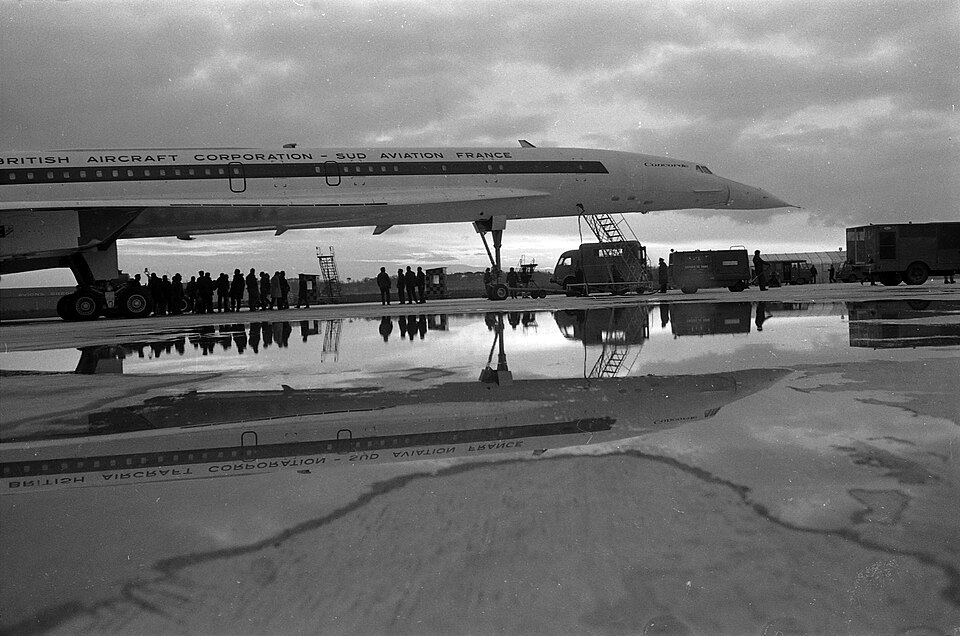
_-_53Fi2322.jpg)
Concorde’s routes were expanded to Bahrain(first operated by British Airways from London to Bahrain in January 1976), South America (operated first by Air France from Paris to Rio de Janeiro via Dakar), and Singapore (by British Airways from 1977, on and off until 1980). Some of the other routes operated on the Concorde included:
- Air France: Paris to Caracas, Venezuela, via the Azores (beginning in April 1976)
- Air France: Mexico City (via Washington) [twice-weekly between 1978 and 1982]
British Airways operated around 300 charter flights using Concordes each year, with some of the flights being:
- Regular charters (subsonic or supersonic) from Exeter Airport operated in the UK between 1998 and 2000.
- Charter services to visit Santa in Rovaniemi, Lapland. These were carried out in the 1980s and 1990s.
- Charters to Oceania, including a record-breaking charter in 1985.
One has to say that these were fairly limited operations. Air France’s operations of its Concordes to various South American destinations coincided with the periods of oil-boom in the region, and the services terminated “when times got tougher”, said Simple Flying. Services in Asia were chequered due to “noise complaints in Malaysia and lack of permission to fly supersonic in Indian airspace”. The same publication also said:
“In the early 1970s, the Anti-Concorde Project and opposition led to banning of commercial supersonic transport in Canada, Ireland, the Netherlands, Norway, Sweden, Switzerland, and West Germany. This meant that Concorde routes were restricted, making it even more infamous among airlines.”
As it couldn’t be deployed on as many routes to make it profitable, the days of Concorde were numbered.
Concorde was a veritable gas guzzler and not particularly environment friendly
The Concorde was too noisy and potentially cancerous
In 1975, the US Department of Transportation had analyzed the breakage probabilities of various buildings if Concorde flew over them during its aerial operations, with the probabilities “calculated to be less than . 001 for a year of Concorde operations; the only exception was the case of already cracked lites at Sully Plantation. These each had a yearly breakage probability of 20%.” The report also said that if the tiles in the set of analyzed buildings were to be replaced by newer ones, the probabilities would be impossibly small. Concorde, the 1–seater supersonic plane was quoted to be “will be noisier than existing subsonic aircraft, save arguably for the B-707 and DC-8 on landing, which [form] 27% of the U.S. commercial fleet.” Most of the flights were restricted to over the ocean as the sonic boom associated with faster than sound flights “could shatter the glass of the houses if it flew over residential areas”.
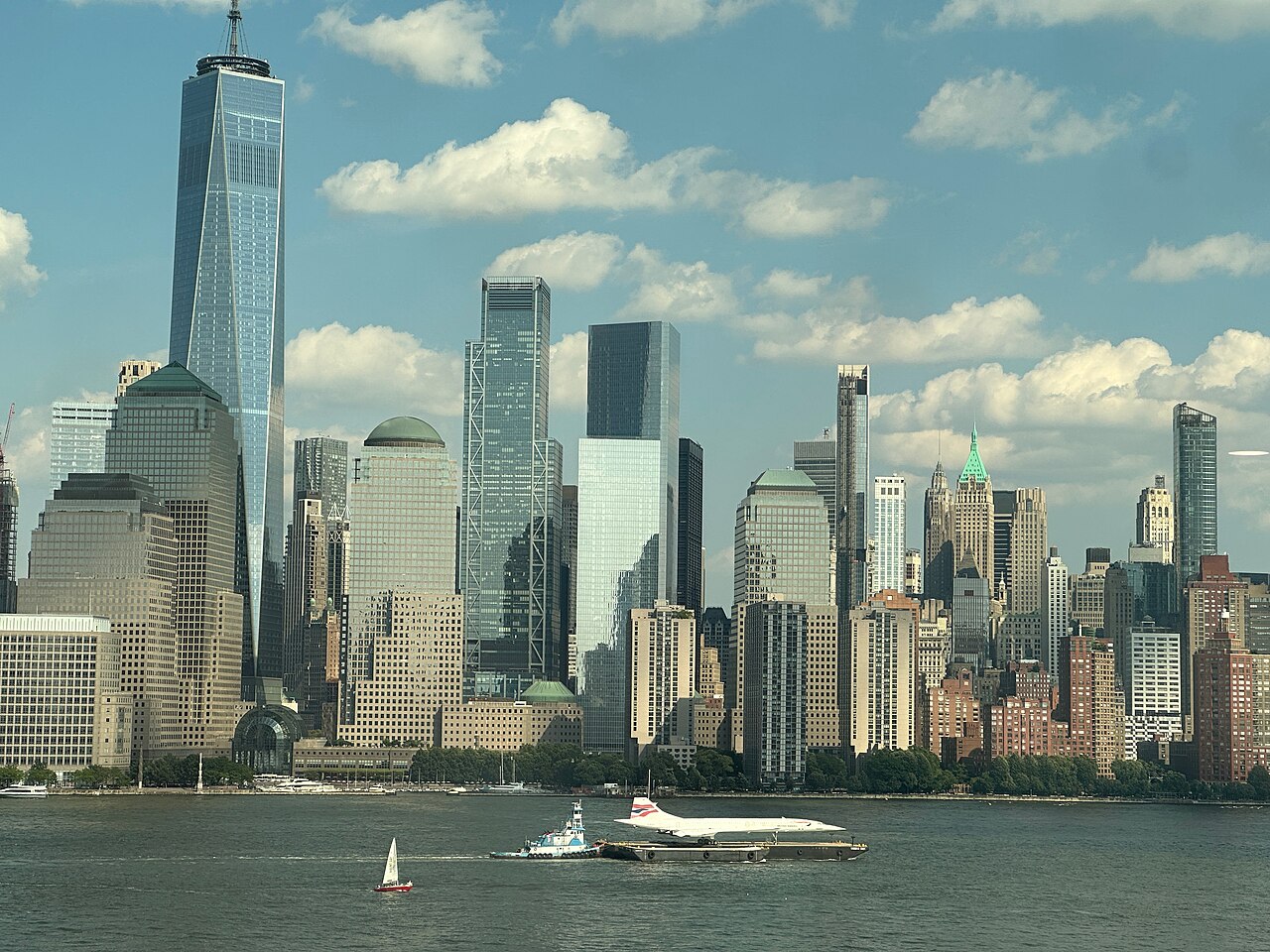

The aviation community had some inkling about the environmental problems, such as noise pollution, that would be caused by the Concorde even before the aircraft’s official passenger operations. Here’s a table that shows the fuel consumed by Concorde during its flights:
| Fuel capacity | 26,286 Imperial gallons (119,500 litres) |
| Fuel consumption | 5,638 Imperial gallons (25,629 litres) per hour |
Potential risks of Concorde lowering the concentration of ozone was also studied. It was found that there’d be a direct correlation between the number of Concorde operated and the incidence of nonfatal skin cancer. David Fahey (of the US government’s National Oceanic and Atmospheric Administration in Boulder) wanted to see the effects of Concorde by flying a plane in Concorde’s path by “sampling exhaust gases in Concorde’s slipstream 10 minutes after the supersonic airliner had passed“, with Fahhey’s concerns (in 1997) being explained to the New Scientist in the following way:
“For twenty years, we have asked engineers to design engines that minimise production of nitrogen oxides. We regarded them as the main hazard from aircraft emissions…A fleet of 500 supersonic aircraft like Concorde could double the surface area of tiny particles present in the stratosphere. That would have a direct effect on stratospheric ozone..”
It was also found that a global fleet of 500 Concorde-like aircraft would increase the depletion of ozone by 2% and a following growth of non-melanoma skin cancer by 2%. Although the cancer risks of such flights were assessed two decades prior, it was deemed that 16 month test flights of the Concorde would pose “minuscule” risks, with the associated long-term health risks being dubbed a “speculation”.
It was hoped that a second-generation Concorde could be and harmful to the environment. There were plans of building of a Concorde B, a successor that would have an additional range of up to 500 miles (805 km), and be able to serve route such as Frankfurt to New York, said author Ingo Bauernfeind in his book “Concorde: Supersonic Icon – 50th Anniversary Edition”:
“… in 1976, Aérospatiale proposed a ‘Concorde B’, a more refi ned variant of the existing model. It featured a slightly larger fuel capacity and more powerful and more fuel-effi cient Olympus engines without the thirsty and noisy reheat system. Another innovation was the redesigned shape of the delta wing with leading-edge slats that could be drooped like Concorde’s nose. The pilot could move them down to improve lift during takeoff and landing, and raise them for supersonic flight in order to reduce drag..”
However, this more environmentally friendly Concorde never saw the light of day.
The crash of Sierra Charlie
All onboard were killed and Concorde couldn’t recover
The photograph (below) of Air France’s Concorde F-BTSC, known as Sierra Charlie (Flight AF 4590), moments after its takeoff from Charles De Gaulle Airport on 25 July 2000, might look like a dump and burn display. However, this was not the case. One of its wheels had infact struck a debris- a 16-inch piece of titanium alloy lost by a Continental Airlines McDonnell Douglas DC-10- 30, which had taken off from the airport a few minutes earlier. This led to one of Concorde’s tyres being shredded. This led to “reverberations through the fuel tanks powerful enough to rupture them and causing a deadly stream of ignited aviation fuel”. An engine failure compounded with the fire caused the Concorde to crash into a hotel in nearby Gonesse.
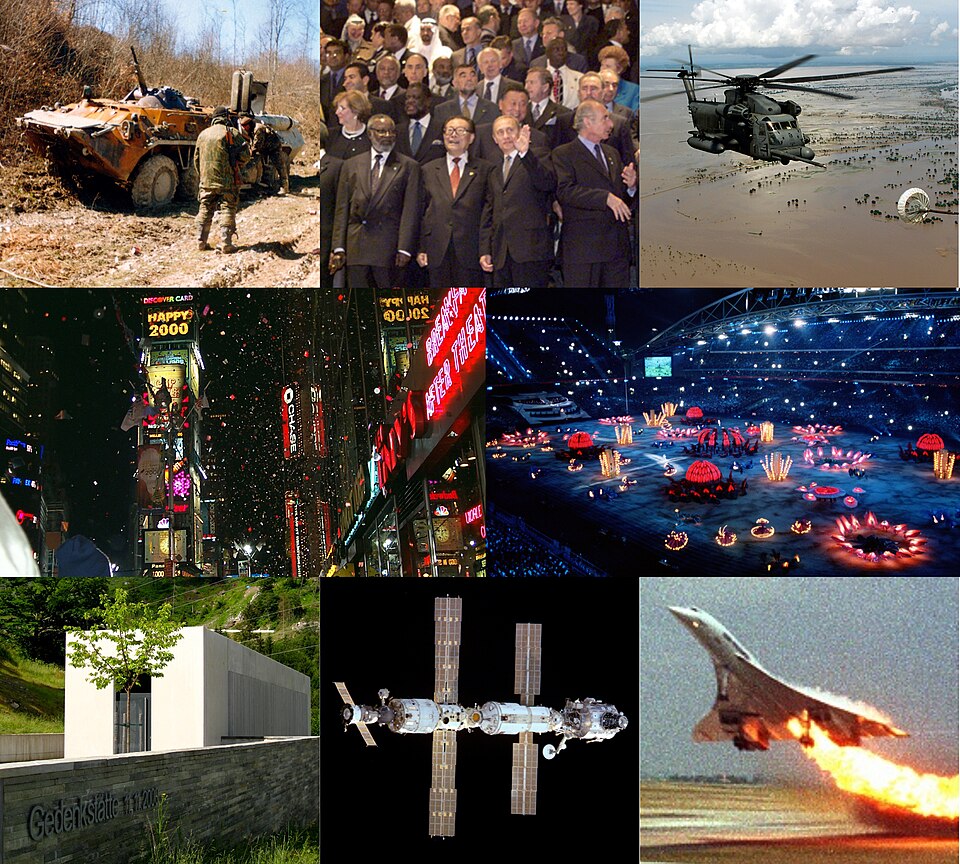

Presidential Press and Information Office
NASA
Paul Mannix
TSGT Rick Sforza
User:Manfred M Wiesinger
Toshihiko Sato
Svm-1977 | Wikimedia Commons
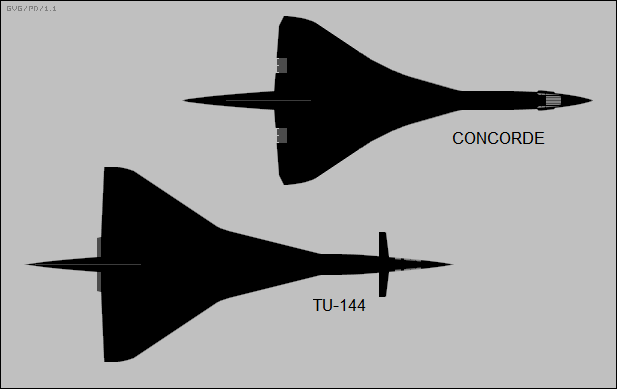
When the aircraft had an airspeed of approximately 200 kts (at an altitude of approximately 200 feet), it was unable to take-off further. The engine failed 60 seconds after takeoff, and within 90 seconds from the beginning of the takeoff roll, the plane crashed, killing all hundred passengers and nine crew aboard, and four in the hotel. This was not, however, the first crash of a supersonic aircraft. Concorde’s Soviet Rival, the Tupolev Tu-144 (which was also dubbed Concordski or the Soviet Concorde) had crashed during its unveiling during the Paris Air Show. You can read the details below. NASA’s hypersonic aircraft, the North American X-15, had also been involved in a fatal crash during its hypersonic flight.
Tupolev Tu-144 – The Soviet Concorde: Why the Supersonic Jet Failed?
Here are the probable causes of the crash, as elucidated in the crash report:
- The ripping out of a large piece of tank in a complex process of transmission of the energy produced by the impact of a piece of tyre at another point on the tank, this transmission associating deformation of the tank skin and the movement of the fuel, with perhaps the contributory effect of other more minor shocks and /or a hydrodynamic pressure surge.
- Ignition of the leaking fuel by an electric arc in the landing gear bay or through contact with the hot parts of the engine with forward propagation of the flame causing a very large fire under the aircraft’s wing and severe loss of thrust on engine 2 then engine
- The impossibility of retracting the landing gear probably contributed to the retention and stabilisation of the flame throughout the flight.

Following the crash, the remaining Concordes of both Air France and British Airways were grounded. Safety improvements were made in the Concordes that were grounded:
- Kevlar lining on the fuel tanks
- Specially developed burst-resistant tyres (newly developed Michelin NZG tyre)
- More secure electrical controls
The following year would see two test flight campaigns to validate the modifications and to certify the newly developed Michelin NZG tyre. The French test-flight crew consisted of the following personnel:
- Test Pilot Pierre Grange (Concorde pilot from 1984–89)
- Airbus Test Flight Engineer Didier Ronceray
Assistance was provided bt Air France’s Concorde Chief Pilot Edgard Chillaud and Flight Engineer Roger Béral. The first airline flight with the modifications was piloted by BA Concorde Chief Pilot Mike Bannister
Picture: Eduard Marmet | Wikimedia Commons

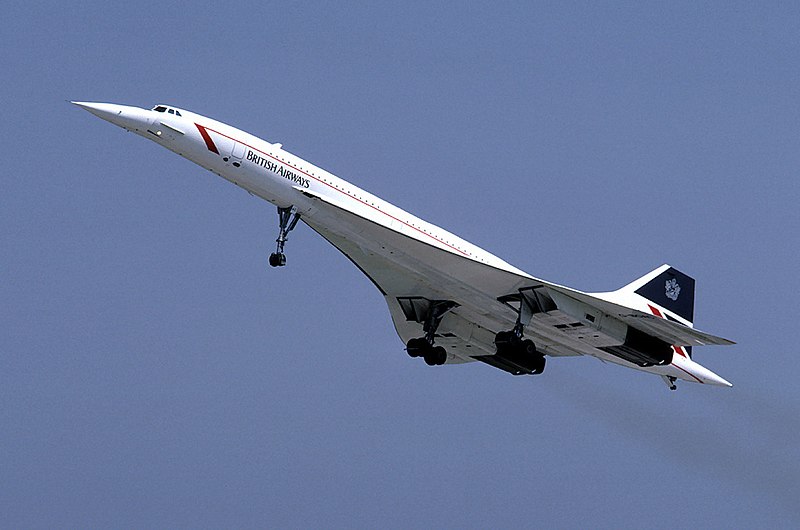
On 17 July 2001, the first airline flight of the Concorde after the grounding took place, while the the first flight with passengers took place on 11 September 2001. Commercial operations to New York (by British Airways and Air France) on the Concorde began on 7 November 2001 using Sierra Delta (F-BTSD) and Alpha Echo (G-BOAE). Despite these flights, which were termed “rebirth flights” of the Concorde, much speculation about Concorde’s inefficiency lurked.
A BA Concorde captain for 15 years, John Hutchinson, claimed that fire on the Sierra Charlie was ’eminently survivable; the pilot should have been able to fly his way out of trouble’. It was also reported in the Guardian that maintenance negligence was a reason behind the crash:
“…there is compelling evidence that it was the missing spacer which may have caused the plane to skew to the left… the plane was operating outside its legally certified limits. When it stood at the end of the runway, ready to roll, it was more than six tonnes over its approved maximum takeoff weight for the given conditions…”
This only fatal crash involving the Concorde might not have stomped over the Corcorde’s future, but one of the stark accidents on the rebirth flight with all its passengers was to shake aviation down to the core.
The post 9/11 dip in aviation and Concorde
Even if Concorde hadn’t stopped in 2003, it would have stopped a few years later
Concorde’s first passenger flight after its rebirth took place on September 11, 2001, a fateful day for aviation where passengers used a rather anachronistic technology- Airfones – to communicate. Many Concorde passengers headed to their offices in the World Trade Center after that day. Approximately forty of them perished when the twin towers were hit. This led to the biggest ground stop in the history of aviation, affecting the flights of Concorde.
The International Air Transport Association (IATA) reported losses of $8.0 billion for US Airlines in 2001. Only three years later did the revenues go back to 2000 levels. Heritageconcorde.com reported how much Concorde’s flights dropped after the 9/11 attacks:
“Forty of the Concorde’s best customers who travelled a minimum of 20 times a year worked at the World Trade Center, and were killed in the terrorist attack. Some flights between the USA and UK/France were almost empty, when carrying a full load, Concorde achieved 15.8 passenger miles per gallon, post 9/11 the continuing costs of flying empty aircraft rocketed. Not to be deturred normal passenger operations resumed on 7 November 2001 by BA and AF (aircraft G-BOAE and F-BTSD), with service to New York JFK, where passengers were welcomed by then mayor Rudy Giuliani.”


A couple of years later, Concorde made its last-ever flight on Nov. 26, 2003, as a British Airlines flight departed London’s Heathrow Airport, one of the busiest airports in the world, and landed in Bristol, England. The Concorde that flew this day was the last of 20 Concordes to be built. This aircraft was re-registered as G-BOAF (also commonly referred to as Concorde Alpha Foxtrot) and made its maiden flight on April 20, 1979. Here’s a take a look at the details of the aircraft:
| Number of flight hours | 18,257 hours |
| Number of flights | 6,045 |
| Number of supersonic flights | 5,639 |
| Pilots | Chief Pilot Captain Mike Bannister
Captain Les Brodie Captain Paul Douglas. |
| Flight Engineers | Warren Hazleby
Trevor Norcott |
Had Concorde’s operations not stopped in 2003, it probably wuld have seen its end in the global recession of 2007, when oil prices soared to unseen levels. The hike in oil prices in 2007 was one of the reasons why the Airbus A380, the largest passenger plane ever, didn’t fare as well as was expected out of it.
After all, the Concorde consumed 32.5 liters per second, with half of the total fuel load exhausted during the time between exiting an airport gate and reaching its cruise speed (which was just over Mach 2). Its consumption of 25,629 liters per hour dwarfs 747-400’s hourly average of 14,400 liters.
Unmanageable maintenance costs
Before the Concorde stopped flying, British Airways’ Concordes were half empty. Air France had been hit worse- only a fifth of the seats were sold on its five Concordes, as the nation couldn’t recoup strength after losing all its passengers and crew in the crash in Paris in July 2000. In 2003, Air France had seen a 72% rise in maintenance costs of the Concorde, with publications reporting that new cockpit security doors cost approximately $300,000 each. For a Boeing subsonic airliner, on the other hand, this expense was 12 times lower ($25,000).


Coupled such costs with other logistical expenses meant that in 2003, the last year of its operation, the British Airways was spending £1 billion [£1.7 billion ($2.3 billion) today] on Concorde. British Airways also claimed that Concordes required up to 57 hours of maintenance for every flight hour. Half of Concorde’s operational expenses were maintenance related – on a conventional airliner, this figure is only around 10 percent. In 2003, BA said that they would need to spend £40m to keep the Concordes flying. After the Paris crash of Concorde, BA had spent £14 million to retrofit its Concordes.
Concorde’s Top Speed: A look at the safest supersonic airliner’s pace
Here’s Heritageconcorde.com’s take on the large efforts of maintaining the Concorde:
“ Another significant aspect with regard to engineering was the complexities inherent in an aircraft which was in 2003 more than 27 years old. With all the superlatives heaped on Concorde, it seems rather strange to label it as old technology, but such it was in spite of all it’s state-of-the-art features which included fly-by-wire… Maintenance was a complicated procedure and when technical problems a cured, they also tended to effect the whole fleet at the same time, requiring particular attention and increased effort. “
Such an unconscionable rise in maintenance costs would mean only one thing: the prices of flying on the Concorde would be higher. In 1977, one-way flights on the Concorde between the UK and the US would cost £431, around £2,200 ($2,800) in today’s money. By 1996, the same flight was priced at around $12,500 in today’s money. How much would the flight tickets have cost had BA spent £40m to keep them flying, we don’t know. We do know that it would have broken the figurative bank, though.