Airfone’s history is one where a potentially groundbreaking air-ground radiotelephone that could have revolutionized in-flight communication gets supplanted by something more groundbreaking. Created by John D. Goeken – the founder of MCI Communications- airfone allowed passengers to make phone calls from airplanes. It was a significant advancement in aviation technology in the early 1980s.
At its peak, Airfone was available on about 62% of commercial airplanes in the United States by 2001. The service was mostly used by business travelers who valued the option to converse while in flight. But what was this piece of technology called “airfone” become superannuated, obsolete? Let’s find out.
History of Airfone: A few snippets
Airfone was started by a man who would later become its own rival – John D.Goenken. While the technology made it to aircraft in the 1970s, it was the decade that followed when the potential of airfone started to takeoff. In 1981, Western Union acquired a 50% share in Airfone. By 1987, More than 2 million calls had been placed from GTE Airfone Inc.’s airfone.
At that time, airfone did not have any competitors either. One of the reasons behind it was the fact that it had taken ten years to develop the technology and build a system of ground stations that facilitated communications from aircraft to the ground. Further, a lack of space on the electromagnetic spectrum kept other companies from competing with airfone.

Photo: National Museum of American History | Wikimedia Commons
The technology was remarkable for its time. Here are a few facts that gives us a cue:
- Calls made from airfone installed in aircraft were directed to one of the US’ 68 ground stations.
- Calls could last between half an hour to three-quarters of an hour before the connection got fuzzy.
- According to LA Times, calls used to be “billed electronically to the caller’s credit card–MasterCard, Visa, American Express, Carte Blanche, Diners Club or Air Travel Card–at a flat rate”.
- The parent company of airfone also had plans to provide connections that enabling data transmission from portable computers.
- Before the 90s, widebody aircraft were equipped with four to eight cordless airfones (which they could take to their seats to make a call) while the narrowbodies were equipped with one to two.
The rapid expansion of Airfone services during the 1980s made it understandable that airlines began considering a phone for nearly every passenger. These units could be installed in seat armrests or the backs of seats, allowing travelers to make calls while in flight.
The scale of the rollout was significant. In a 1987 interview with the Los Angeles Times, Sandra Goeken, a spokeswoman for GTE Airfone Inc., said some airlines were installing the system at a rate of roughly one aircraft per day.
At the time, Airfone was already available on around 475 aircraft operated by 16 major carriers, with another 225 aircraft expected to receive the service by the end of the year. Goeken noted that the United States had approximately 3,200 commercial aircraft, while more than 1 million people traveled by air each day. With around 60% of those travelers estimated to be business passengers, GTE viewed business travelers as its primary customer base, although first-time Airfone users were also increasing, rising by 22% over the previous six months.
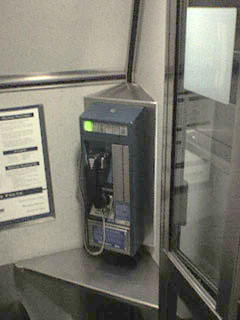
Airfones were also being used to relay information about any in-flight medical emergencies to the ground. It was also expected that the people in one aircraft would be able to call people in another aircraft. Perhaps such use prompted the company to develop airfone’s parallel in railways- “railfone”. The following is a photo of a railfone.
| Category | Data/Figures |
| Initial Monthly Calls (1984) | 1,000 calls |
| Monthly Calls (Mid-1987) | 30,000 calls |
| Number of Planes with airfone services (1987) | 475 |
| Projected Monthly Calls (End of 1988) | Approximately 100,000 calls |
| Expected Revenue (End of 1987) | $25 million |
| Pricing Structure for calls within the US | In 1987, it was $7.50 for the first three minutes; $1.25 for each additional minute
In 2006: $3.99 per call and $4.99 a minute |
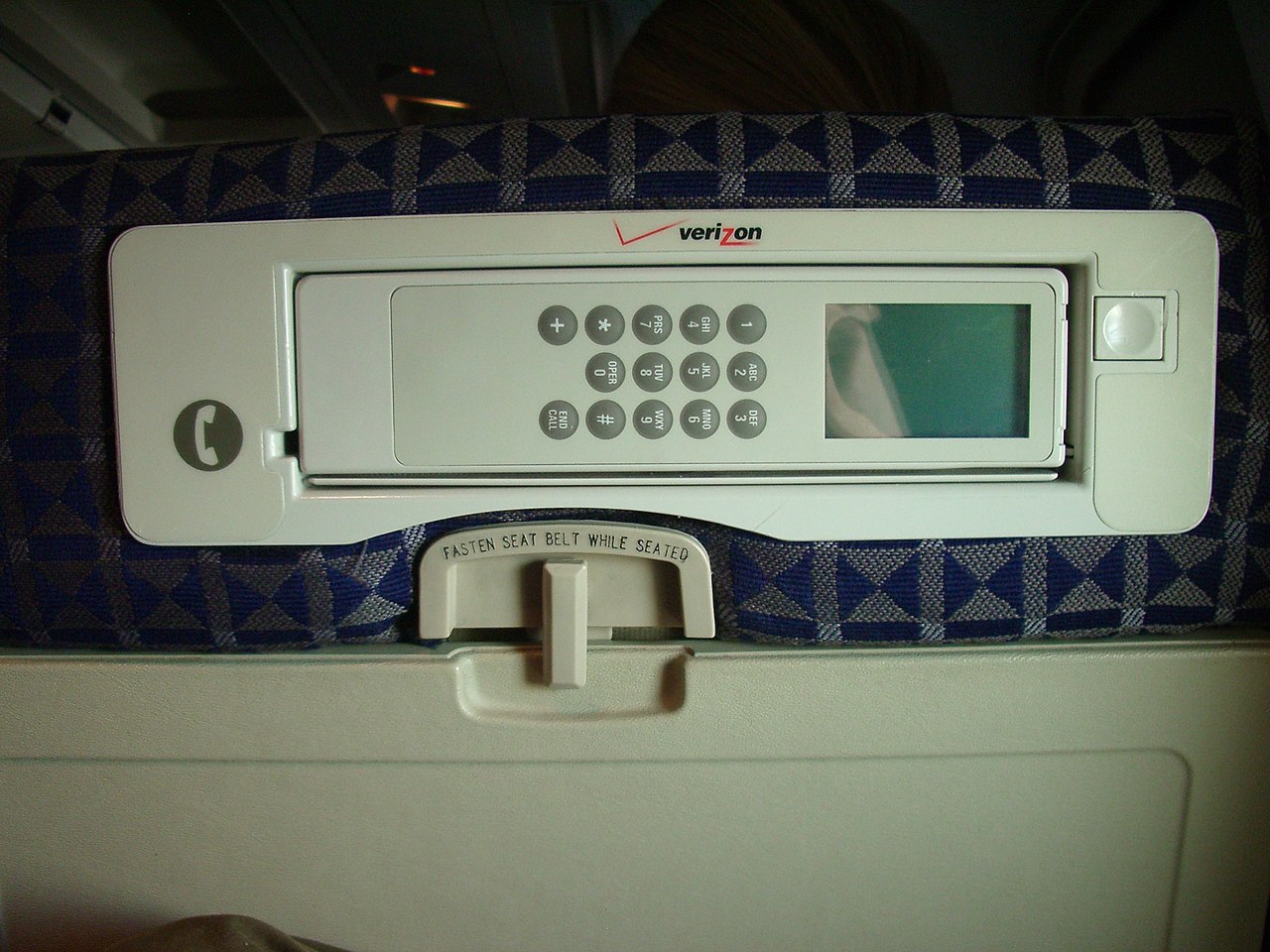
Photo: Mike Kuniavsky | Wikimedia Commons
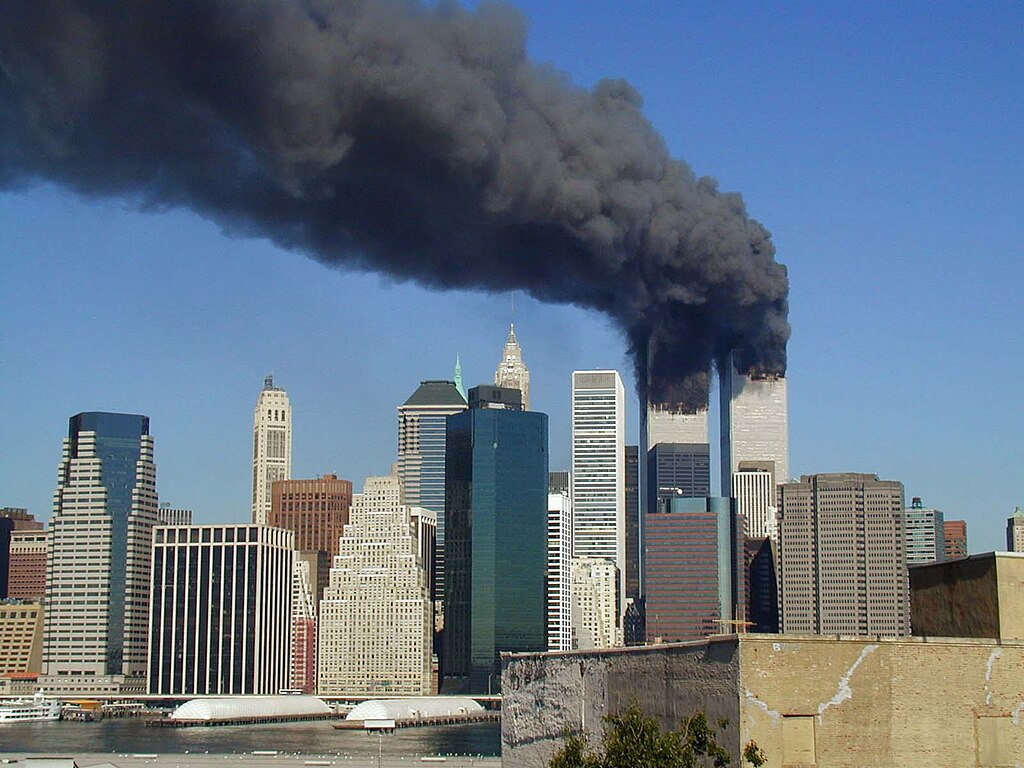
9/11: The most remarkable event with airfone usage
Airfone also played an important role in relaying information from United Airlines Flight 93 during the September 11, 2001, hijacking. According to the FBI, 37 calls were made from the aircraft between 9:28 a.m., when the hijacking began, and 10:03 a.m., when the aircraft crashed. Of those calls, 35 were placed using Airfone units installed in the seatbacks in the final nine rows.
Credit card records helped investigators establish important details about these calls, including the time they were made, the caller’s name, the numbers dialed, the duration of each call, and the row from which the call originated. This information became an important part of the investigation into the events aboard Flight 93.
Among the most well-known Airfone calls was the one made by passenger Todd Beamer. During his call, Beamer reportedly said “Let’s roll,” a phrase that became closely associated with the passengers’ decision to confront the hijackers and attempt to regain control of the aircraft.
Technology behind the airfone
Airphone used signals transmitted from the ground-based cell towers to the aircraft where Airfone was equipped. Since the cell towers were ground-based, airfones would find difficulty in communication when aircraft (equipped with them) flew over the oceans. In order to avoid interference with aircraft radio equipment, the airfones operated with extremely low power.
Further, the makers claimed that the voice quality of the calls made from an airfone would be comparable to that of any long-distance call made on land. However, users often encountered their calls being interrupted. Projections made in 1984 claimed that this service that started as a $20 million venture would be able to generate $750 million a year.
Western Union had acquired half of the Airfone shares in 1981, but it later sold its stake to GTE in 1986 for $39 million. Delta Air Lines became the first US carrier to publicly introduce the Airfone air-to-ground communication system, marking an important step in the service’s expansion across commercial aviation.
The technology received a major upgrade in 1992 through a joint project between GTE and IEX Corp. Stratus Computers supplied the hardware, while IEX Corp. developed the software that managed the system. Together, the components allowed Airfone to handle calls more efficiently as aircraft moved between different ground-based coverage areas.
According to NewsBank, Stratus’ fault-tolerant computers served as the brains of the ground-switching nodes. They tracked active calls and managed their transfer from one radio cell to another, while also directing data packets from the radio cells toward telephone switches connected to the conventional network.
The upgraded system was known as GenStar and was designed to reduce dropped calls. Its user interface was also expanded, with screens and connections added to support fax services.
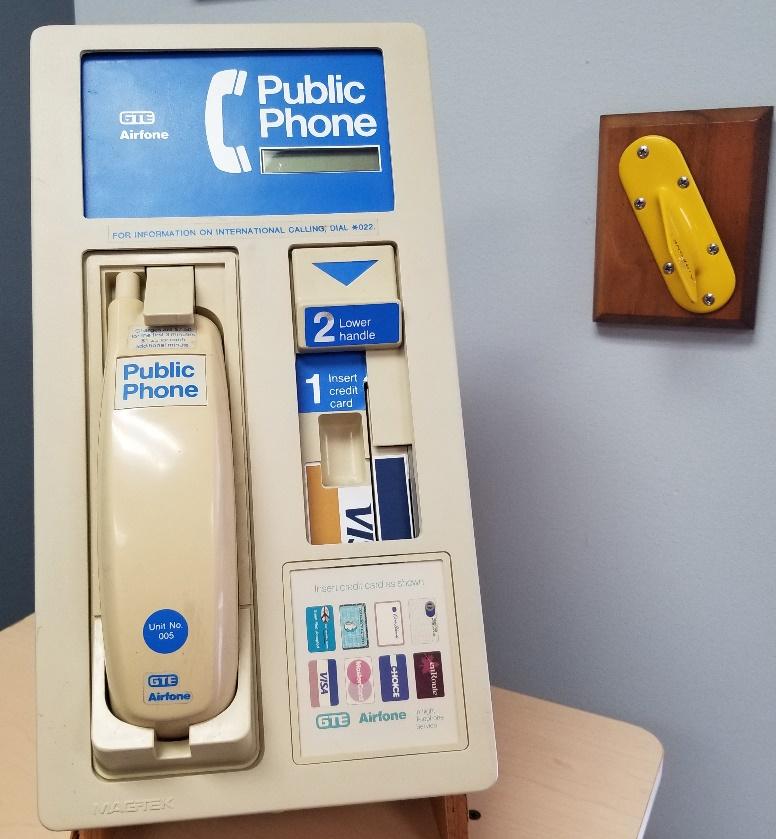
The earliest Airfone systems were considerably more basic. The first generation used analog technology, with cordless stations installed on cabin bulkheads. Passengers would insert a credit card into the station, and once the card was verified, the handset would be released so it could be carried back to the passenger’s seat. After finishing the call, the handset had to be returned to the station before the credit card was released.
The fall of the airfones
While Delta was the first carrier to offer airfone services, Southwest Airlines, the budget carrier that helped coin the term “The Southwest Effect” was the first airline to terminate airfone’s use. Airfone’s disappearance from the aviation landscape can be attributed to several key factors The biggest of these was probably the high cost. American Airlines had been offering airfone services since 1996 on its 654 domestic route aircraft. However, the cost of “$7.60 plus tax per minute, along with a $2.99 connection fee per call” meant that with fewer than three calls being made per day on each plane.
Following the September 11 attacks, Airfone temporarily reduced its prices in an effort to support airlines and encourage passengers to return to air travel. The company recognized the severe challenges facing the aviation industry in the aftermath of the attacks and sought to make in-flight communication more affordable during the difficult period.
Airfone President Bill Pallone said the company wanted to support its airline partners as they dealt with the consequences of the terrorist attacks. He added that the lower rates were intended to provide an additional benefit to passengers as air travel gradually began to recover.
The following prices were effective on airfones, from September 21 to October 5 in 2001:
- 99 cents per-minute for direct-dial domestic voice calls.
- 99 cents for a one-time initial charge for such calls.
Verizon Communications declared the end of Airfone services in 2006 in all commercial aircraft (around 1,000), internet technology was already on the rise. At that time, Airfone had 140 employees, some of whom were transferred within Verizon, but the company noted that they needed “to balance the human resources with the expenses incurred to run the business.“, reported NBC:
“ Airfone signaled its waning interest in the business last month with an early exit from an auction of nationwide airwaves by the Federal Communications Commission that could lead to cheaper in-flight broadband. Its apparent maximum bid of $12.4 million was surprisingly low for the country’s largest telecommunications company.”
Proliferation of the internet and cellphone technology
According to Harvard, the number of mobiles per person has increased by more than 100% in the U.S. and Europe, and has helped establish 7.3 billion connections around the world. And with cheap internet, information related to flight delays can be easily conveyed. There are also numerous flight tracing websites where one can look at the real-time status of aircraft. Further, some airlines allow Wi-Fi services for its passengers.
Newer technology, much like telephones, don’t allow “disagreeable person keep his distance” (as Ambrose commented). One might want to recall that a cell phones does indeed do “all things for all people” , such as providing the option of not simply calling someone (as was the case with airfone) but also texting, internet-ing, and much, much more – something that airfone was never able to do.