Qantas Airways (QF) operates QF9 and QF10, a nonstop Boeing 787-9 service linking Perth Airport (PER), Western Australia, with London Heathrow Airport (LHR), England. The route launched on March 25, 2018, as the world’s first nonstop link between Australia and Europe, and it still covers around 7,829 nautical miles (14,500 km) in roughly 17 hours and 30 minutes.
The flight is popular precisely because it eliminates a stopover, but performance data shows Qantas routinely trims passenger loads to keep the aircraft within its operating limits.
The underlying problem is physics, not marketing. Boeing publishes a maximum range of up to 7,830 nautical miles (14,498 km) for the 787-9, a figure based on ideal wind, weight, and temperature conditions that rarely hold on a real Perth departure, Simple Flying reported. Because the westbound sector already sits close to that ceiling, small changes such as a hot afternoon on the tarmac or a detour around closed airspace can force Qantas to leave seats empty, cut cargo, or add a refuelling stop in Singapore, as the airline has done for extended periods in 2026.
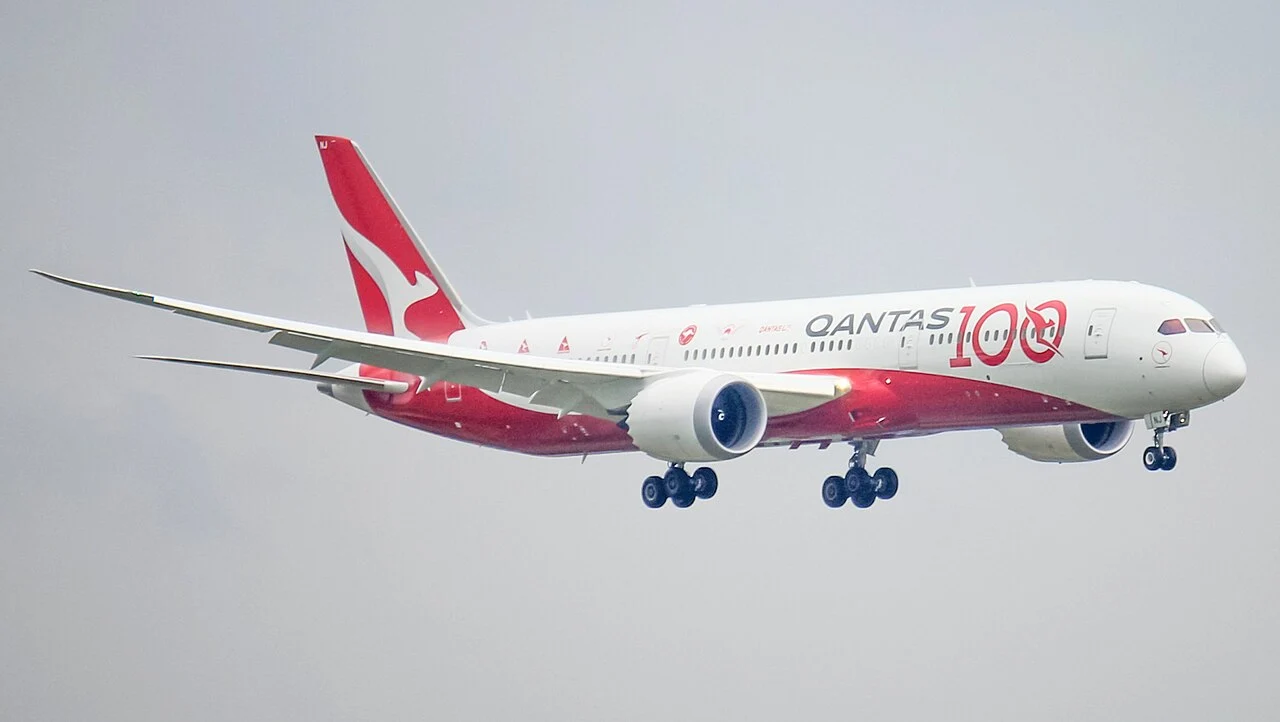
Why The Boeing 787-9 Has So Little Margin on This Route
Boeing’s 787-9 Dreamliner is the backbone of Qantas’ ultra-long-haul network, and the Perth-London sector remains the longest nonstop route the type operates anywhere in the world, spanning 7,829 nautical miles.
Range specifications printed in marketing material assume idealized payload, wind, and reserve conditions. Real flights rarely get all three at once, so the gap between paper range and operational range becomes the central challenge on this specific route.
Every long-haul aircraft experiences some difference between advertised and achievable range. QF9 is unusual because it operates so close to the outer edge of that boundary that the difference becomes operationally significant on a near-daily basis. Fuel, passengers, baggage, cargo, and mandatory safety reserves all compete for the same narrow margin, leaving Qantas with limited room to absorb disruption.
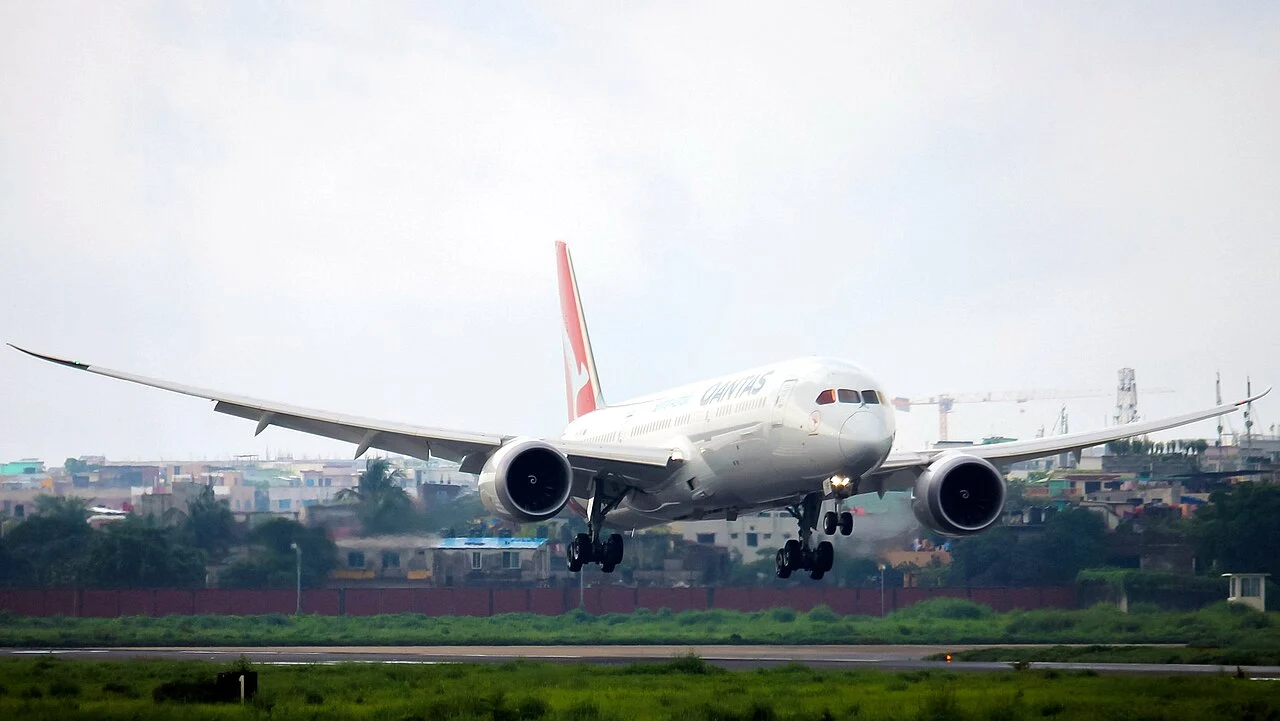
Hot Fuel Takes Up More Space Without Adding Weight
Jet fuel expands as it warms, which means hot fuel occupies more physical volume while carrying less mass per liter. Because an aircraft’s tanks are limited by volume as well as by weight, this creates a genuine constraint on days when Perth’s tarmac runs hot.
According to analysis published by Analytic Flying and cited by Simple Flying, the 787-9’s tanks hold 33,398 gallons (126,429 liters). At fuel temperatures near 15°C, that volume holds around 223,990 lb (101,600 kg) of fuel. At 30°C, a temperature Perth regularly reaches, the same tank volume holds only about 220,680 lb (100,100 kg), a loss of roughly 3,307 lb (1,500 kg). The aircraft has not changed; only the fuel’s density has.
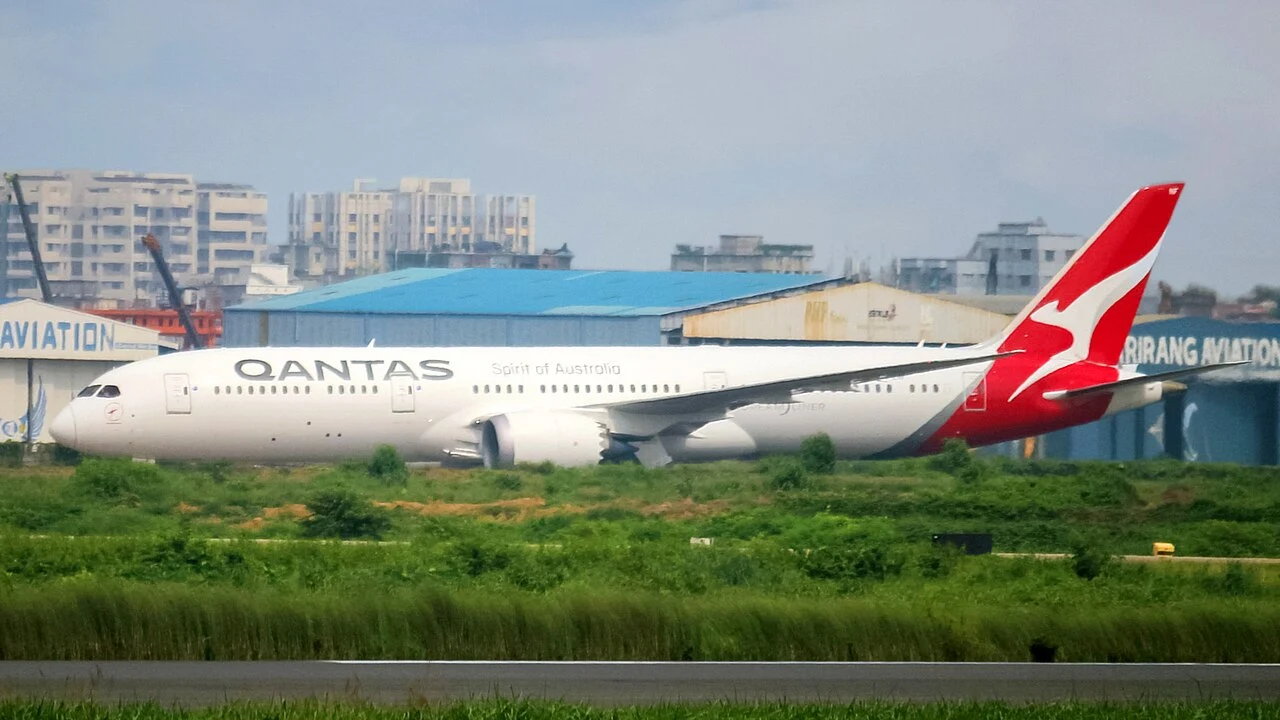
Empty Seats Reflect Fuel Math, Not Weak Demand
Passengers who see empty seats on QF9 might assume the route is under-selling. Data suggests otherwise. Analytic Flying’s review of BITRE seat-capacity figures, cited by Simple Flying, found that QF9 averaged around 219 occupied seats out of 236 available across the past year.
In January 2025, that figure reportedly fell to about 203 passengers, and the same analysis found capacity dipping to 206 seats in some months, against a clear seasonal pattern tied to Australian spring and summer heat.
Each unsold seat represents payload Qantas has deliberately removed to protect the fuel margin. Analytic Flying’s review of the westbound and eastbound legs found a stark asymmetry: westbound QF9 averaged 16 empty seats, while eastbound QF10, which benefits from prevailing tailwinds, averaged just one empty seat per flight.
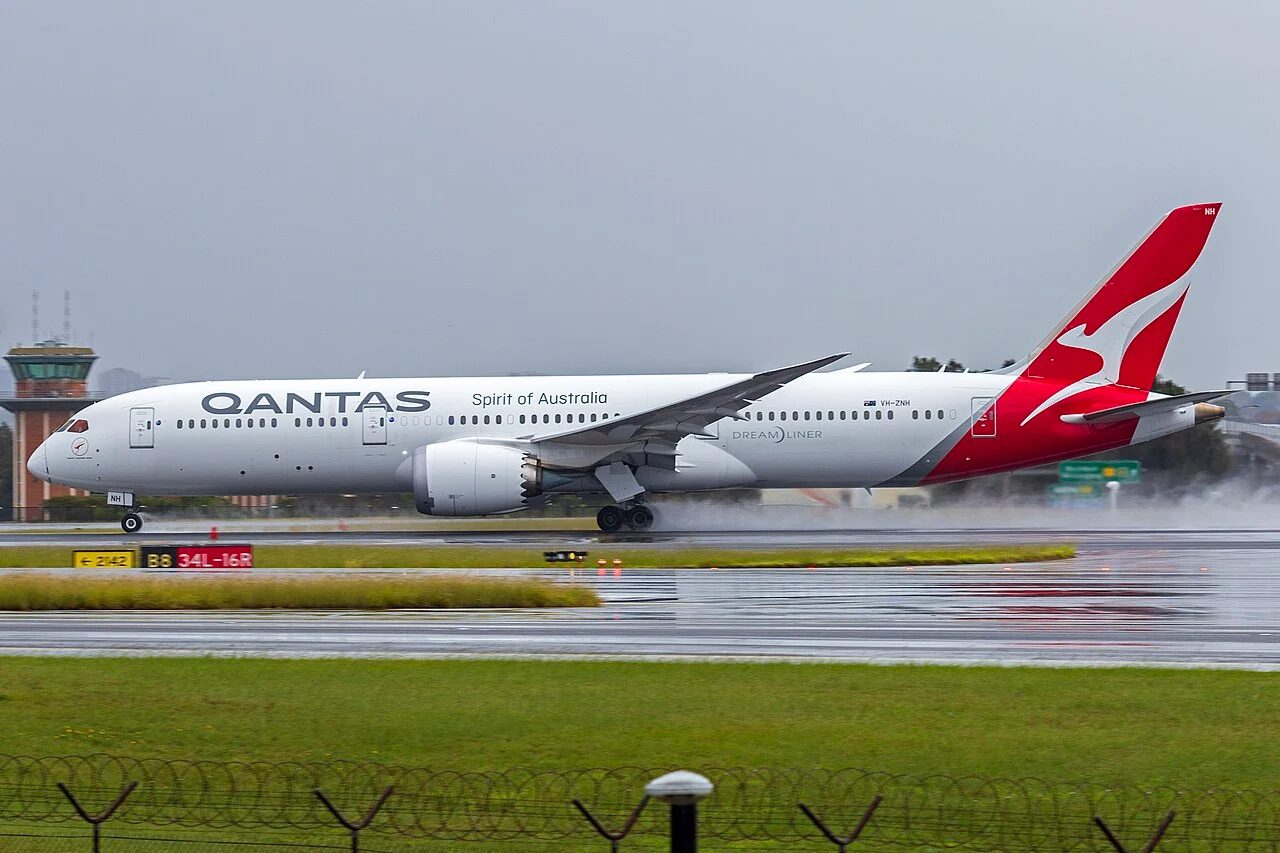
Airspace Closures Pushed QF9 Past Its Limits Entirely
Middle East airspace closures in 2026 turned a manageable range problem into an operational crisis. Qantas’ standard track over Oman, the United Arab Emirates, Qatar, and Bahrain became unusable after escalating military action involving the United States, Israel, and Iran closed regional airspace, forcing the 787-9 onto a longer northerly track over India, Pakistan, Afghanistan, and Turkmenistan. Simple Flying reported the detour added roughly 30 to 45 minutes of flight time.
That extra half hour, only 3% to 4% of total flight time, still translates into 160 to 270 nautical miles (300–500 km) of additional distance, comparable to the distance between London and Paris.
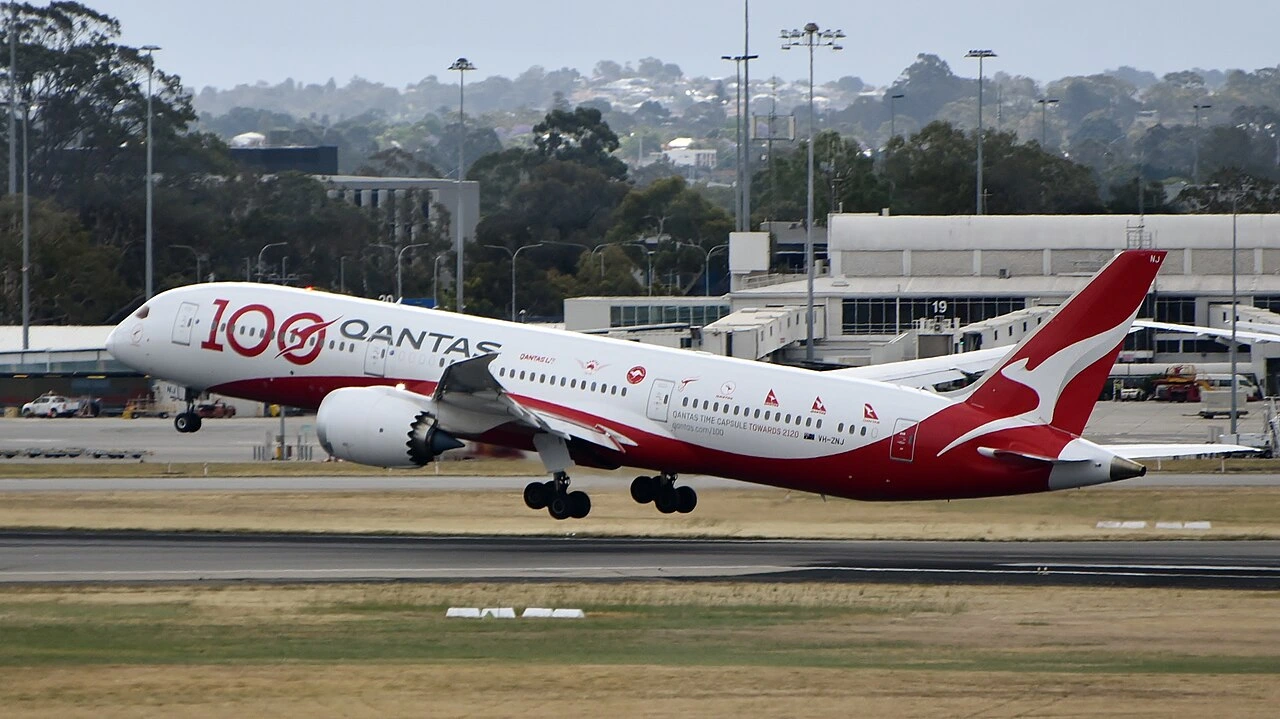
On a route with almost no fuel margin, that is enough to break the operating model entirely. Qantas confirmed the consequence in a travel advisory:
“QF9 from Perth to London may operate via Singapore for a fuel stop due to adjustments required on flight paths. There are no other impacts to Qantas operated flights, including flights between Singapore and London,”
the airline said, as reported by AVSN.
Qantas first suspended the nonstop service on March 4, 2026, rebooking passengers onto flight QF209 via Singapore Changi Airport (SIN), adding roughly three to four hours to total journey time. The rerouting mirrored two shorter suspensions in April and August 2024 for similar reasons.
Qantas indicated the Singapore stop would let it carry around 60 additional passengers per flight once payload restrictions were lifted, though the airline said in April 2026 that it would review the rerouted schedule for a possible return to nonstop operations for the northern winter timetable.
_-_VH-ZNJ_-_Boeing_787-9_Dreamliner_-_MSN_66074.jpg)


_Boeing_787-9_Dreamliner_departing_Sydney_Airport_(3).jpg)
.jpg)