Emirates (EK) operates the world’s longest nonstop Airbus A380 flight between Dubai International Airport (DXB), United Arab Emirates, and Auckland Airport (AKL), New Zealand. The return sector carries a maximum block time of 17 hours and 25 minutes, according to schedule data from Cirium Diio cited by Simple Flying. Emirates flies the route daily using a four-class Airbus A380.
The same carrier also runs the longest one-stop A380 service in its own network, linking Dubai with Christchurch Airport (CHC) via Sydney Kingsford Smith Airport (SYD). That itinerary takes up to 19 hours and 55 minutes and ranks second among all A380 routes worldwide, behind only Qantas’ Sydney-Singapore-London service, per Simple Flying’s route analysis. Both records rest on the same logic: New Zealand sits far from Dubai, and the A380’s size lets Emirates make the distance pay.
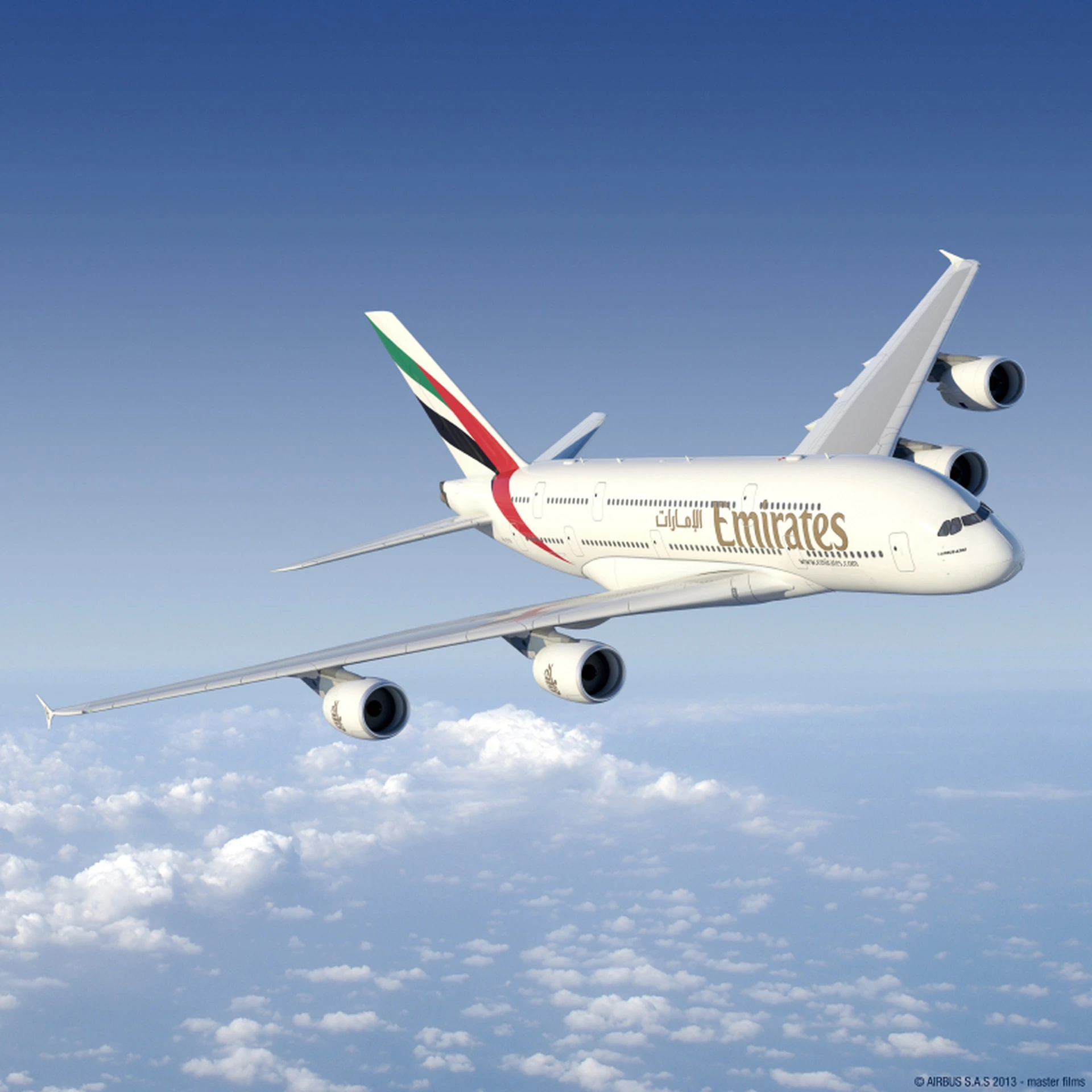
Dubai To Auckland Holds the Nonstop A380 Record At 17 Hours 25 Minutes
Emirates has flown to Auckland since 2003, but for the first 13 years, every flight routed through Australia. The airline launched a nonstop link on March 1, 2016, initially using the Boeing 777-200LR before demand pushed it onto the Airbus A380 within six months. Since December 2022, Emirates has served Auckland only nonstop, and only with the A380.
The route now carries 484 seats across four classes: 14 First Class suites, 76 Business Class seats, 56 Premium Economy seats, and 338 in Economy. Outbound flight EK448 leaves Dubai near 10:05 am and lands in Auckland roughly 15 hours and 50 minutes later. The return flight, EK449, faces stronger headwinds and needs up to 17 hours and 25 minutes, which is why the record is usually quoted on that leg.
When Emirates restored the nonstop Auckland service after a pandemic-driven suspension in December 2022, the carrier called it the reclaimed “longest route on its network” in a press release announcing the return. The distance covers roughly 14,200 kilometres each way. Auckland Airport has hosted A380 service since May 2009, and it remains one of only two commercial airports in New Zealand equipped to handle the aircraft, alongside Christchurch.
The nonstop title is not permanently fixed to Emirates. In December 2025, Qantas briefly held the longest A380 block time with its restored Dallas Fort Worth-Sydney service, timed at 17 hours and 25 minutes against Emirates’ 17 hours and 10 minutes that month. Seasonal winds and schedule shifts mean the two carriers regularly trade places at the very top of the nonstop list.

Dubai To Christchurch Via Sydney Is Emirates’ Longest One-Stop A380 Flight
Emirates’ longest single service of any kind is not nonstop at all. Flight EK412 leaves Dubai, stops in Sydney under fifth-freedom rights, and continues to Christchurch, with a combined block time of up to 19 hours and 55 minutes. That places it second among every A380 route flown anywhere, trailing only Qantas’ Sydney-Singapore-London “Kangaroo Route,” which runs close to a full day in the air.
Fifth-freedom rights let Emirates sell the Sydney-Christchurch segment as a standalone domestic-style sector, which improves the economics of an otherwise thin long-haul market. The service resumed on March 27, 2023, after more than three years off the route due to the pandemic. Emirates’ Divisional Vice President for Australasia, Barry Brown, said the water-cannon welcome back in Christchurch was a reminder of “how special the aircraft is” to the city.
Christchurch Airport’s chief executive, Justin Watson, was quoted in the same release describing the resumption as “a significant moment for Christchurch and the South Island.” The route again carries the four-class, 484-seat A380 configuration and supports South Island exporters, moving 15 to 18 tonnes of cargo such as cherries, lamb, and seafood daily. Passengers landing in Christchurch also gained access to Emirates’ Premium Economy cabin for the first time on that route.
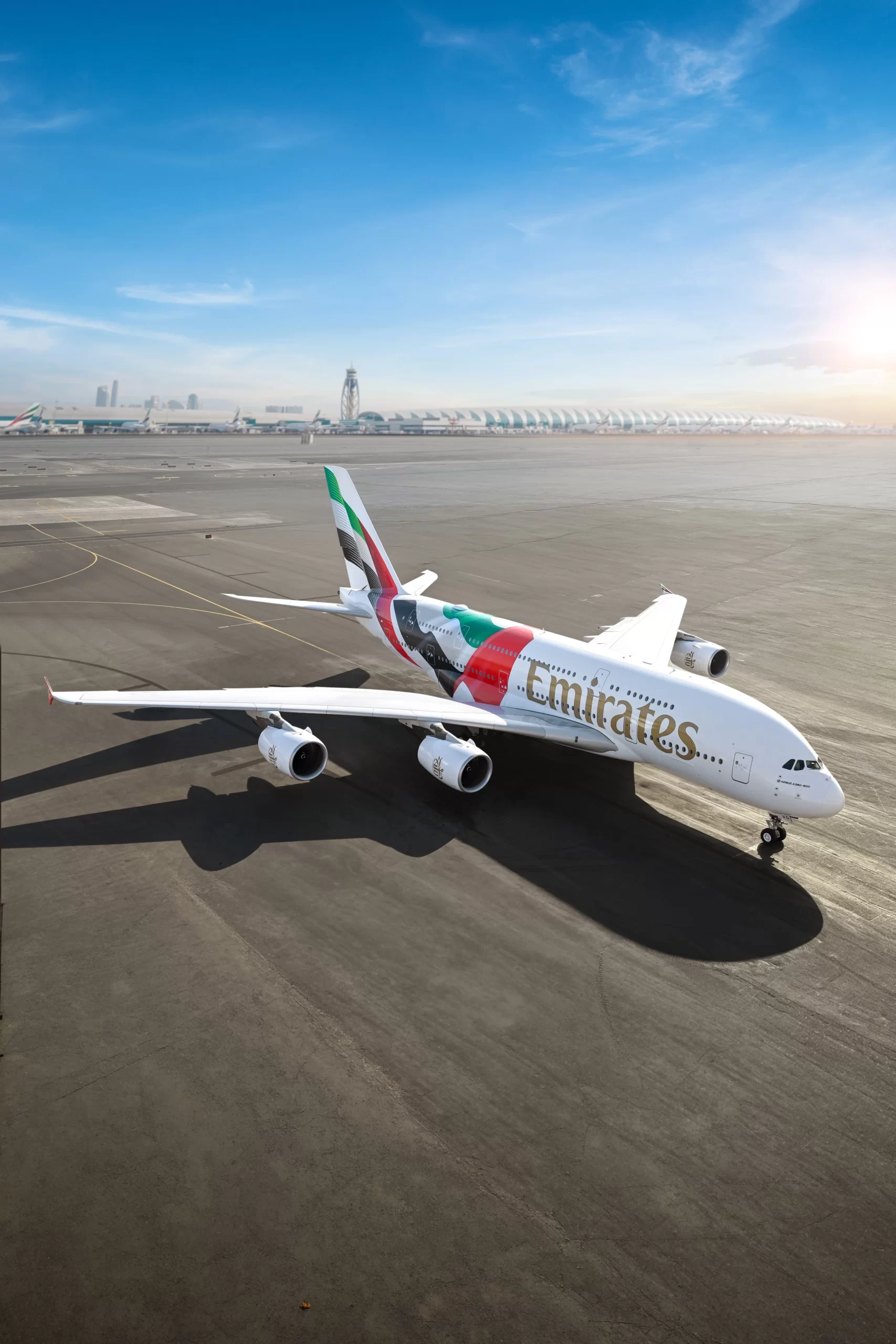
Why The Airbus A380 Fits Emirates’ Longest Routes
Emirates chooses the A380 for its two longest routes because the aircraft’s size offsets the cost of flying such extended sectors. A single Auckland departure can carry over 400 seats, and the route generates roughly 6,800 seats a week across the schedule during peak deployment. Fuel burn and crew duty limits matter more over 17 hours than on shorter sectors, so extra capacity per flight helps spread those costs.
The A380 also gives Emirates room for cabin features that support premium fares on long journeys. These typically include:
- An onboard lounge and bar exclusive to First and Business Class passengers
- Private First Class suites with sliding doors
- A Shower Spa available to First Class travellers
- An inflight entertainment system carrying thousands of channels
Westbound sectors from Dubai face stronger headwinds over the Indian Ocean and Southeast Asia, which can affect fuel planning. Emirates sometimes weighs routing passengers through Australia instead of flying nonstop when payload or wind conditions make that trade-off more efficient.
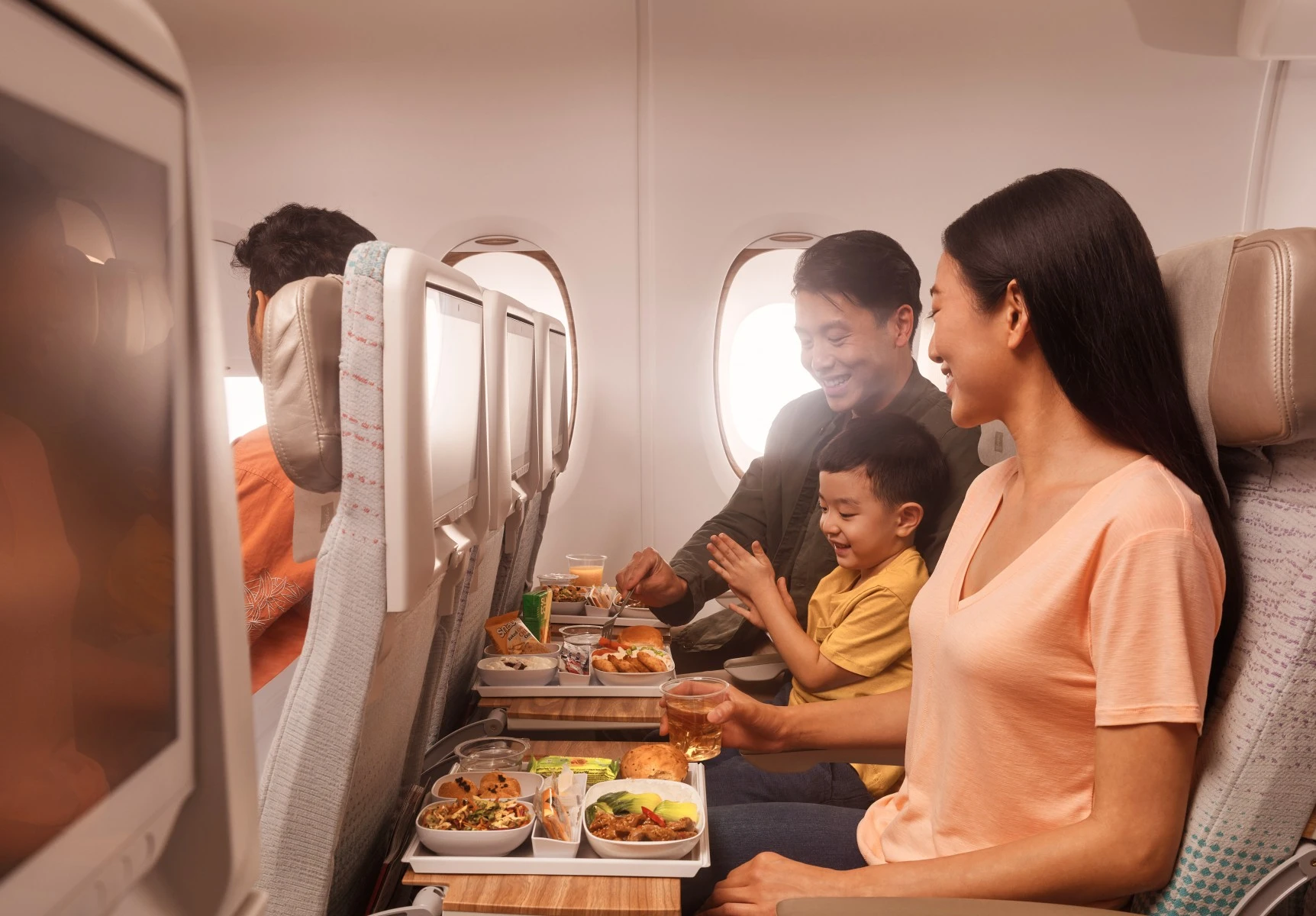
All in All
Travellers booking the Auckland or Christchurch services can expect the full four-class Emirates A380 product on both routes, including Premium Economy. Both routes depend on Emirates keeping enough A380s in active service outside the retrofit programme, so passengers should confirm aircraft type closer to departure during 2026. Fifth-freedom access on the Christchurch route also means travellers can book Sydney-Christchurch alone, without flying the full Dubai sector.

_(3100408933).jpg)