Emirates (EK), the world’s largest international airline by international passenger kilometres flown, has repurposed more than 88,000 kilograms of plastic waste generated from Economy Class inflight dining into brand-new meal service products — all within a single year. The milestone was announced by the Dubai-based carrier ahead of World Environment Day on 5 June 2026. The programme, launched in June 2023, targets damaged and end-of-life trays, casseroles, snack dishes, and bowls — items that would otherwise be written off and discarded.
To translate that ambition into industrial reality, Emirates committed more than AED 50 million (approximately USD 13.6 million) to establish a closed-loop manufacturing model for inflight dining serviceware. The initiative is executed in partnership with deSter FZE UAE, a Dubai-based aviation serviceware provider that holds a ‘Gold’ sustainability rating from Ecovadis, the globally recognised corporate sustainability benchmarking body. Crucially, Emirates deliberately chose a UAE-based facility to avoid the carbon cost of shipping used plastics to another country for processing — a decision that compresses the programme’s own environmental footprint while enabling it to operate at airline-grade scale.
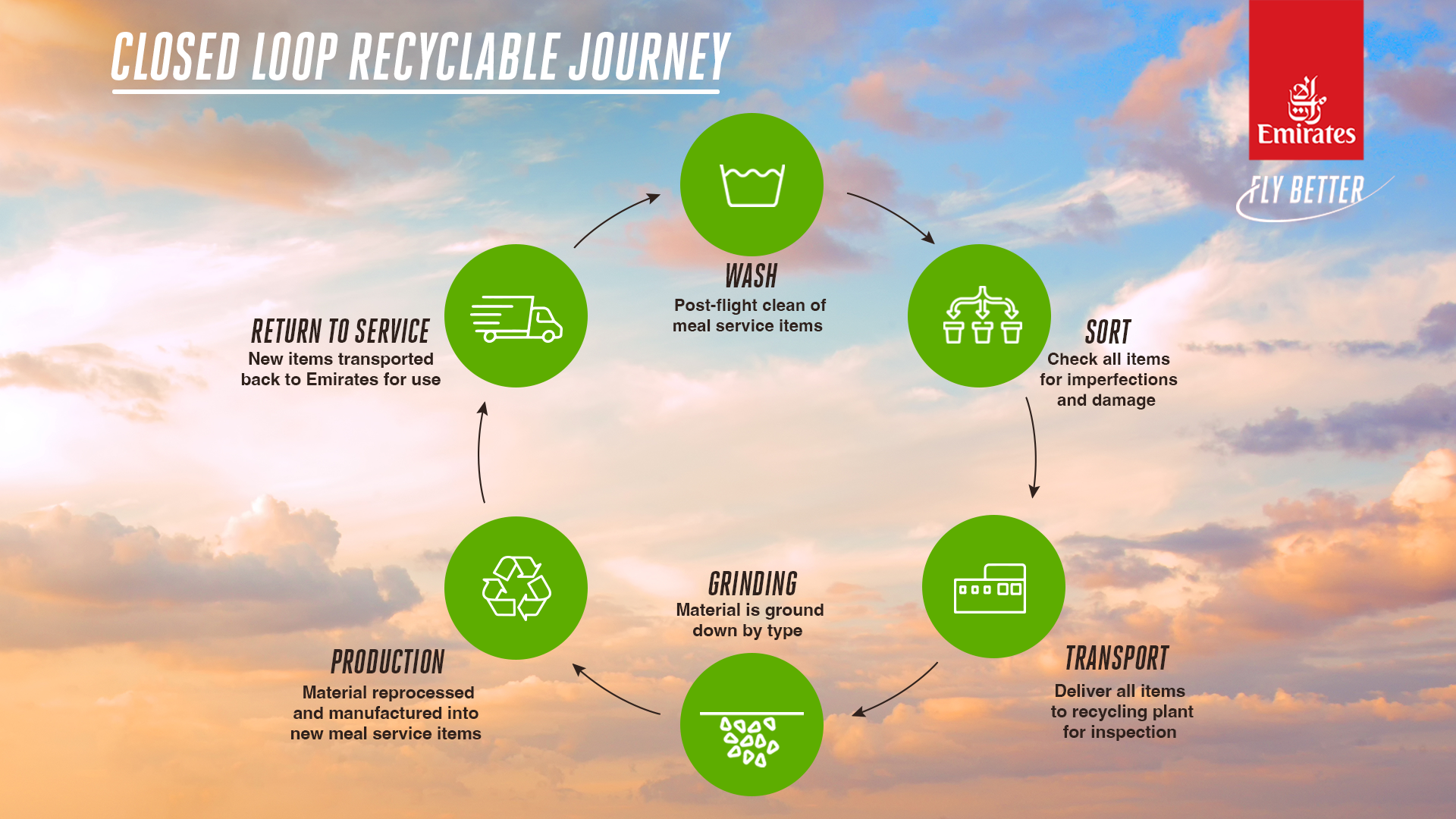
How The Closed-Loop Recycling Process Actually Works
Once a flight lands at Dubai International Airport (DXB), the relevant Economy Class serviceware — trays, bowls, casserole dishes, and snack plates — is segregated from general cabin waste. Crew members collect these items and hand them over to Emirates Flight Catering, one of the world’s largest airline catering operations. The items are then washed, inspected for damage, and transported to deSter’s specialist facility in Dubai where they undergo grinding, reprocessing, and re-moulding into fresh serviceware.
The recycled output contains up to 25 per cent recycled content (recyclate), and this proportion is designed to increase over time as the programme matures. Finished products are returned directly to Emirates Flight Catering and reintroduced into service across thousands of flights worldwide. The entire loop — from retiring a tray onboard to placing a new one on a meal cart — occurs within the UAE, meaningfully reducing transport-related emissions that would arise from outsourcing recycling abroad.
The deSter facility itself operates on sustainable design principles:
- Solar power drives a significant portion of facility energy needs.
- Efficient water management minimises consumption during the washing and processing stages.
- Waste minimisation practices govern all manufacturing stages at the plant.
- The company is a member of the CE100 network, which includes some of the world’s leading circular economy companies.
- deSter holds the ‘Gold’ Sustainability rating from Ecovadis, a globally recognised certification for sustainable business practices.
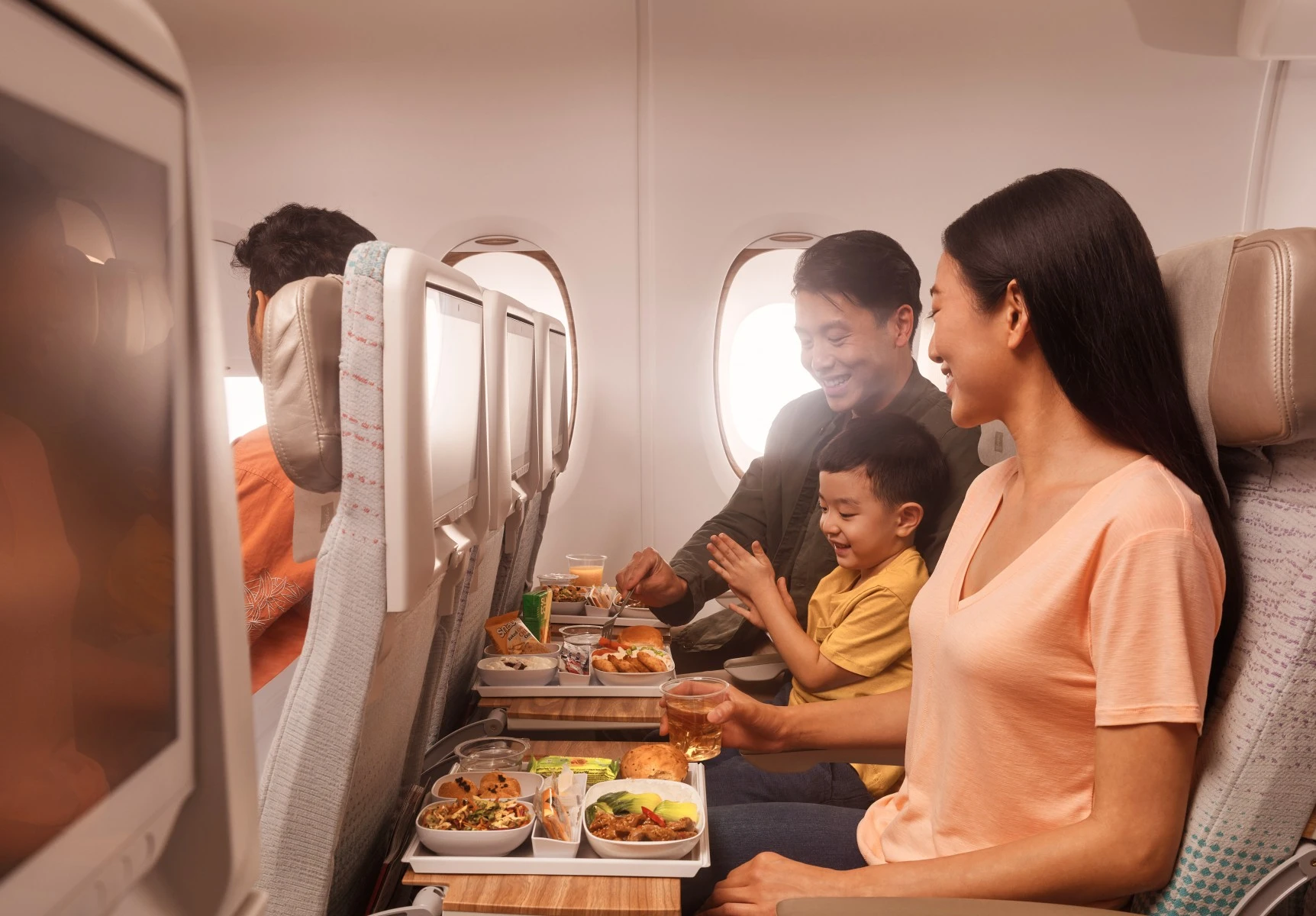
Numbers Behind Emirates’ Closed Loop Programme
When Emirates unveiled the closed-loop programme in June 2023, the goal was to set a precedent for how a mega-carrier with millions of annual passengers could integrate circular manufacturing into day-to-day catering logistics. The 88,000-kilogram figure now confirmed represents tangible, quantified progress rather than a forward-looking pledge — it is waste already diverted.
To contextualise the scale, Emirates Cabin Crew had previously recycled over 500,000 kilograms of plastic and glass bottles through a separate collection-and-sorting initiative in 2022 alone, according to a press release from the Emirates media centre.
That prior figure, noted by Simple Flying, was roughly equivalent to the weight of a fully loaded Emirates Airbus A380. The new closed-loop figure, while distinct in scope, adds a qualitatively different dimension: rather than segregating waste for external recyclers, the airline now controls the full production cycle — retiring the old material and manufacturing the replacement in one integrated supply chain.
The carrier has also diverted over 150 million single-use plastic items from landfill each year by replacing plastic straws, inflight retail bags, and stirrers with paper and wood alternatives sourced from responsibly managed forests.
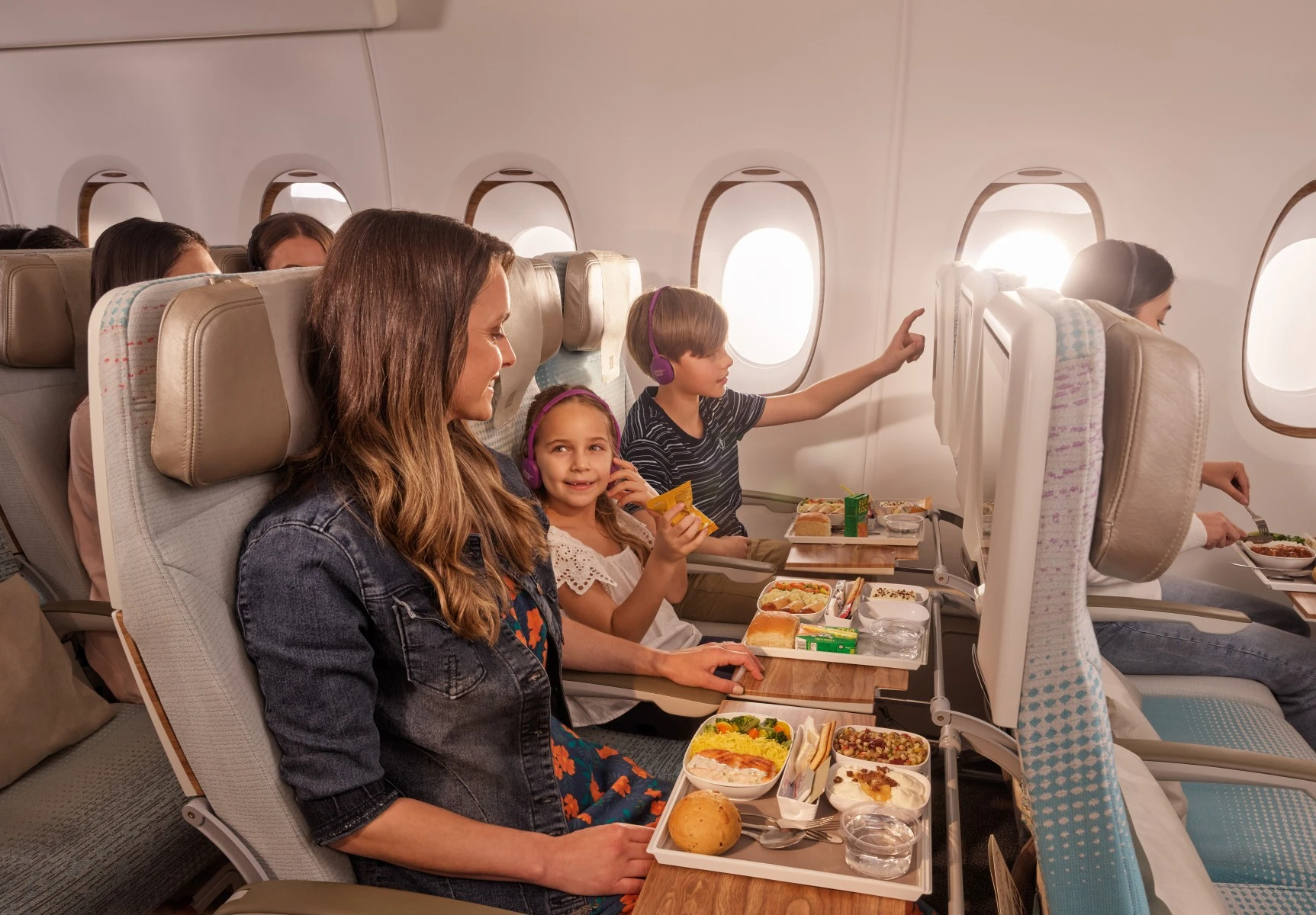
Emirates’ Sustainability Across All Cabin Classes
The recycling initiative does not exist in isolation. Emirates has woven sustainable materials into the inflight product stack across every cabin class, as documented in Emirates’ latest circular economy disclosure.
First Class and Business Class:
- Plastic packaging for mattress toppers, duvets, and blankets in First Class has been replaced with reusable bags made from recycled polyester.
- First and Business Class amenity kits feature fabrics with recycled content, redesigned accessories, and kraft paper packaging for dental kits.
- Loungewear, slippers, and eye masks are produced from lightweight modal fabric derived from certified botanic fibres.
- VOYA skincare products featured onboard are manufactured using organic seaweed sustainably harvested from Ireland.
Premium Economy and Economy Class:
- Reusable amenity kits, developed in partnership with conservation organisation United for Wildlife, incorporate bio-based materials including cactus-based alternatives.
- Kit contents are made from 100 per cent recycled polyester; packaging uses non-toxic soy-based inks with materials produced from responsibly sourced paper.
- Fleece blankets in both Premium Economy and Economy are made from recycled polyester equivalent to approximately 28 recycled plastic bottles per blanket. Emirates first introduced these in 2017, and over the six years following that initiative, the programme prevented more than 95 million plastic bottles from going to landfill.
Across All Cabin Classes:
- Headset packaging is now made from 100 per cent recycled low-density polyethylene (LDPE).
- Plastic straws have been replaced with certified paper alternatives.
- Plastic duty-free carrier bags have been replaced with paper versions.
- Menus across all classes are printed on paper sourced from responsibly managed forests.
Children’s Products and Toy Amenity Kits
Emirates’ youngest passengers also interact with the carrier’s sustainability commitments. The airline’s complimentary toy bags, baby amenity kits, and plush toys are made from recycled plastic bottles and other sustainable materials.
According to the carrier’s media centre, over eight million plastic bottles were repurposed during twelve months of amenity kit production alone. Each Emirates kids’ backpack requires 5.5 recycled plastic bottles in its construction, and each duffle bag requires 7 — a level of component-level specification that is atypical in airline sustainability communications.
New children’s toys and bags now contain at least 50 per cent recycled content, including post-consumer polyester, and unnecessary single-use packaging has been removed from these items. Magazines and product tags accompanying children’s products are printed on responsibly sourced paper.