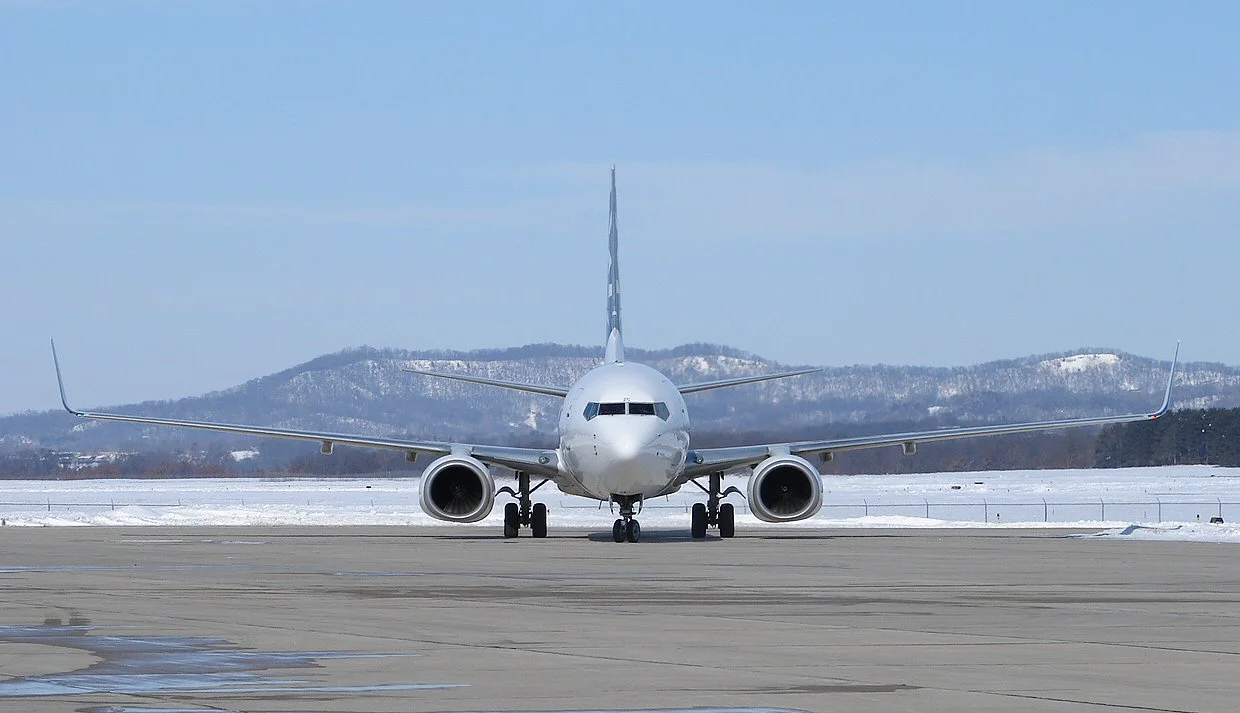
The US Federal Aviation Administration (FAA) has issued a new airworthiness directive requiring operators to inspect 471 US-registered Boeing 737 MAX aircraft for cracking in a critical fuselage reinforcement, after a crack outside the boundaries of an existing safety order turned up during routine maintenance on an older-generation jet.
According to The National News, the directive covers the 737-8, 737-9, and high-density 737-8200 variants and takes effect September 10, 2026, with the FAA stating plainly that the condition “addresses an unsafe condition that is likely to exist or develop on products identified in this rule-making action.” Globally, the order sweeps in roughly 1,429 aircraft, making this one of the broadest precautionary structural directives issued against the MAX family since it returned to service.
The affected component is the bear strap, a structural reinforcement that wraps the forward galley door cutout and helps the fuselage distribute stress around the opening during the repeated pressurization and depressurization cycles of every flight. The FAA said undetected cracking could eventually spread into the fuselage skin, potentially compromising the aircraft’s ability to sustain limit loads and adversely affecting structural integrity— language the agency has used before, because this isn’t a new problem so much as an old one that’s now reaching further into the fleet than regulators expected.
Where the Crack Problem Actually Started
The MAX directive traces directly back to AD 2021-02-13, issued in February 2021 for certain 737-600, -700, -700C, -800, and -900 series aircraft after inspectors found bear strap cracking between specific fuselage stations, often originating from rough sanding marks left on the strap’s surface during manufacturing — a production-quality issue rather than a design flaw, and one severe enough that the FAA warned uncorrected cracking could sever the bear strap entirely and lead to uncontrolled cabin decompression. That 2021 order applied only to older 737NG variants and only within a defined inspection zone.
The reason regulators are back at this five years later: the FAA received a report that a crack had appeared on a 737-900ER outside the boundaries the 2021 directive actually covered, a model not included in the original order’s applicability at all.
That discovery forced the agency to propose superseding the 2021 rule with a broader one — expanding both which aircraft are covered and how much of the fuselage must be inspected — and separately convinced regulators that if the same manufacturing method could crack past its expected boundaries on NG jets, the structurally similar MAX family needed to be pulled into the inspection net too, even with zero cracks found on any in-service MAX to date.
Boeing’s Position: An Extension, not a New Failure
Boeing has been careful to frame the directive as an extension of a program it has run for years rather than a response to any MAX-specific failure. A company representative told The National that the MAX shares a similar design and build process with the NG, so Boeing extended the inspection regime to MAX airplanes even though the issue “has not been observed on the 737 Max fleet.”
The manufacturer says it has already completed engineering analysis identifying the crack’s root cause and is developing permanent design changes intended to prevent the issue on future production aircraft, while continuing to support inspections across the existing fleet in the meantime.
The Second FAA Directive in Two Weeks
This isn’t an isolated regulatory action. It follows a separate FAA notice on July 28 flagging that seats on hundreds of US-registered 737 MAX aircraft may have been incorrectly installed and could need inspection or correction, meaning the MAX fleet has now drawn two distinct precautionary directives inside roughly ten days.
Neither order grounds any aircraft; both reflect the FAA’s stated preference for catching structural and installation issues on a fixed inspection schedule before they generate an in-service failure, rather than waiting for a fault to surface mid-flight.
Fleet Scale and the Middle East Angle
Aviation intelligence firm IBA estimates roughly 2,300 Boeing 737 MAX aircraft are currently flying worldwide, including 823 registered in the United States, meaning the new directive touches well over half of the US-based fleet. In the Gulf, flydubai remains the region’s dominant MAX operator and has continued deepening that commitment rather than hedging against it — the carrier signed a $13 billion initial agreement for 75 737 MAX aircraft at the November 2025 Dubai Airshow, with options for 75 more, intended for both fleet growth and replacing older jets.
Boeing has not said whether carriers outside the US, including flydubai, will face the same inspection timeline; national aviation authorities typically mirror FAA directives but aren’t obligated to adopt identical compliance dates.
Part of a Longer Reckoning on Boeing Quality
The directive lands as Boeing, under chief executive Kelly Ortberg, continues rebuilding manufacturing credibility following the intense scrutiny that followed the January 2024 Alaska Airlines door plug blowout on a nearly new 737 MAX 9 — the incident that first triggered today’s heightened FAA oversight of Boeing’s production lines.
Coming just weeks after the seat-installation notice, the bear strap directive reinforces a pattern regulators have leaned into since: treat every echo of a past structural or production issue as grounds for fleet-wide precaution, even when, as here, the fault hasn’t actually shown up on the aircraft being inspected.


.jpg)

.jpg)