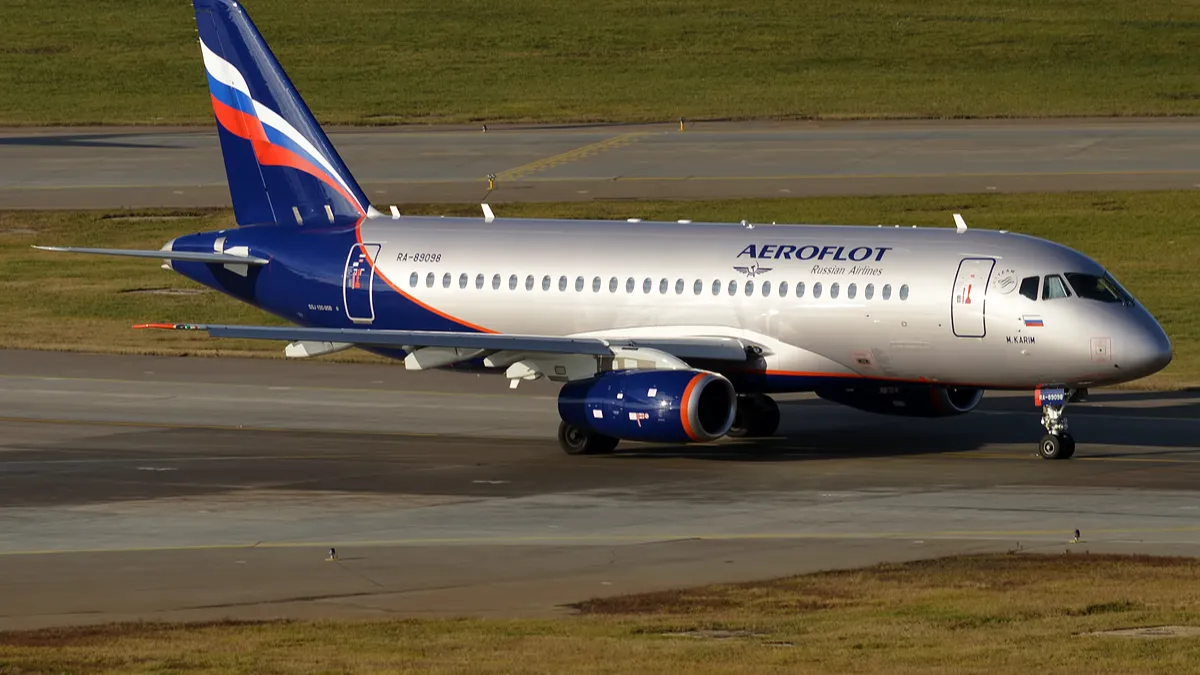
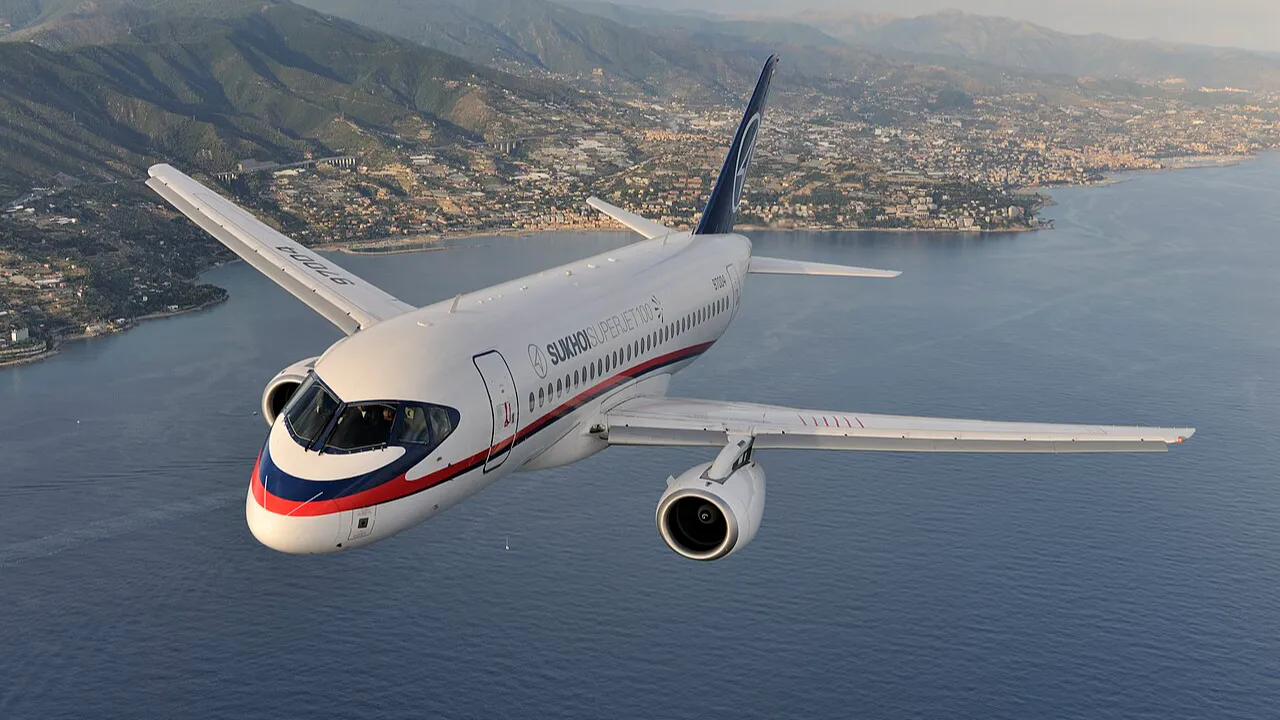
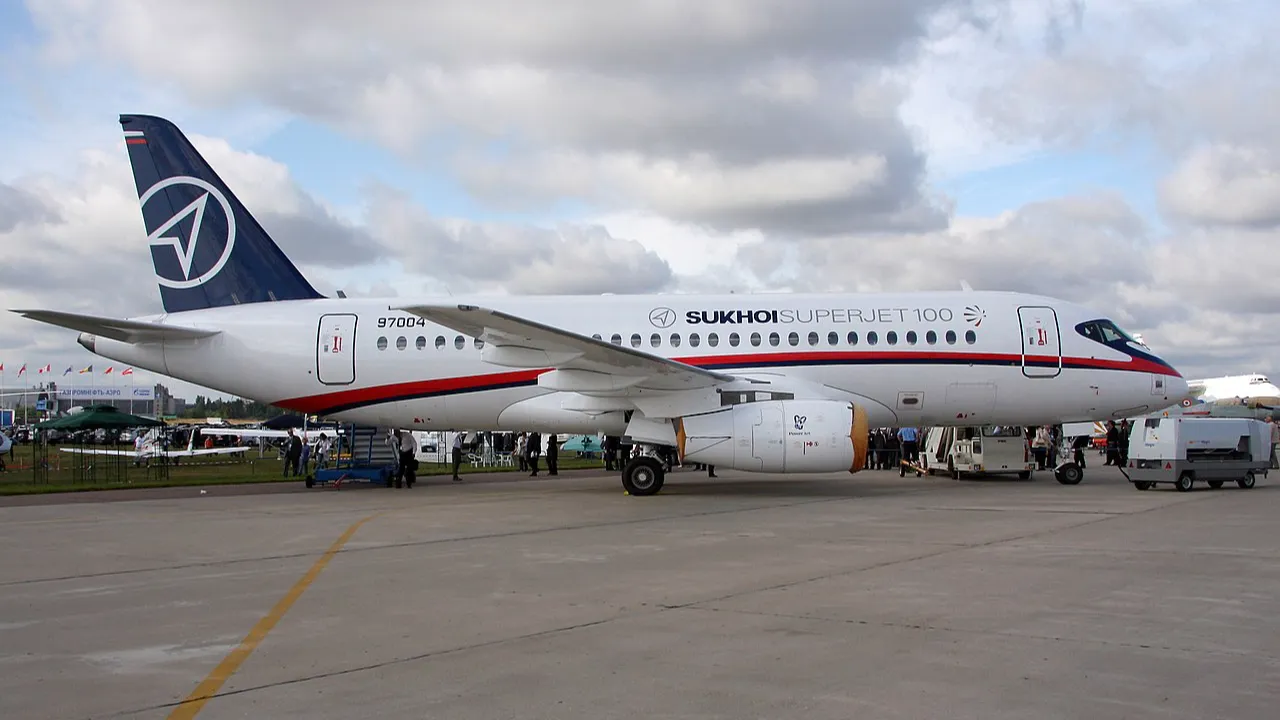
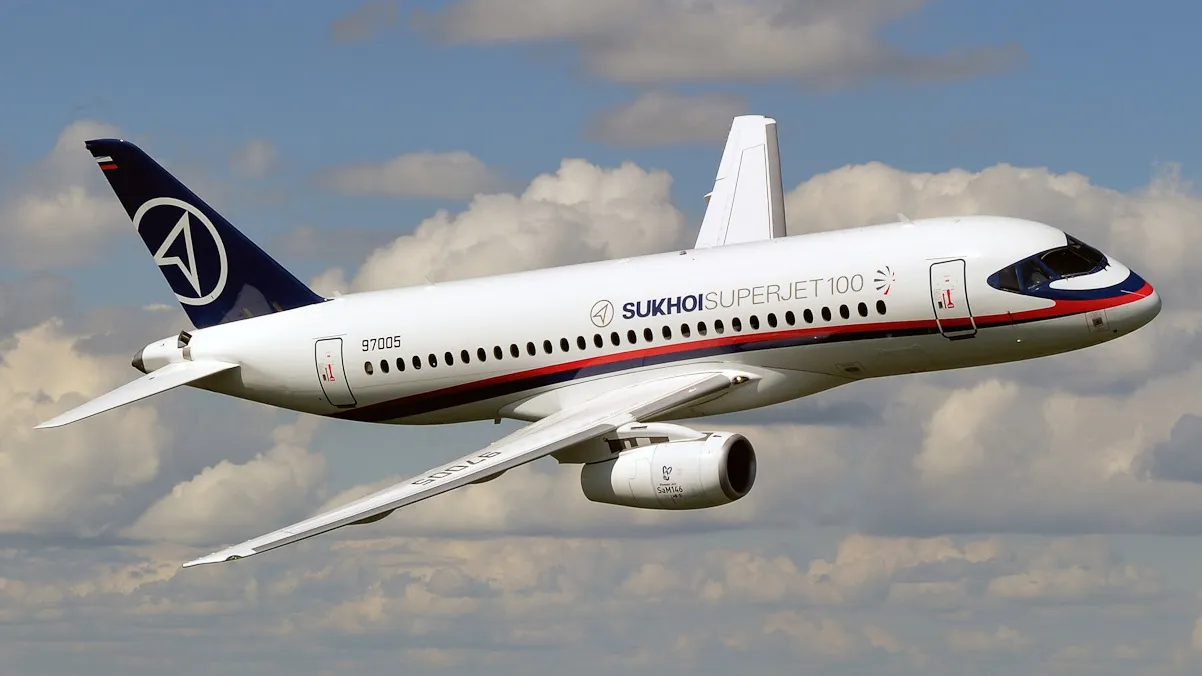
On 27 October 2025, the Indian state-run aerospace major Hindustan Aeronautics Limited (HAL) signed a memorandum of understanding (MoU) with Russia’s Public Joint Stock Company United Aircraft Corporation (PJSC-UAC) to manufacture the twin-engine narrow-body passenger jet SJ‑100 (also known as the SuperJet 100) in India.
The agreement gives HAL, which recently signed a contract worth $7 billion (₹66,500 crore) for the 97 Tejas Mk-1A light combat aircraft (a fighter jet that is made with 64% indigenous materials) by the Indian Air Force (IAF), the rights to produce the SJ-100 for domestic customers. The historic signing represents the first complete passenger aircraft to be built in India since the end of the AVRO HS-748 programme, which ran from 1961 to 1988.
What does the agreement to build the SJ-100 in India entail?
This partnership between HAL and PJSC-UAC comes at a time when India is enhancing its self-reliance in civil aviation under the “Aatmanirbhar Bharat” [a phrase that loosely translates as “self-sufficient India”]. HAL’s initiative to produce the SJ-100 in India will support short-haul regional connectivity via the UDAN scheme [UDAN is an acronym for “Ude Desh ka Aam Naagrik“, which can be translated as “All Ordinary Citizens Will Take to the Skies”.
The SJ-100 is already in service with more than 16 airlines globally and over 200 units have been produced to date. Rajnath Singh, India’s Defence Minister, was buoyed during the historic signing of the MOU and was quoted in The Economic Times as having commented:
“In a landmark step for the Indian civil aviation sector, HAL and PJSC-UAC have signed an MoU for the production of SJ-100 civil commuter aircraft in India. The SJ-100 will be a game-changer for short-haul connectivity under the UDAN scheme and marks a major stride towards achieving ‘Aatmanirbharta’ in civil aviation,”
HAL has secured the manufacturing rights for manufacturing this twin-engine narrow-body aircraft with a range of about 3 ,530 km for domestic customers. The agreement was signed by Prabhat Ranjan on behalf of HAL and Oleg Bogomolov for UAC, in the presence of HAL CMD D K Sunil and UAC Director–General Vadim Badeka. The SJ-100, being am, is well-suited for short-haul operations in India’s regional network, and falls under the category of an aircraft, which the Indian government will need in the following numbers:
- 200 jets for regional connectivity
- 350 for the Indian Ocean region to serve nearby international tourist destinations
Significance of Manufacturing the SU-100 for India’s Aviation Industry
This pact signals India’s re-entry into full-scale passenger aircraft manufacturing after decades. The last time a complete passenger aircraft was produced was by HAL’s AVRO HS-748, whose specifications are as follows:
What are the specifications of the Sukhoi SJ-100 to be manufactured in India?
| Flight Phase | Parameter | Value |
|---|---|---|
| Take-Off | V₂ | 160 kts |
| Distance | 1,731 m | |
| MTOW | 45,880 kg | |
| Initial Climb (to 5,000 ft) | IAS | 200 kts |
| ROC | 2,500 ft/min | |
| Initial Climb (to FL150) | IAS | 280 kts |
| ROC | 2,000 ft/min | |
| Initial Climb (to FL240) | IAS | 280 kts |
| ROC | 1,500 ft/min | |
| Mach Climb | Mach | 0.76 |
| ROC | 1,500 ft/min | |
| Cruise | TAS | 450 kts |
| Mach | 0.78 | |
| Ceiling | FL410 | |
| Range | 3,048 NM | |
| Initial Descent (to FL240) | Mach | 0.78 |
| ROD | 1,500 ft/min | |
| Descent (to FL100) | IAS | 280 kts |
| ROD | 2,800 ft/min | |
| Descent (FL100 & below) | IAS | 210 kts |
| MCS | 190 kts | |
| ROD | 1,000 ft/min | |
| Approach | Vₐpp (IAS) | 210 kts |
| Distance | 1,400 m |
Source: Skybrary
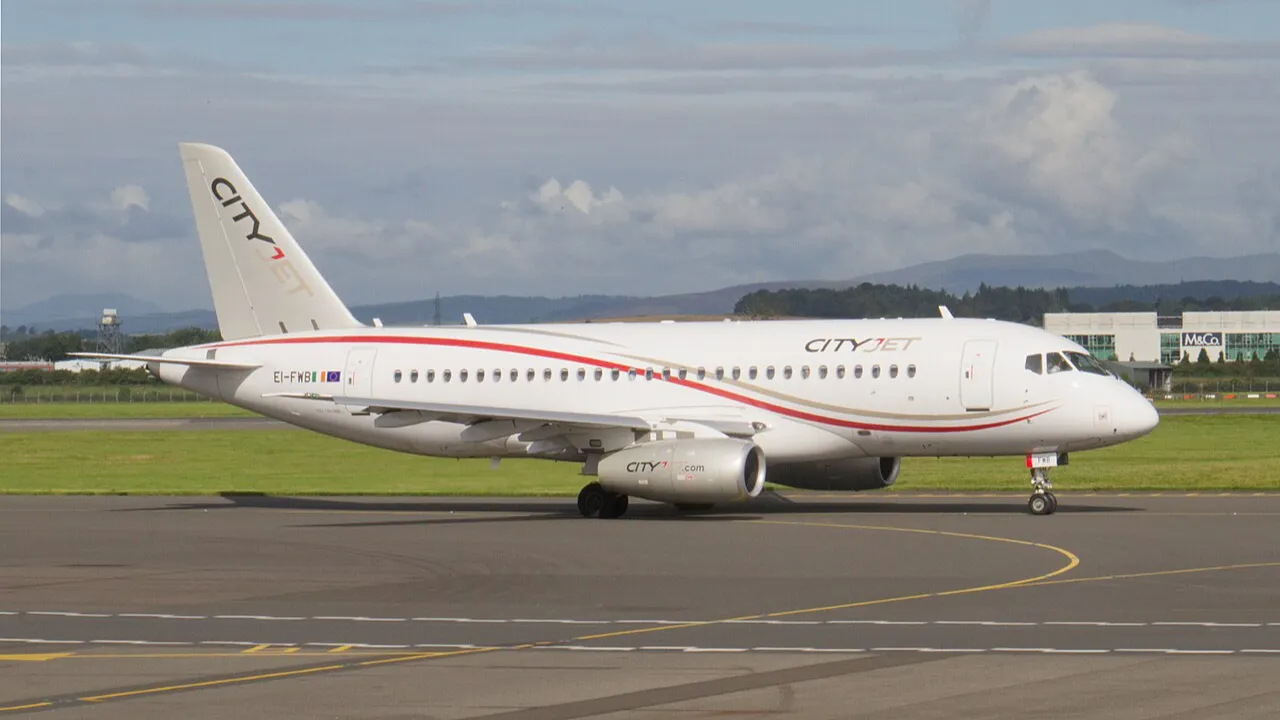
Implementation challenges for manufacturing SJ-100 in India
Implementation of the development of the Sukhoi SJ-100 in India will involve the following:
- Setting up manufacturing infrastructure
- Supply-chain development
- Possibly engine or key systems integration
- certifying the Indian-manufactured SJ-100 variant for domestic operation.
While the timeline has not yet been publicly disclosed by HAL or UAC, there are reasons to be optimistic about this. The helicopter that can land at the top of Mount Everest, the Airbus H125, is also set to be manufactured in India.
The signing of the deal of manufacturing Tejas defense aircraft in India is likely to generate 11,750 direct and indirect jobs annually over the contract period, and the construction of the SJ-100 and Tejas aircraft by HAl are likely to support one another. One has to be wary of the challenges such as aligning global supply-chain partners: India has already been hit with hard sanctions for buying Russian oil, and thereby indirectly opposing Ukraine, claims the US. Russia-Ukraine war has already downed several wonderful planes, the most noticable being the Antonov An-225, one of the biggest aircraft ever to be made.
5 most wonderful aircraft destroyed in the Russia-Ukraine war
HAL will also have to work on securing certification for an aircraft type produced in India, alongside managing cost-competitiveness relative to two of the biggest aircraft manufacturers in the world:
- Airbus, whose passenger planes generally start with the letter A and the number 3. India’s largest carrier, Indigo, operates a majority of Airbus A320 types.
- Boeing, whose civil aircraft names start and end with the number 7, and India’s budget carrier SpiceJet introduced a few of these aircraft to its fleet a few days ago, leading to a skyrocketing of its shares.
regional offerings, and ensuring market uptake in India’s regional aviation segment.
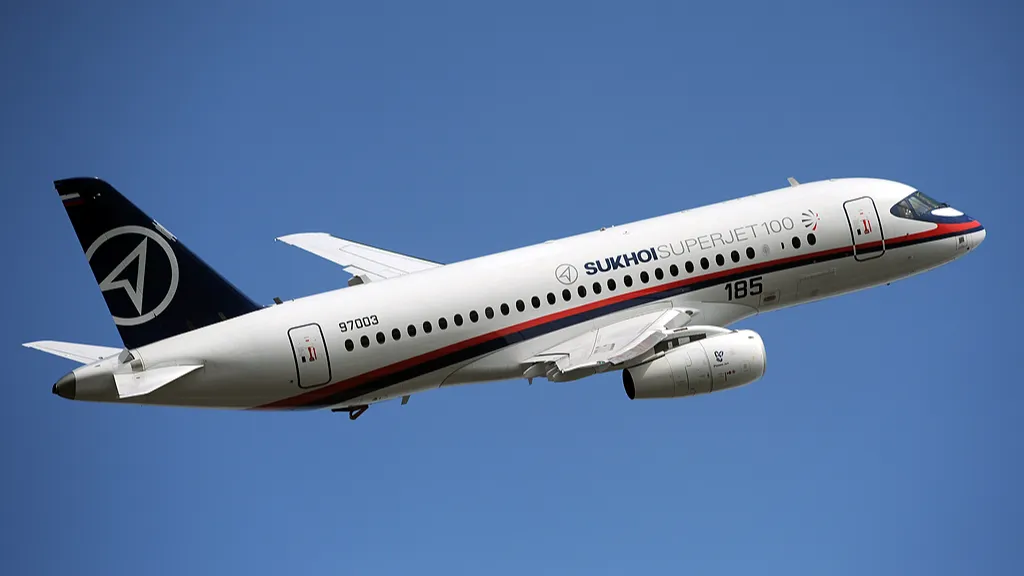
All in All
India’s aerospace sector is undergoing massive strides as it has leapt from assembling parts or converting smaller airframes to full passenger-jet production on its soil. Maybe this is one of the reasons why it inched past China in modern military rankings.
India Inches Past China in Modern Military Aircraft Rankings
There are various gains for India: regional connectivity, manufacturing self-reliance, employment generation, reduction of dependency on foreign aircraft manufacturers, and catalyse a deeper aerospace supply-chain ecosystem.
Defense News noted that deal “does not include rights for indigenous design modification, meaning that while the aircraft will be built locally, its engineering and intellectual property will remain under Russian control“:
” The HAL–UAC partnership provides India with production rights, enabling HAL to assemble the aircraft domestically using Russian kits, components, and sub-systems. However, India’s role will be limited to manufacturing and maintenance, as the MoU excludes indigenous design authority…For Russia, the deal represents both a commercial opportunity and a geopolitical statement. Facing Western sanctions that restrict exports and technology transfer, Moscow has aggressively promoted its domestically re-engineered aircraft like the SJ-100 and MC-21 as proof of its industrial resilience.”
People will also watch out for how India will configure its domestically set up SJ-100. Aeroflot, the carrier which once operated the Soviet Concorde, operates the Sj-100 and configures it in the following way:
| Feature | Business Class | Economy Class |
|---|---|---|
| Total Seats | 12 | 75 |
| Seat Pitch | 38″ | 30″ |
| Seat Width | 19.5″ | 18″ |
| Recline | 5″ | 3″ |
Data: Seatmaps


_(2).jpg)
_over_Italy.jpg)
.jpg)
_(cropped).jpg)
.jpg)
