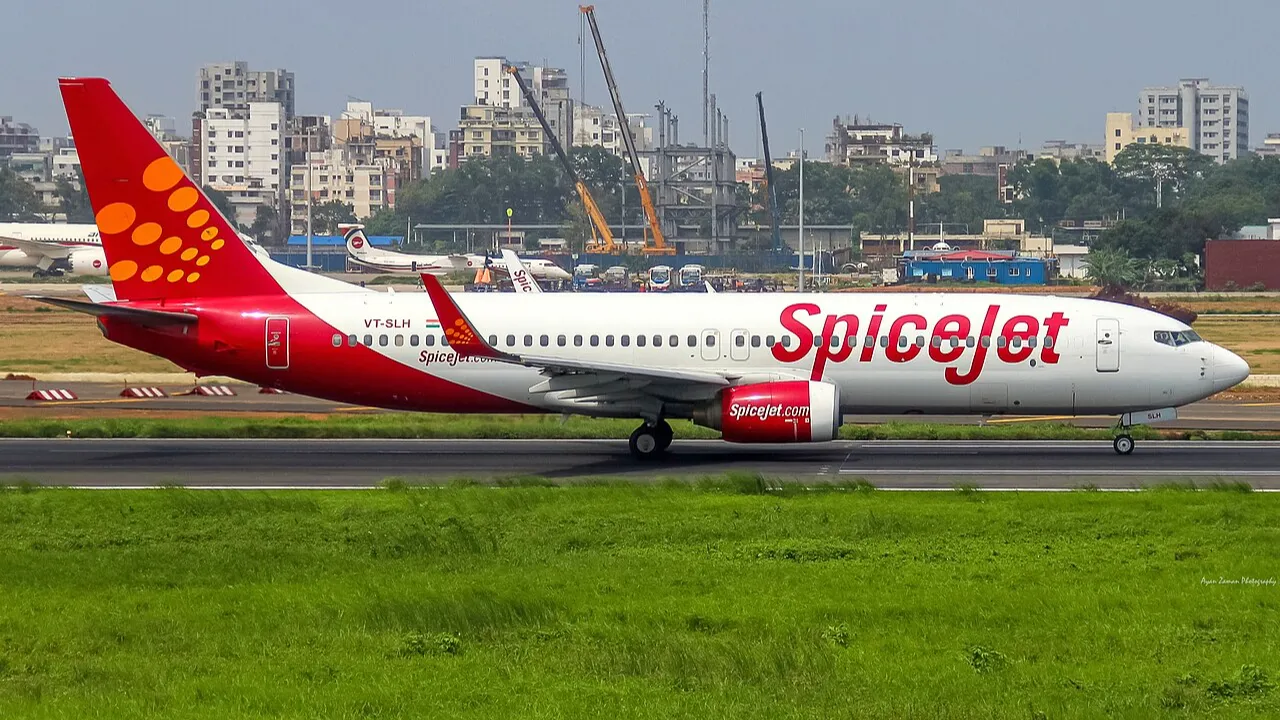
India’s budget carrier SpiceJet (SG) has inducted nearly five aircraft into its operational fleet in October 2025. The latest two of these — a newly leased Boeing 737 and the un-grounding of a previously grounded Boeing 737 MAX — follow two Boeing 737s and one Airbus A340 already added earlier in October, as part of the carrier’s winter expansion plan.
as part of its winter expansion plan. The fleet additions come during the festive and holiday season in India where SpiceJet wants to capitalize on. The carrier is aiming to more than double its capacity and triple its available seat-kilometres (ASKM) by December 2025.
Spicejet’s Latest Fleet Additions and Operational Impact
Earlier in October, SpiceJet had already inducted two Boeing 737s and one wide-body Airbus A340 aircraft. The addition of another Boeing 737 aircraft and simultaneously un-grounded a 737 MAX aircraft brings the number of aircraft it has added to its fleet to five this month.
Currently, SpiceJet operates a total of 58 aircraft, 33 of which are the Boeing 737 types- the most prominent type in its fleet. It also operates 24 De Havilland Canada DHC-8 Dash 8s, and a solitary Airbus A340, which is registered YR-LRE and is 17.3 years old. In July, the carrier had announced that it would be “inducting five Boeing 737s on damp lease from another operator“. This was to take the total number of new fleet additions to 10, and the carrier had also stated that it had “advanced discussions to lease more aircraft ahead of the winter 2025 schedule“.
According to Business Today, SpiceJet “will operate 250 daily flights, up from 125 flights in the Summer Schedule 2025 and 150 flights during the last winter season“.
SpiceJet’s expanded fleet was expected to significantly increase its operating capacity by the end of 2025, with the airline aiming to more than double its operational fleet and nearly triple its available seat kilometres (ASKM). The Economic Times reported that the expansion would support the carrier’s efforts to accommodate rising travel demand and restore connectivity across its network.
SpiceJet Chief Business Officer Debojo Maharshi said the latest aircraft inductions, together with the return of another Boeing 737 MAX, represented another stage in the airline’s growth plans. The carrier expected the additional aircraft to more than double its capacity and triple its ASKM by December 2025.

The expansion plans had also been highlighted earlier by SpiceJet Chairman and Managing Director Ajay Singh. Speaking to The Travel World, Singh described the fleet additions as the start of a larger winter expansion, with the airline looking to strengthen its operations, introduce new routes and improve connectivity for passengers across India and international markets.
The planned growth was therefore not limited to adding aircraft. SpiceJet was also seeking to use the additional capacity to rebuild its network, increase available seat capacity and respond to stronger seasonal demand.
SpiceJet had introduced the following flights this month:
- Daily flights to Port Blair in the Andaman and Nicobar Islands and Udaipur.
- Special non-stop flights in the festive season of Diwali where it connected Ayodhya with Ahmedabad, Bengaluru, Delhi, and Hyderabad.
SpiceJet’s Key Aircraft Types and Implications for Customer-Experience
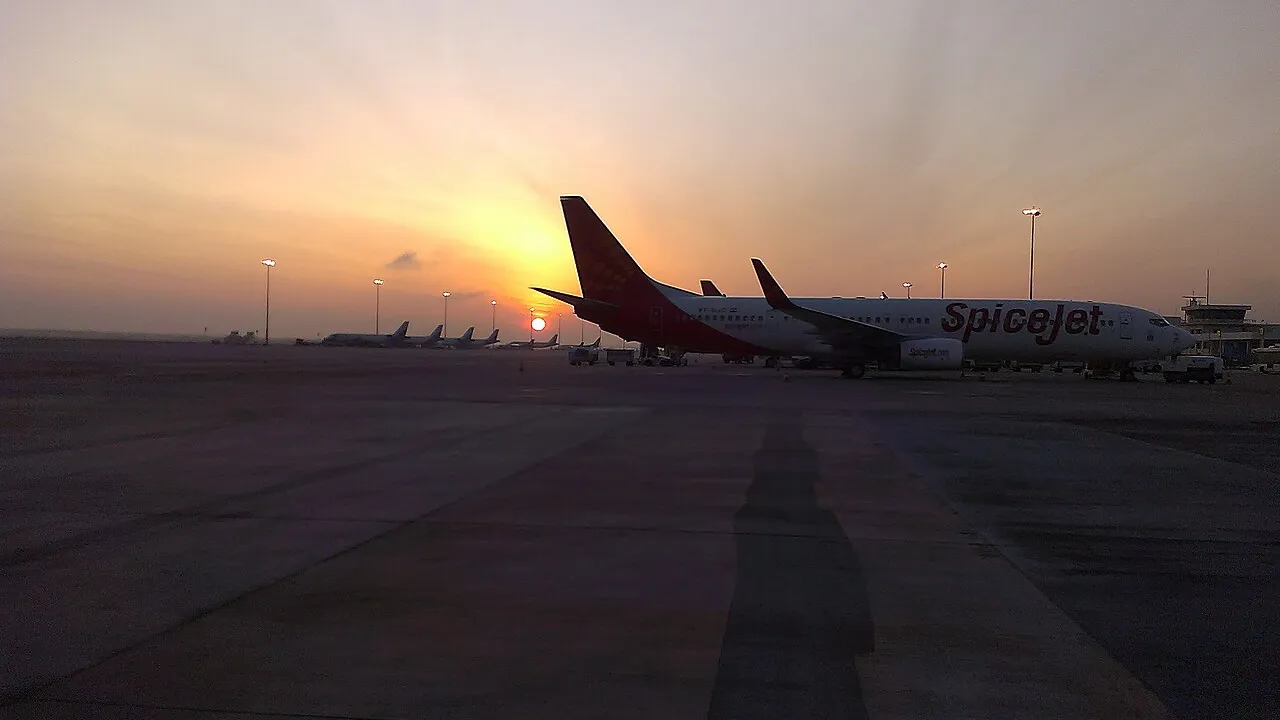
Among the fleet additions are narrow-body Boeing 737 aircraft and a wide-body Airbus A340. The Airbus A340 is noteworthy because it allows long-haul operations or high-density sectors, and SpiceJet hasn’t really had a strong experience operating this aircraft type. Here’s SpiceJet’s history of working with the A340:
| Year / Period | Leasing Partner | Number of Aircraft | Purpose / Notes |
|---|---|---|---|
| Pandemic (approx. 18 months) | Hi Fly Malta | 1 | Airbus A340-300 ‘preighter’ for freight operations |
| May – June 2024 | Legend Airlines | 1 | Operated for Hajj passenger operations |
| May – June 2025 | Legend Airlines | 2 | Operated for Hajj passenger operations |
| Overall | Legend Airlines | 3 | SpiceJet has operated all three of Legend’s Airbus A340-300s |
Source: Aerospace Global News

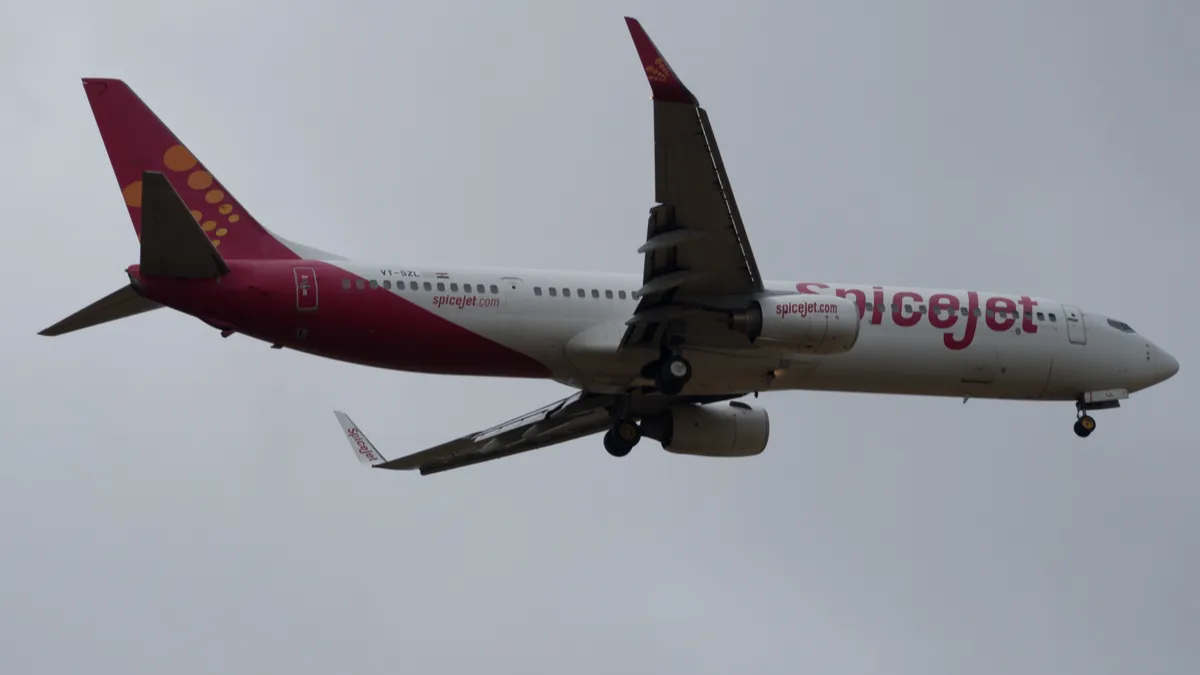
According to SpiceJet itself, it “is one of the country’s largest regional players operating multiple daily flights under UDAN or the Regional Connectivity Scheme“. The majority of the airline’s fleet offers the most spacious economy-class seating in India dubbed “SpiceMax”.
Economic Implications of Spicejet’s Induction of New Aircraft
SpiceJet’s latest aircraft additions were followed by a sharp rise in the airline’s share price. SpiceJet Ltd. shares climbed 6.28% on October 27, reaching an intraday high of ₹40.59 ($0.46), while the stock had gained nearly one-third over the preceding month.
Osho Krishan, Senior Analyst – Technical & Derivative Research at Angel One, said the recent rally had strengthened the stock’s technical position. He noted that the shares had moved toward their 200-day exponential moving average, with trading volumes supporting the recovery. Krishan identified support around ₹36 ($0.41), followed by ₹33 ($0.37), while resistance was expected near ₹42 ($0.48).
The airline has also been working to resolve longstanding financial obligations. According to Moneycontrol, SpiceJet settled a $24 million payment dispute involving Credit Suisse and reached an agreement with Carlyle Aviation Partners that improved its liquidity position.
The Carlyle agreement was particularly significant because it released nearly $90 million in previously tied-up maintenance reserves and credits, giving SpiceJet additional financial flexibility as it pursued its fleet and capacity expansion.

All in All
The induction of new aircraft to its fleet and strengthening of its shares might are things that SpiceJet must have been looking forward to. Ratings agencies Crisil, a rating agency upgraded SpiceJet’s ratings, assigning an A4+ short-term rating earlier this month, while in September Acuité, another rating agency upgraded its long-term rating for SpiceJet to ‘BB (Stable)’. Both of these changes had come about after a capital infusion of Rs 3,000 crore through a QIP.

_AN2341381.jpg)


