On Sunday, the aviation network of the United States faced what could be dubbed as the most extraordinary aviation disruption in the nation in the past five years as more than 8,000 flights were delayed across the nation due to severe staffing shortages within the Federal Aviation Administration (FAA). On Satuday, Air-traffic-control “triggers” were reported at 22 airports reported Newsweek while Guardian reported this figure to be 20 for the following day. These have forced ground delays and operational slowdowns across the country.

To make matters worse, U.S. Transportation Secretary Sean Duffy was quoted in Reuters as having said that he “expects more flights to be delayed, with air traffic controllers set to miss their first paycheck“. This is a part of a federal government shutdown which has left thousands of aviation personnel such as:
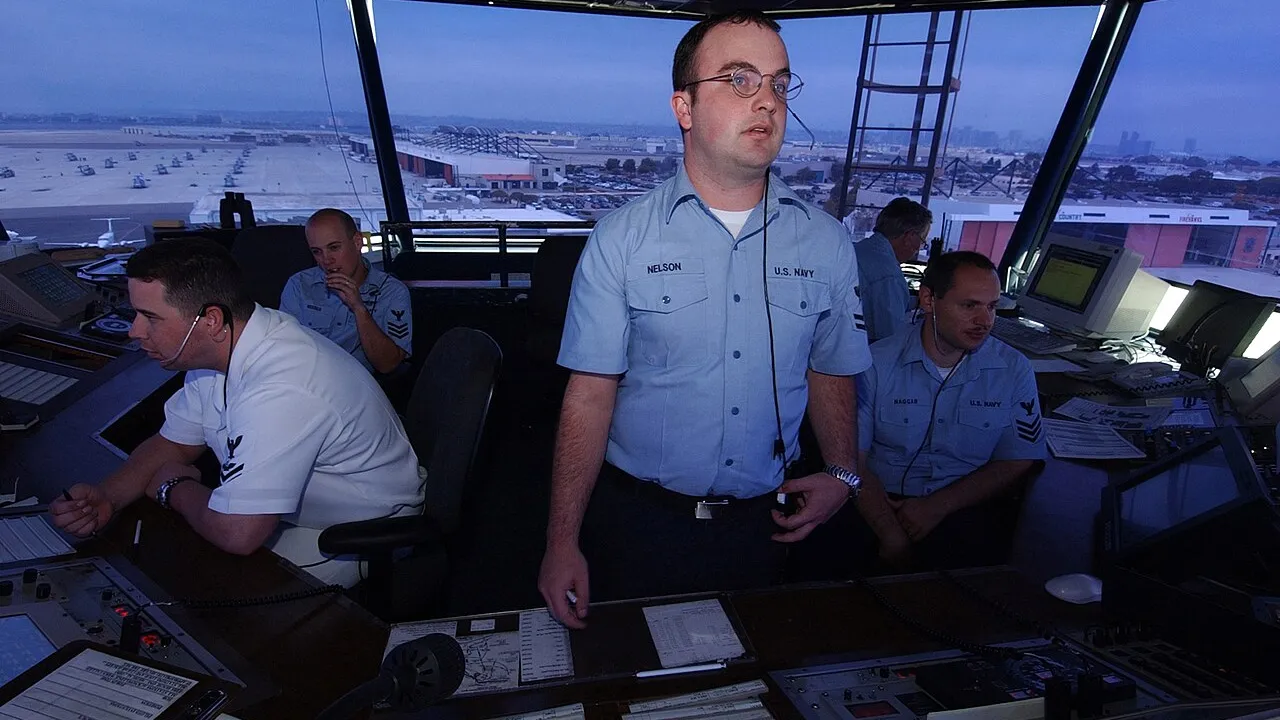
- Air-traffic controllers
- Technical specialists
- Transportation Security Administration (TSA) officers
working without pay. With operations continuing under constrained budgets, the shortage of personnel has strained the entire national airspace system.
The Immediate Impact of Staffing Shortages at US Airports
According to the FAA, the number of “triggers” — instances where an airport must reduce operations due to controller shortages — reached its highest level since the shutdown began at the start of the month. These shortages forced ground stops and delays at major airports in airports such as:
- Los Angeles International Airport (LAX) [which issued a ground stop (GS) at around 11.30am ET (15.30 GMT) following ATC shortages, with the GS covering most of the southern California region. ]
- Chicago O’Hare International Airport (ORD) [which is an aerodrome that is adapting to cater to travelers with accessibility requirements]
- Newark Liberty International Airport (EWR)
On Thursday, over 6,000 flights were delayed, followed by 900-plus had been delayed on Friday morning. The figure rose to around 5,000 fight delays on Saturday, and flight-tracking data indicated that over 8,000 flights were delayed nationwide by late evening on Sunday. The hardest-hit carriers included the big three airlines of the US, and the most popular budget carrier of the nation – Southwest Airlines.
American Airlines Expands Summer 2026 Network With New Routes From New York and Dallas/Fort Worth
Let’s breakdown the numbers by airlines:
| Airline | Number of Flights Delayed | Percentage of Total Flights Delayed |
|---|---|---|
| Southwest Airlines | 2,000 | 45% |
| American Airlines | 1,200 | 33% |
| United Airlines | 739 | 24% |
| Delta Air Lines | 610 | 17% |

Photo: Sixflashphoto | Wikimedia Commons
Table: Key Figures from the U.S. Air Traffic Staffing and Shutdown Impact Report
| Category | Data / Figure | Description / Context |
|---|---|---|
| Air Traffic Controllers (ATCs) | 13,000 | Number of controllers required to work without pay during shutdown. |
| Transportation Security Administration (TSA) Officers | 50,000 | Number of TSA personnel working unpaid. |
| First Missed Paycheck | Tuesday, Oct 28 | Controllers to miss first full paycheck on this date. |
| FAA Academy Funding | “Within weeks” | Air traffic controller academy expected to run out of funds to pay students. |
| Controller Absences Impact (Thursday) | 6.6% of flights delayed | Percentage of flights delayed due to controller absences. |
| Normal Flight Delay Rate | 5% | Typical delay rate under normal staffing conditions. |
| Peak Delay Rate (Earlier in Shutdown) | 53% | Peak percentage of flights delayed earlier in the shutdown period. |
| Airports Affected (Recent Day) | 4 airports |
|
| FAA Staffing Deficit | 3,500 controllers short | Shortfall relative to FAA’s targeted staffing level. |
| Mandatory Overtime | 6-day weeks | Many controllers working extended shifts and additional days. |

Root causes of Workforce Strain in US Aviation
The federal government shutdown, in effect since October 1, 2025, has forced approximately 13,000 air-traffic controllers and around 50,000 TSA officers to work without pay. The FAA was already facing a staffing deficit of nearly 3,500 controllers before the shutdown, a gap that had led to extended shifts, overtime, and increased fatigue among personnel.
When the shutdown was merely one week old, Duffy had remarked to NPR that the sings were ominous:
“If we see there’s issues in the tower that are affecting controllers’ ability to effectively control the airspace, we’ll reduce the rate, and you’ll see more delays or you might see a cancellation…I’m willing to do that before we’re willing to risk anyone’s life in the air.”
Aviation publication Simple Flying also reported of something similar:
“Some towers may have to go dark and have traffic handled remotely, which becomes more dangerous if something happens that limits controllers’ ability to see. This will still keep aircraft moving, but increases risks to passenger safety. Customer service lines will become busy, and passengers will be able to rebook comfortably through their airline’s app in order to track flights in real time. Passengers should allow for longer connection buffers in their travel plans.”
It wouldn’t be a surprise if we note that Air Traffic Controllers, who are responsible for ensuring the safe and orderly flow of aircraft report growing financial and mental stress. An assistant professor of computer science at Ohio University, Chad Mourning, was quoted in the CNN as having said that the worsening of the shutdown “because people can only work so much over time before they burn out.”
A professor of sociology at Washington University in St. Louis was also quoted in the same publication echoing a similar sentiment: “We have a lot of pent-up grievances on the part of air traffic controllers, and now you’re adding to the mix the fact that they’re not getting paid and that there’s no real end in sight for the shutdown,” Air Traffic Controllers have already been described as “understaffed and overworked” in the US.
Here’s a table elucidating the average salaries of ATCs in the US:

Table: Top 10 U.S. States by Average Air Traffic Controller Salary
| Rank | State | Average Annual Salary (USD) |
|---|---|---|
| 10 | Colorado | $128,210 |
| 9 | New York | $130,840 |
| 8 | Ohio | $131,180 |
| 7 | Minnesota | $131,330 |
| 6 | California | $132,300 |
| 5 | Texas | $133,260 |
| 4 | Georgia | $136,210 |
| 3 | Illinois | $136,390 |
| 2 | Virginia | $139,520 |
| 1 | New Hampshire | $147,350 |
Source: Forbes

Regulatory Framework and Legal Obligations surrounding ATCs
Under U.S. federal law, certain aviation functions are considered “essential services,” requiring continuity even during a government shutdown. Air-traffic-control operations fall within this mandate, compelling controllers to work without immediate compensation until a budget resolution is enacted.
In a statement issued by the The National Air Traffic Controllers Association (NATCA), it does “ not endorse, support, or condone any federal employees participating in or endorsing a coordinated activity that negatively affects the capacity of the NAS, or any other activities that undermine the professional image and reputation of the people we represent“, further adding:
“Air traffic controllers and other aviation safety professionals take their responsibility to protect the safety of the flying public very seriously. Participating in a job action could result in removal from federal service. It is not only illegal, but it also undermines NATCA’s credibility and severely weakens our ability to effectively advocate for you and your families.”
Given the limited number of air traffic controllers across the United States, even a few absences at key airports can significantly disrupt flight operations. As ATCs are a critical link in any nations’s aviation system (an ATC from Nepal even helped dispel the myth that Lukla Airport was the most dangerous in the nation) — when even a small fraction are unavailable, the whole network is subject to its ripple effects.
China and US Lawmakers Hint Multi-Billion 500 Boeing Aircraft Agreement
Here is a table that has the overview of the Air Traffic Controller Career (provided by the U.S. Bureau of Labor Statistics):
| Category | Details |
|---|---|
| Typical Entry-Level Education | Associate’s degree |
| Work Experience in a Related Occupation | None |
| On-the-job Training | Long-term training while working |
| Number of Jobs (2022) | 23,000 |
| Employment Change (2022–2032) | +300 |
| Job Outlook (2022–2032) | 1% (Little or no change) |
| Median Pay | $137,380 per year / $66.05 per hour |

Previous Similar Incidents and Comparative Analysis
The current crisis bears striking resemblance to the 2018–2019 government shutdown, which lasted 35 days and disrupted major airports including LaGuardia, Miami, and Philadelphia. Then, as now, unpaid controllers led to widespread delays, with similar operational slowdowns across the system.
| Year | Event | Duration | Primary Cause | Operational Impact |
|---|---|---|---|---|
| 2018–19 | U.S. federal government shutdown | 35 days | Controllers and TSA working unpaid | Major delays at LaGuardia, Miami, and Philadelphia |
| 2025 | Current U.S. shutdown | 25 + days | Controller absences amid unpaid status |
|

What are the Stakeholder Perspectives on US’ ATC Shortages and Flight Disruptions?
“This shutdown has real consequences for these hard-working American patriots…With each passing day, controllers become more distracted by the risk of receiving a zero-dollar paycheck on 28 October, despite working 40 hours per week and, in many cases, mandatory overtime due to the controller staffing shortage.”
According to the Guardian, the shutdown “also forced employees in training at the FAA Academy in Oklahoma to be sent home on 3 October“. It takes almost half a decade to train a technician fully, and disruptions such as these (or the ones which were already seen during the pandemic) is only going to worsen the condition, said Dave Spero, president of the Professional Aviation Safety Specialists, AFL-CIO (Pass):
“For every day the government is shut down and employees in the aviation ecosystem are still furloughed, another layer of safety may be peeled away..The furloughed employees want to be back on the job, all of the employees need to be paid and they want to start actively contributing to the modernization of the air traffic control system. We call on Congress to open the government as soon as possible.”

All in All
The cascading delays across 22 major U.S. airports only points to the fragility of critical infrastructure when political and fiscal crises intersect.
As the US’ airspace continues to function on strained resources, and ATCs suffering from mental and financial breakdown, the question remains not only how long operations can be sustained safely but also what reforms are necessary to prevent such crises in the future.
Until the government resolves the impasse and restores full pay to its workforce, both airlines and passengers remain at the mercy of an overstretched system teetering on the edge of gridlock.