Airbus Helicopters and Tata Advanced Systems Limited (TASL) have announced a collaboration that will produce the single-engine helicopter Airbus H125 (which was previously known as the Airbus AS350B3 Eurecil) in India. The Airbus H125, holds the distinction of being the only helicopter that has landed at the top of Everest and the final assembly line will be Vemagal in Karnataka, with delivery of the first helicopter to be expected to begin by 2027.
The production of the H125 in India aligns with India’s “Atmanirbhar Bharat”, a loose translation this phrase means a “self-sufficient India”, and this is an initiative that prioritizes self-reliance in critical manufacturing sectors. The news comes days after the state warplane maker of India, Hindustan Aeronautics Limited (HAL), signed a contract worth $7 billion for the procurement of 97 Tejas Mk-1A light combat aircraft – a plane that has up to 64% of materials indigenous to India.
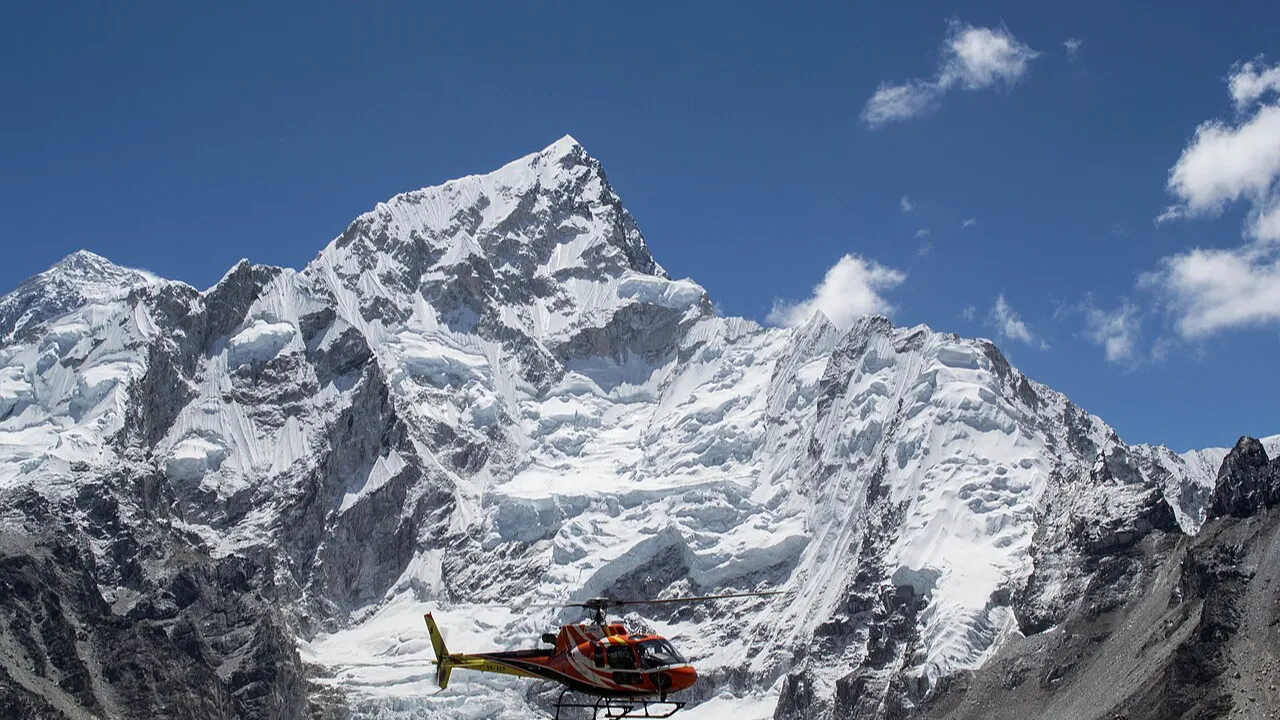
Airbus H125 helicopter manufacturing in India
More than 6,500 units of the Airbus H125 have been delivered globally. This aircraft type has accumulated over 38 million flight hours. As the Safran Arriel 2D engine of the H125 allows for operations at altitudes above 20,000 feet, these choppers are ideal for missions in the Himalayan terrain that encompasses nations such as India, Nepal, among others.
This statement was echoed by Airbus, which claimed that the ‘Made in India’ H125 helicopter will “help develop new civil and para-public market segments and also meet the Indian armed force’s requirement for a light multi-role helicopter, especially on the icy heights of the country’s Himalayan frontiers”. The production of the H125 in India has the potential of furthering the helicopter’s presence in places such as the Everest Base Camp, where it is used for a helicopter tour.
This is not the first time Airbus is partnering with India. More than six decades ago, the aerospace manufacturer collaborated with Hindustan Aeronautics Limited to produce the Cheetah and Chetak helicopters – two rotorcraft that have served the Indian armed forces with distinction. Airbus calls the H125M “an ideal successor to these helicopters”.
Jürgen Westermeier, President and Managing Director of Airbus India and South Asia, welcomed the partnership with Tata Advanced Systems to establish India’s first private-sector helicopter Final Assembly Line. He said producing the H125 domestically could help unlock the country’s largely untapped helicopter market and expand the role of rotorcraft in areas such as connectivity and nation-building.
Westermeier also described the agreement as another important milestone in Airbus’ long-standing relationship with Tata. The facility in Vemagal, Karnataka, is expected to produce the H125 for the Indian market as well as for export to other countries in South Asia, with the first Made-in-India helicopter expected in early 2027.
The project is part of Airbus’ wider effort to develop an Indian helicopter manufacturing ecosystem, with the locally produced H125 expected to support applications ranging from tourism and emergency medical services to disaster relief and law enforcement. A military variant, the H125M, is also planned for potential Indian armed forces requirements.
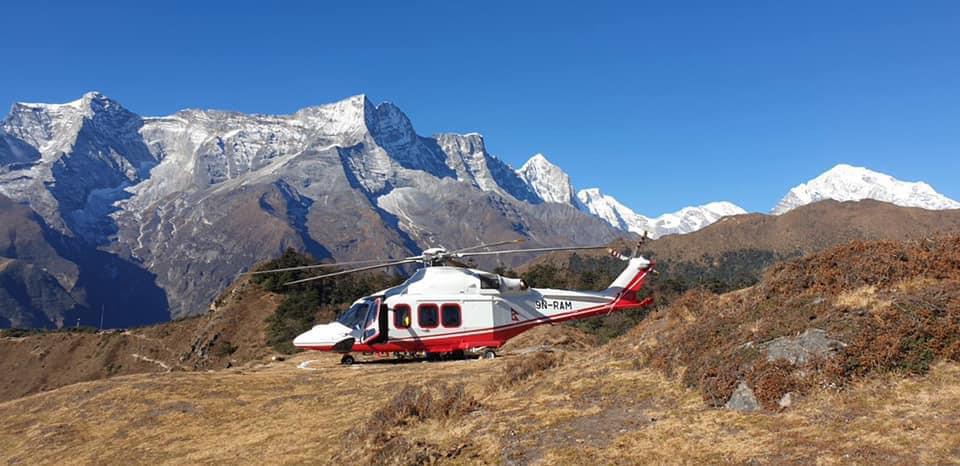
Where will the Airbus H125 be manufactured in India?
Following the C295 military aircraft manufacturing facility by Tata Advanced Systems in Vadodara, the H125 final assembly line Tata’s second Airbus assembly plant.
Sukaran Singh, Managing Director and CEO of Tata Advanced Systems, described the planned H125 production program as an important milestone for India’s aerospace industry. The facility at Vemagal, Karnataka, will be India’s first private-sector helicopter Final Assembly Line and is being established in partnership with Airbus.
Singh said the project would allow Tata Advanced Systems to support both India’s civil and defense helicopter requirements while expanding its capabilities beyond fixed-wing aircraft. He also highlighted the company’s existing relationship with Airbus, with the H125 program becoming its second major Final Assembly Line collaboration with the European manufacturer.
The partnership builds on Tata Advanced Systems’ growing role in India’s aerospace sector, where the company is already involved in the production of fixed-wing aircraft and other aviation and defense systems. The H125 facility is expected to further expand those capabilities into rotary-wing aircraft production.
The Vemagal facility is planned to serve both the Indian market and export customers in the wider region, with the first Made-in-India H125 helicopters expected to be delivered from the facility as the program ramps up.
India has attempted domestic helicopter manufacturing before, primarily through Hindustan Aeronautics Limited (HAL). Models such as the Dhruv Advanced Light Helicopter and the Light Utility Helicopter (LUH) have been produced domestically, though largely for defense purposes rather than civilian markets.

Photo: Chhutin Sherpa | aviospace.org
A brief into the H125, the helicopter to be manufactured in India
Let’s take a look into the performance of this chopper that has various distinctions, achieved with helicopter pilot, Didier Delsalle:
| Performance Metric | Specification |
|---|---|
| Hover ceiling OGE @ MTOW, ISA | 3,871 m (EASA certification) |
| Hover ceiling IGE @ MTOW, ISA | 4,420 m |
| Fast cruise speed @ MTOW | 252 km/h |
| Max range @ fast cruise speed | 630 km |
| Max endurance @ fast cruise speed | 4 hr, 27 min |
| Flight envelope (temperature) | -40°C to ISA +35°C (limited to 50°C) |
| Max altitude flight | 7,010 m |
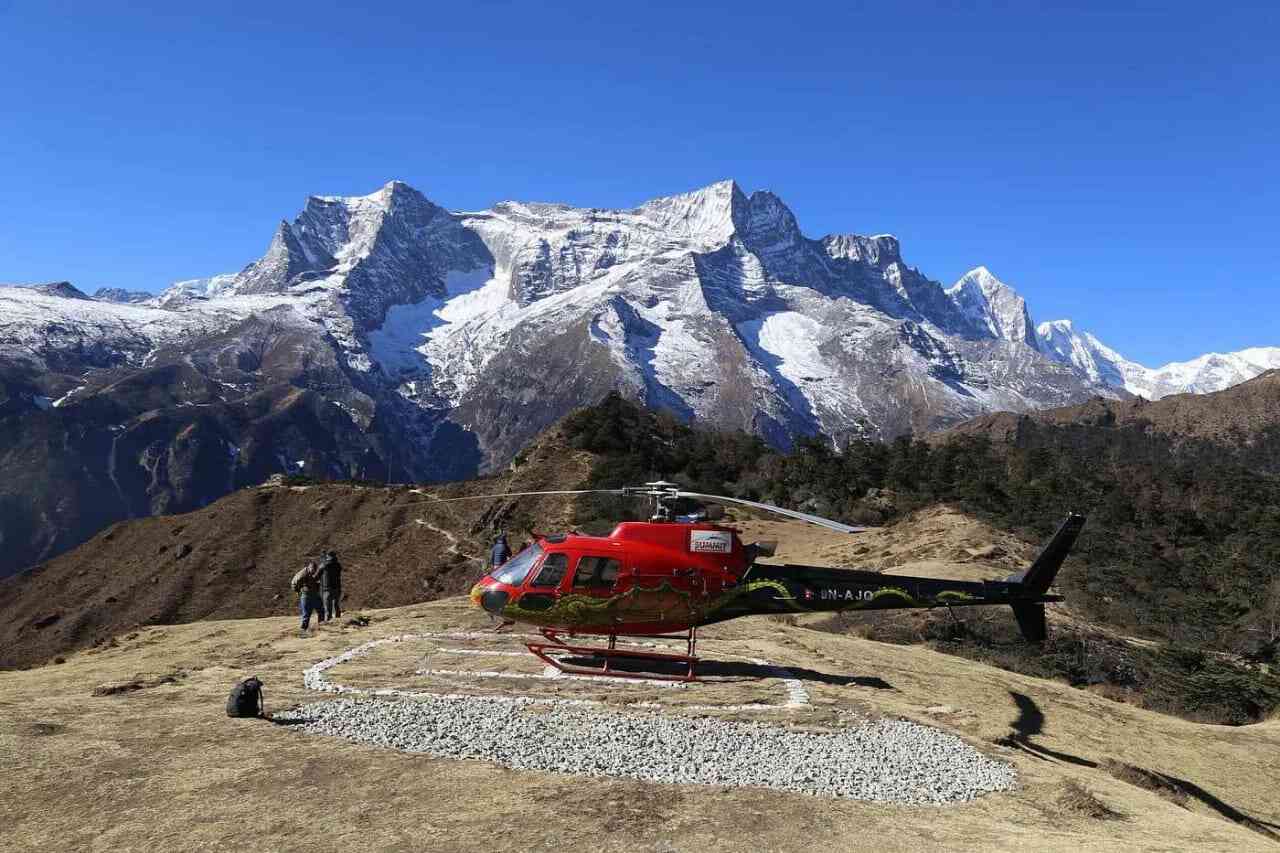
Bottom Line
While the H125 doesn’t have an service ceiling as high as the height of Mt. Everest, this helicopter that is set to be manufactured in India, has landed at the top of the tallest peak.
If the plans of manufacturing this chopper in Karnataka is successfully executed, the program could establish India as a credible hub for civil helicopter manufacturing, and have positive reverberations in the helicopter industry of the South East Asia region.