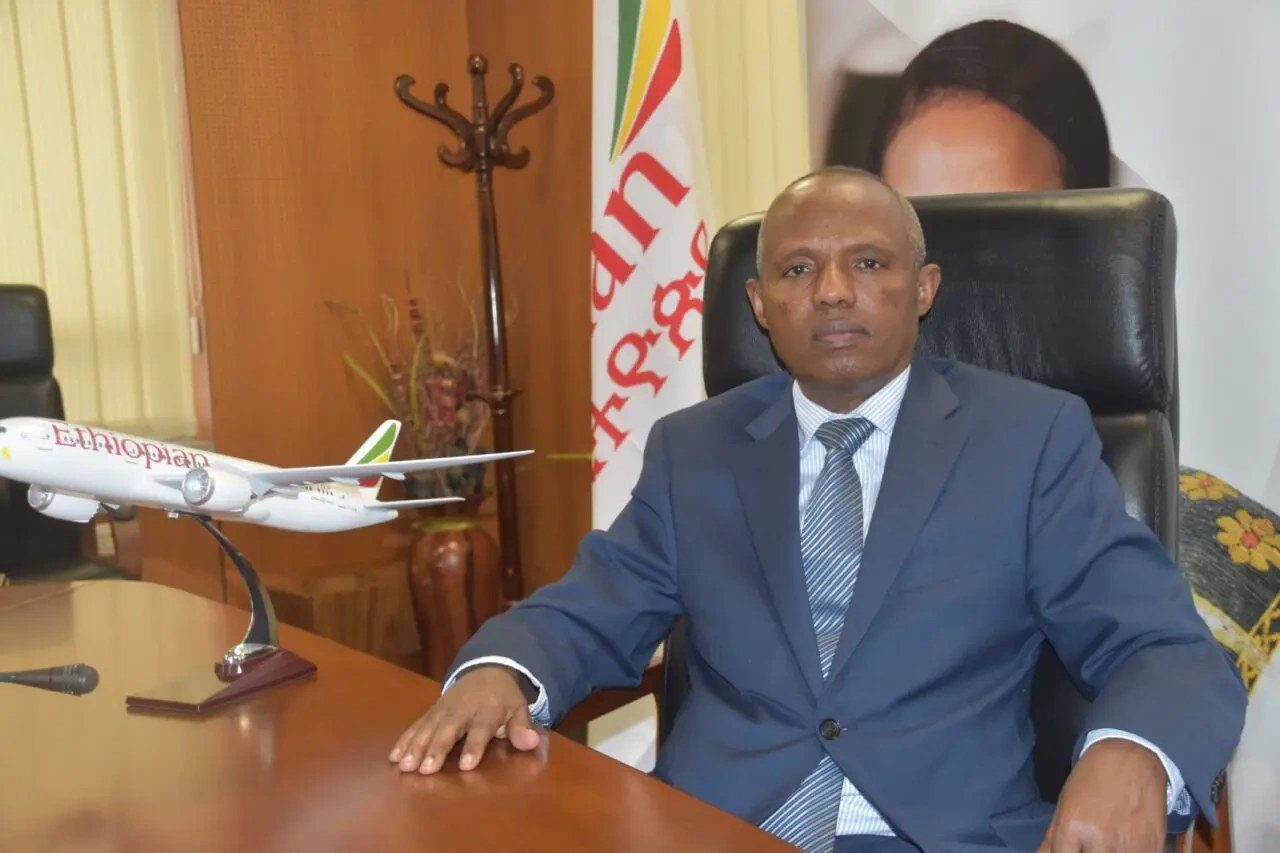
Search for “Mesfin Tasew salary” and most results land on a wide estimated range in the hundreds of thousands of dollars, built from comparisons to other state-owned enterprises. There’s a problem with that approach: it isn’t backed by a filing, and it doesn’t match the one concrete figure that has actually surfaced. A leaked internal payroll document tabled before Uganda’s Parliament in 2022 put Tasew’s pay at Ugandan Shs 8.6 million a month — roughly $2,328, or about $27,900 a year — according to reporting by the Monitor and separately corroborated by Uganda Today.
That figure predates Tasew’s promotion to Group CEO — he took the top job in March 2022, and the leaked document reflects pay from around that period — and Ethiopian Airlines (ET) has not published anything more current since. As a wholly government-owned enterprise, the carrier is under no obligation to disclose executive compensation the way a listed airline would, and it hasn’t. What follows is what can actually be verified, what remains a guess, and how that guesswork stacks up against CEOs running comparable carriers elsewhere in the world.
The Only Hard Number on Record Is Years Old
The 2022 leak surfaced during a Ugandan parliamentary probe into Uganda Airlines’ own executive pay scandal, where lawmakers used Ethiopian’s much lower reported CEO salary as a point of comparison. It wasn’t Ethiopian Airlines disclosing its own numbers — it was a neighboring carrier’s payroll dispute that incidentally exposed them. No equivalent leak or filing has emerged since, meaning the airline’s actual 2026 compensation structure for Tasew is unknown rather than simply modest.
Aviation blogs that publish precise-looking 2026 ranges — often citing “comparable African state-owned enterprise pay structures” — are doing the same thing seen with other opaque carriers: building a plausible-sounding number out of peer analogy rather than a document. It’s a reasonable exercise for context, but it shouldn’t be mistaken for a disclosed figure.
Who Is Mesfin Tasew, And Why Is He Still in the Job?
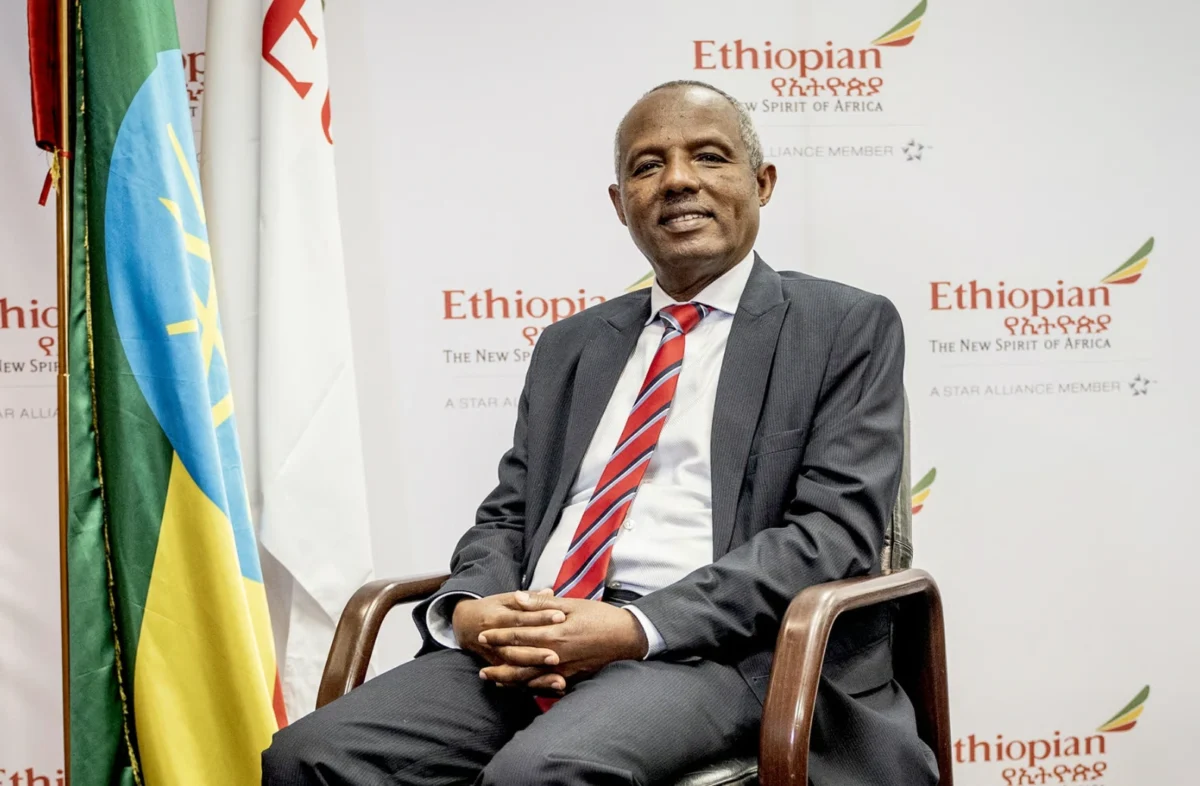
Tasew is not a career executive parachuted into the role. He joined Ethiopian Airlines in 1984 as an associate engineer and spent the next three-plus decades moving through technical and operational leadership — Director of Operations and Technical Systems Support, Chief Information Officer, Vice President of Maintenance and Engineering, and, from 2010 to 2021, Chief Operating Officer — before a short stint as CEO of the Togo-based regional carrier ASKY Airlines, according to his official executive profile. He returned to Addis Ababa as Group CEO in March 2022, succeeding Tewolde GebreMariam.
He was originally due to retire in 2023, then again in 2025, but has twice extended his tenure at the federal government’s request. In August 2025, he confirmed to The Reporter Ethiopia that he would stay through the 2025/26 fiscal year before finally stepping down, with Chief Commercial Officer Lemma Yadecha reportedly the leading internal candidate to succeed him.
The Airline Is Growing Fast — Whether or Not the CEO’s Pay Reflects It
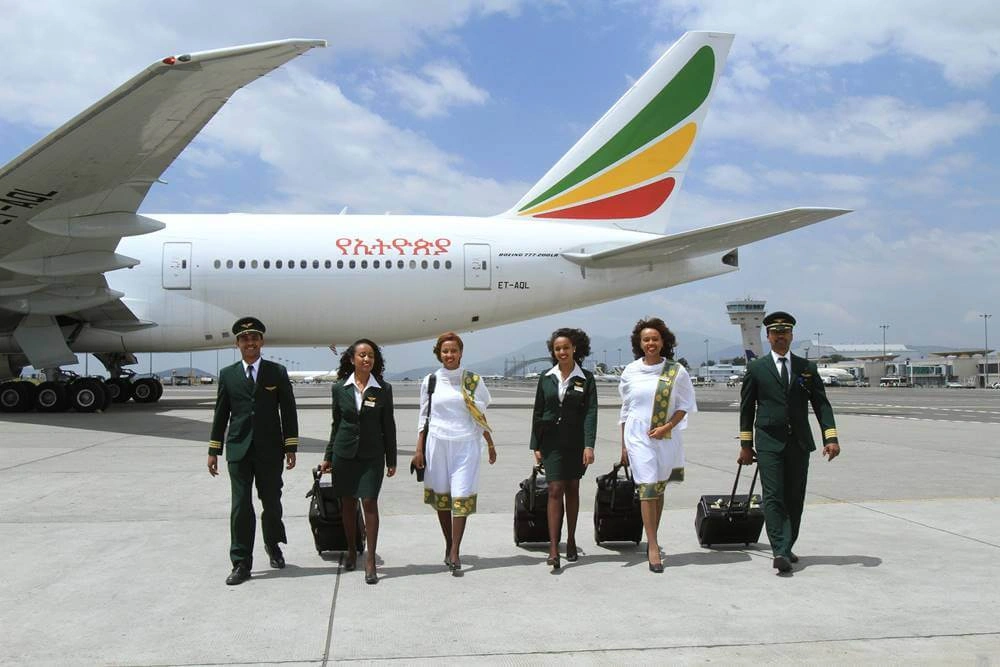
Whatever Tasew is actually paid, it isn’t tracking the airline’s trajectory. Ethiopian Airlines Group reported $4.4 billion in revenue for the first half of its 2025/26 fiscal year, up 14% year-on-year and 2% above its own internal target, Reuters reported via CNBC Africa. That growth came from a fleet that grew to roughly 147 aircraft during the period, plus new routes to Porto, Hanoi, and Abu Dhabi that pushed its international network to 145 destinations, according to Fana Media Corporation’s coverage of the same briefing. For the full 2024/25 fiscal year, the airline posted $7.6 billion in revenue, an 8% increase, while carrying more than 19 million passengers, per Addis Standard.
The airline is also mid-construction on Bishoftu International Airport, a four-runway, $12.5 billion project outside Addis Ababa slated to become Africa’s largest airport once complete — construction on the first phase formally began in 2026, with Reuters citing a target completion date of 2030.
How Tasew’s Pay Stacks Up Against Other Airline CEOs
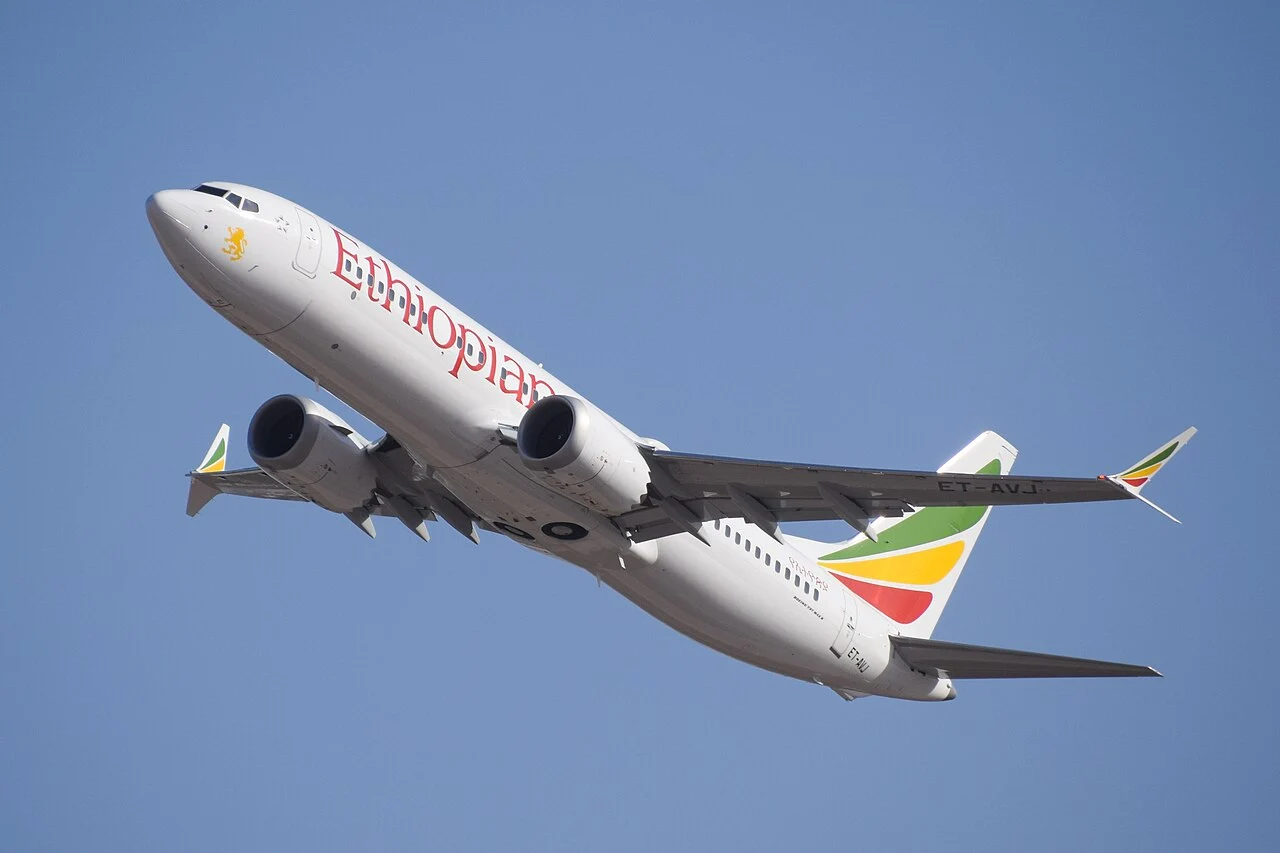
Because Ethiopian’s real 2026 figure isn’t public, the fairest comparison uses the one confirmed number — the $27,900 leaked 2022 salary — against CEOs at carriers of a similar scale, where pay is either legally disclosed or has been reported by financial press with real sourcing:
| CEO | Airline | Ownership structure | Reported / estimated total pay |
|---|---|---|---|
| Mesfin Tasew | Ethiopian Airlines | Wholly state-owned | ~$27,900/year (leaked 2022 payroll figure; no newer disclosure exists) |
| Ronald Lam | Cathay Pacific | Hong Kong-listed | HKD 17–22 million (~US$2.2–2.8 million), 2026 estimate |
| Campbell Wilson | Air India | Privately held (Tata Sons) | ₹27.75 crore (~US$3.3 million), board-approved, effective April 2025 |
| Anne Rigail | Air France | Subsidiary of listed Air France-KLM | Not individually disclosed; estimated €3.4–4.7 million |
| Carsten Spohr | Lufthansa Group | Publicly listed (Frankfurt) | ~€8.83 million most recently disclosed, capped at €11 million by German law |
Two things stand out. First, the gap between Tasew’s confirmed figure and everyone else’s is enormous — even Anne Rigail’s undisclosed-but-estimated pay at a single subsidiary airline is more than a hundred times Tasew’s confirmed 2022 salary. Second, ownership structure explains most of the spread: Lam, Wilson, Rigail, and Spohr all run carriers where either a stock exchange listing, a board disclosure to shareholders, or financial-press reporting eventually surfaces a real number. Ethiopian’s total state ownership means none of those pressure points exist, and the airline has never volunteered the information itself.
Why The Comparison Is Structurally Unfair — And Why It Still Matters
None of this means Tasew is underpaid relative to Ethiopian public-sector norms; a state-owned enterprise CEO in Addis Ababa is not competing in the same labor market as an executive at a Frankfurt-listed conglomerate. Ethiopian civil-service and parastatal pay scales are set by government policy, not by airline-industry benchmarking, and that context is exactly why the leaked $27,900 figure looked unremarkable inside Ethiopia even as it made headlines in Uganda.
What the comparison does show is how differently the same job — running a 140-plus-destination, multibillion-dollar airline group — gets valued depending on whether that airline answers to shareholders, a stock exchange, or a government ministry. Ethiopian Airlines is, by revenue and growth rate, competitive with or ahead of several of the carriers in the table above. Its CEO’s confirmed pay is not.
Bottom Line
The only verifiable figure for Mesfin Tasew’s compensation is a four-year-old leaked payroll number — about $27,900 annually — and Ethiopian Airlines has disclosed nothing since to update it. Everything above that figure currently circulating online is an estimate built on peer comparison, not a filing. Against CEOs at Cathay Pacific, Air India, Air France’s parent group, and Lufthansa Group — all running airlines of comparable or smaller scale than Ethiopian — the confirmed number for Tasew is dramatically lower, a gap explained almost entirely by ownership structure rather than by the airline’s underlying performance.


.jpg)

.jpg)