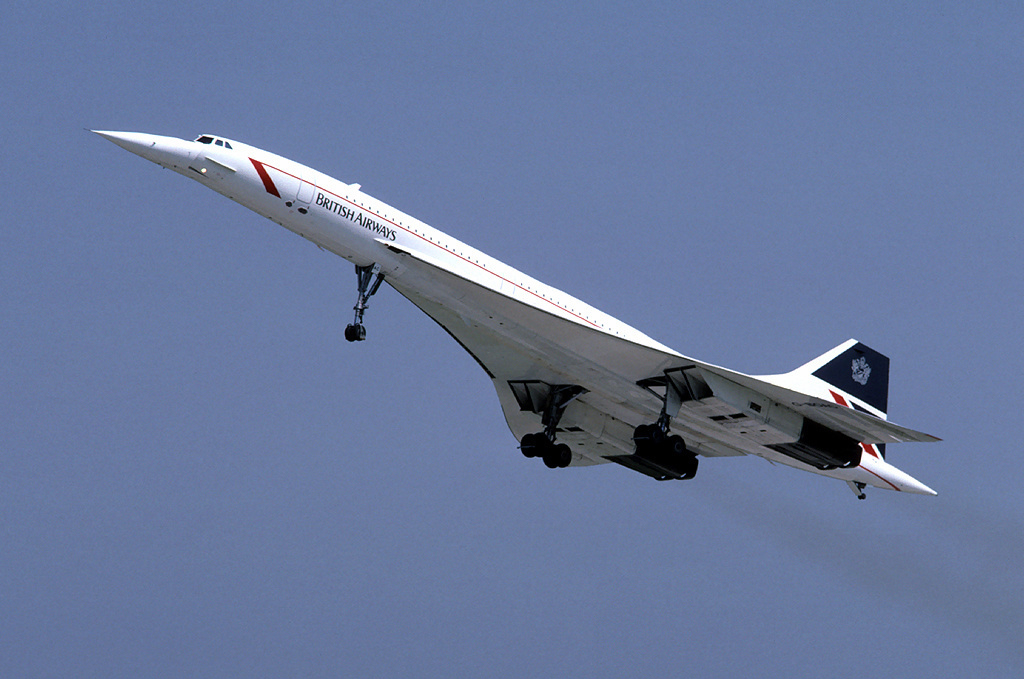
British Airways Concorde in 1986.
The iconic supersonic jet, Concorde, (which probably had an even more iconic flight number: BA001) concluded its 27-year service with a final landing at Filton runway in November 2003. An absence of commercial viability, public concerns about the plane’s noise ( the sonic boom ) alongside high levels of pollution, led to its demise.
Concorde, which was a collaborative effort between Britain and France, reduced flight duration drastically. However, only a total of 20 Concordes were built – only 14 were used for commercial purposes. The remaining six were prototype, pre-production, and developmental models. These 14 aircraft made 500,000 flights since its first transatlantic crossing in September 1973. Travelling at a speed faster than sound, the supersonic jet flew over 2.5 million passengers to their destination.
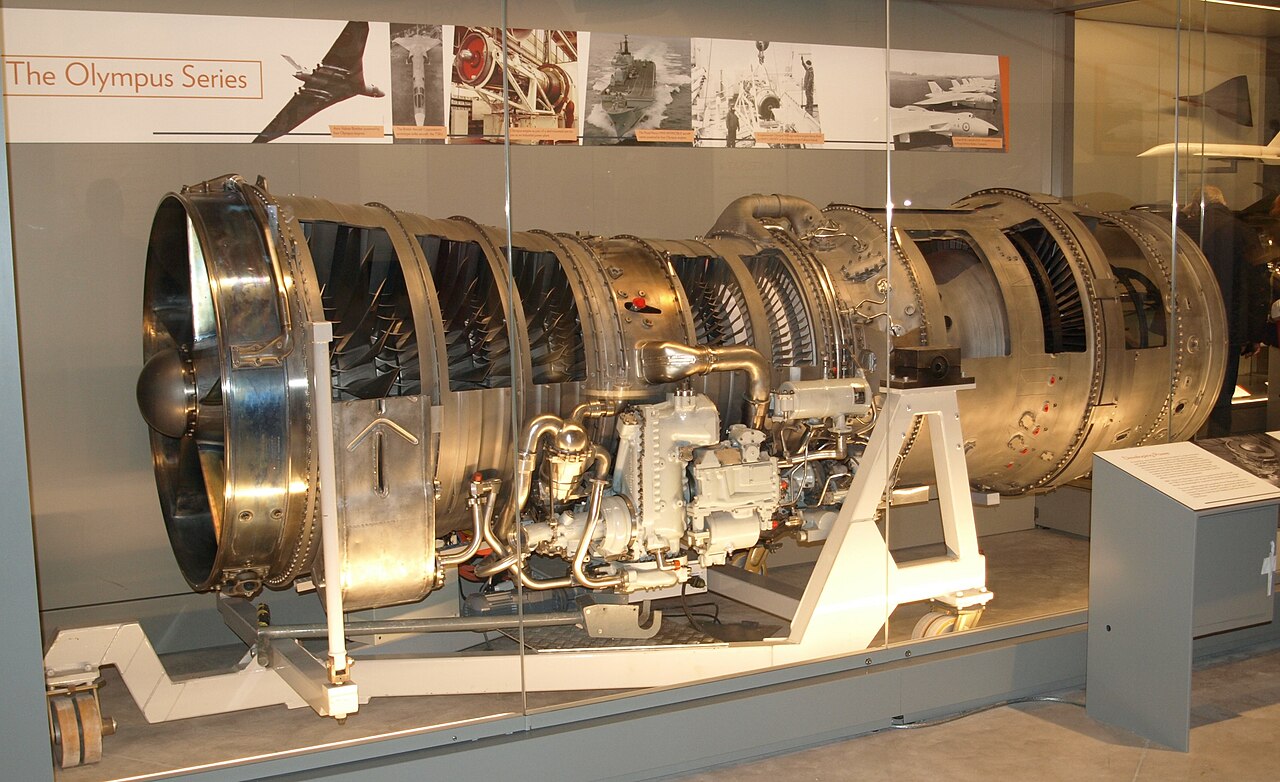
Rolls-Royce/Snecma Olympus 593, an Anglo-French turbojet
The Environmental Shadow of a Supersonic Jet
Behind the opulence and engineering of Concorde were more harmful emissions like nitrogen oxides (NOx) and CO2 compared to subsonic planes of its time. We have already touched upon how the aviation community had come up with Flygskam, a concept that was to alarm people of the carbon footprints associated with aviation. Perhaps associated movements such as Tagskryt would have been much more potent if the Concorde was still flying to this day.
Concorde produced three times more noise than other aircraft of its time. Its NOx and CO2 emissions were three times greater than today’s subsonic planes. Due to the exceptional heights that it flew in (it cruised at twice the height of a commerical jet), It contributed five times more to global warming.
NASA has also examined the potential environmental impact of large-scale supersonic aviation. Its modelling found that, under scenarios with unrestricted flight paths, a fleet of 130 to 870 commercial supersonic aircraft could operate between 100,000 and 750,000 round-trip flights each year. Such operations could account for up to 2.5% of global commercial seat-kilometres while increasing fuel consumption from commercial passenger aviation by as much as 7% and nitrogen oxide (NOx) emissions by up to 10%.
The Concorde’s environmental impact was particularly concerning because the aircraft cruised at an altitude of almost 18 kilometres, within the stratosphere where ozone is present. Scientists feared that emissions from large numbers of supersonic aircraft could accelerate ozone depletion, with some assessments suggesting that widespread supersonic operations could reduce the total ozone column by as much as 10%.
NASA Goddard Space Flight Center Earth sciences chief scientist Paul Newman has also warned that future supersonic and hypersonic aircraft could release water vapour and nitrogen oxides into the stratosphere. While the number of such aircraft remains small today, he noted that a future fleet numbering in the thousands could have a significant effect on the stratospheric environment.
The World Meteorological Organization (WMO) similarly concluded that future commercial supersonic and hypersonic fleets could contribute to stratospheric ozone depletion. The organisation identified water vapour and NOx emissions at cruise altitude as major concerns, with NOx potentially increasing catalytic destruction of ozone. According to the WMO assessment, total column ozone could decline by as much as 10%, depending on the aircraft type and the altitude at which emissions are released, with the strongest effects potentially occurring in the Northern Hemisphere’s polar regions during spring and autumn.
However, these projections should be viewed in the context of actual aircraft operations. NASA has conducted tests involving hypersonic aircraft, but these experimental vehicles did not operate with the same frequency or for the same sustained periods as a commercial aircraft such as Concorde. The environmental effects of a future large-scale supersonic fleet would therefore depend heavily on how many aircraft entered service, how often they flew and at what altitudes.
Research also revealed that Concorde’s engines emitted significantly higher quantities of sulfuric acid particles than the exhaust produced by subsonic aircraft. These sulfuric acid particles were subsequently determined to be a contributing factor in the depletion of the ozone layer. To examine the environmental effects of Concorde, David Fahey of the US government’s National Oceanic and Atmospheric Administration in Boulder, sent a plane to chase the Conorde as “it flew high over the ocean near New Zealand, sampling exhaust gases in Concorde’s slipstream 10 minutes after the supersonic airliner had passed“. It was found that Concorde produced much more exhaust particles than expected.
Fahey also found that operating 500 aircraft (with exhaust) like the Concorde would increase the depletion of ozone by 2%, which would in turn increase worldwide incidences of non-melanoma skin cancer by 2%
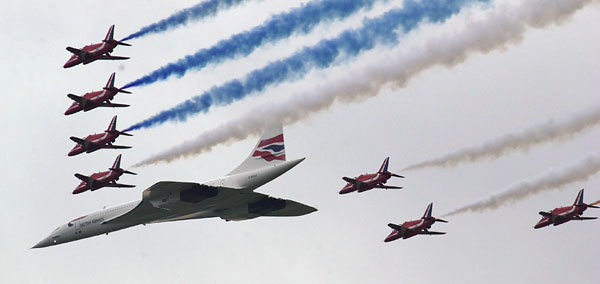
Concorde formation flight with the Red Arrows at the Queen’s Golden Jubilee.
The Future of Supersonic Travel: A Balancing Act
A potential solution to operating the Concorde would be utilizing alternative fuels, such as the Sustainable Air Fuel (SAF).
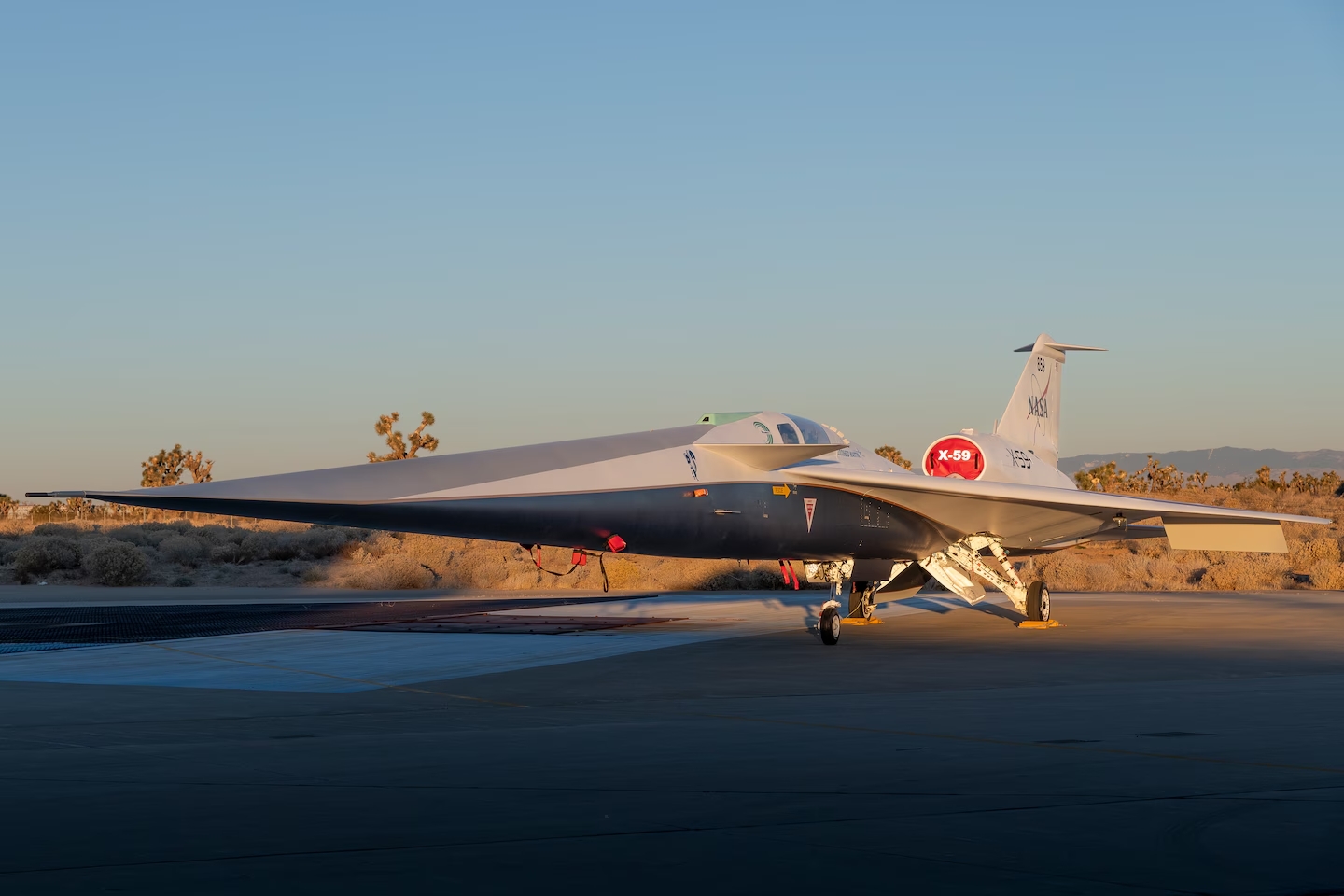
NASA’s X-59, its quiet supersonic research aircraft, sits on the ramp at Lockheed Martin Skunk Works in Palmdale, California.
The future of supersonic travel will depend heavily on the industry’s ability to address its environmental impact. Interest in the technology has returned in recent years, with projects such as Boom Supersonic’s Overture and NASA’s X-59 demonstrating that manufacturers and researchers are once again exploring faster-than-sound passenger travel.
However, the concept continues to face criticism over its potential carbon footprint. Jeff Miller, then vice-president of Aerion, a U.S. startup that had attracted more than $100 million in investment to develop the AS2 supersonic business jet with Airbus, argued that the newer generation of supersonic aircraft could struggle to meet existing ICAO carbon dioxide standards.
Miller estimated that even more efficient supersonic aircraft could produce at least twice the carbon emissions of modern subsonic aircraft on a real-world basis. The fundamental problem, he argued, is the large amount of energy required to accelerate and operate an aircraft at supersonic speeds.
Whether future designs can overcome this disadvantage remains uncertain. Advances in aerodynamics, engines, sustainable aviation fuel and other technologies could reduce the environmental impact, but the eventual footprint of large-scale supersonic travel will only become clear once these aircraft enter regular commercial service.
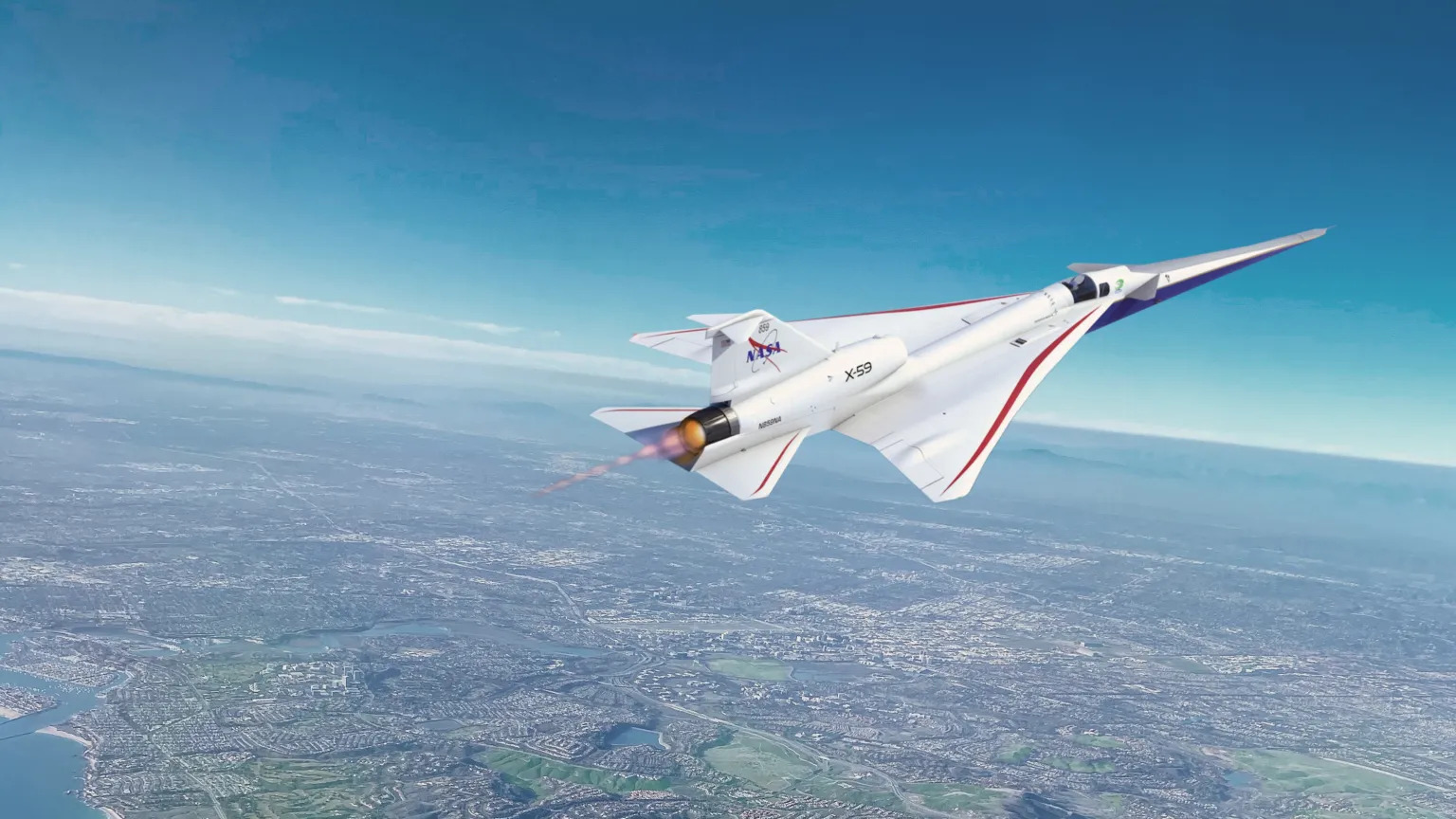
NASA’s X-59 First Flight, 2024