Modern aircraft engines are strong, efficient, and can even propel aircraft to a speed greater than that of sound. The North American X-15 even hit hypersonic speed. However, such airplane (engines) have to undergo rigorous tests to study how they operate under different environments. After all, one of the aircraft in the North American X-15 program even crashed leading to the death of a NASA pilot.
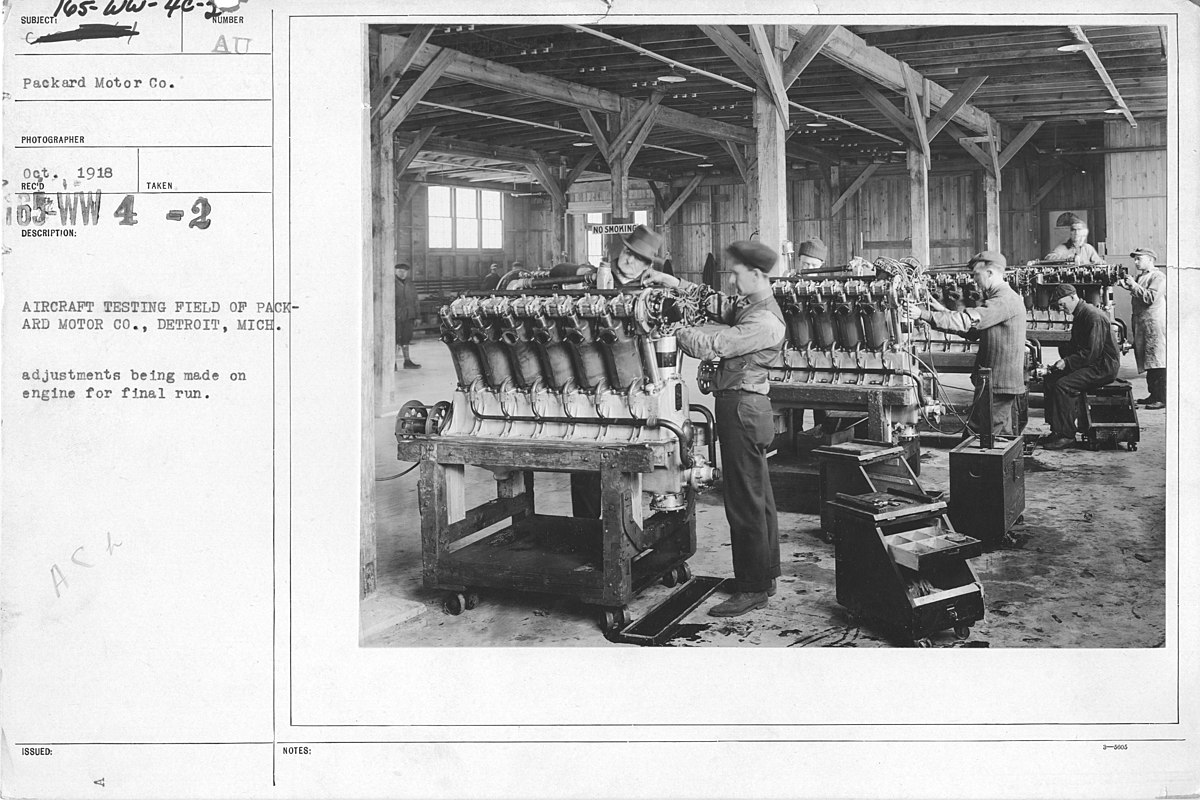
The aviation industry has seen a lot of other bizarre aircraft, too. A couple of examples of those would be the following:
- The Caspian Sea Monster, which was a Ground Effect Vehicle, a veritable bridge between a watercraft and an aircraft.
- Kalinin K-7, a Russian aircraft that was probably too ahead of its time.
- Scaled Composites Stratolaunch, which had two fuselages, six engines, and a wingspan greater than an American football ground. It was one of the largest aircraft ever built.
As each aircraft type is unique, and so are the engines fitted inside them, tests are performed in them to check whether they can withstand the freezing temperatures, high speeds, and the occassional live birds that hit them. In this article, we will go through the five surprising things you might not know about aircraft engine testing.
The “Chicken Test”
Where chicken traveling at sound speeds are hurled at an engine

Image: Wikimedia Commos
The cruising altitude of an aircraft is way above the altitude where birds cruise. While a nifty helicopter known as Ingenuity has also flown on the surface of the planet Mars, helicopters unlike planes, haven’t reached space. Helicopters have flown to the top of Mount everst, though. This is an altitude where birds don’t really fly. But when helicopters and planes take off, they are lifting up from altitudes where birds are present (and hover around). As a result, bird strikes are a big threat to aviation safety. The Jeju Air 2216 crash last year turned out to be the most fatal bird strike ever.
While many groundsmen are deployed to keep the birds away from the airport, the minimization of the damage done by bird strike starts during the construction and the development of an engine. Engines are tested rigorously to determine how forceful a bird strike they can withstand.
Although a variety of birds are used in the testing phase, the whole procedure has garnered the name “chicken test”. While the engine should be able to guzzle a single four-pound bird, large engines need to be able to devour eight-pound birds. According to the research quoted above, the engine must “also swallow a volley of eight one-and half pound birds, fired in quick succession, and a further volley of sixteen smaller birds of three ounces each“. The engine is said to have passed the chicken test if it doesn’t catch fire, keeps running, and is able to later shut down safely. However, there are some limitations of this test:
- The tests are controlled and are might not be able to exactly mimick the (atmospheric) conditions of the accidents happening in real time.
- It would be impossible to include all types of birds while testing, as aircraft flying over different regions of the world encounter a variety of bird species. For example, the highest bird strike ever recorded was on November 29, 1973, when a flight operated by Air Ivory Coast encountered a vulture strike at a staggering altitude of 37,000 ft.
Engine Testing Under Extreme Environmental Conditions
From boiling hotness to cold
We mentioned previously that an aircraft has flown to the top of Mount Everest. At the peak, temperature can be as low as -60 degree Fahrenheit. In summer, cities that are infamous for their pronounced heat can experience temperatures as much as 120 degree Fahrenheitht. Therefore, an aircraft’s engine needs to be tested whether it can operate under such extreme temperatures.
The sole purpose of the hot and cold tests that engines undergo test is to ensure that the aircraft and the systems can operate in any climatic condition and environment using standard procedures. When an aircraft engine undergoes a hot section inspection (HSI), it involves an examination of engine parts such as:
- Turbine blades
- Vane rings
- Combustion chamber
- Stators
- Compressor turbine disk
According to Pratt and Whitney, an HSI helps identify minor cracks in non-rotating parts. It also helps determine if some parts need replacement. According to a report published in the BBC, an aircraft can be flown to freezing conditions to check whether it can withstand extreme cold.
In addition to trials such as powering-up the aircraft after long periods at low temperatures, aircraft are also flown to high-altitude airfields such as La Paz 13,300ft , and Cochabamba 8,300ft (2.5km) feet to see if they are able to withstand meteorological challenges posed by such high-altitude places.
Engines are tested to ensure that they can also withstand hailstorms. For this, water ingestion tests are carried out. During such tests, the core of an engine is drenched to make sure it can withstand heavy rain.
Engines Run for Thousands of Hours
A reliability check!
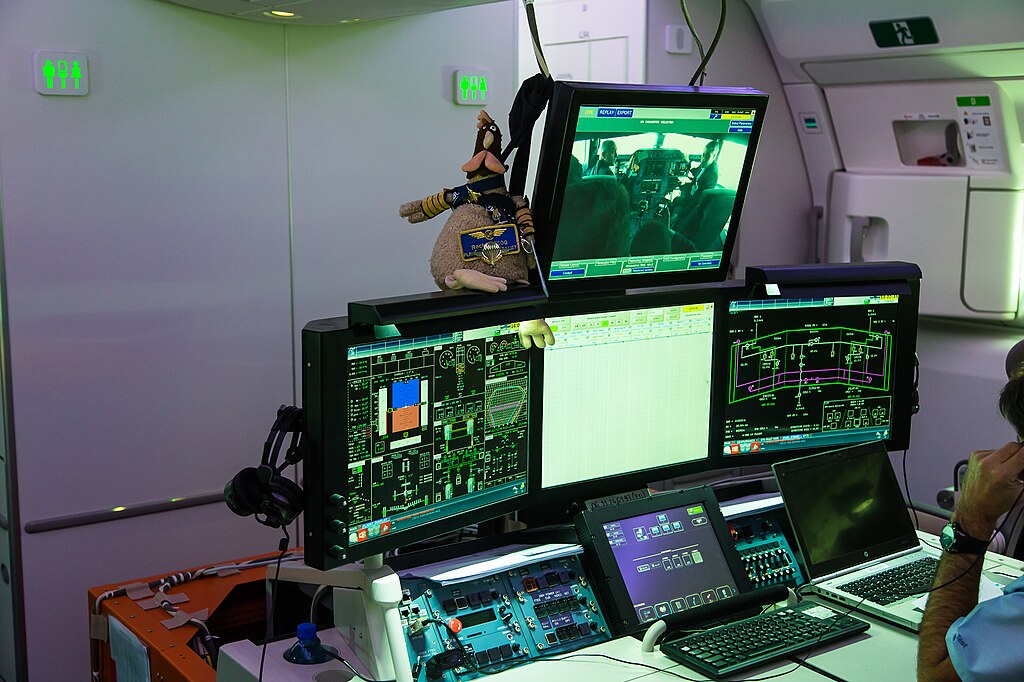
Image: Wikimedia Commons
In order to determine how long the engines can operate, engines undergo rigorous testing that involve running them for thousands of hours before certification. This helps determine their maximum durability. These tests ensure that such engines stimulate real-life wear and tear. Running engines for thousands of hours this way helps to know when they need to undergo maintenance checks (for overhaul and repair).
Running engines for such marathon-ish length helps manufacturers identify failure point in engine components like turbines, compressors, bearings, fuel systems, among others. Manufacturers such as Rolls-Royce can subject engines to hundreds, if not thousands of long-haul flights before certification.
Blades Shot with Titanium
Controlled replica of failure
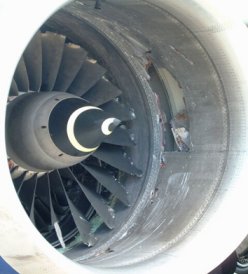
Image:Wikimedia Commons
Engine certification standards require that if a fan blade breaks off during operation, it must not penetrate the engine casing or cause any damage to the aircraft. To make sure a blade test is performed.
Here is a brief on how this entire process works:
Blade-shaped titanium is fired from a gas gun to replicate a real fan blade fragment. The titanium projectile is loaded into a carrier shell and then fired at the engine’s fan containment ring at speeds of around 300 m/s. After the test, the damaged case is mounted on a rig with hydraulic actuators to simulate unbalance, high-vibration conditions during engine spool down, which lasts hours to mimic just seconds in flight.
Mike Pereira, head of the Ballistics Impact Lab, says:
“It’s surprisingly difficult to predict penetration, even in simple metals. If you were trying to predict if a metal projectile would penetrate a flat panel of aluminum, your prediction is probably not going to be accurate.”
Researchers experiment with alternate geometries that help absorb energy by plastically deforming the blade before it hits the wall. The importance os such tests include:
- The fan blade is the most energetic threat due to its size and speed, and losing it can cause massive unbalance
- Certification according to 14 CFR Part 33.94 in the United States requires testing and containment validation.
The Noise Check
Performed with a precision of a fraction of a decibel
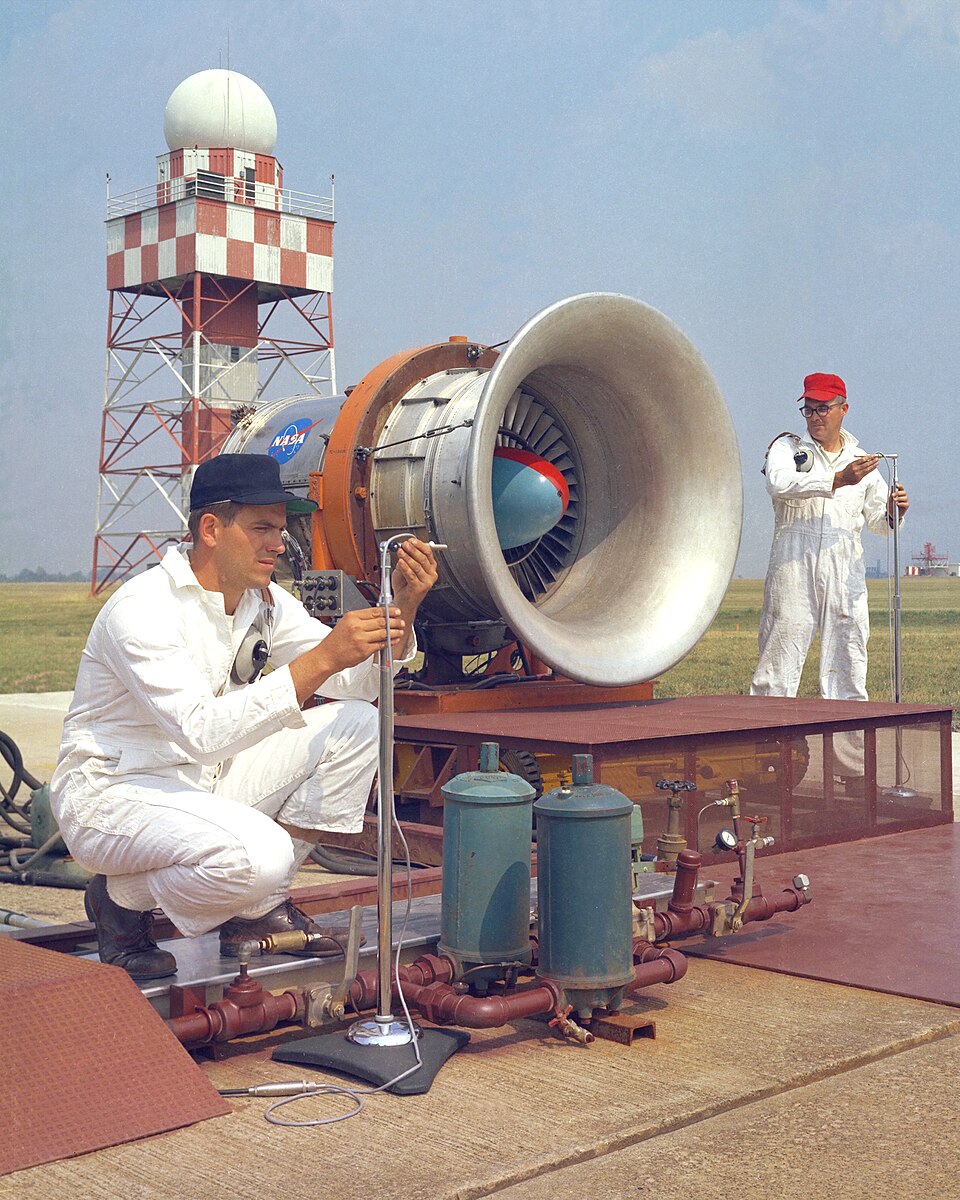
Image: Wikimedia Commons
Agencies like the FAA and EASA have ensured that aircraft adhere to certain noise standards. Aircraft noise affects communities near the airport where they operate. We all know that the supersonic Concorde was a fuel-guzzler, and a producer of an extraordinary amount of noise. Current aircraft, in comparison, produce a low amount of noise.
To detect engine noise small as a fraction of a decibel, engine manufacturers such as Rolls-Royce place highly sensitive microphones around the engine test beds. These help measure noise levels when the engines are operated at their highest or lowest power. It has been quoted that “to ensure that ground air turbulence doesn’t interfere with the nose of the engine, the engine intake is fitted with what looks like a giant golf ball”.
By 2050, sound that aircraft produce will be 65% lower than the sound produced by engines during the turn of the millenium. Engines such as the Trent 1000 (this engine type can be found in the Dreamliner) and Trent XWB are quieter than ever before.
Test cells that are anechoic in nature are used to measure engine noise levels. Some of the properties of an anechoic test cell includes:
- An environment that simulates actual aircraft operating conditions
- Acoustics that are controlled to extract accurate data about engine performance (and vibrations).
- In addition to powerful ventilation and cooling systems, they are also equipped with acoustic doors, acoustic windows, and wedges.