
The highest ever recorded bird strike (i.e., a collision of a bird and an aircraft) occurred over the West African coast when an Air Ivory Coast aircraft struck a vulture at a staggering height of 37,000 feet – an altitude which is almost 8,000 ft greater than the height of Mount Everest. [A helicopter, however, can fly much higher than a height of 37,000 ft. After all, the highest altitude achieved by a helicopter is 40,820 feet (12,442 meters)]. The highest ever altitude a bird has reached in the Himalayas is 6,800 metres (22,000ft), [when a certain species of duck crossed the Himalayas]. In light of these staggering facts, one might wonder if a mechanical bird like a helicopter can fly to the top of Mount Everest.
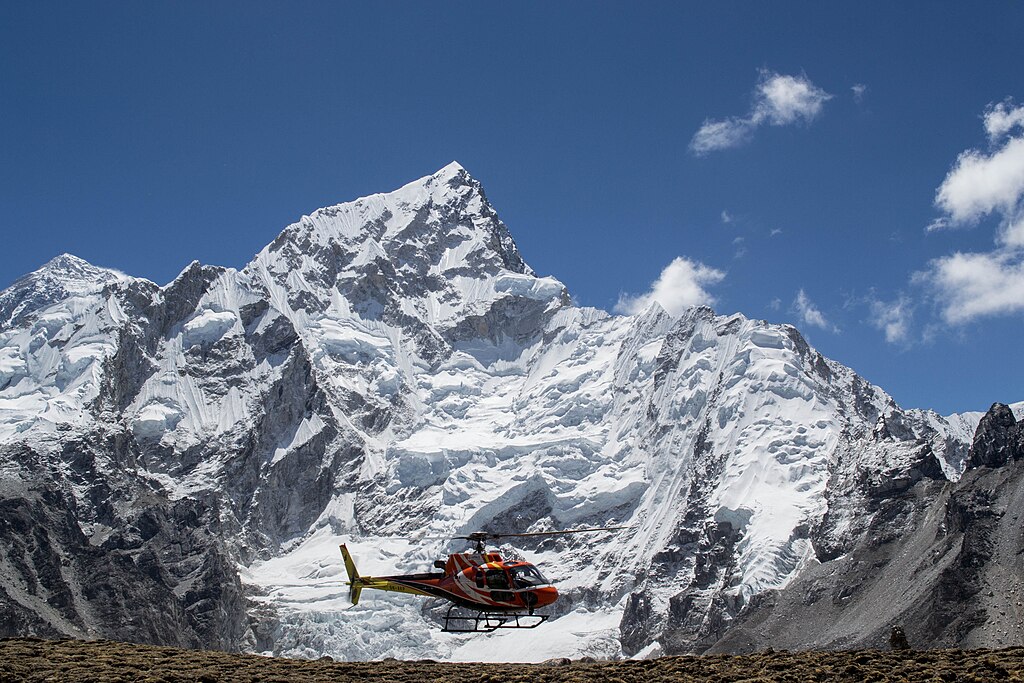
Image: Daniel Oberhaus | Wikimedia Commons

Helicopter flights are quite common in the Everest region. Nepali helicopter operators predominantly operate the Airbus A350B3 (also known as Airbus H125) helicopters for sightseeing in the region, though one can occasionally spot the Mil-Mi 17 and Bell 407 in this region. The H125 is quite popular for the Everest Base Camp tour and for conducting rescue operations for mountaineers. Nepali helicopter operators made a switch to the Airbus A350B3 after a helicopter pilot, Didier Delsalle, was able to land this helicopter at the top of Mount Everest. It is a feat that only Dider has been able to replicate.
The story of the Pilot who flew a helicopter to the top of Mount Everest
On May 14, 2005, pilot Dider Delsalle landed his AS350 B3 registered F-WQEX at the top of Everest. The temperature of -35 degrees in the summit was beyond freezing. There were a lot of things that could have gone wrong for Didier:
- The glass of the helicopter could have fogged up from the inside
- Strong drafts could have swayed the helicopter
- A white-out could have rendered it impossible for him to navigate the Himalayas
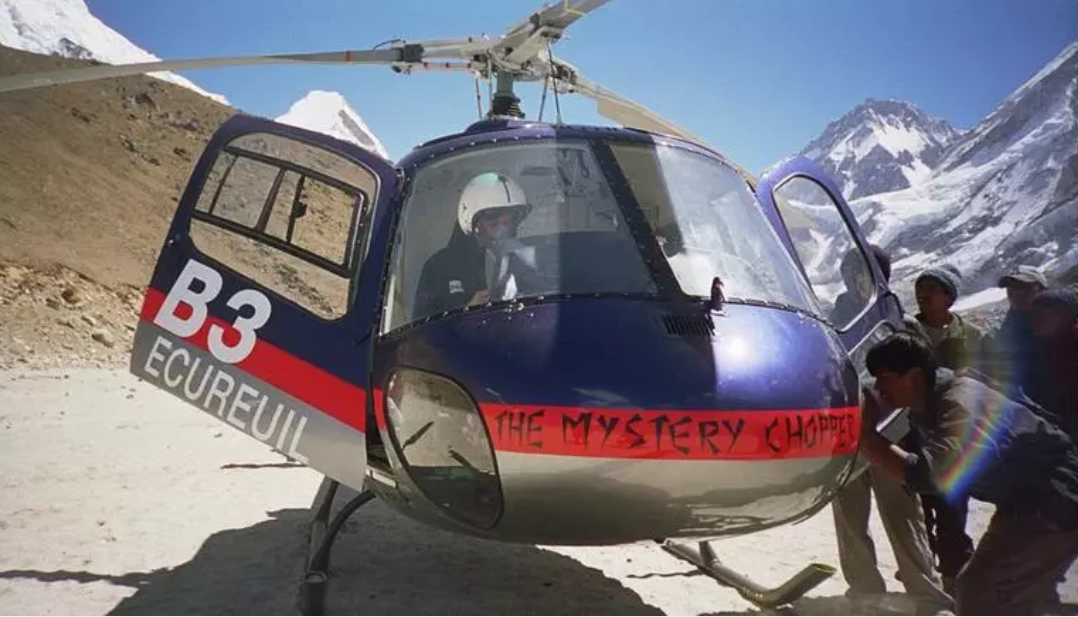
Photo: Airbus
…and the list of things that could have gone wrong piles up. Despite the inherent risks of such a flight, Delsalle’s motivation for flying to the top of Mount Everest was “to expand rescue capabilities for Everest climbers, hundreds of whom have died in their attempts to summit”. If we are to take Arthur Schopenhauer’s yardstick of judging a genius: “Talent is like the marksman who hits a target that others cannot reach, genius is like the marksman who hits a target others cannot even see“, could we think of Delsalle as a veritable genius. After all, the proposition of touching a helicopter at the top of Everest might not have past the minds of many.
The highest helicopter flight ever inspired Delsalle to take the H125 to the top of Everest
Delsalle record of the helicopter flight to Everest was also inspired by a fellow French aviator, Jean Boulet, someone who had achieved a record of 12,442 m (40,820 ft) of a helicopter flight on Aérospatiale SA 315 Lama. The chopper was equipped with a Turbomeca Artouste III B engine and embarked on this record-breaking journey that set a limit of how high helicopters could fly on 21 June 1972. [Since then, a NASA helicopter has flown on the surface of Mars too, but the chopper did not fly to Mars but was carried on a shuttle].
At this record-breaking height, Jean Boulet’s chopper experienced a temperature of −63°C, where the engine flamed out. Despite a long autorotation, Bolet was able to land the helicopter safely.

Photo: Chris Lofting | Wikimedia Commons
.jpg)
More than fifty years later, Bolet’s record still stands, though one might argue that Bolet hit a target (the highest ever flight a helicopter had achieved) that others couldn’t reach and therefore was a talent, but Delasalle, a genius because he hit a target that others couldn’t really see. But Boulet wanted to land his Aérospatiale SA 315 Lama to the top of Everest itself, but “the company was not too keen to do that, and the type of helicopter was quite sensitive to power variations at high altitude [due] to the way the engine was governed”. The Lama was not “the helicopter to fly in the very turbulent environment at high altitude.”
The helicopter that flew to the top of Everest: AS350B3
Delsalle flew the AS350 B3 Écureuil helicopter, a helicopter whose origins can be traced to 1974 (when Aerospatiale first flew the AS350 prototype), to the top of Everest. In the following decades, the chopper evolved into AS350 Écureuil or “Squirrel” (known in North America as the “AStar”), with variants getting more and more powerful. After the turn of the millennium, the most powerful version of the A350 was developed, and Airbus assigned Delsalle as its test pilot. That is when Delsalle approached Airbus with the possibility of taking the chopper to the top of Everest.

Photo: Chhutin Sherpa | aviospace.org
By the time that Didier initially proposed his idea (and was rejected), Aérospatiale had merged into Eurocopter. But in 2004, something changed. Vertical Magazine revealed that “new software version of the Turbomeca (now Safran Helicopter Engines) Arriel 2 engine performed better than expected”, prompting Delsalle to talk to the manufacturers again (as reported in Vertical Magazine):
“I went back to the company and said we have to do that, we have the capability, and I will prove to you by some local tests here around the south of France that we have the capability to do that with an acceptable level of safety,”
And along he went for the flight tests in France, where he performed the following flights:
- April 2004: a flight up to 8,992 m (29,500 ft)
- April 2005: a flight up to 10,211 m (33,500 ft)
Delsalle also recorded plus “time to climb” records to heights of 3,000, 6,000, and 9,000 m.
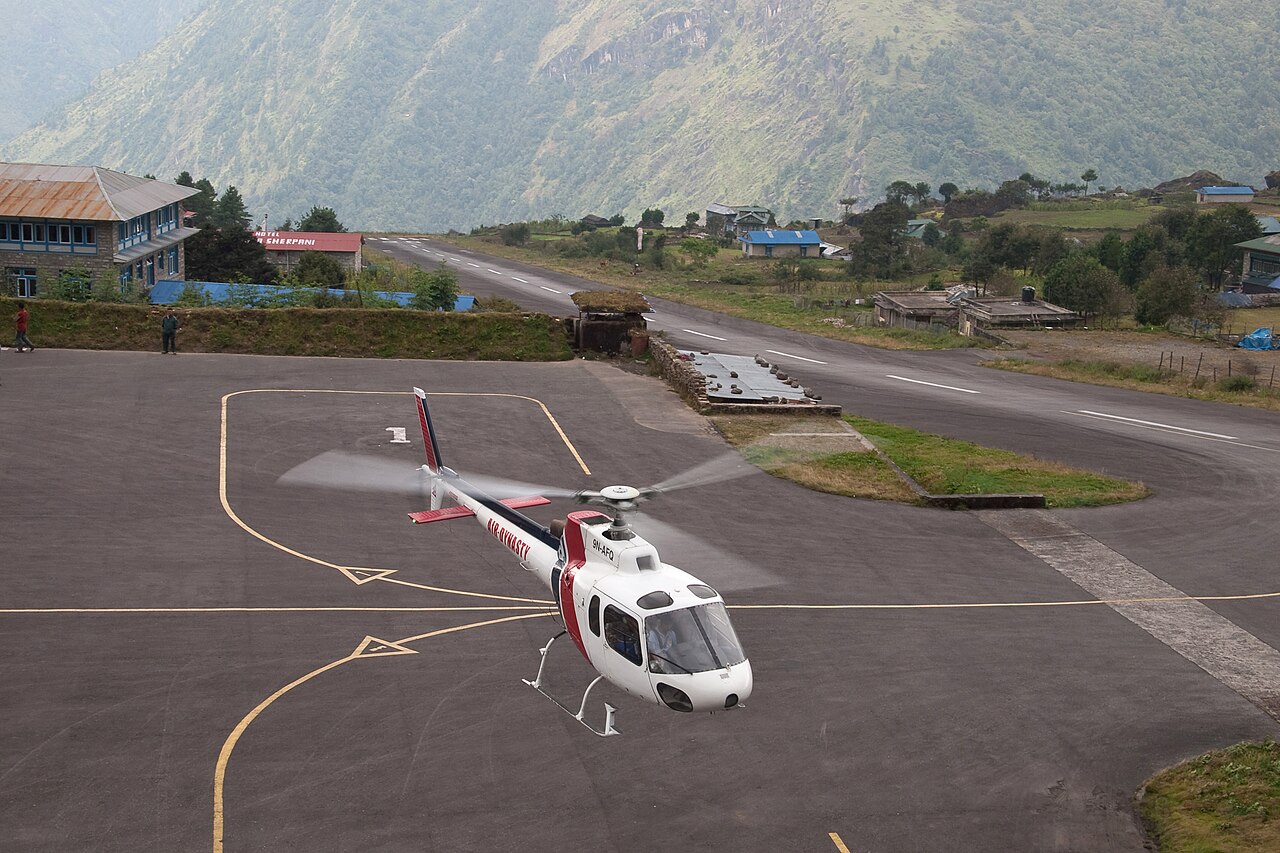
Photo: Vyacheslav Argenberg | Wikimedia Commons

This chopper, that would later be used to land at the top of Everest, was flown on a cargo plane to Delhi, where it was reassembled to fly to Nepal. Eventually, the helicopter found its way to Lukla, which is home to the most dangerous airport in the world. And from Lukla Airport, Delsalle set off on record-breaking flights to the top of Everest.
Specifications of the AS350B3
Let’s look at some specifications of this chopper:
| Maximum Range | 349 nm |
| Maximum operating altitude | 23,000 ft |
| Take off power | 632 kW |
| Engine Type | Turbine |
| Passenger Capacity | 5-6 |
Why flying a helicopter to the top of Mount Everest is a challenge
After touching down on the top of Mount Everest on a clear (weather-wise) day (on 14th May, 2005) and returning to Lukla, Dider Delsalle was exasperated to find that it was impossible to find a recording of the flight- something without which the FAI (the body which verifies records, such as the flight of a plane to space) wouldn’t verify Delsalle’s record. Delsalle scaled Everest on the chopper the next day, again. However, the weather at the top of Everest is not like anything you’d find elsewhere, as you have to “push into the mountain to stay on the top of the summit”, said Dider:
“When you reach the summit you reach the updraft point, and of course the updraft winds have enough force to throw you away as soon as you put the collective down,… Another big problem there is that you have no visual of the summit, and you have no specific cues, because you are on the highest point. You are in free air in fact, and you have to try to find where is the summit exactly.”
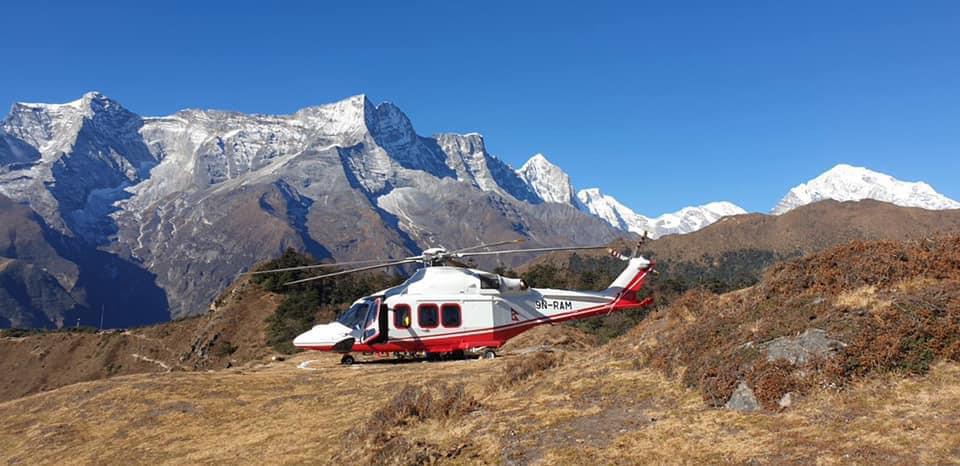
Besides the difficulty of the wind that engulfs Mount Everest, there are plenty of other reasons why flying to the top of Mount Everest is a challenge. Let’s look at a few of them:
No areas for emergency landings near the top of Everest
Lukla airport constructed a helipad only after the collision of a fixed-wing plane with a chopper in 2019. Though there are designated helipads in villages such as Namche, Khumjung, Tengboche etc., finding an even piece of relatively flat land (for landing) in the periphery of Mount Everest, in case of an emergency (landing) is well nigh impossible. This is one of the reasons why rescue missions are extremely difficult in very high altitudes, such as ones above 8,000 meters.
In Pictures: Hillary (Lukla) Airport; crucial gateway to the majestic Everest
When fixed-wing aircraft approach the Lukla airport, they can divert to Phaplu airport if the weather is awry. After all, Phaplu airport acts as a surrogate to Lukla’s flights. Lukla’s weather necessitates flights to divert to Phaplu or kathmandu in case the weather becomes too inclement to land. This was the case of Agni Air 9N-AHE, which, on its way to a diversion to Kathmandu, eventually crashed.
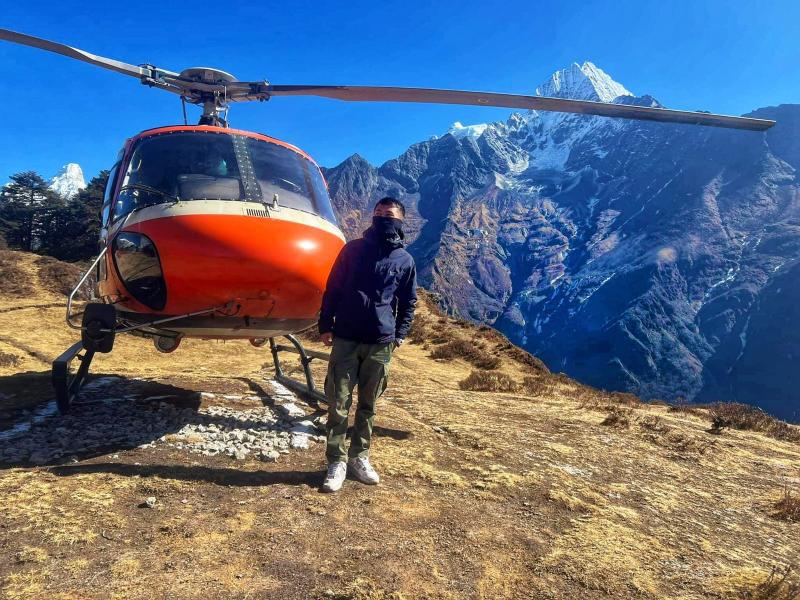
[There are no airports in the Everest region, upwards of Lukla, though. Atleast not functional ones: Synagboche Airport (3,860 meters), which lies around an hour’s walk from Namche Bazaar, was shut down following protests, while the Mingbo Airstrip (4,650 meters) was an airport that was too turbulent to operate.]
This gives you a sense of how precarious aircraft operations can be in case there are no spots for emergency landings nearby.
A helicopter’s performance isn’t as good when climbing upwards of 7000 meters
At very high altitudes (such as the top of Mount Everest), rotors find it difficult to generate the necessary lift, thus impacting a helicopter’s ability to maintain controlled flight. At such altitudes, the oxygen available for combustion is also low. This can limit an engine’s performance. Talking to Globalair.com, an aeronautical engineer in Nepal “who has monitored ADs, SBs, and Modifications for AS350B3e helicopter, besides assisting on various inspections/maintenance/troubleshooting on AS350B3e” commented about this very aspect:
“ Helicopter engines, especially those that rely on combustion, can struggle in thinner air because there is less oxygen available for combustion. This results in reduced engine power. Turbine engines, commonly used in helicopters, are less affected by altitude compared to piston engines, but they still experience a performance drop at very high altitudes.”

Photo: Ajendra Rai | Wikimedia Commons
Nepali helicopter pilot Surendra Paudel claimed that he abstained from rescue missions above 7000 meters (approximately 23,000 ft)- the maximum operating altitude of the AS350, which he regularly uses for performing rescue missions in the Everest region. While performing rescue operations at an altitude of around 7,000 meters, Surendra makes sure that he strips the AS350 off of all non-essential items to make it lighter. This is something that Delsalle did in his historic helicopter flight to the top of Mount Everest, too.
Harsh Winds in the Everest region
One of the biggest challenges for helicopter pilots to take a helicopter to the top of Mount Everest would be to counteract that strong wind that the region experiences. Before touching down on Everest, pilot Delsalle had completed a lot of recce flights, where he had to find ways to navigate his AS350 amidst strong winds:
“On one side of the mountain, on the updraft side, I wasn’t able to approach the mountain because even taking out all of the power of the aircraft, I was still climbing,..But of course on the other side you had the downdraft side, and on this side even with maybe 60 knots on the airspeed indicator I was going backward . . . and the helicopter at full power was not powerful enough to counteract that.”
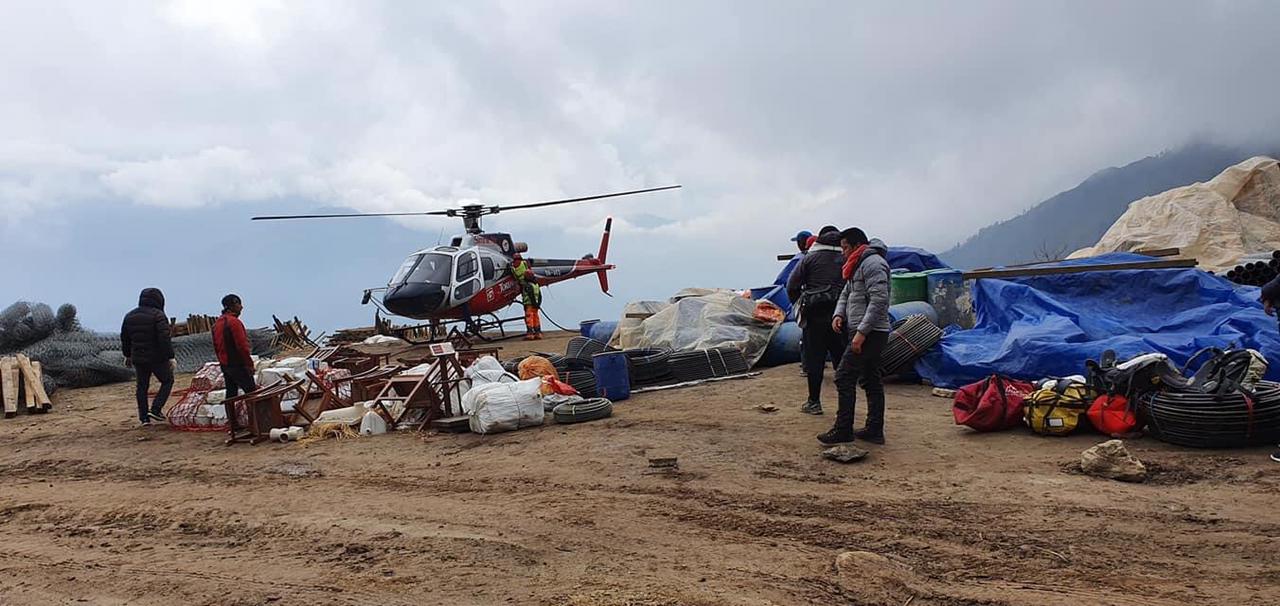
It has been said in his preparatory flights to land on the top of Everest, Delsalle had to navigate “the fine line between Everest’s updrafts and downdrafts”.
Other difficulties in navigating the skies of the Everest region
It was bad weather that had forced mountaineers to temporarily halt their ascension (and trudge back down from) to Everest a few days prior to Delsalle’s historic flight. Often, the Everest region is prone to a white out, a condition which is defined by Merriam Wwebster as “a surface weather condition in a snow-covered area (such as a polar region) in which no object casts a shadow, the horizon cannot be seen, and only dark objects are discernible”.
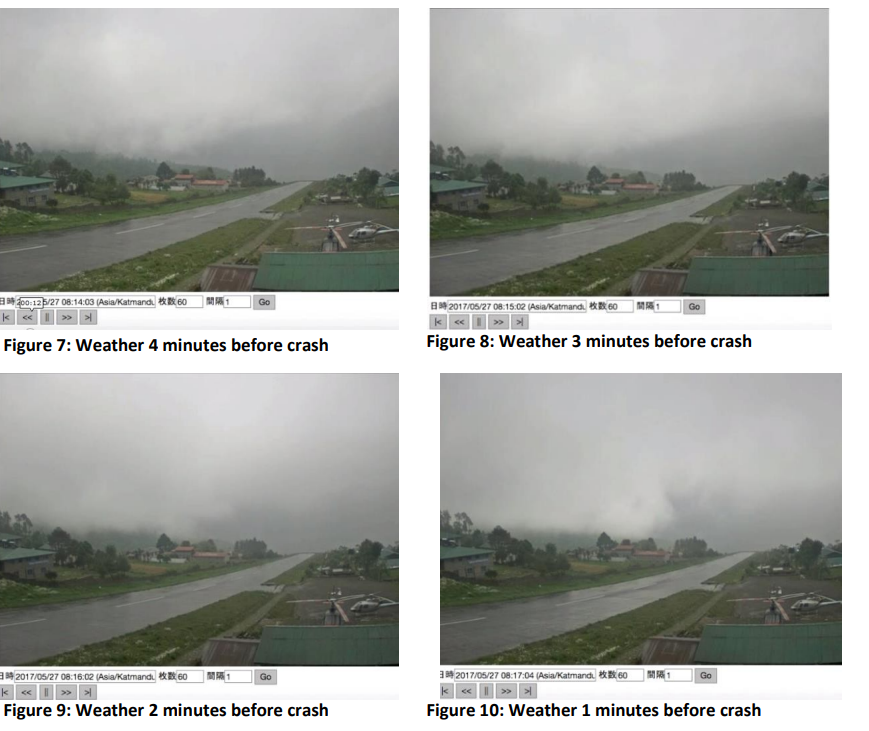
Take a look at this photograph of the weather of Lukla Airport moments before an aircraft approached landing here, missing the runway completely and being decimated after missing the runway and colliding with a wall. Although this is not a white out but merely a reminder of the fog that can envelop Lukla over no time, a white-out would, similarly, mar the possibility of a helicopter navigating its way to the top of Everest.
How high can a helicopter fly?
Despite the maximum operating altitude of the A350B3E being 6000 meters lower than the height of Mount Everest, Didier Delsalle was able to fly 500 ft above this towering mountain. Delsalle had pointed out that the objective of the flight was “to prove to our customers all the margins they have while using the helicopter in the normal certified envelope, compared to what the helicopter is capable of during the test flight”. This seems to be in line with the description of a conversation between Delsalle and his inspiration Boulet: “This altitude record was conducted in order to demonstrate the helicopter exceptional ability at performing aerial work and rescues at high altitudes and to commercialise it in mountainous regions of the world”.
Although FAI claims that Jean Boulet’s altitude record hasn’t been broken, unofficial web-sources say otherwise: Fred North has reached an altitude of 12,954m(42,500ft) with a chopper of the AS350 family – the AS350B2 Squirrel helicopter. Note that B-2’s service ceiling is merely 15,100 ft. However, there are choppers whose maximum operating altitudes are greater than that of the AS350B3 or AS350B2. Here’s a look at a few of them:
| Aircraft Type | Service Ceiling |
| Bell XV-15 VTOL | 29,035ft (8849.868 m) [the same as the height of Everest] |
| Bell Boeing V-22 osprey | 25,000 ft (7620 meters) [comparable to the altitude of the highest recue performed in the Everest region] |
| Boeing MQ-18 Hummingbird (A160) | 26,247ft(8,000.085) |
| Lockhead AH-56 Cheyenne | 25,997ft(7, 923.885) |
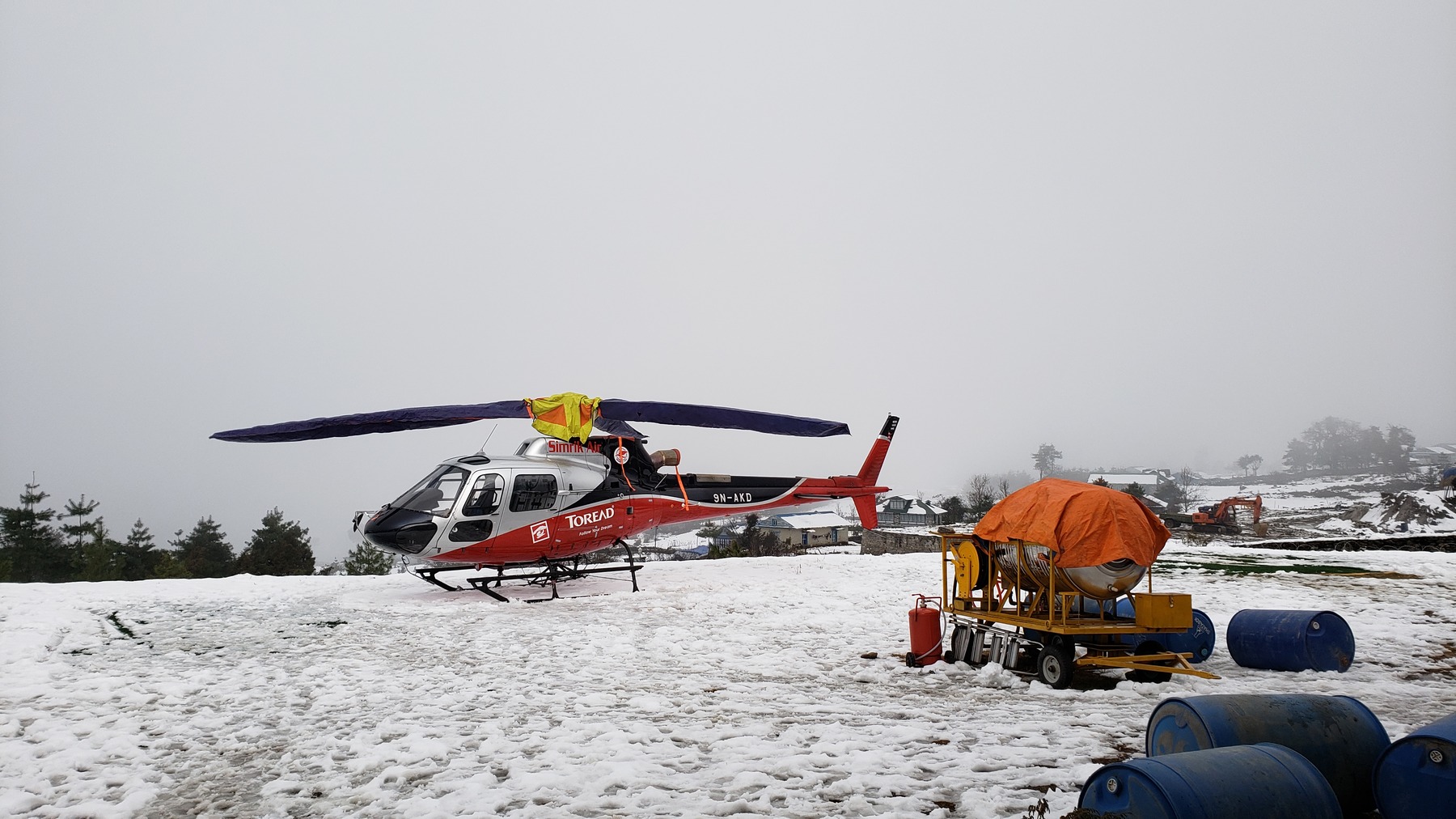
Photo: Surendra Paudel, a helicopter pilot in Simrik Air
Here are a few notes on the choppers discussed in the table above:
- Only two prototypes of the Bell XV-15 Tiltrotor were ever made. These were developed by Bell for NASA (to conduct research works) and the aircraft was retired in 2003.
- The Bell Boeing V-22 osprey is a convertiplane*, an aircraft that utilizes “tiltrotor technology to combine the vertical performance of a helicopter with the speed and range of a fixed-wing aircraft”
- Lockhead AH-56 Cheyenne was built for combat for the US army, but only ten of these were ever made. The project was disbanded in 1969.
- The Boeing MQ-18 Hummingbird (A160) was abandoned by the US Army in 2012.
*Here’s our guide on the convertiplane:
How the AS350 compares with helicopters in the Everest region
The Mi-17 is colloquially known in the Everest region as a “flying tractor”, for it can transport almost all residents of a small village in teh Everst region in one fell swoop. The chopper was used extensively during rescue operations following the Everest avalanche of 2015. The following photograph (of the Mil Mi-17) is from Phaplu Airport.
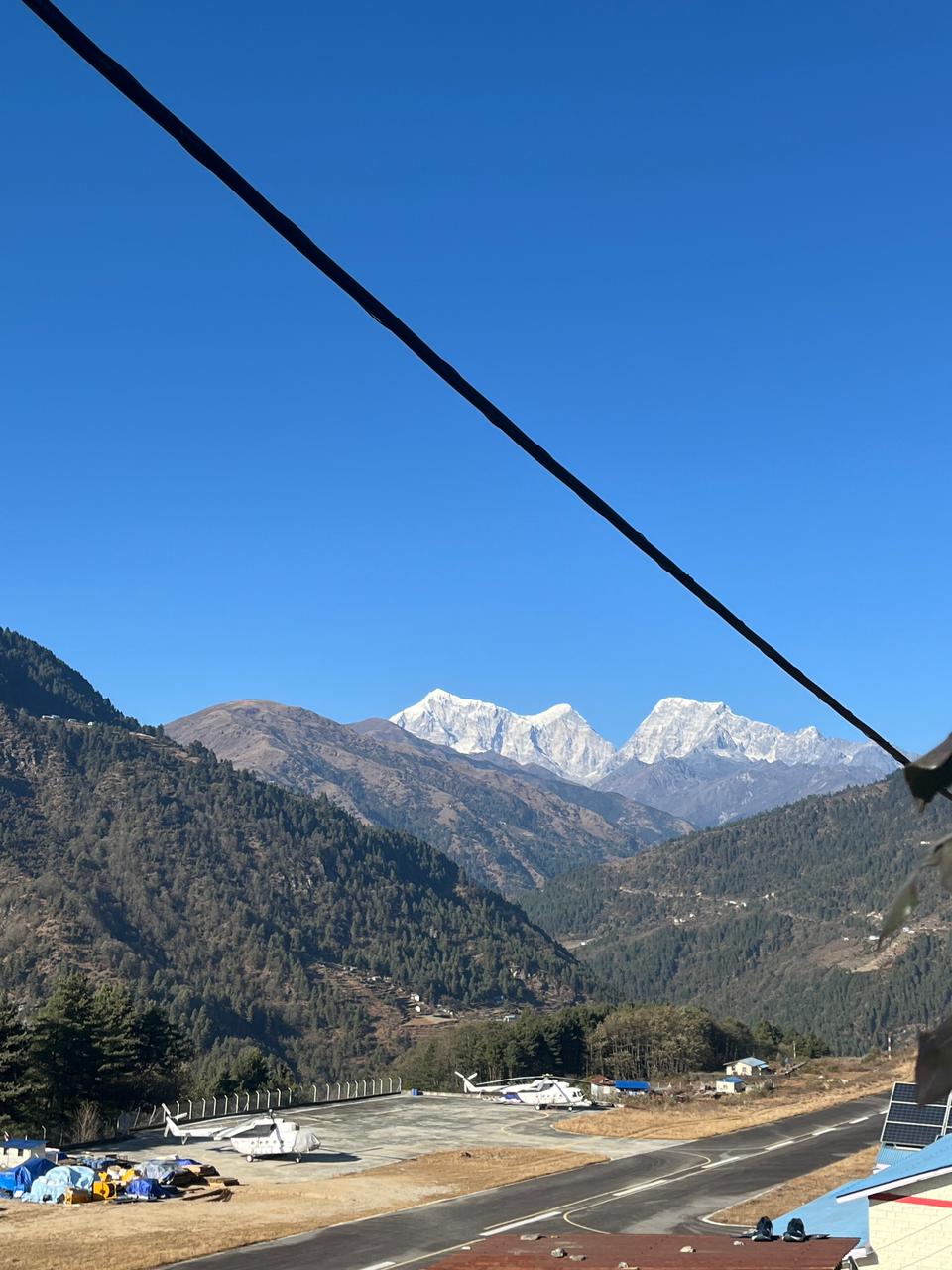
Image: Chhutin Sherpa | aviospace.org
The twin-turbine transport helicopter Mi-17’s can climb up to 6000 meters and is powered by two Klimov TV3-117VM turboshaft engines. Sir Edmund Hillary, the person after whom Lukla airport is named, wrote an auto-biography “View From the Summit” where he details that even before the construction of Lukla Airport, ‘a large helicopter’ had landed in Khumbu. While he might have been referring to the Mil-17, pilot Surendra said that he might have been referring to a Mil Mi-9 instead.
Prabhu Helicopters had a fleet that used to comprise the R66 Turbine / R66 Turbine Marine, though the operator has changed its operations to the AS350.
| Characteristics | Mil Mi-17 | AS350B3 | Robinson R66 Turbine Marine |
| Empty Weight | 7,489kg | 1,173 kg | 580 kg |
| Fuel Capacity | 687 gallons | 939 lb | 493 lb |
| Maximum Speed | 250 km/hour | 253 km/hr | 222 km/hour |
| Main rotor diameter | 69 ft 9 in | 35 ft | 33 ft |
| Service ceiling | 4,600 m | 7,000 meter | 4,300 m |
Some other reasons why helicopters don’t go to the top of Everest
Traditional tourism would be heavily affected if helicopters flew directly to Mount Everest
Each year, Nepal sees almost 1000 people vie for a permit to climb Mount Everest- each climber pays $11,000. While the national daily of Nepal, The Kathmandu Post, reported that there would be an increase of $4,000 in the price of the permit, even without this revision, we already know how much Nepal benefits from (trekking permits of) the mountaineering industry.
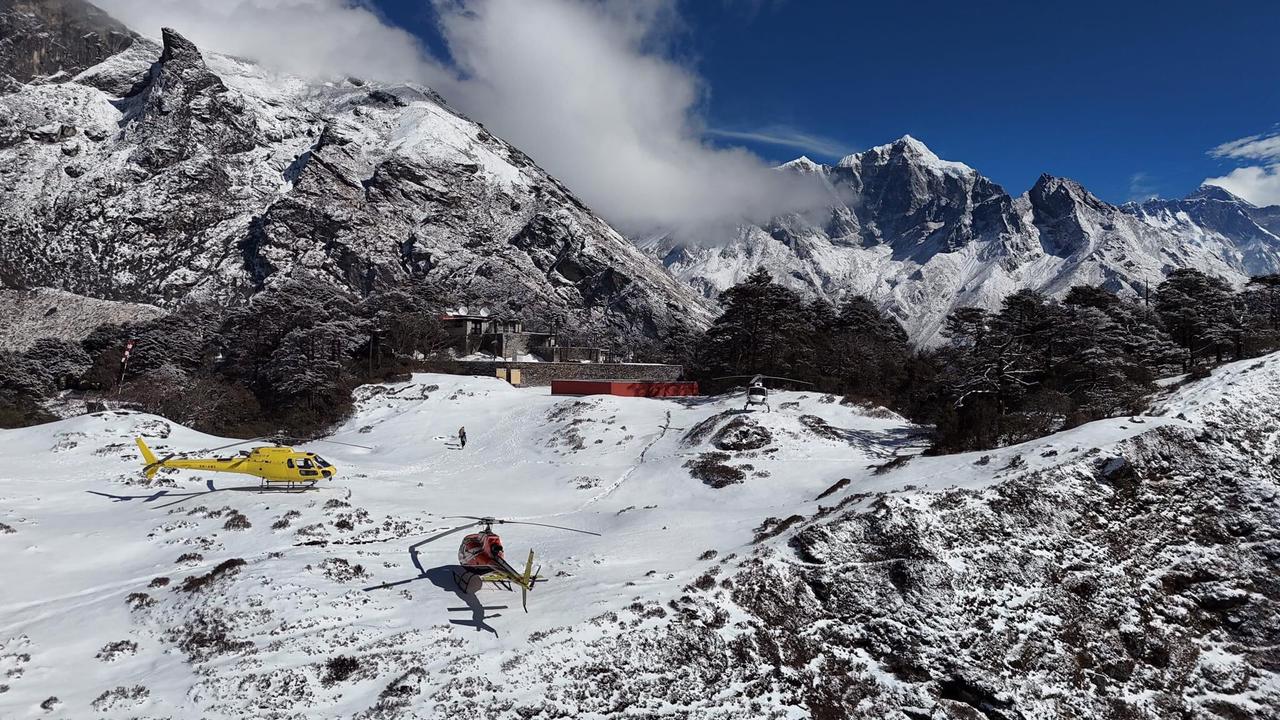
Photo: Ajendra Rai | aviospace.org
Regular helicopter operations to the top of Everest (which is currently no more than wishful thinking) are likely to put a big dent in the mountaineering industry of the nation. After all, trekkers take almost two months to climb Everest. For many of the villages in Khumbu, trekking and mountaineering are what sustain the villagers. In the absence of such activities (which would follow if helicopter flights could land at the top of Mount Everest), porters, mountain/trekking guides, hoteliers in Khumbu would be put out of work.
When Syangboche Airport was about to see regular passenger operations, villagers from Lukla protested, as regular flight operations to Syangboche would mean that tourists would bypass Lukla. The businesses in the villages through which one would trek upwards from Lukla would be shrivel.
Would helicopter flights to Mount Everest be sustainable?
One aspect of (the presently hypothetical) regular helicopter operations to Mount Everest is the issue of sustainability. We won’t know what effect regular helicopter operations to Mount Everest would have on the wildlife of the Sagarmatha National Park region. Almost half a decade ago, two movements swept across Europe: flygskam and Tagskryt. The former of these could be literally translates as “flight shame”, a movement that was to show the depredations of the high CO2 emissions from plane travel. The second of these could be translated a “train brag”, a movement where people would brag of traveling through trains, a medium with less C)2 emissions.
Tågskryt: Was it Just A Social Media Trend Against Aviation?
Geopolitical reasons for not operating helicopters to the top of Everest
Mount Everest is nestled between the boundaries of Nepal and Tibet. Mountaineers (and trekkers) can climb Everest (Base Camp) from either Nepal ot from Tibet. As the Himalayas border Tibet and Nepal, regular flight operations to the top of Mount Everest can aggravate geopolitical tensions.

Delsalle’s AS350 that flew to the top of Everest is known as “The Mystery Chopper”- not a lot of people had any idea that the helicopter had such ambitious plans. The Nepalese government denied that Delsalle “had secured appropriate permissions for the flight, and also that he had landed on Everest at all”.
All in All
History shows us that the helicopter can climb to the top of Mount Everest, but it required a genius to do so. And often the line between a madman and a genius is flimsy: Didier erred on the side of the genius. However, the weather helped him to:. Eurocopter was initially reticent to let him get to the top of Everest, as a crash would have devastated the sales of the AS350. No pilot since Dider has dared to scale the top of Everest, let alone touch it.