

Every time a traveler buys a flight, a complex chain of systems, rules, and institutions quietly executes behind the scenes. Airline ticketing — the process of issuing a valid document confirming a passenger’s right to board an aircraft — is not a single click. It is a structured workflow involving airlines, global technology platforms, financial clearing organizations, and accredited intermediaries, all operating across a framework of international standards set primarily by the International Air Transport Association (IATA), the trade body that represents 367 airlines from over 120 countries as of 2025. Understanding how this process works matters to anyone who buys, sells, or builds technology around air travel — because the rules governing each step directly determine price, availability, refundability, and accountability.
The global scale of what this industry manages daily is staggering. In 2025, U.S.-based travel agency air ticket sales alone surpassed $100 billion for the first time, according to the Airlines Reporting Corporation (ARC). The IATA Billing and Settlement Plan (BSP), which operates in over 200 countries, processed $232.8 billion in ticket sales in 2024 with a 100% on-time settlement rate. Yet despite these numbers, the underlying mechanics — what happens when a search query is sent, how a Passenger Name Record is created, and why payment can take three or more days to settle — remain invisible to most travelers. This article explains the full process: who does what, at which stage, and why the system is undergoing the most significant redesign in its decades-long history.

What An Airline Ticket Actually Is — And Why It Carries Legal Weight
An airline ticket is, at its most fundamental level, a document that confirms a passenger’s purchase of a seat on a specific flight. It can appear in paper or electronic form. Today, the overwhelming majority of tickets are digital, while physical paper tickets have become a rarity across most major markets.
The ticket carries three distinct legal and operational functions. First, it finalizes the commercial agreement between a passenger and an airline — it is, in effect, a contract of carriage. Second, it acts as a travel document confirming and securing seat and service allocation for a specific journey. Third, on itineraries involving more than one airline, the ticket governs the relationship between the carriers involved.

When a flight goes through more than one airline, only one carrier holds ownership of the ticket. That ownership makes the issuing airline accountable for the passenger’s status — including check-in procedure, boarding, and flight disruption handling — even if another carrier physically operates the aircraft. This is the legal foundation of the interline and codeshare system that underpins modern multi-carrier travel.
Under IATA Resolution 830a, every commercial booking must contain five mandatory elements: the passenger’s full name, the itinerary, contact details, ticketing information including the e-ticket number and fare basis code, and a “received-from” element identifying who initiated the booking. These fields form the minimum legal requirement for any reservation.

Step 1 — Flight Search: How Availability Reaches the Traveler Through 3 Different Channels
The airline ticketing process begins with a search. There are three main channels through which a traveler accesses flight availability, and each works differently.
Airline websites and direct booking platforms
When a passenger makes a website flight search, the query travels through the airline’s travel booking software to the carrier’s Central Reservation System (CRS). The CRS — which stores all flight schedules, seat inventory, fare rules, and booking classes — returns a list of available options for the selected dates and routes. The CRS then returns a status code of HK (“holding confirmed”) when a seat is available, or UN when the carrier cannot fulfil the request. Most travelers choose to book directly with airlines because it is easier to change or cancel a reservation, and because airlines offer a broader range of ancillary services than are typically accessible through third parties.

Online Travel Agencies (OTAs)
For travelers building complex itineraries across multiple airlines, OTAs such as Expedia, Booking.com, or Kiwi.com aggregate flight data from multiple sources. They do this by pulling information from Global Distribution Systems (GDSs), which are large intermediary networks connecting airlines with travel sellers. Today, three GDS networks — Amadeus, Sabre, and Travelport — process the majority of indirect airline bookings worldwide. According to Amadeus’s 2024 Annual Report, the company alone processed 1.7 billion total bookings in 2024, each generating a Passenger Name Record. GDS fees can account for up to 25% of ticket prices in the traditional distribution chain, a cost that has long motivated airlines to seek alternatives.
Metasearch engines
Platforms like Skyscanner, Google Flights, and Momondo collect data from OTAs and airline CRSs to display the widest possible range of flight options. They also pull data from low-cost carriers that typically do not distribute inventory to GDSs. Metasearch engines do not handle the booking themselves. They redirect the traveler to the airline’s own website or to an OTA to complete the purchase.

Step 2 — Booking: How A Passenger Name Record (PNR) Is Created
Once a traveler selects a flight, the retailer — whether an airline website or an OTA — verifies with the CRS that the option is still available at the same price. It then collects the traveler’s data to create a Passenger Name Record, or PNR.
A PNR is a unique booking file created at the time of reservation, holding everything needed to manage and service a trip from reservation to departure. Originally introduced by airlines in the 1960s to automate booking management, the format has become the universal standard across air, rail, hotel, and car rental systems worldwide. Each PNR is tied to a unique alphanumeric reference code, typically six characters, called a record locator — the code travelers receive by email immediately after booking.
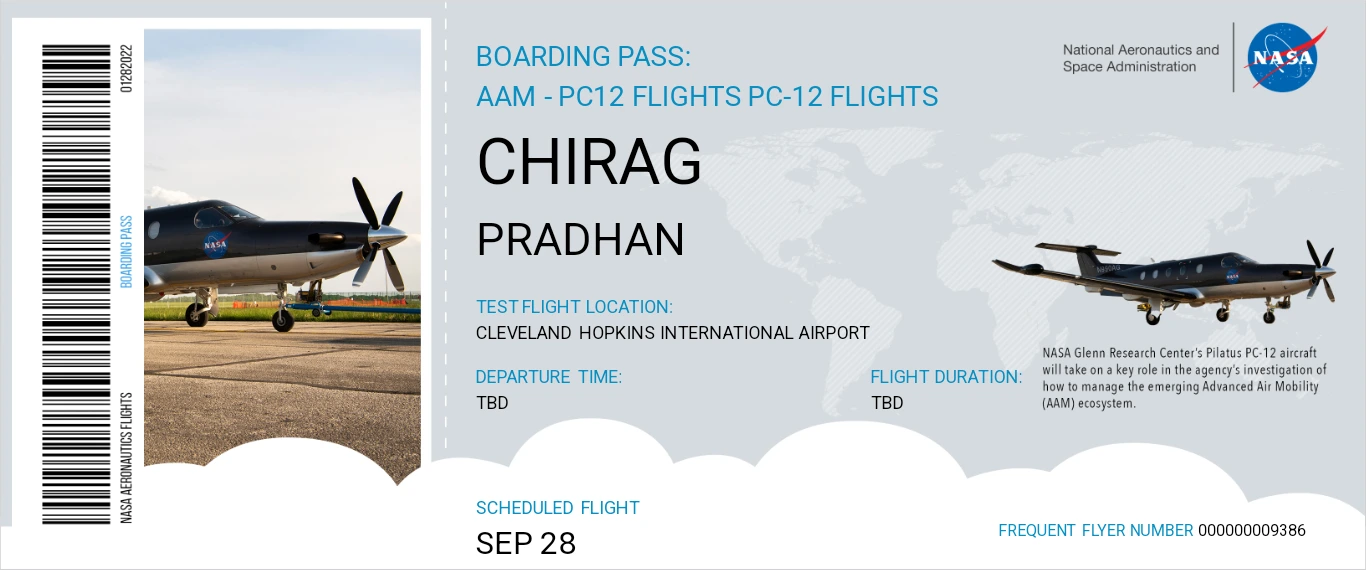
Beyond the five mandatory IATA fields, a PNR can contain dozens of optional elements, including seat preferences, meal requests, loyalty program numbers, and special service requests (SSRs). The possible data points can expand to more than 60 items under IATA guidelines. An active PNR remains in the GDS until 24 to 72 hours after the last flight segment is flown, per the IATA Passenger Services Conference Resolutions Manual 2024.
It is critical to understand that a PNR and an e-ticket are not the same thing. A PNR confirms the reservation; an e-ticket confirms the right to travel. A booking can exist without a ticket — and this distinction becomes important in the payment step.
Under U.S. law, air carriers operating flights to, from, or through the United States must transmit PNR data to the Department of Homeland Security (DHS) and U.S. Customs and Border Protection (CBP) prior to departure. The U.S. CBP retains this data for 15 years under federal regulation 19 CFR § 122.49d.

Step 3 — Ticketing And Payment: Why It Takes 3 Days for Money to Reach an Airline
Finalizing a booking requires payment — and this is where the complexity becomes most pronounced. Banks do not transfer money to airlines immediately. It can take three days or more to verify payment details and go through the entire confirmation process. This creates the gap between the moment a traveler receives a PNR number and the moment a ticket is actually issued.
The financial operations for a passenger booking directly on an airline’s website are handled through payment gateways — third-party services that process transactions and ensure data security. However, when full-service carriers, GDSs, and OTAs are involved, money must flow through two specialized financial clearing institutions: IATA’s Billing and Settlement Plan outside the United States, and the Airlines Reporting Corporation inside it.

Once payment is confirmed, the airline adds the fare data to the PNR. This record is then used to issue the e-ticket. The traveler finally receives a complete itinerary receipt to their designated email address, containing both the PNR reference and the 13-digit e-ticket number.
Ancillaries — such as extra baggage, seat upgrades, or priority boarding — are added to the PNR using IATA Special Service Request (SSR) codes. Each code contains four characters and corresponds to a specific service. Some airlines use proprietary codes that supplement the IATA system. Qatar Airways, for example, uses the code FALC to record the transport of falcons.
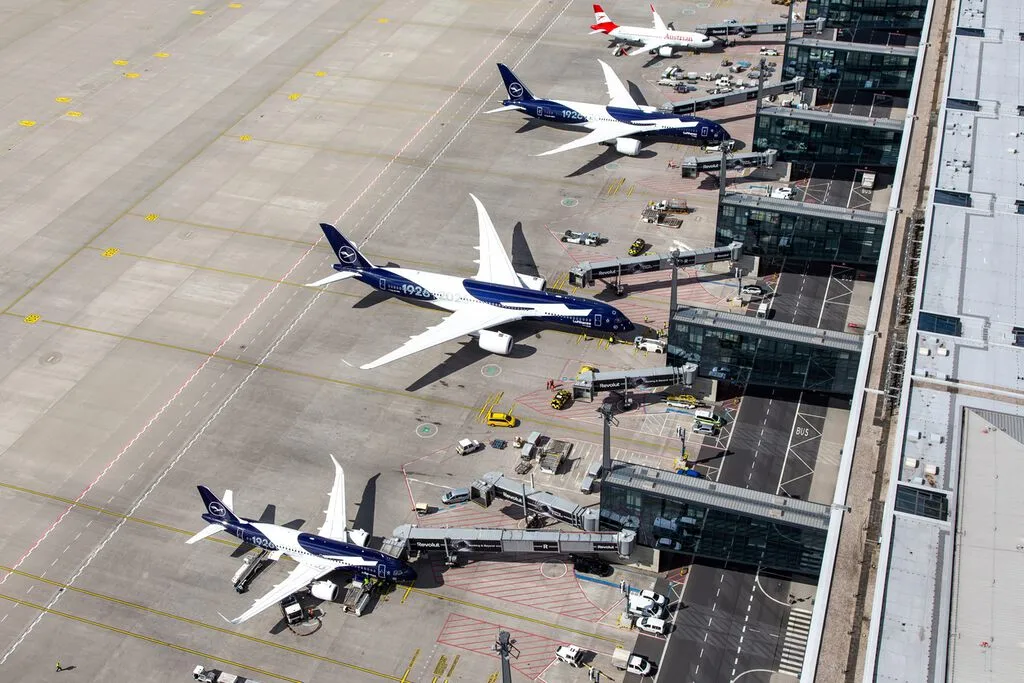
How $232.8 Billion In Ticket Sales Gets Settled Globally Each Year
Outside the United States, the financial backbone of airline ticketing is IATA’s Billing and Settlement Plan (BSP). The BSP operates in over 207 countries and territories, connects approximately 400 airlines, and processes tens of thousands of travel agency transactions every week.
The BSP works as follows. After an agent issues a ticket through a GDS, the GDS reports that transaction to IATA’s Data Processing Centre (DPC). The DPC validates all ticketing data, ensures compliance with IATA standards, and generates a consolidated billing report — usually issued weekly, depending on the country. The travel agent then makes a single net payment to the IATA clearing bank covering all BSP transactions for that period across all airlines.

The BSP then distributes the appropriate amounts to the respective airlines. Typically, the airline receives payment two to four weeks after the ticket was issued. The preferred method is electronic funds transfer or direct debit.
In 2024, IATA’s BSP processed $232.8 billion in ticket sales with a 100% on-time settlement rate, according to IATA’s own financial data. Only IATA-certified travel businesses have the right to access the BSP and issue tickets in the name of airlines outside the United States.
The BSP’s primary limitation is that it cannot be used to settle transactions with carriers that are not IATA members — which includes most low-cost carriers. When these carriers are involved, alternative settlement methods such as virtual credit cards (VCCs) or direct bilateral agreements are used.

The U.S. Handles $100.4 Billion In Domestic Agency Ticket Sales Per Year
Inside the United States, the equivalent of the IATA BSP is the Airlines Reporting Corporation (ARC), established in 1984 as a successor to the Air Traffic Conference of America. ARC is owned by nine major airlines and partners with almost 500 carriers. It accredits travel agencies and provides the financial settlement infrastructure for all U.S.-based agency air sales.
In 2025, U.S.-based travel agency air ticket sales processed through ARC totaled $100.4 billion — a record high and a 1% increase over 2024. ARC’s dataset now covers over 25 billion passenger flights operated by more than 480 airlines across 235 countries since 2015. All companies registered in the U.S. need ARC certification to issue tickets for member airlines.
Full ARC accreditation requires an agency to be registered in the United States, Puerto Rico, the U.S. Virgin Islands, or American Samoa. It also requires a financial bond or letter of credit of at minimum $20,000, plus a $2,300 application fee and the appointment of an ARC Specialist who has passed the ARC certification examination.

In January 2026, ARC took a historic step. The corporation launched the air travel industry’s first orders-based reporting and settlement system, designed to move the industry beyond ticket-based settlement and into a dynamic, modern retailing model. ARC’s Sarah Boyd, principal of airline retailing solutions, stated in a press release: “Orders represent a fundamental shift in how ARC and our partners conduct business.” This directly enables the broader industry transition to the IATA ONE Order standard.
NDC adoption through ARC channels has accelerated. In 2024, total NDC transaction volume through ARC increased by more than 50% compared to 2023, with 799 travel agencies reporting NDC transactions in December 2024 alone, according to ARC chief commercial officer Steve Solomon.

How Small Travel Companies Issue Tickets Without IATA Or ARC Accreditation
Not every travel company can afford the financial requirements and administrative burden of direct IATA or ARC accreditation. For these smaller businesses, two types of partners make ticket issuance possible.
The first is airline consolidators. Consolidators are wholesalers that buy flight inventory in bulk at discounted rates from airlines and then sell it to retail travel agencies with a designated markup. Travel agencies that work with airline consolidators can use the consolidator’s access credentials to connect to the GDS and issue tickets. This cooperation also gives agents access to a wider range of airfares, including both published and private contract fares not available to the general public.
The second type is host agencies. A host agency acts as an intermediary between travel retailers and travel suppliers. All entities operating under one host agency share a single set of accreditation credentials for booking and ticketing. This arrangement allows smaller or independent travel businesses to operate with the legitimacy of a fully accredited company, at a fraction of the compliance cost.
The key features of each model are:
- Consolidators buy bulk inventory and sell at marked-up rates; they work best for agencies focused on specific routes or international fares where negotiated rates offer genuine advantages over published GDS fares.
- Host agencies operate as umbrella organizations; they suit independent travel advisors who want branding independence but cannot justify the cost of standalone accreditation.
- Both models carry risk: agencies using a consolidator’s or host’s credentials are bound by that partner’s financial and operational standards, and may be exposed to the partner’s commercial obligations.

How The NDC Standard Is Already Changing Airline Ticketing In 2025
The traditional GDS-centric ticketing model has a structural problem. The majority of flights are distributed through GDSs, which force all systems to exchange data via the archaic EDIFACT protocol — a standard developed in the 1980s that cannot transmit rich content like seat photos, bundled offer descriptions, or real-time dynamic pricing. Airlines cannot collect detailed passenger information through EDIFACT, nor personalize offers. They pay significant transaction fees to GDSs for this limited service.
In 2012, IATA launched the New Distribution Capability (NDC) standard to address these limitations. NDC uses XML-based APIs to allow airlines to connect directly with travel sellers — OTAs, Travel Management Companies (TMCs), and aggregators — bypassing the GDS for content and offer creation. It enables airlines to offer richer, more personalized content in real time and control their distribution strategy across all channels, not just their own websites.

As of mid-2025, approximately 80 airlines had adopted NDC to some extent, according to IATA’s Airline Retailing Maturity index. Leading adopters include American Airlines, Lufthansa Group, United Airlines, Qantas, Emirates, and Qatar Airways. A BCG and IATA study found that 81% of airline respondents confirmed that their airline currently has live NDC channels.
However, NDC has its complications. It is often slower and less versatile than standard GDS flow. New distribution formats require agencies to invest in technical integration with each airline separately. NDC adoption was an incremental process through 2024, not a clean switch — and mainstream adoption is now projected to occur between 2028 and 2030, according to a late 2024 industry report.
McKinsey’s research estimates that improved retailing techniques enabled by NDC could unlock as much as $45 billion in additional industry value by 2030.

IATA ONE Order: The Single Record That Will Replace PNRs, E-Tickets, And EMDs
The most consequential change on the horizon for the airline ticketing industry is IATA’s ONE Order initiative. Today, one booking flow creates three separate documents: a PNR, an e-ticket, and an Electronic Miscellaneous Document (EMD) used to record ancillary fees. ONE Order is an XML-based standard designed to merge all three into a single, unified retail record available under a single reference number.
ONE Order extends NDC by transforming order management into a retail-like model — the same way most e-commerce stores operate. Managing a single record will help the airline create a single version of truth for each order in the sales pipeline. Storing and processing a single type of record also reduces the infrastructural resources required for billing and accounting.
The goal of this initiative is to simplify the booking process for travel agents, facilitate data sharing between airlines, and improve the experience of passengers who will no longer need to manage multiple reference numbers to track, change, or service a journey.
A landmark moment arrived in May 2025 when Finnair CEO Turkka Kuusisto booked a flight from Helsinki to London Heathrow Airport (LHR) using what Altexsoft described as the world’s first “Native Order” — a booking created and fulfilled under ONE Order architecture from end to end. The moment marked the transition from theoretical standard to operational reality.
Most airlines are expected to transition fully to Offers and Orders architecture between 2028 and 2029, with widespread adoption unlikely before 2030 given the scale of legacy system replacement required. The transition demands that airlines dismantle long-standing organizational silos between their ticketing, reservations, and accounting departments.