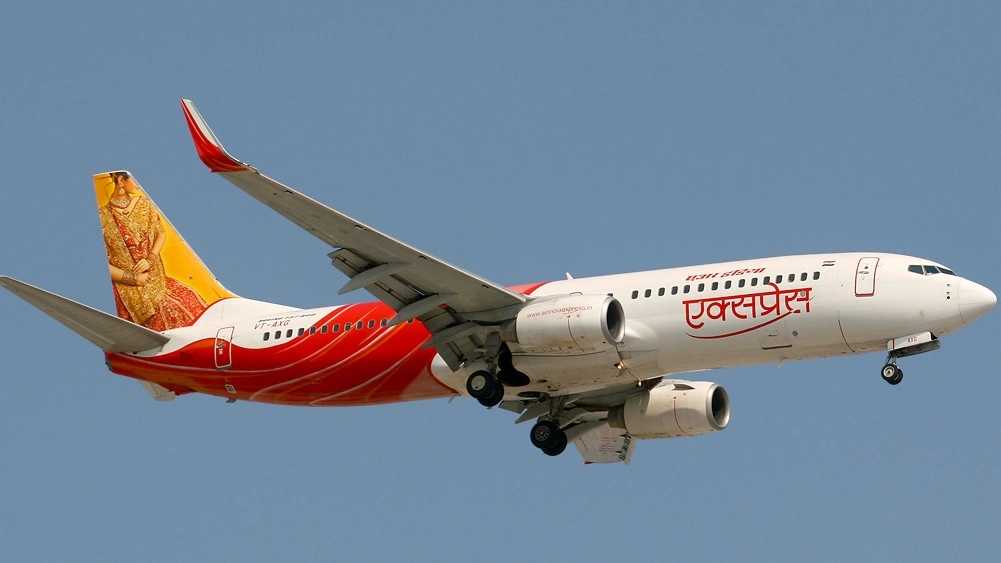
Air India Express (IX) has indefinitely postponed its planned operations at Noida International Airport (DXN), withdrawing from the June 15, 2026 commercial launch of the National Capital Region’s newest gateway, according to a report by The Times of India. The low-cost carrier, a subsidiary of Tata Group-owned Air India, cited cost-cutting pressures as the primary driver, with the group reluctant to incur the additional setup expenses required to establish a ground presence at a secondary NCR airport given its existing dominance at Delhi’s Indira Gandhi International Airport (DEL).
The withdrawal is the second NCR retreat for the airline in as many months. Air India Express ceased all flights from Hindon Airport (HDX) at the end of the winter 2025–26 schedule in late March 2026, ending a services run of less than a year on routes connecting Hindon with Mumbai (BOM) and Bengaluru (BLR). Together, the two decisions effectively consolidate all Air India Group flying in the Delhi region at IGI, leaving millions of passengers in Noida, Greater Noida, Ghaziabad, and western Uttar Pradesh reliant on the congested main hub.
Why Air India Express Stepped Back?
The immediate trigger is a sweeping austerity drive across the Air India Group. Air India’s FY26 losses are estimated to exceed ₹22,000 crore, more than double the ₹10,859 crore recorded in FY25, driven by higher jet fuel costs and longer routing times caused by airspace restrictions linked to geopolitical tensions in West Asia. The Air India board has been discussing emergency measures including temporary unpaid leave, bonus deferrals, and a capacity reduction of more than 20 percent. CEO Campbell Wilson has confirmed his resignation, and the group has begun a search for a successor.
For Air India Express specifically, operating from multiple airports within the same city region carries a significant fixed-cost burden — ground handling teams, maintenance staff, and redundant flight crews must all be duplicated. Concentrating capacity at IGI, where the group already holds infrastructure and slot rights, reduces those duplicated overheads. The move is part of a broader network rationalisation that has also seen other routes reviewed across the airline.
The Hindon exit carried additional operational justification. The airport, owned by the Indian Air Force and operated by the Airports Authority of India (AAI) as a civil enclave inside Hindon Airbase, has only two aircraft parking bays and a small terminal, creating peak-hour congestion and turnaround delays of up to 20–25 minutes.
Aviation analytics firm Cirium recorded an overall capacity reduction at Hindon of around 35 percent for April 2026 as multiple carriers pared services; IndiGo (6E), the largest airline of India, trimmed select frequencies while Star Air (OG) maintained operations. Despite those infrastructure constraints, AAI data shows Hindon handled approximately 960,000 passengers between April and January of the 2025–26 financial year, underlining that demand was not the limiting factor.
According to the Times of India:
Hindon last winter saw a peak of about 25 daily aircraft movement, meaning 25 arrivals and as many departures. That number kept falling and is now at just eight with IndiGo having five arrivals and as many departures and Star Air at three. The number fell after IndiGo reduced its operations and AI Express pulled out its 10 daily flights.
Noida Airport Opens Without Air India Group Presence
Noida International Airport was inaugurated by Prime Minister Narendra Modi on 28 March 2026 at a total Phase 1 investment of approximately ₹11,200 crore, developed by Yamuna International Airport Private Limited (YIAPL), a subsidiary of Zurich Airport International AG, under a public-private partnership with Noida International Airport Limited (NIAL).
The DGCA issued the aerodrome licence on 6 March 2026 under the public-use category for all-weather operations. Phase 1 comprises a single runway and terminal designed to handle 12 million passengers annually, with a long-term capacity target of 70 million passengers across six runways and four phases.
IndiGo will inaugurate commercial services on June 15 with an initial domestic network spanning more than 16 destinations including Bengaluru, Hyderabad, Amritsar, Chandigarh, Dharamshala, Jaipur, Lucknow, Navi Mumbai, Pantnagar, and Srinagar. On launch day, IndiGo’s first service will operate on the Lucknow–Noida–Bengaluru routing, with a simultaneous Hyderabad–Noida–Amritsar frequency. Akasa Air (QP) joins on June 16 with two destinations — Bengaluru and Navi Mumbai — and has separately committed to establishing an MRO facility at the airport, signalling a long-term operational anchor.
Air India Express’s absence is commercially significant for NCR passengers who had been expecting affordable connectivity to Gulf destinations such as Abu Dhabi (AUH) and Dubai (DXB) from a closer catchment point. Those routes remain anchored at IGI, meaning passengers in Noida, Greater Noida, Ghaziabad, and Bulandshahr must continue to travel to Delhi for Air India Group fares — partially negating DXN’s central promise of reducing NCR dependence on the capital’s congested main hub.
Air India Group’s Restructuring
Air India Express’s NCR retreat reflects pressures that extend well beyond one airport. Singapore Airlines (SQ), which holds a 25.1 percent stake in Air India, sent its CEO to Tata Sons in April 2026 to discuss the financial crisis, with both shareholders exploring a capital injection — though the amount under discussion may fall short of total requirements. The board is assessing capacity cuts of more than 20 percent alongside the bonus and furlough measures, while the search for Wilson’s successor continues.
Against that backdrop, the decision to forgo new-airport setups is consistent with an airline managing runway costs rather than pursuing growth. The question facing YIAPL and the Indian civil aviation ministry is whether IndiGo and Akasa Air — the two carriers that are proceeding — can generate sufficient load factors to validate DXN’s economics in its opening months, and whether Air India Express will return once the group stabilises.