The word “Lukla” in the Sherpa language refers to an “abode of sheep”. Locals say that in the past, the region was rife with this creature, though one would find it next to impossible to locate it these days in the “most-dangerous airport” region. Before the construction of Lula’s iconic airport (LUA), which has been referred to as “bonkers”, trekking to the airport took quite a substantial time- trekkers believe that the airport’s construction has cut down on the time it took to trek to the Everest base Camp by as much as seven days.
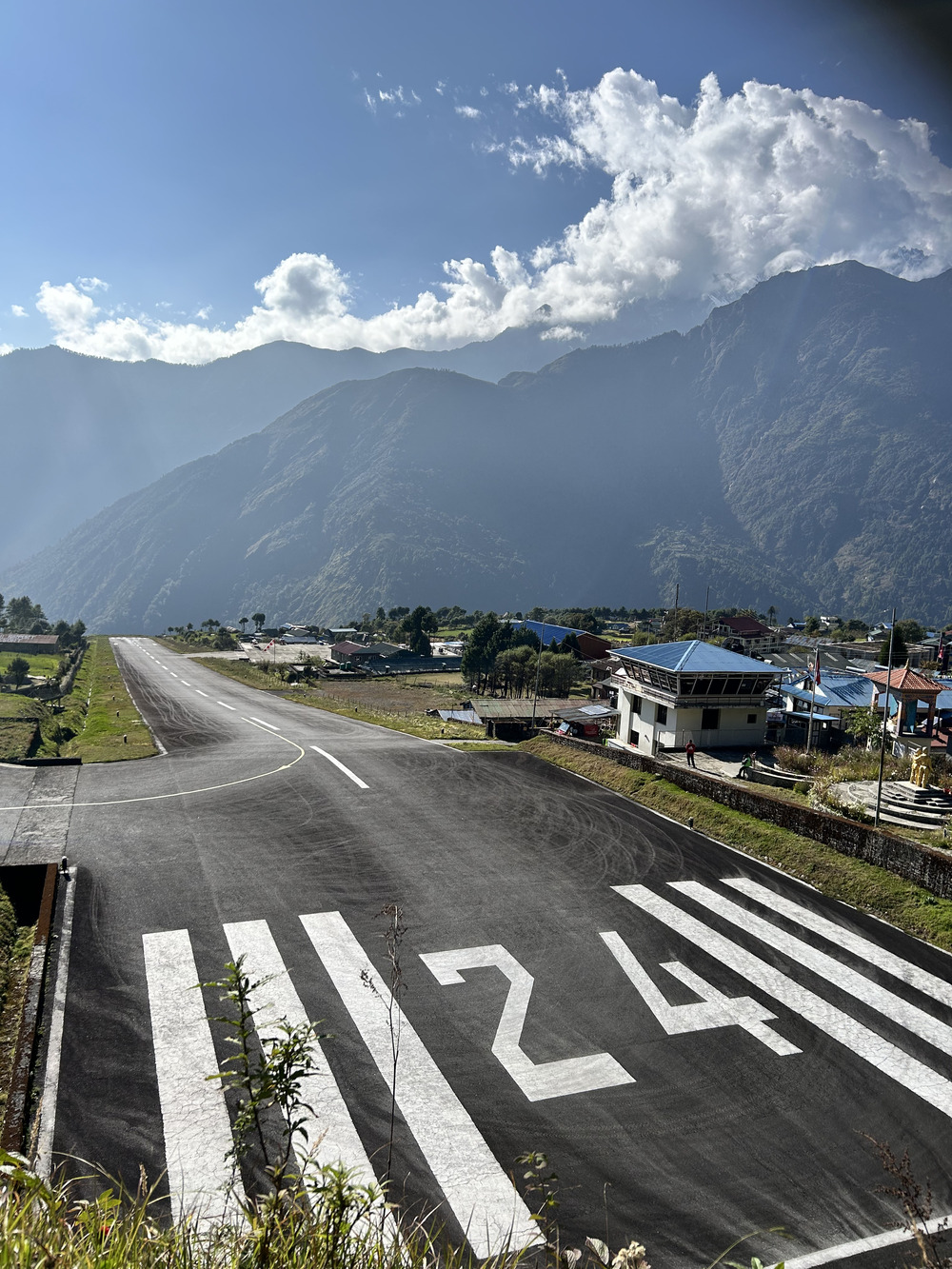
Photo: Karan Bhatta | aviospace.org
This extraordinary airport is sometimes referred to as Lukla STOLport (an acronym for Short Take off and Landing Airport), Lukla ALTIport (which is defined as “a small airport in a mountainous area with a steep gradient runway, used for landing up the slope and for take-off down the slope, thereby making use of only one approach/departure area.”), or in the official language of the Civil Aviation Authorty of Nepal, simply as Lukla Aerodrome.
Regardless of the terminologies used to describe this most precariously positioned airport, it, like the Everest region itself, has been a “magnet for kooks, publicity seekers, hopeless romantics”, to borrow the phrase of John Krauker. Let’s take a look at five fast facts about the world’s most dangerous airport in the world- Lukla.
5. It isn’t the most dangerous airport in Nepal, let alone the world
Nepali Pilots and ATC don’t agree on this notion
The students and practitioners of aviation in Nepal don’t believe that Lukla Airport is the most dangerous airport in Nepal. Captain Rabindra Dangol, who has been an instructor pilot for two decades in Nepal (and one who also trains pilots to fly to Lukla Airport) doesn’t quite buy the hype around Lukla’s supposed most-dangerousness:
“One has to draw a distinction between technical aspects and practical aspects of operating in a particular airport. Technically, one might reason that Lukla Airport is extremely dangerous becasue after the aircraft has inched past a certain point (while approaching Lukla), there’s no possibility of a go-around. But in terms of practicality, I have found operating to/from Phaplu airport more challenging than LUA”.
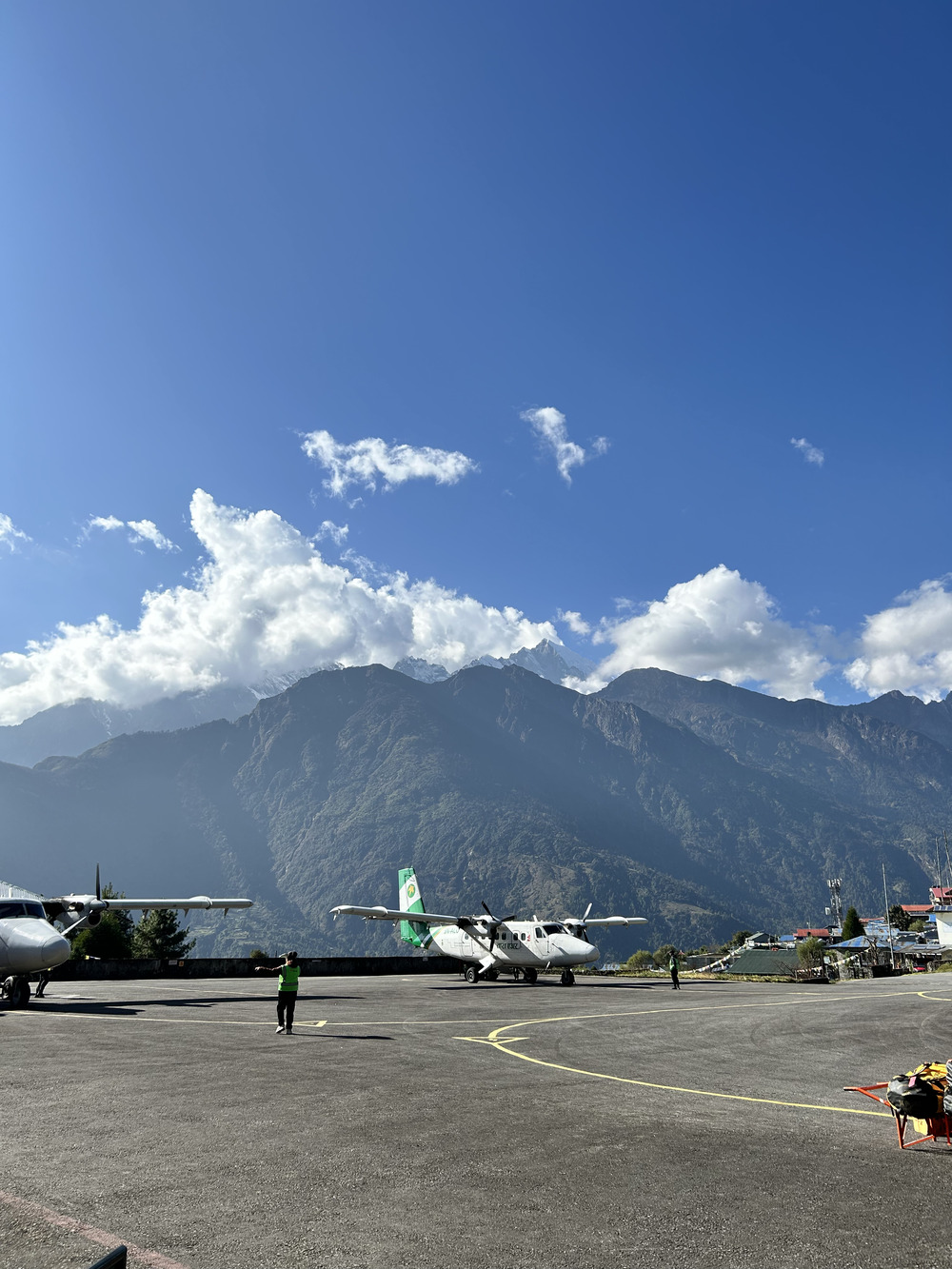
Photo: Karan Bhatta | aviospace.org
The inability of performing a go-around was described by the author of the book titled “Sherpa” as “even when there is a strong wind, no visibility or any other obstacles on the runway, once an airplane crosses the ‘No Go’ zone, it’s only ‘Go Go’, with no chance of turning back”. However, there have been instances when pilots have performed a go-around in Lukla, and one has even been captured in a video.
Ujjwal Tiwari, an Air Traffic Controller, who has served in Lukla for two years and was also an ATC in other airports in the Himalayas of Nepal, said that in the various talks he has had with numerous pilots who have flown to Lukla, no one has confided LUA as dangerous as it is perceived. He said, “never have I ever found Lukla as being the most challenging or dangerous airport for landing”. He further believed that airports, such as the one in:
- Rara (Talcha Airport)
- Dolpa (Juphal Airport)
are more challenging because the crosswind in these two airfields might necessitate a go-around at any time during approach.
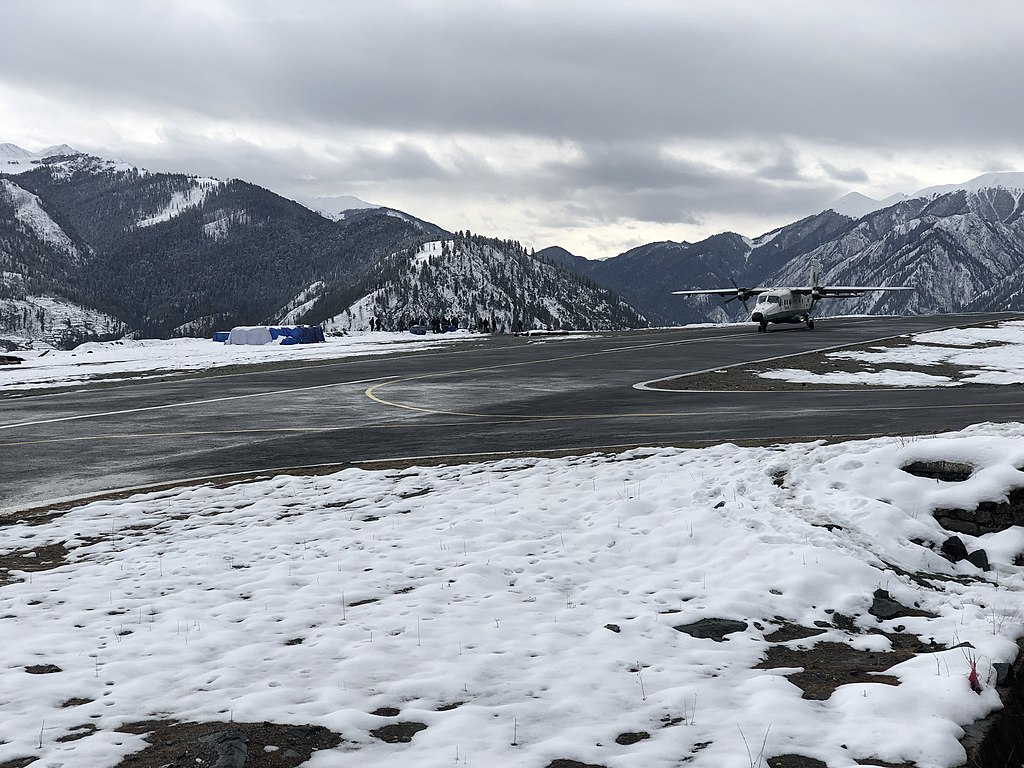
Photo: Tannu 01|Wikimedia Commons
One of the reasons why Lukla gets branded as “the most-dangerous” might simply be because a moniker such as that might mean more publicity for the Everest Region. More publicity might equate greater flow of tourists and greater revenue in the region. You can read about this matter in detail in our guide below:
4. Other airports in the Everest region are more dangerous
Mingbo being the most glaring example
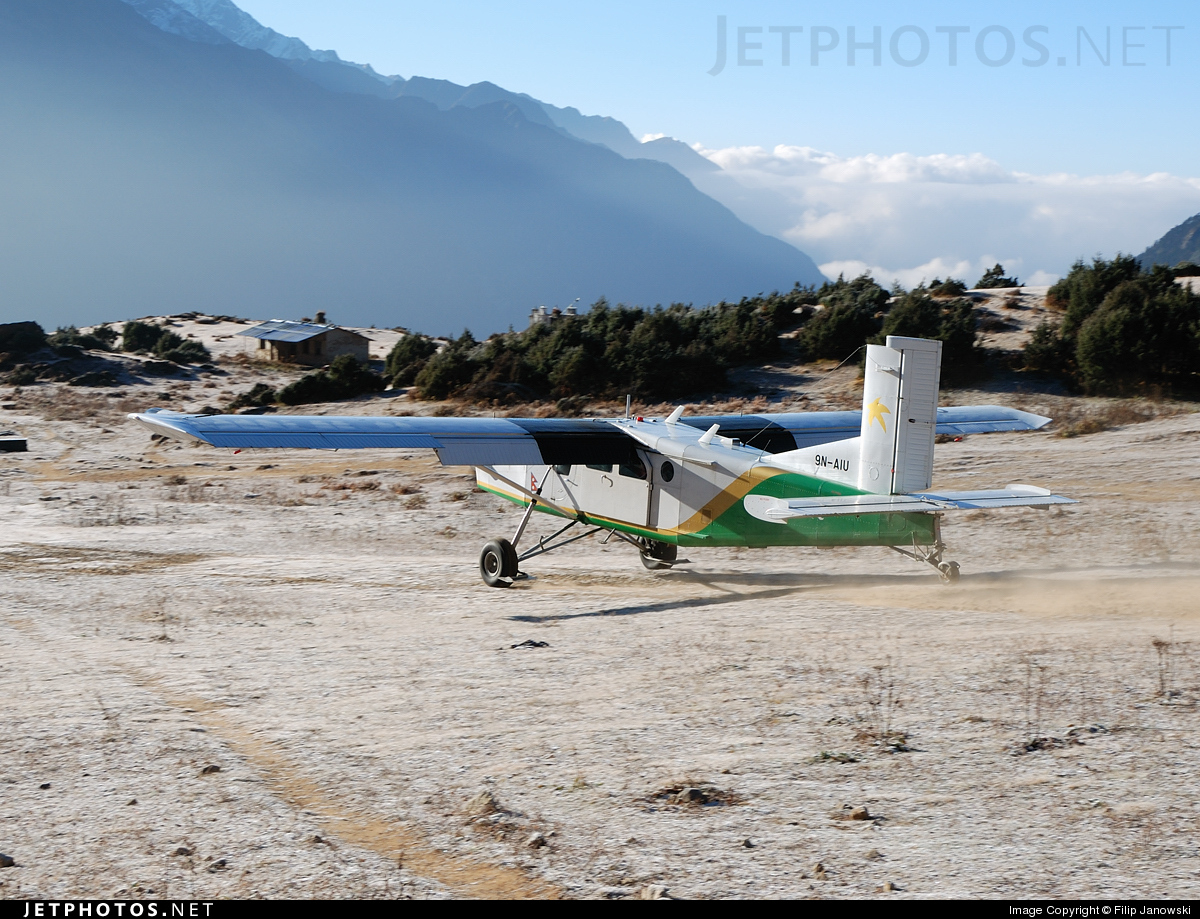
Phaplu Airport, an airport in the Everest region that Captain Rabindra found more challenging than Lukla, lies at an altitude of 2,413 meter – around 500 meters lower than Lukla. When the wife of Sir Edmund Hillary (the man who was seminal in the construction of Lukla Airport) was headed to Phaplu Airport on a Pilatus PC-6 when the aircraft crashed and killed all occupants on theboard.
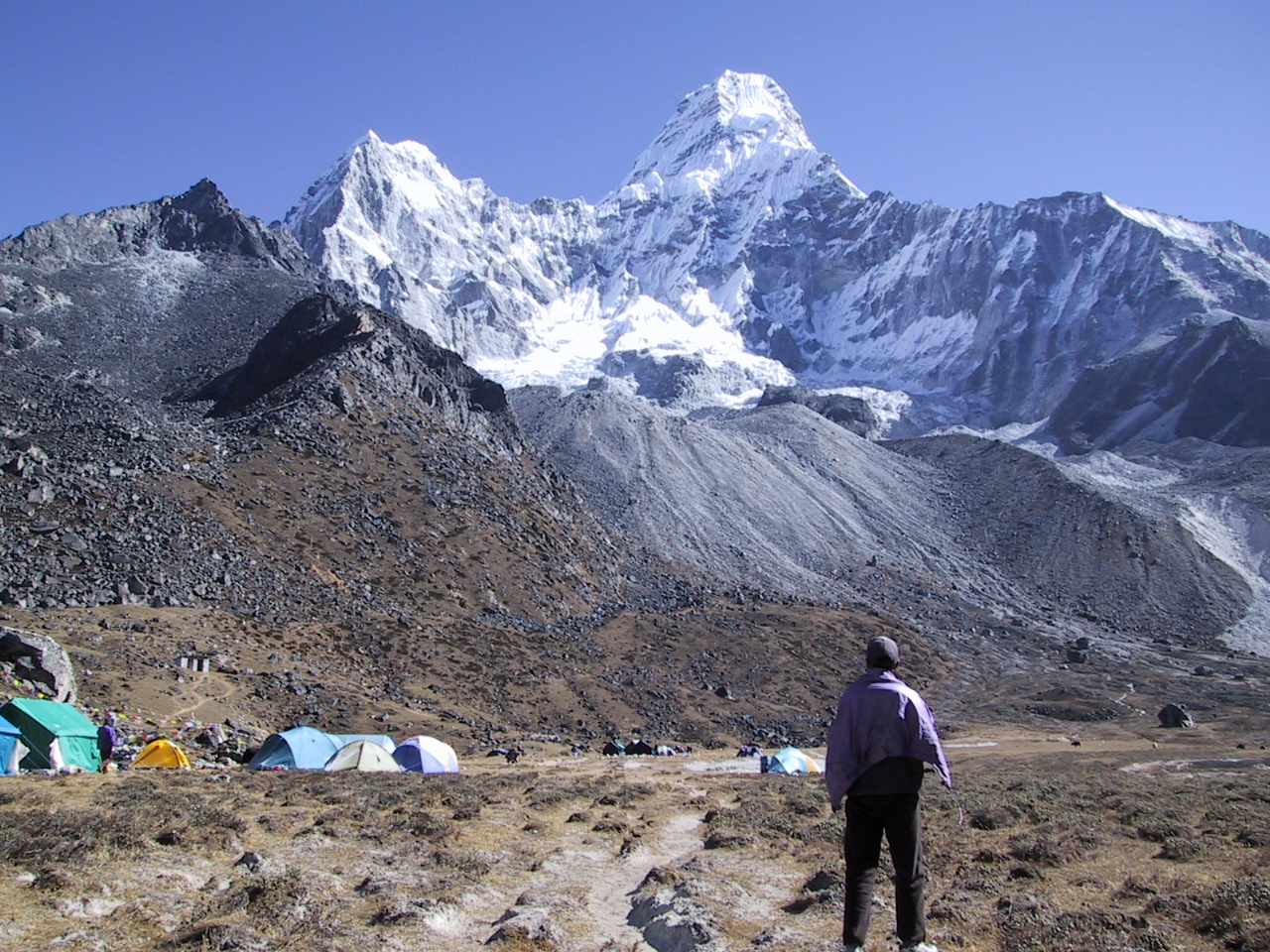
Photo: Ivan G. Somlai
Before the construction of Lukla Airport, or Phaplu Airport for that matter, Sir Edmund Hillary had constructed an airport that was far more dangerous than Lukla- the Mingbo Airport. The airport was located at an altitude of 4,650 meters. A Pilatus Porter used to operate in and out of the airport- and possibly before the government of Nepal even knew about it.
The Everest region is also home to Syangboche aerodrome (3,780 meters), an airport that is located near Khumjung village. The airport can turn into a frozen desert in the winter. The greater unpredictability of the weather and a stronger wind in Syangboche would also mean that it would be more dangerous than Lukla.
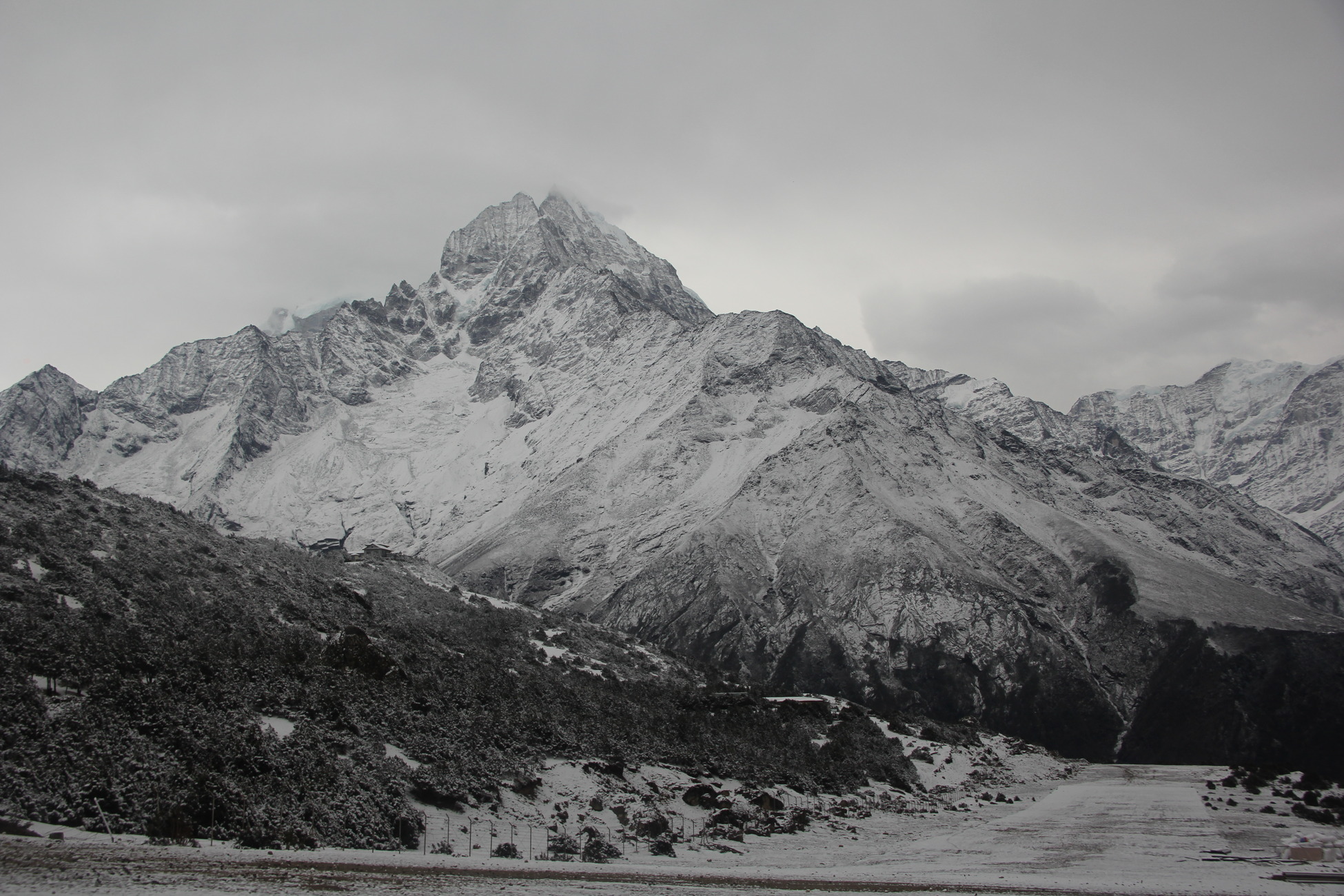
Photo: Karan Bhatta | aviospace.org
| Airports in the district where Lukla lies | Runway | Starting year |
| Syangboche Airport | 405 m | Not Given, though the Civil Aviation Authority of Nepal (CAAN) claims that it had seasonal servicability |
| Phaplu Airport | 680 m | 1976 |
| Kangeldanda Airport | 520 m | 2003 |
3. The helicopter landed on the top of Mount Everest tookoff from Lukla
Piloted by an Airbus helicopter test pilot
In 2005, an Airbus A350B3 helicopter was able to land at the top of Everest. The chopper was piloted by helicopter pilot Didier Delsalle, and in doing so, he achieved the lightest landing performed by a helicopter, ever. Curiously, no person before or after Delsalle has been able to climb to the top of Everest.
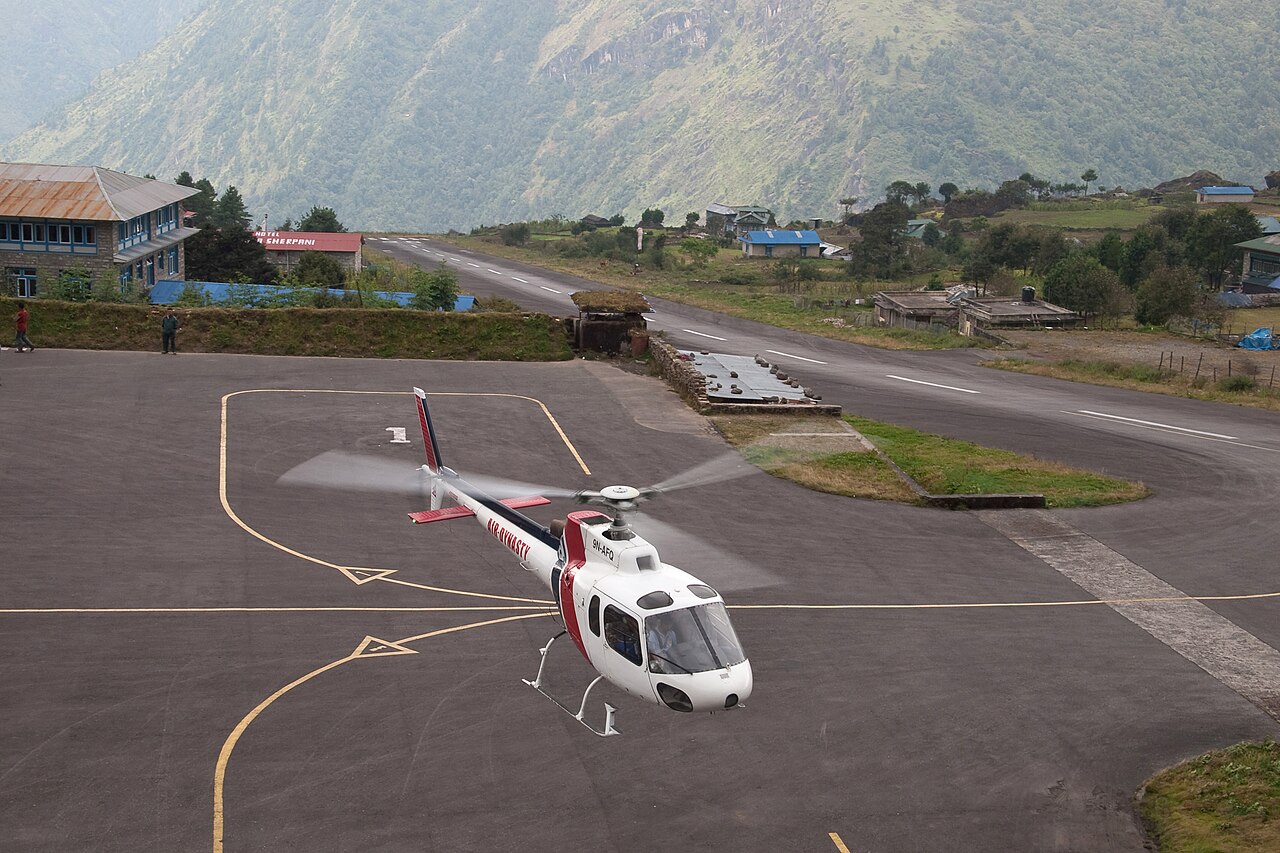
Photo: Vyacheslav Argenberg | Wikimedia Commons
When the Airbus A350B3 was being made, Didier Delsalle proposed that he would try to land at the top of Everest. But Airbus was reticent with the flight, as a crash would have put an indelible stain on the chopper’s prospects. Nonetheless, after years of trying, the aerospace manufacturer acquiesced, and Dider Delsalle landed what was dubbed during its flight as “a mystery chopper” to the summit of Mount Everest. According to the video of this historic flight captured by Airbus, the flight originated in and subsequently landed at Lukla Airport itself.
Specifications of the helicopter that landed at the top of Everest
| Service Ceiling | 23000 ft |
| Rate of Climb | 1959 fpm |
| Takeoff Power | 632 kW |
| Max T/O Weight | 6173 Lb |
2. Lukla is one of the cheapest aerodrome to be constructed
The second-cheapest airport in the Everest region
When Sir Edmund Hillary built the Mingbo airstrip, it cost him merely $900. This prompted him to claim that the Mingbo Airstrip might have been one of the cheapest airstrips to have been ever constructed. Much of the $900 was down to the labor fees paid to the Sherpa locals, who helped level the field by maneuvering the large boulders in Mingbo into pits they had dug specifically to bury the large rocks.
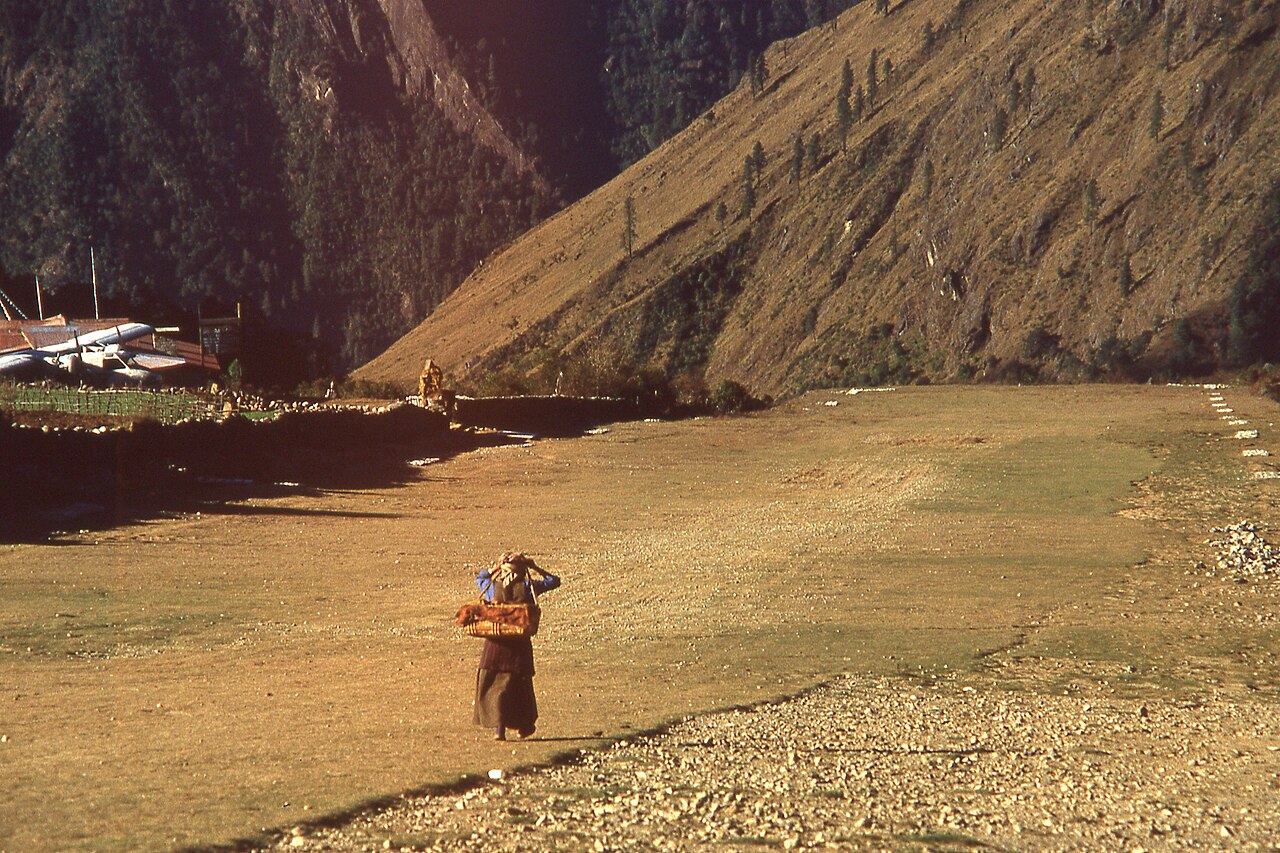
Photo: BBLBobby | Wikimedia Commons
In comparison, acquiring the land needed for the Lukla Airport, cost Hillary merely $600. Although he did say that it was “a substantial sum in that area in those days”, one can reminisce upon this figure, the sort of fame the airport has been able to garner, and feel that the airport was acquired at a bargain. [Take Mumbai’s Navi airport, in contrast. The airport necessitated almost $2 billion construction cost]
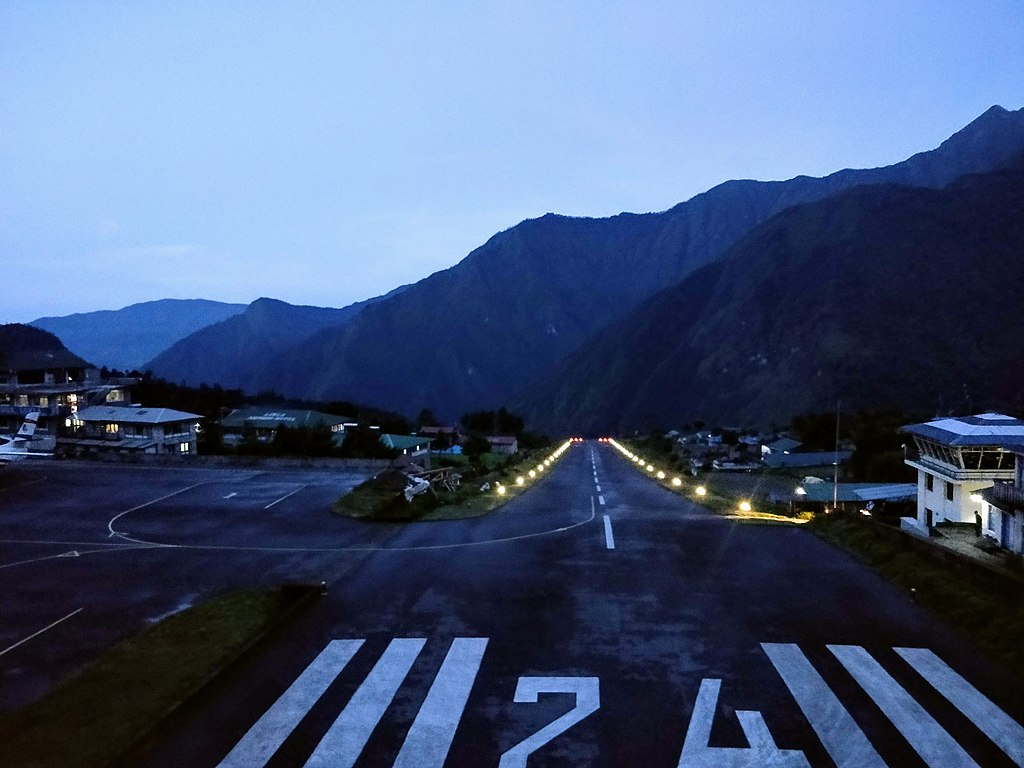
Photo: Nirojsedhai|Wikimedia Commons
Let’s take a look at how the costs of Lukla Airport compare with some costs associated with other airport projects in Nepal.
| Name of the airport project | Associated costs |
| Pokhara Airport | Construction cost $216 million |
| Lukla Helipad construction (in 2019) | $2.2 million |
| Nijgadh Airport (proposed) | Expected costs of construction are around $3.45 billion |
5. Lukla’s accident history isn’t as frightening as it has been perceived
When Lukla Airport’s most-dangerousness is often discussed, people who’ve not been here feel that the airport must have an accident history that is rife with hull losses and hundreds of lives lost. But that is not quite the case. According to the data in the Aviation Safety Network, there have been seven incidents of aircraft accidents with destination Lukla Airport, and three of aircraft that departed Lukla. In all of these accidents, fifty-six people have lost their lives. This number is smaller than the number of people who departed in the crash of Yeti Airlines Flight 691.
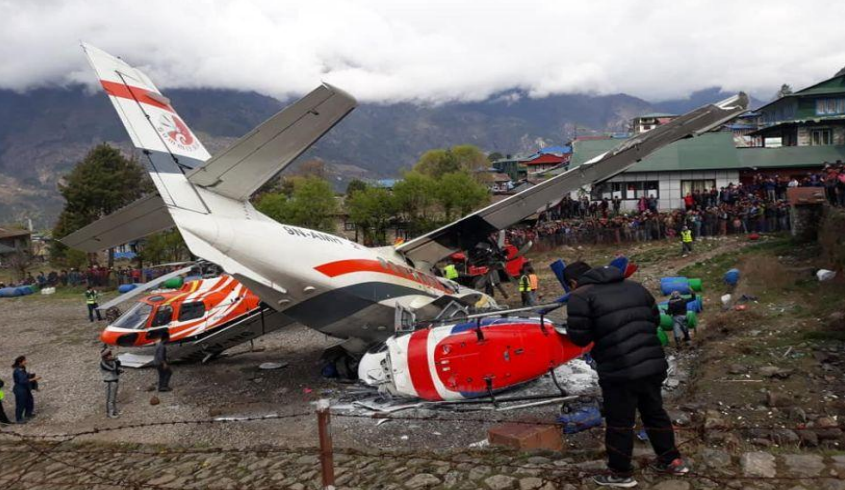
Photo: Government of Nepal
Aircraft Accident Investigation Commission, 2019
- In 2008, Yeti Airlines’ DHC-6-300 Twin Otter, registered 9N-AFE, crashed at Lukla. Investigators identified failures by both the regulator and the airline’s safety management system to address unsafe pilot practices, particularly those associated with STOL operations.
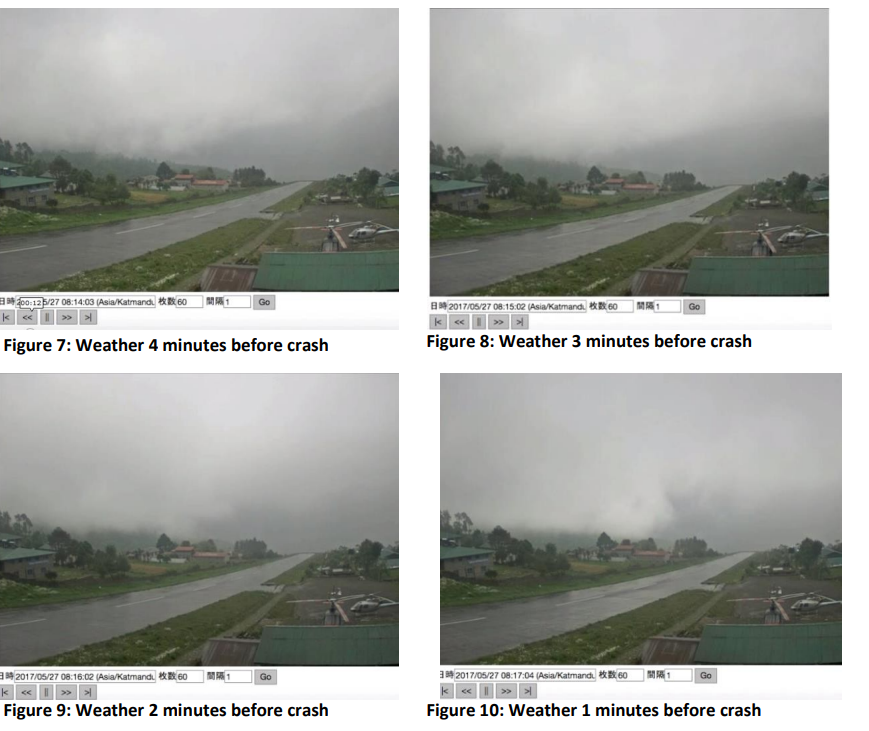
- A separate Goma Airlines accident was linked partly to an ATS officer’s failure to close the airport as deteriorating weather made operations unsafe.
- In 2019, Summit Air’s Let L-410UPV-E20, registered 9N-AMH, crashed during an attempted takeoff and collided with two helicopters operated by Manang Air and Shree Airlines.