Flight attendants have openly admitted that the fasten seat belt sign does not always mean turbulence is ahead. View from the Wing reported that discussions on the flight attendant forum A Fly Guy’s Cabin Crew Lounge reveal that cabin crew sometimes ask pilots to switch on the sign simply to keep passengers away from the galley. This practice raises serious questions about the integrity of an official safety signal that passengers are legally required to obey.
The International Air Transport Association (IATA) has long advised that airlines should use the seat belt sign only when necessary, warning that overuse can undermine passenger compliance during real emergencies. The United States Federal Aviation Administration (FAA) mandates under 14 CFR 121.317(f) that passengers must remain seated with their belts fastened whenever the sign is illuminated. When crew activate the sign for non-safety reasons, they effectively exploit a federal safety regulation as a crowd-control tool.

Flight Attendants Reveal the Hidden Meaning Behind the Seat Belt Sign
The admission came from active flight attendants posting on an industry forum. View from the Wing reported that crew members described calling the flight deck and asking pilots to turn on the seat belt sign when they wanted passengers to stop entering the galley. The sign, in these cases, carries a very different message: “Leave us alone.”
The galley is the primary work area for flight attendants during a flight. Passengers who wander into the galley to stretch, socialise, or request extra drinks have become a significant source of frustration for cabin crew. The forum posts indicate that some flight attendants view the seat belt sign as a convenient, formal-looking way to address this problem.
This informal practice is not officially sanctioned by any airline. No airline has publicly confirmed or defended the use of the seat belt sign for non-safety purposes. The admission comes entirely from crew members speaking candidly on a professional forum.
Why Passengers Enter the Galley and Why Crew Object
Passengers have increasingly treated the galley as a communal space, particularly on long-haul flights. One Mile at a Time reported that travellers routinely use galley space to perform stretches, socialise with crew, or request items outside the regular service cycle. Flight attendants argue this intrudes on their only available workspace.
The removal of privacy curtains in economy cabins by several U.S. carriers has contributed to the problem. View from the Wing also noted that airlines like American Airlines (AA) have removed much of the original galley workspace and even relocated lavatories into what was previously crew-only territory. This has left flight attendants with almost no private space on narrow-body aircraft.
A flight attendant quoted on the One Mile at a Time forum stated:
“Passengers think they can come into the galley and do exercises and stick their asses in flight attendants’ faces while they are trying to eat and accomplish their working tasks.”
The comment reflects the depth of frustration among some cabin crew over boundary issues in the galley.
How The Seat Belt Sign Is Supposed to Work Under FAA Rules
The seat belt sign is a federally regulated safety tool in the United States. Under 14 CFR 121.317(f), every passenger must fasten their seat belt and remain seated while the sign is illuminated. Separately, under 14 CFR 121.317(k), passengers must comply with crewmember instructions regarding seat belt use.
The FAA’s Advisory Circular AC 121-24D states that the possibility of unexpected turbulence must be emphasised to passengers when the sign is switched off. This reflects the regulator’s intent: the sign is a turbulence and safety management tool, not a behavioural control mechanism. Blatant and repeated passenger disregard for crewmember instructions can attract enforcement action under FAA rules.
IATA has stated clearly that seat belt signs should be used only when necessary to preserve their importance as a safety signal. When the sign is overused or misused, passengers become desensitised to it. A Transport Safety Board of Canada report on an Air Canada (AC) flight noted that prolonged sign illumination reduced passenger compliance when actual severe turbulence arrived.
The Real Danger of Desensitizing Passengers to Safety Signals
Turbulence is the leading cause of in-flight injuries on commercial aircraft. According to FAA and National Transportation Safety Board (NTSB) data, between 2009 and 2024, turbulence caused 207 serious injuries and one fatality in the United States alone. Of those, 166 injuries involved flight attendants who were moving through the cabin when turbulence struck.
Simple Flying reported that Southwest Airlines (WN) cut turbulence-related injuries by 20% after it moved to end cabin service at 18,000 feet rather than 10,000 feet. The change kept passengers and crew seated with belts fastened for a longer portion of the descent. Korean Air (KE) separately removed noodle service from economy class after turbulence incidents reportedly doubled since 2019.
Aviation safety expert Don Marshall of the Flight Safety Foundation told CBC News that the intent of putting the seatbelt sign on degrades because “passengers get up and walk around the cabin anyway.” Using the sign for non-safety purposes accelerates that degradation. When passengers learn the sign sometimes means nothing, they are less likely to respond quickly when it genuinely warns of danger.
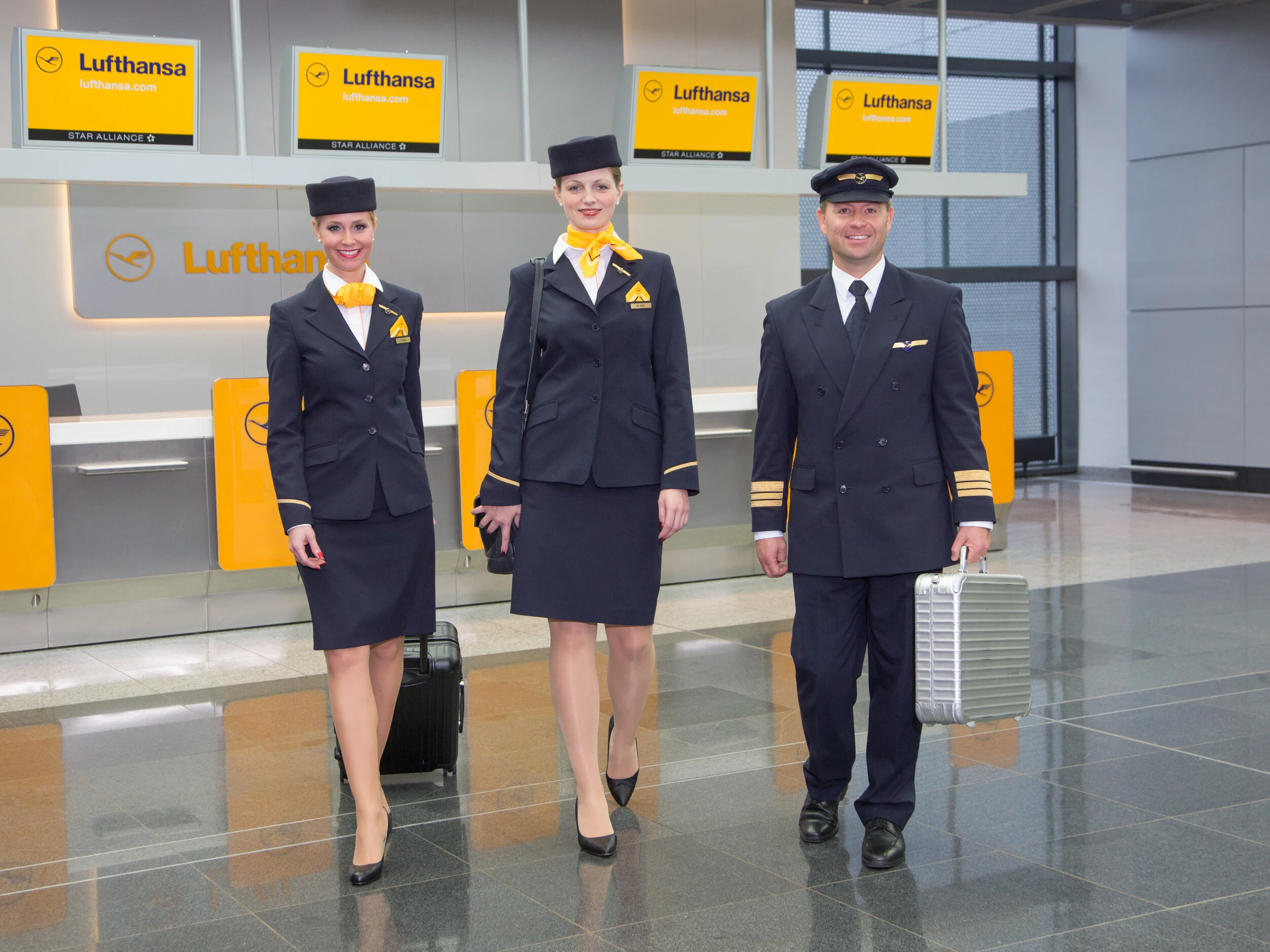
How Pilots Factor into the Seat Belt Sign Decision
The seat belt sign sits in the cockpit and the captain controls it at their discretion. Cranky Flier reported that pilots sometimes forget to switch off the sign after turbulence has passed, as their primary focus remains flying the aircraft, communicating with air traffic control, and monitoring systems. A flight attendant quoted in the same report noted:
“It’s the Captain’s discretion so I usually don’t have a say unless I want to keep saying ‘Hey, wanna turn the seatbelt sign off/on?’ every 20 minutes.”
Under U.S. carrier rules, the seat belt sign also applies to flight attendants, not just passengers. Cranky Flier noted this differs from many international carriers, where flight attendants are free to move during cruising flight even when the sign is on. At U.S. airlines, crew calling up to request the sign be switched on creates a situation where the flight attendants themselves must also sit down, which can interrupt service.
This means that when a flight attendant asks a pilot to activate the sign to deter passengers, they effectively ground themselves too. The action requires a degree of coordination between the cabin and the flight deck. It also means the pilots are knowingly participating in using a safety tool for a non-safety purpose.
Airline Policies on Seat Belt Sign Usage Vary Widely
Different airlines treat the seat belt sign differently, and no universal standard governs how frequently or for how long it should remain on. CBC News reported that airline policies on seat belt signs vary greatly. Some carriers leave the sign on continuously and do not enforce compliance strictly, while others are strict and face conflict when passengers used to lenient rules board their flights.
WestJet Airlines (WS) told CBC News that it follows Transport Canada’s guidance and uses the sign only when necessary for safety. Air Canada (AC) stated it also follows Transport Canada’s recommendations and makes specific announcements to explain the severity and expected duration of turbulence. These approaches align with IATA’s advisory to customise announcements so passengers understand why the sign is on at any given moment.
The FAA’s own Air Carrier Operations Bulletin No. 1-94-27 states that the seat belt sign must be used appropriately and that crew must give an announcement whenever the sign is switched off. The bulletin reinforces that the sign carries a formal obligation for passengers, and its activation should correspond to a genuine safety need.