A KLM Royal Dutch Airlines (KL) Boeing 737-800, registered PH-BXY, was forced to divert to Billund Airport (BLL) in Denmark on Friday, June 13, 2026, after its right engine failed mid-flight on a scheduled service from Bergen Airport (BGO), Norway, to Amsterdam Airport Schiphol (AMS), the Netherlands. According to aviation24.be, the aircraft was operating as flight KL1164 when two loud explosions were heard on board, followed by visible smoke entering the cabin and a low oil pressure warning received by the flight crew, who subsequently shut down the right engine. The aircraft completed the diversion on a single engine, landing safely at Billund with no injuries reported among those on board.
The incident took place on a route of approximately 890 kilometres, scheduled to last roughly 83 minutes. Passengers described a distressing experience, with some reporting black smoke coming from the engine and heightened anxiety in the cabin. The diversion to Billund was determined by the flight crew as the nearest suitable airport. KLM confirmed the engine shutdown to Norwegian news agency BA, and all passengers were offered psychological support upon arrival.
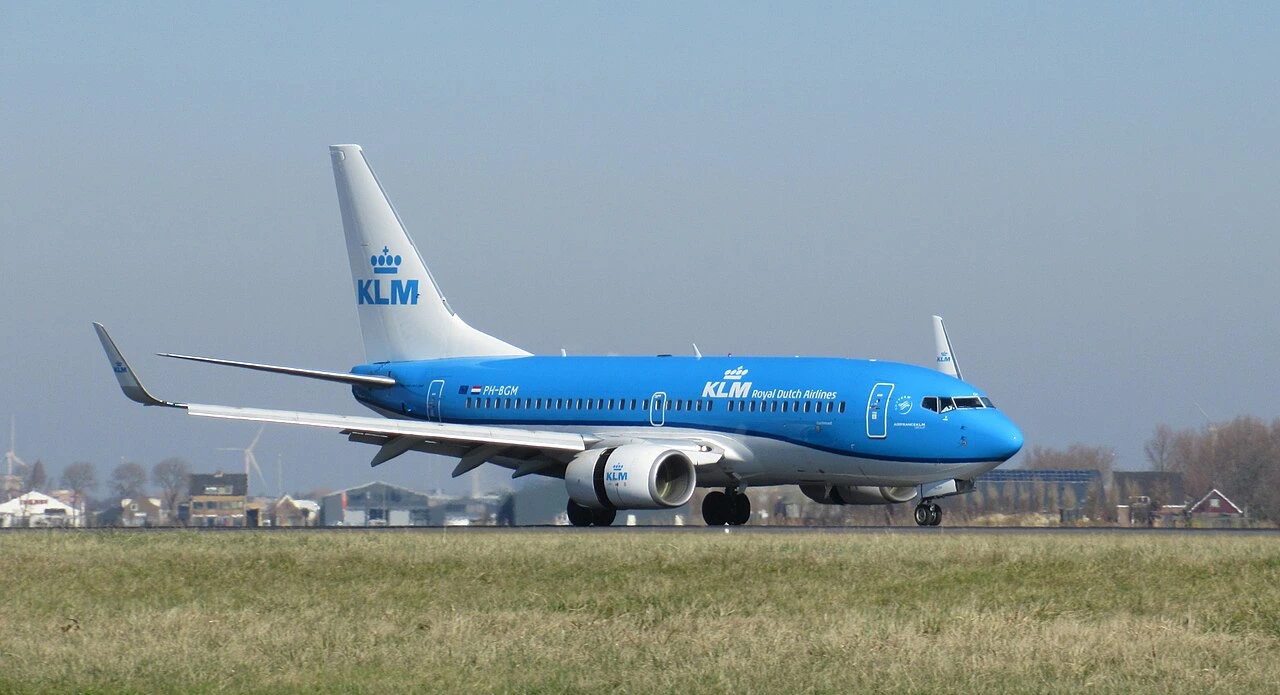
What Happened on Flight KL1164
The sequence of events began shortly after the flight entered cruise. The aircraft experienced two loud explosions, followed by the smell of burnt electronics and visible smoke entering the cabin. In the cockpit, the crew received a low oil pressure warning on the right engine. In accordance with standard procedures, the captain elected to shut down the affected engine and proceed on the remaining left engine.
Passenger Arild von Feste, who was on board with his wife Charlotte, provided a first-hand account to Norwegian newspaper Dagbladet. He described the cabin crew as “stressed, but professional” while they worked to stabilise the aircraft. Von Feste stated that he understood the engine failure had caused substantial internal damage, and that passengers were given little information in the immediate minutes after the bangs were heard, leading some to contact their families.
After approximately one hour, the captain announced that the right engine had lost oil pressure, causing significant damage, and that the plane would land at the nearest available airport — Billund. The aircraft landed safely in Billund without further incident, and KLM provided passengers with refreshments in the staff canteen. Von Feste and his wife later accepted an alternative KLM flight to Amsterdam, scheduled to depart Billund at 19:00.
KLM’s Confirmation and Passenger Aftercare
KLM Royal Dutch Airlines confirmed the engine shutdown to Norwegian media. KLM press spokesperson Anoesjka Aspeslagh confirmed to newspaper BA that the captain made the decision to shut down the engine after detecting a drop in oil pressure. The airline did not immediately release a detailed technical explanation of the root cause of the failure.
On the ground at Billund Airport, KLM offered passengers professional psychological support. Not all passengers accepted the offer. All passengers landed safely, and the airline provided refreshments while onward arrangements were made. KLM arranged alternative routing for affected travellers to complete their journeys to Amsterdam.
No injuries were reported among those on board, and no emergency services intervention was required on the ground at Billund. The aircraft, PH-BXY, remained on the ground at Billund pending a technical inspection.
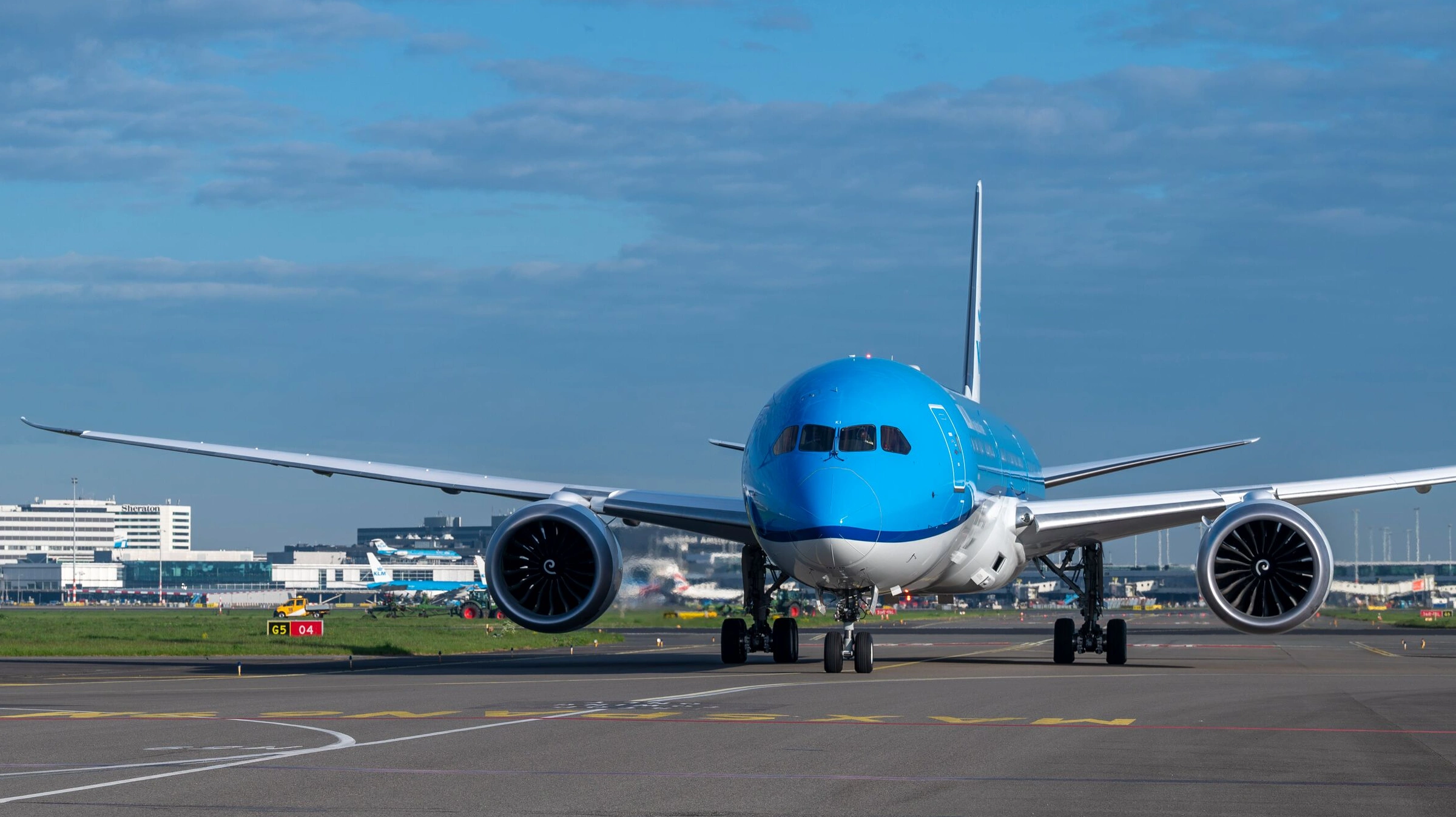
Boeing 737-800 PH-BXY and Its Engine Type
The aircraft involved in the incident is a Boeing 737-800, variant designation 737-8K2, registered PH-BXY. This is an aircraft type that Netherlands’ king has also flown. Flight tracker data shows PH-BXY was approximately 16 years old at the time of the incident. The Boeing 737-800 is a narrow-body, twin-engine jet used primarily on short- to medium-haul routes throughout KLM’s European network.
The 737-800 is powered by two CFM56-7 turbofan engines, which are produced by CFM International — a joint venture between GE Aerospace of the United States and Safran Aircraft Engines of France. The CFM56-7 is one of the most widely deployed powerplants in commercial aviation and is generally regarded as highly reliable. The engine is a dual-rotor, axial-flow turbofan, with the N1 rotor consisting of a fan, low-pressure compressor, and low-pressure turbine, and the N2 rotor consisting of a high-pressure compressor and high-pressure turbine.
KLM operates 31 Boeing 737-800s, with an average fleet age of 18.6 years. PH-BXY, at roughly 16 years old, sits below that average age but is nonetheless a maturing airframe by modern standards. The broad age profile of KLM’s 737 fleet is relevant context: the airline is in the process of transitioning its narrow-body operations to Airbus A320neo-family aircraft, but that transition is gradual and the 737-800s continue to carry the majority of KLM’s European short-haul flying.

How the Boeing 737 Handles a Single-Engine Event
A Boeing 737-800 is certified to fly and land on a single engine. Pilots train extensively for engine-out scenarios as part of their initial type rating and recurrent simulator training. When a low oil pressure warning triggers, standard procedure is to cross-check the indication, attempt to identify any confirming secondary symptoms — such as vibration, abnormal exhaust gas temperature, or N1/N2 decay — and, if the failure is confirmed, to action the engine shutdown checklist and declare an emergency or PAN-PAN to air traffic control.
The crew on KL1164 followed this procedure: they received a low oil pressure warning, confirmed the engine issue, shut the right engine down, and diverted to the nearest suitable airport. The successful outcome — a safe landing with no injuries — reflects both the soundness of that procedure and the training level of the crew.
The smell of burnt electronics and visible smoke in the cabin is consistent with an oil-related engine event on the CFM56. When oil leaks onto hot engine components, it can produce fumes that enter the aircraft’s air conditioning system through bleed air offtakes. This is a recognised phenomenon in turbofan operations, and crews are trained to manage it through passenger communication and ventilation procedures.


.jpg)