Japan Airlines (JL) is facing fresh regulatory and reputational pressure after two cabin attendants concealed alcohol consumption before a domestic flight on May 23, 2026, causing a 40-minute delay and prompting Japan’s Ministry of Land, Infrastructure, Transport and Tourism (MLIT) to formally reprimand the airline. The flight, JL252 from Hiroshima Airport (HIJ) to Tokyo Haneda Airport (HND), was scheduled to depart at 7:40 a.m. but did not push back until 8:22 a.m., affecting 186 passengers, South China Morning Post reported. The delay was caused by a mandatory pre-flight breath test that detected alcohol in the chief cabin attendant’s system, forcing the airline to source a replacement before the aircraft could depart.
The incident escalated beyond a routine disciplinary matter when MLIT found that both crew members had attempted to hide their violation during an internal investigation. According to Japan Today, JAL issued a public statement on June 13, announcing a 30 percent pay cut for two months for President Mitsuko Tottori and punitive measures for all board members, saying the airline “takes this matter extremely seriously and deeply apologises“. The ministry has ordered JAL to submit a concrete package of preventive measures by July 17, 2026.
What Happened on Flight JL252
The incident began the evening before the flight. The chief cabin attendant, a woman in her 50s, consumed alcohol at a hotel lounge in Hiroshima beyond the time permitted under company regulations, which prohibit drinking within 12 hours of duty. A second cabin attendant, a woman in her 30s, accompanied her and also consumed alcohol in violation of the same rules.
The concealment was deliberate. The chief cabin attendant conducted a self-test at the hotel, which returned a positive result. She did not disclose this and proceeded to the airport, where a mandatory pre-flight breath test again detected alcohol, forcing JAL to remove her from duty. The flight, operated by a Boeing 767, departed only after a replacement cabin attendant was arranged.
The second crew member in her 30s had already been removed from duty that day for unrelated reasons. A subsequent internal investigation uncovered her alcohol violation as well. MLIT determined that both women tried to cover up the incident, and characterised the case as evidence that “awareness of safety issues has yet to be thoroughly ensured”.
MLIT’s Formal Reprimand and Deadline
Japan’s transport ministry moved formally on June 13, 2026, issuing a reprimand to JAL and setting a firm compliance deadline. The ministry’s position was unambiguous: concealment compounded the original violation and demonstrated a systemic failure in safety culture, not merely an individual lapse.
MLIT urged JAL to compile preventive measures by July 17, 2026. The July 17 deadline is significant. It means the airline has approximately five weeks to design, document, and submit a credible operational response to regulators — a tight timeframe that signals the ministry’s impatience with what it views as recurring misconduct.
This is not the first time JAL has been issued regulatory guidance over alcohol violations. In December 2023, the carrier received a formal business improvement order from MLIT urging stricter controls on staff conduct after repeated misconduct cases. The June 2026 reprimand follows multiple subsequent incidents and executive pay cuts that critics argue have not produced lasting change.
JAL’s Responded with Dismissal, Suspension, and Executive Pay Cuts
JAL’s internal response was swift and graduated. The chief cabin attendant in her 50s was fired by JAL. The second attendant in her 30s was suspended. The decision to dismiss the senior crew member, rather than suspend her, reflects the added severity of the concealment finding.
At the executive level, JAL announced punitive measures for the entire board. President Tottori, who became the first woman to lead Japan Airlines when she was appointed in April 2024 and who previously began her career as a flight attendant, faces a 30 percent salary reduction for two months. This is not the first time Tottori has accepted a pay cut over an alcohol-related incident at JAL. The same mechanism — executive pay cuts as a public accountability measure — has been used repeatedly at JAL over the past several years.
The New Cabin Crew Alcohol Policy
In the weeks following the May 23 incident and ahead of the formal reprimand, JAL moved to overhaul its cabin crew alcohol rules. The previous policy required cabin attendants to avoid alcohol within 12 hours of duty. That threshold was not sufficient to prevent the violation: the chief attendant drank in the evening and still tested positive the following morning.
JAL has now banned all cabin crew — a workforce of more than 6,000 flight attendants — from consuming alcohol during any work-related layover before a return flight, on both domestic and international routes. The policy took effect immediately after the incident became public at the end of May. Industry observers view the move as one of the strictest alcohol-related policies currently in place at any major commercial airline.
The practical scope of the ban is significant. Cabin crew on international routes often spend multiple nights at destination hotels before operating return sectors. Under the previous rules, moderate drinking outside the 12-hour window was permitted. That flexibility has been eliminated entirely.
A Pattern of Alcohol Incidents at JAL
Series of alcohol violations at Japan Airlines that stretches back nearly a decade, involving both pilots and cabin crew, on domestic and international routes.
- 2018 — London Heathrow: A JAL co-pilot was arrested at Heathrow Airport shortly before a London-to-Tokyo flight after a crew bus driver smelled alcohol on him. Tests found his blood alcohol level at 189 milligrams per 100 millilitres — nearly 10 times the UK legal limit of 20 milligrams. He pleaded guilty and was sentenced to 10 months in prison. JAL later acknowledged that its in-house breathalyser had been circumvented.
- 2018 — Systemic pattern: JAL pilots failed the airline’s own breath-based sobriety tests 19 times in 15 months during 2017–2018, with 12 flights delayed as a result. Japan’s aviation safety analyst Geoff Tudor described it at the time as a severe dent in the airline’s reputation.
- April 2024 — Dallas: A JAL captain was warned by US police for disruptive behaviour while intoxicated at his hotel during a layover in Dallas. The flight from Dallas to Tokyo was cancelled as a result.
- December 2024 — Melbourne: Two JAL captains scheduled to operate flight JL774 from Melbourne Airport (MEL) to Tokyo Narita International Airport (NRT) failed pre-flight alcohol tests on December 1, 2024, delaying the departure by more than three hours. Both conducted self-administered breath tests at their hotel around 5 a.m., which showed alcohol above permitted levels.
- August 2025 — Honolulu: A JAL captain admitted to heavy drinking before duty at Honolulu International Airport (HNL), causing delays of up to 18 hours and disrupting around 630 passengers across multiple flights. JAL dismissed the captain and cut pay for 37 executives. MLIT issued a second formal reprimand within less than a year.
The May 2026 cabin crew case adds a new dimension: it is the first of the recent incidents to involve cabin attendants rather than flight deck crew, and the first in which falsification of an internal investigation has been formally cited by the ministry.
Why the Concealment Matters
Aviation safety frameworks rely on honest reporting. Self-tests and pre-flight checks are only effective if crew members who fail them disclose the result and stand down from duty. In this case, the chief cabin attendant conducted a self-test, received a positive result, and proceeded to the airport anyway. The second attendant also failed to report her own consumption.
JAL’s January 2025 submission to MLIT had already included a pledge to draw up a list of employees identified as at risk due to alcohol consumption and to enhance monitoring of staff behaviour both in and outside of duty periods. The May 2026 incident demonstrates that those commitments did not prevent a new concealment-based violation. MLIT’s language in the June 13 reprimand — that safety awareness has “yet to be thoroughly ensured” — reflects its view that structural change has not kept pace with promises.
The pattern also raises questions about whether financial penalties on executives and high-profile policy announcements are sufficient deterrents without deeper cultural change inside the airline. Japan Today analysis of the recurring incidents noted that Japanese government regulators have reprimanded JAL at least twice in less than a year, but that both corporate and regulatory responses followed a familiar cycle: apologies, meetings, and pledges that were not followed by lasting behavioural change.
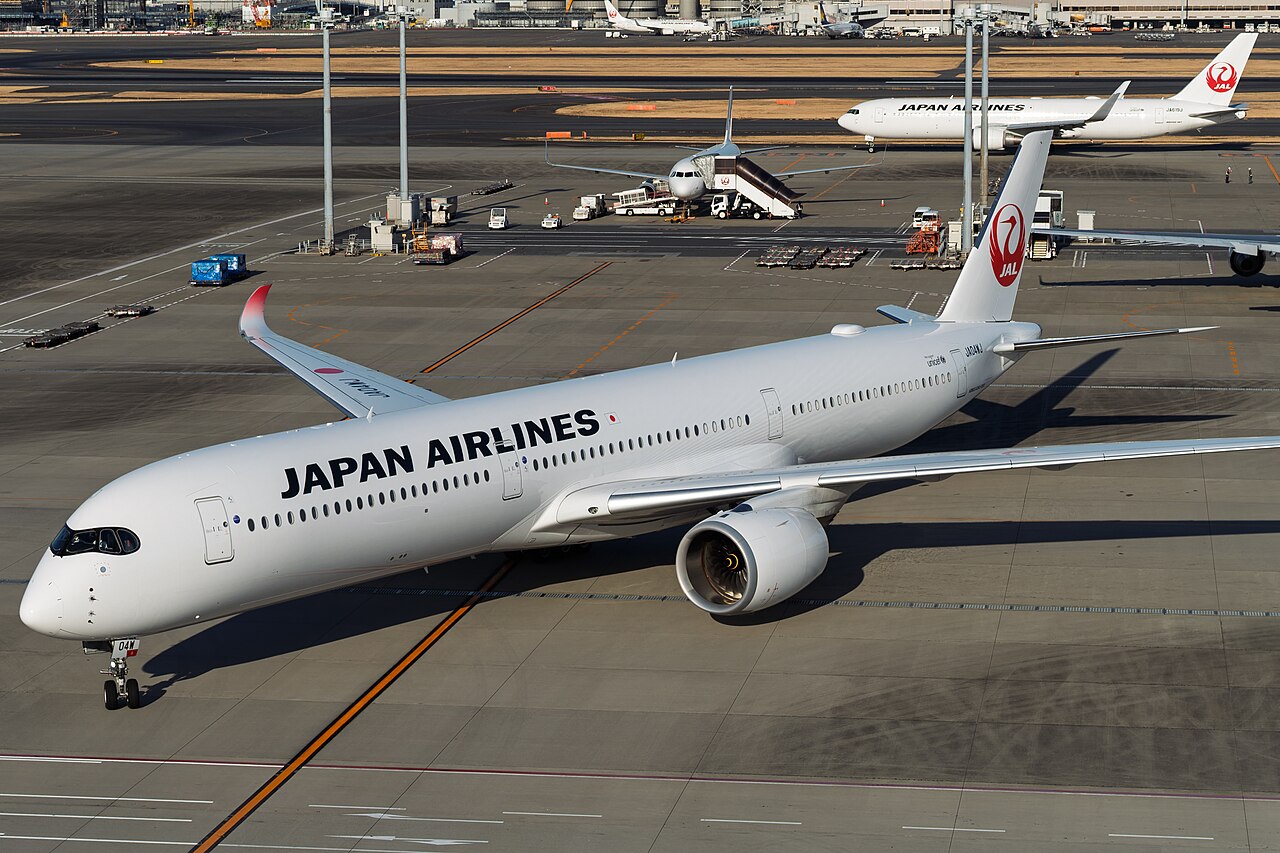
Japan’s Standards Amidst Aviation Alcohol Rules
Japan’s aviation alcohol standards are among the strictest in the world for operational compliance, though the 2018 London incident revealed that domestic enforcement was inconsistent before more advanced breathalysers were introduced. JAL’s internal 12-hour rule for cabin crew was already tighter than many comparable international carriers. The new total layover ban goes beyond that.
For pilots, Japan’s limit is 0.1 mg/L in breath — significantly stricter than the driver limit in many countries. Prior to 2018, Japan did not mandate alcohol consumption limits for its pilots, with airlines relying on internal rules. The arrests and regulatory pressure of that period drove the government to tighten its framework. The June 2026 incident suggests that similar pressure may now produce additional regulatory action covering cabin crew.


_JA743J_LHR_(12672352563).jpg)


