Pacific Airways (CX) is actively planning additional aircraft orders spanning widebody, narrowbody, and freighter categories, according to statements made by Group Chief Executive Ronald Lam Siu-por on Sunday, 8 June 2026. Lam made the disclosures to reporters on the sidelines of the International Air Transport Association (IATA) Annual General Meeting in Rio de Janeiro, Brazil, characterising the coming decade as a pivotal window for the Group’s commercial expansion, The Standard reported.
The disclosures come at a moment of strategic complexity for the carrier. Cathay already holds orders for more than 100 new-generation aircraft, encompassing long-delayed Boeing 777-9 widebodies, Airbus A330-900 regional twins, Airbus A350F freighters, and Airbus A320neo family narrowbodies destined for its low-cost subsidiary HK Express. Yet, Lam confirmed the Group is prepared to augment that pipeline through a combination of fresh orders and the exercise of contractual purchase options.
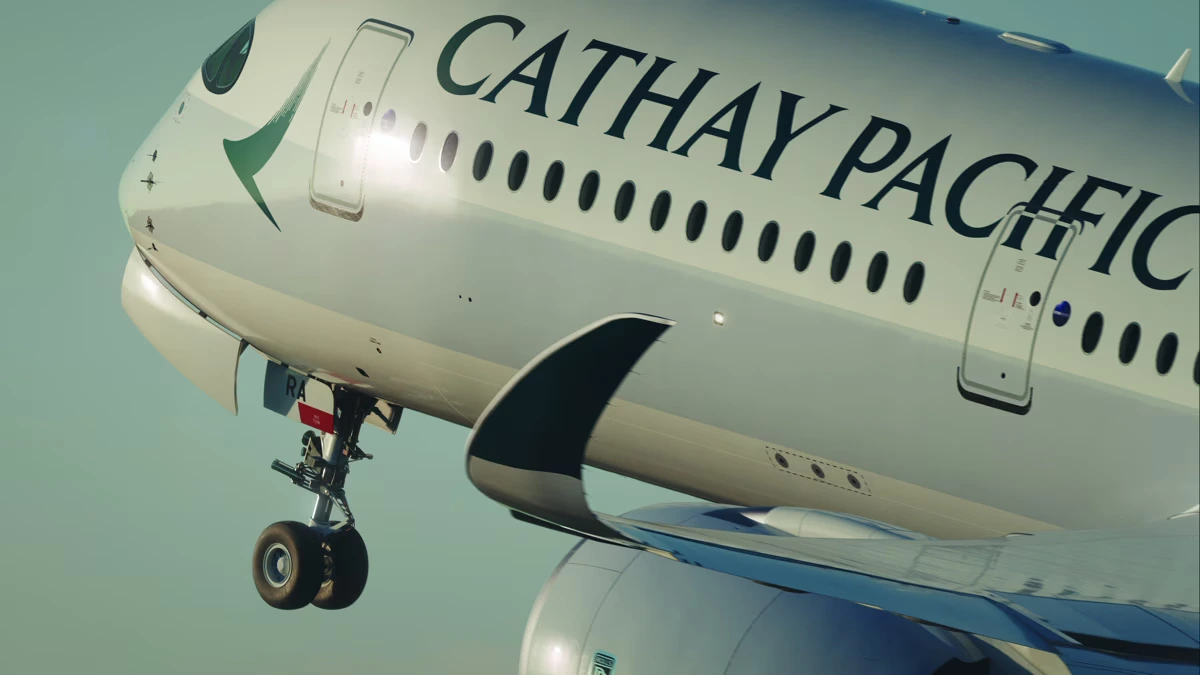
Lam’s “Golden Decade” Vision Include a Third Runway
Cathay Pacific’s appetite for further aircraft commitments is inseparable from the operational possibilities unlocked by Hong Kong’s three-runway system. The HK$142 billion (approximately US$18 billion) infrastructure project was inaugurated on 28 November 2024 and is projected to raise the airport’s annual capacity to 120 million passengers and 10 million tonnes of cargo by 2035. Cathay currently accounts for more than 50 percent of all movements at HKG, positioning it as the primary beneficiary of those additional slots.
“The next 10 years is a golden opportunity for Cathay Group’s expansion,” Lam told reporters in Rio de Janeiro, explicitly citing the acceleration of flights enabled by the third runway as the foundational rationale for further fleet investment. His remarks align closely with the Group’s publicly stated HK$100 billion-plus capital commitment, spread across fleet renewal, new cabin products, airport lounges, and digital infrastructure over a seven-year horizon. Aviation Week’s coverage of Lam at Routes World 2025 revealed that Cathay is now evaluating a “substantial” long-haul and freighter fleet renewal campaign constituting the second phase of its 2026–2035 strategic plan.
“There will be more orders for sure,” Lam stated in Rio de Janeiro, adding that fresh orders as well as the exercise of options on existing contracts remain under active consideration. We had previously documented how Cathay’s dual-brand strategy — combining the full-service Cathay Pacific network with HK Express’s expanding low-cost operations — has driven the Group to serve over 100 passenger destinations globally.
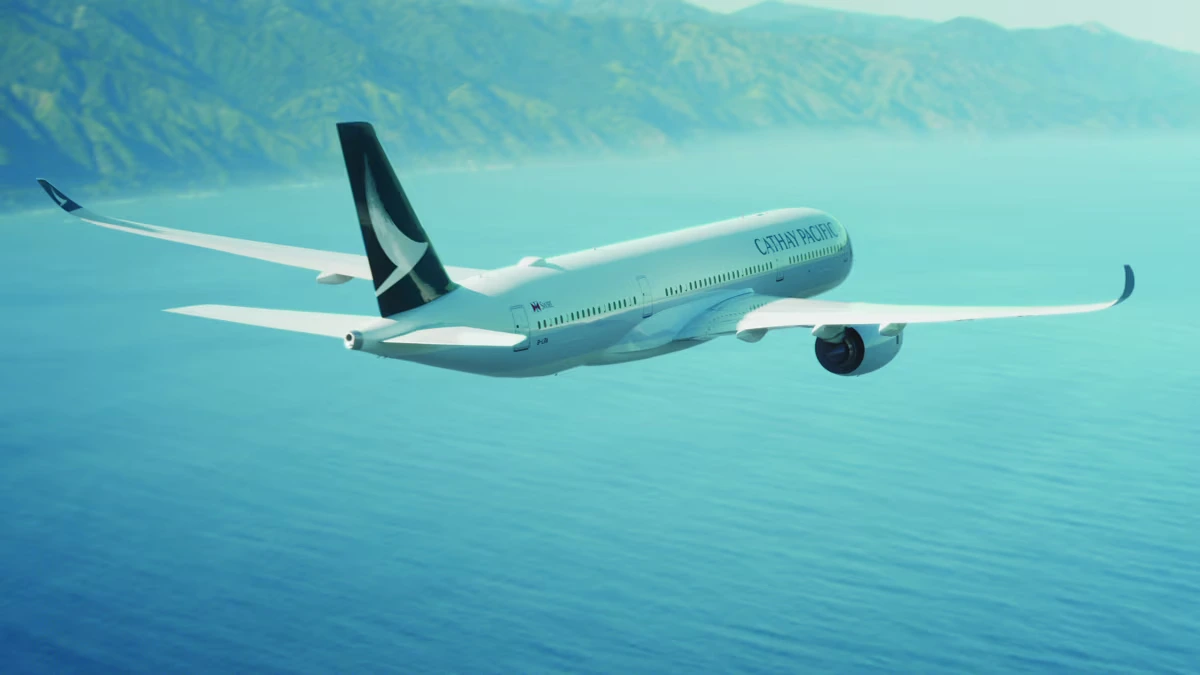
The Existing Order Book Include a Mix of Boeing and Airbus
Speaking at the IATA AGM, Lam confirmed to Aviation Week that the Boeing 777-9 delivery schedule is now planned for the end of 2027, subject to the ongoing certification process. “We haven’t got a firm schedule yet, but we are in a very close conversation with Boeing,” he said. The Boeing 777-9 will carry a range of 7,295 nautical miles (13,510 km) and is designed to reduce fuel consumption by 20 percent and noise by 40 percent compared to the legacy aircraft it replaces, making it central to both Cathay’s ultra-long-haul ambitions and its decarbonisation commitments.
In August 2025, Cathay exercised options for 14 additional 777-9s, expanding its total commitment from 21 to 35 aircraft, at an estimated list-price value of US$8.1 billion. At the time, Lam described the order as enabling the airline to “continue our rich history of connecting the world with our Hong Kong hub.”
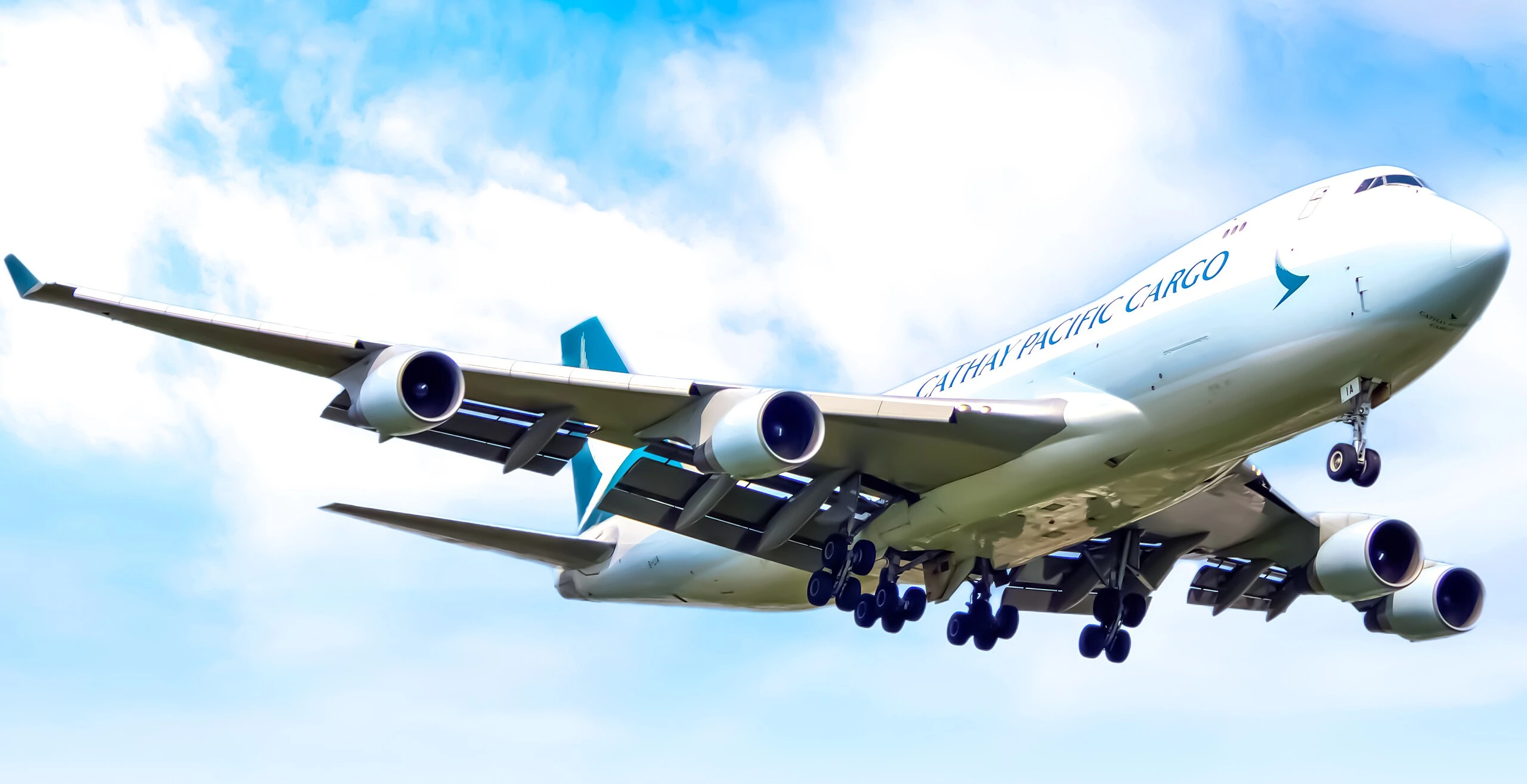
On the Airbus side, Cathay ordered six A350F freighters to replace its ageing fleet of six Boeing 747-400ERFs, with deliveries expected from 2027. The 30 Airbus A330-900s, ordered in August 2024, will replace the carrier’s older A330-300s and are scheduled to enter service from 2028. In 2026, Cathay Pacific is scheduled to receive three Airbus A320neo-family narrowbodies, while HK Express will receive two A320neos and three A321neos, reflecting the ongoing narrowbody build-up for both carriers within the Group.
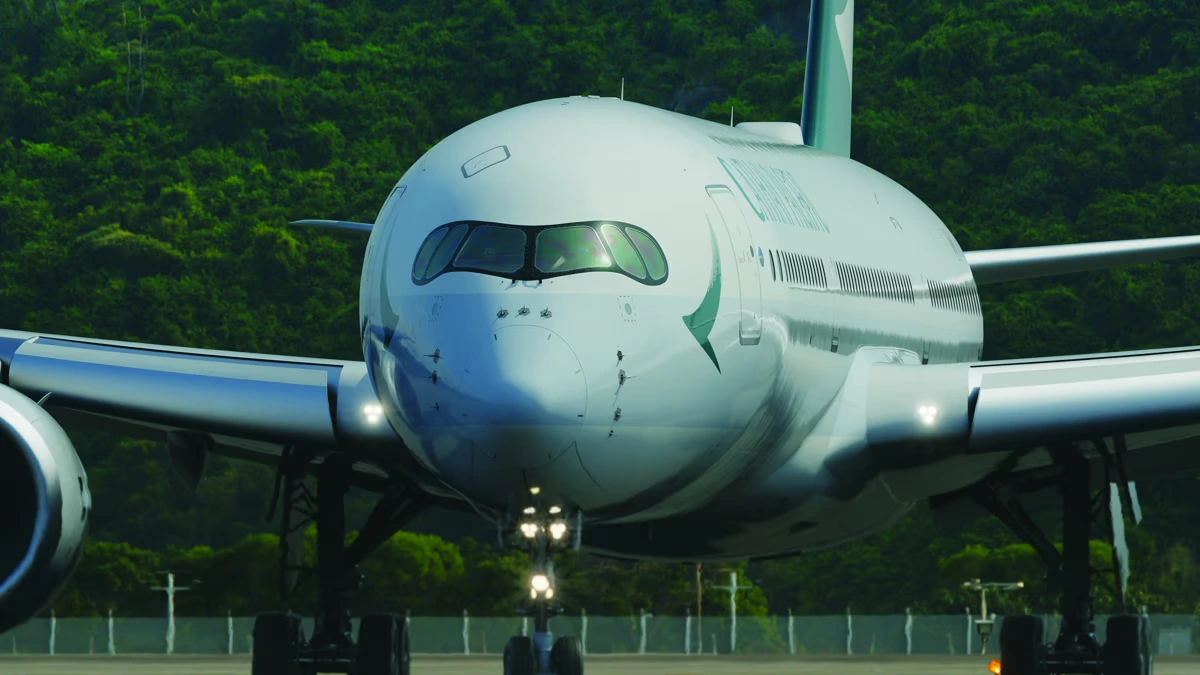
One of the more definitive pronouncements from Lam’s briefing in Rio de Janeiro concerned Cathay’s low-cost subsidiary. HK Express will maintain a strictly Airbus-only fleet, with Lam explicitly ruling out the acquisition of short-haul Boeing aircraft for the carrier.
What Cathay’s Additional Orders Could Look Like
While Lam declined to specify the exact types or quantities of aircraft under evaluation, the contours of Cathay’s likely procurement trajectory have been visible for some time. A Bloomberg-sourced report from late 2024 indicated that the airline’s Chief Operations Officer Alex McGowan had already described the forthcoming widebody procurement as the “final component” in a series of sequential acquisitions, following the A330neo, A320neo family, and A350F campaigns. The review was considering both the Boeing 787 Dreamliner family and additional Boeing 777X variants, as well as potential Airbus additions in the form of more A330-900s, A350-900s, or A350-1000s.
Cathay Pacific has not placed a net-new Boeing order since December 2013, when it originally committed to the 777-9 programme. Gulfnews reported in early 2026 that the carrier was poised to break that drought, with new widebody orders under active discussion — a development that would constitute a significant vote of confidence in Boeing’s recovery from its manufacturing and certification difficulties. Lam’s Rio de Janeiro comments appear to confirm that the procurement process is advancing.
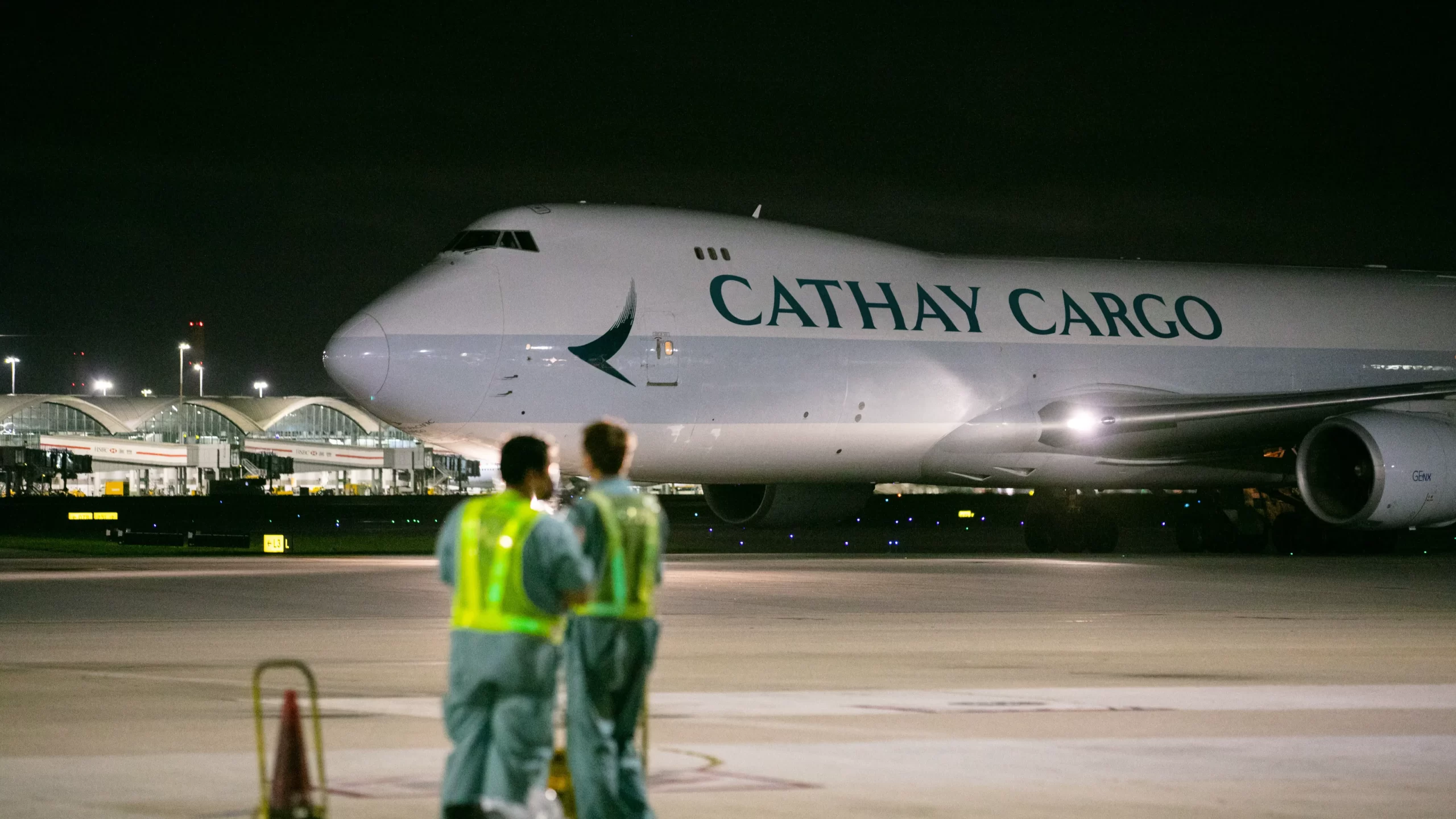
For its freighter fleet, Cathay’s existing order for six Airbus A350Fs, detailed in our coverage of the A350F programme, will begin retiring the carrier’s six legacy Boeing 747-400ERFs. But with 14 Boeing 747-8F freighters still active in the Cathay Cargo fleet, the scope for further freighter acquisitions — whether additional A350Fs or an eventual Boeing 777-8F order — remains commercially substantial.
_-_Cathay_Pacific_Cargo_Airlines.jpg)