On 4 June 2026, Emirates (EK), the carrier that announced that it had recycled almost 90,000 kg of plastic from in-flight dining, announced the promotion of Hanan Mohammed Jawad and Bakhita Al Mheiri to the rank of captain, making them the first Emirati women to command an aircraft in the airline’s four-decade history. Both pilots, based at Dubai International Airport (DXB), now operate the carrier’s Boeing 777 fleet after advancing through the Emirates Group’s National Cadet Pilot Programme (NCPP), a fully funded initiative launched in 1993. The promotions mark what the airline describes as a “pivotal step forward in its commitment to empowering Emirati women in aviation.”
The announcement carries weight beyond a single airline milestone. It arrives at a time when women constitute fewer than five percent of pilots globally, according to data compiled by the International Civil Aviation Organization (ICAO), and when the UAE aviation sector simultaneously employs over 27,000 women — representing 42 percent of its total aviation workforce. That these two Emirati women now hold command authority over one of the world’s most capable long-haul widebodies signals a structural shift, not simply a symbolic gesture.
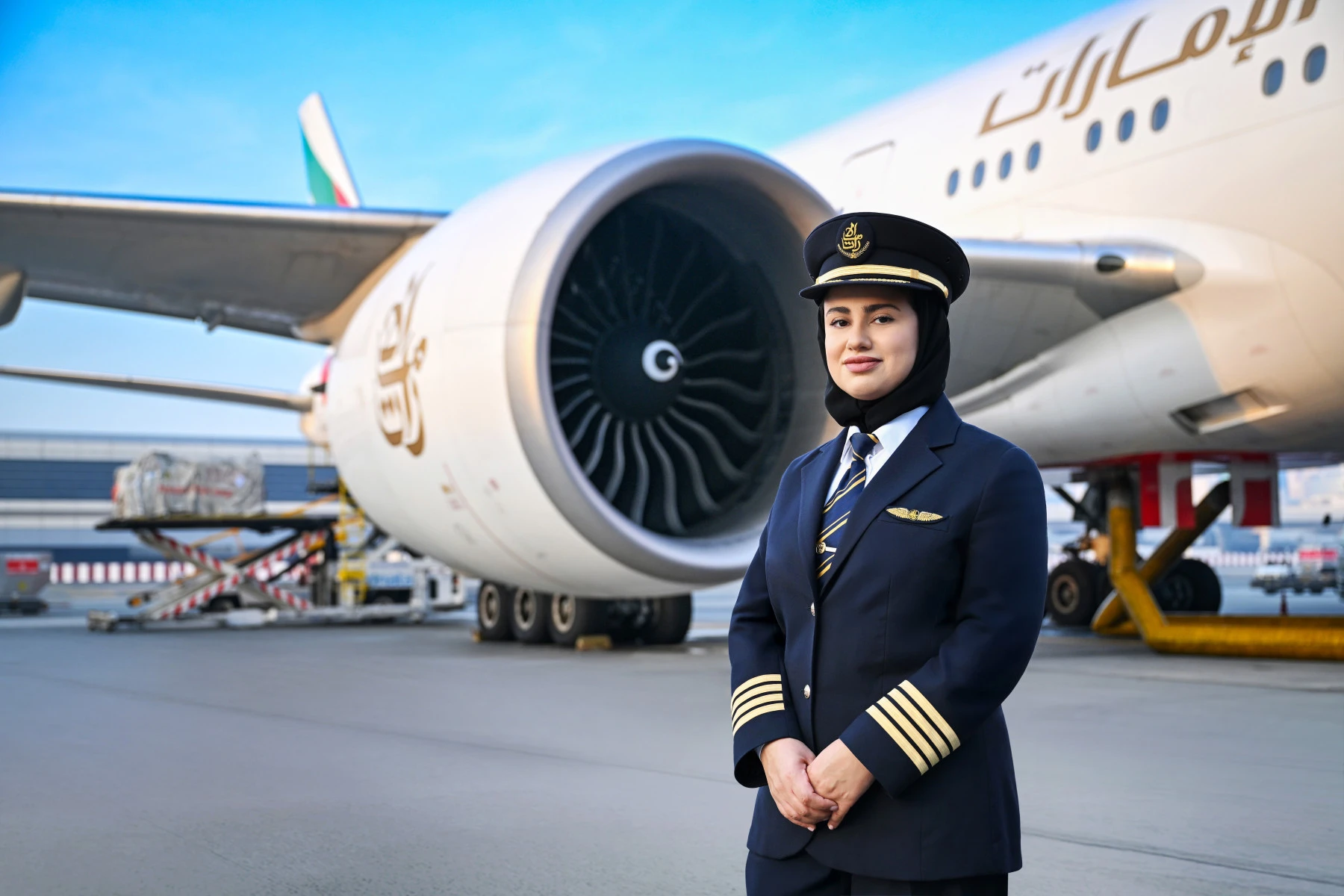
Hanan Mohammed Jawad: Over 9,000 Hours and a Childhood Dream Fulfilled
Hanan Mohammed Jawad joined Emirates in 2008 through the National Cadet Pilot Programme, driven by ambition, passion, and a lifelong dream of taking to the skies. With sustained mentorship from the airline’s fleet management, she steadily progressed through junior ranks, accumulating flight time and building command-readiness across years of line operations.
Hanan has logged 9,253 flying hours over the course of her career — a figure that underscores the rigour of a path that spans nearly two decades. The origin of her ambition is disarmingly specific: at the age of 14, she watched the UAE’s first female pilot appear on television and was transfixed by the pilot’s bearing.
In a statement published in the Emirates press release, Hanan said:
“When I was 14, I saw the UAE’s first female pilot on TV and was struck by her confidence and presence. From that point on, all I wanted was to become a pilot.”
She placed her promotion in deliberate context, framing the fourth stripe not as a destination but as a departure point:
“Receiving my fourth stripe is a proud milestone, but I don’t see it as the destination. This is just the beginning — I don’t believe the sky is the limit. The path to command is built over time, and my years as a First Officer prepared me for this moment,”
Hanan also spoke about the personal discipline that underpins her professional life.
“You change as you grow, and that’s a strength. When I was younger, I loved drawing and reading. Today, I challenge myself in new ways. I’ve recently started skiing and I’m still a beginner — I enjoy being in that learning space. Balance matters to me now. I’ve moved from intense gym training to practices that build focus and calm — yoga, aerial yoga, Pilates, and reformer. They support the clarity, discipline, and presence my role demands,”
…she reflected.
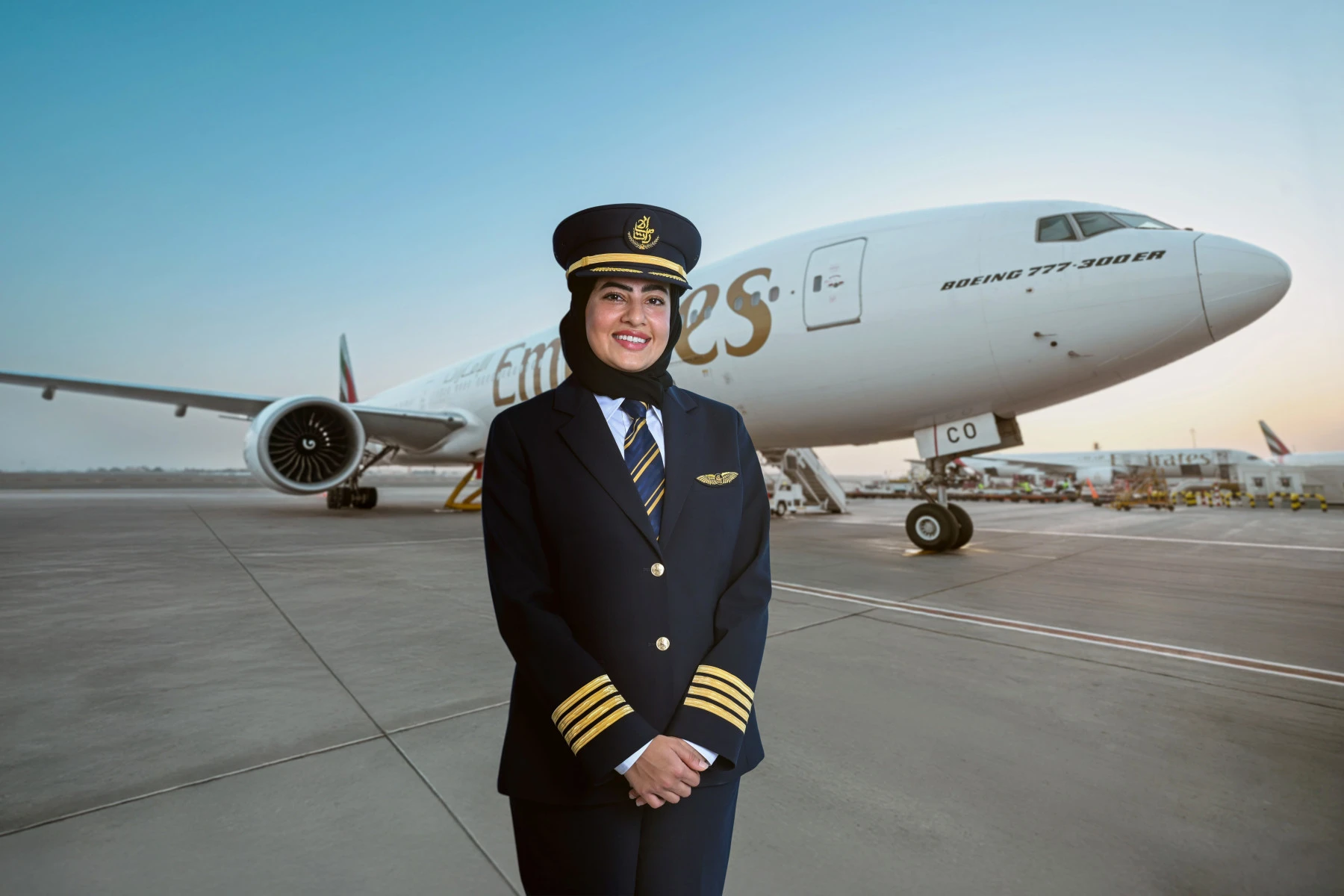
Bakhita Al Mheiri: A Decade of Milestones Culminating in Command
Bakhita Al Mheiri entered the Emirates National Cadet Pilot Programme in 2011, inspired by successful Emirati female pilots who had already begun carving paths in the industry. Over the following decade and a half, she built a record within the airline’s flight operations division, advancing from cadet to First Officer to — in 2026 — captain.
Her path reflects a combination of technical advancement and the institutional support that the NCPP structures into its multi-year curriculum. Bakhita progressed steadily from her cadet entry through successive milestones, arriving at the fourth stripe in the same year as Hanan — making their dual promotion a defining moment rather than a solitary one.
Bakhita attributed much of her development to the mentorship she received from training captains and senior leaders:
“My journey at Emirates has been deeply influenced by the mentorship and guidance I received from exceptional training captains and leaders throughout my flying and command journey. Their experience, professionalism, and willingness to share knowledge not only strengthened my technical and leadership skills but also shaped me personally by teaching me the value of responsibility, discipline, and continuous learning,”
She framed her captaincy as a responsibility to pass that investment forward:
“One of the most meaningful lessons I gained throughout this journey was the importance of passing knowledge and experience forward. With the opportunity and responsibility I have been given as a captain, I hope to carry forward the same values and mentorship that were invested in me, and to support and guide the younger generations beginning their own flying journey, so they too can continue contributing to the future and success of the UAE,”.
Emirates’ Institutional Voice Behind the Milestone
Emirates’ Divisional Senior Vice President of Flight Operations, Captain Hassan Alhammadi, provided the senior institutional commentary accompanying the announcement. In a statement published by the airline, he said:
“At Emirates, we have always committed to developing our UAE Nationals as part of our professional workforce. The cadet pilot programme remains vital in providing a path to young men and women to pursue professions as commercial pilots at Emirates, supporting our future pilot requirements.”
He added:
“We are immensely proud of Hanan and Bakhita for becoming Emirates’ first Emirati female captains — a well-deserved achievement that reflects years of dedication, professionalism, and hard work, and underscores the airline’s ability to nurture Emirati talent from entry level through to the highest leadership roles.”
Captain Alhammadi is also the Emirates executive quoted in our report covering the airline’s integration of IATA’s Turbulence Aware platform, where he emphasised the airline’s commitment to operational safety and the adoption of advanced flight technologies — the same operational culture that shaped the two new captains throughout their careers.
Both Hanan and Bakhita issued a joint message to aspiring female pilots:
“Our leadership has long recognised women as essential partners in shaping our nation’s future, and Emirates is creating the environment and opportunities for women to thrive, and we will continue to build on this for future generations,”

Emirates Pilots’ Message to the Next Generation
Both captains used their promotions as a platform to address those who might follow. Their joint statement carries the weight of institutional backing and personal experience in equal measure:
“Our leadership has long recognised women as essential partners in shaping our nation’s future, and Emirates is creating the environment and opportunities for women to thrive, and we will continue to build on this for future generations.”
The Dubai Media Office marked the occasion on 4 June 2026 with a formal post confirming both captains’ new status on the Boeing 777 fleet, amplifying the announcement across official UAE government channels. For young Emirati women considering careers in commercial aviation, the significance of that visibility — captains who look like them, flying widebody jets over six continents — is difficult to overstate.
The NCPP remains open for applications through the Emirates Group Careers portal, and the programme’s track record — from the 52 NCPP graduates at EFTA’s December 2025 ceremony through to the first Emirati female captains in 2026 — makes the most compelling case yet for its efficacy.