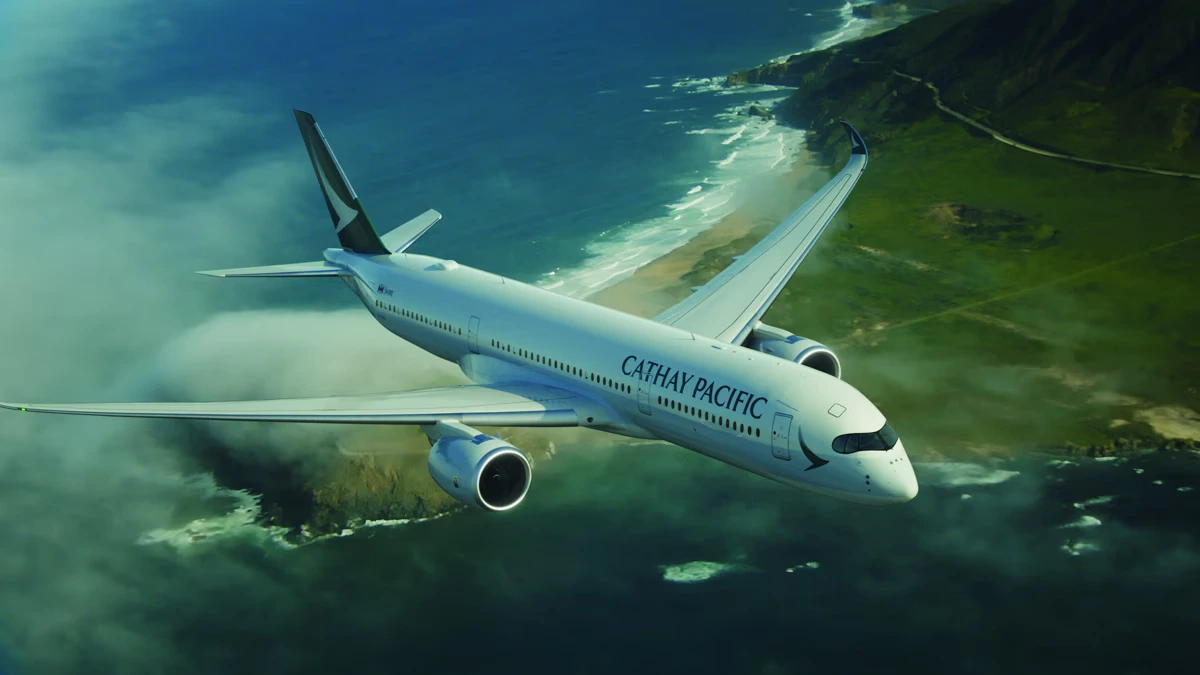
On May 21, 2024, a 73-year-old British passenger named Geoff Kitchen died aboard Singapore Airlines (SQ) flight SQ321 after the Boeing 777-300ER plunged through extreme clear-air turbulence over Myanmar, hurling unrestrained passengers into overhead bins and leaving over a hundred people hospitalized. Only today, Cathay Pacific’s Flight CX156, an A350 suffered turbulence over the skies injuring ten. The reason behind this incident was a phenomenon called turbulence – a word that derives from the Latin turbulentia, meaning agitation or disturbance.
In aviation, turbulence describes the chaotic, irregular movement of air currents that causes an aircraft to experience sudden, unpredictable changes in motion — rolls, pitches, and yaws that passengers feel as anything from a faint vibration underfoot to a violent, weightless lurch. Atmospheric scientists at the University of Reading have now documented that severe clear-air turbulence over the North Atlantic increased by 55 percent between 1979 and 2020 — a finding that places the question of turbulence squarely within the larger, pressing conversation about climate change and the future of commercial flight.

The Physics Behind the Bump that is Turbulence
At its most fundamental level, turbulence is a state of fluid motion — in this case, air — characterized by chaotic fluctuations in velocity and pressure. The Nobel laureate physicist Richard Feynman famously described turbulence as the most important unsolved problem in classical physics. In practical aviation terms, turbulence occurs when an aircraft moves through a region of atmosphere where airflows at different velocities meet, creating eddies and vortices that impose sudden, asymmetric forces on the airframe.
Air behaves as a fluid, and like all fluids it moves in currents. When those currents are laminar i.e. smooth, layered, and orderly, an aircraft passes through them without perceptible disruption. When the currents become turbulent, the pressure differences across the wings and fuselage fluctuate rapidly, transmitting that instability directly to passengers and crew. The severity of the resulting motion depends on the scale of the eddies relative to the size of the aircraft: large, sweeping atmospheric disturbances tend to produce rolling or pitching motions, while smaller, faster eddies generate the rapid, staccato jolts that passengers find most alarming.
The Five Primary Types of Turbulence and How Each Forms
Understanding turbulence demands distinguishing between its distinct types, because each has a different origin, a different set of telltale signs, and a different mitigation strategy.One can characterize it variously in the forms of clear air turbulence, mechanical turbulence, thermal turbulence, mountain turbulence, and wake turbulence. This is a taxonomy broadly consistent with ICAO and FAA classifications.
Clear air turbulence (CAT)
CAT is arguably the most consequential and the least understood. It occurs above 15,000 feet in the complete absence of cloud cover, making it invisible to both the naked eye and conventional weather radar. CAT is generated primarily by wind shear — the rapid change in wind speed or direction over a short vertical distance — concentrated in and around jet streams at cruising altitudes of 23,000 to 39,000 feet. As we previously explained, CAT is typically associated with regions exhibiting strong wind shear, horizontal deformation, and convergence, often with insufficient moisture to form clouds.
The fact that specific cloud patterns — particularly thin cirrus — can sometimes indicate nearby CAT means that pilots and dispatchers must treat these formations as early warning markers. Temperature inversion, or vertical wind shear potential, can also produce it. CAT constitutes 75 percent of all turbulence encounters above cloud-free regions and represents the variant most closely associated with climate-driven increases.
Mechanical turbulence
Mechanical Turbulence arises when horizontal wind flows over physical surface obstructions — buildings, forests, coastlines, and mountain ranges — producing chaotic eddies in the lowest layers of the atmosphere. The rougher the terrain and the stronger the surface winds, the more violent the mechanical disturbance.
At ground level, this manifests during takeoff and approach as gusty, unpredictable conditions; above terrain features, it can persist into the lower portion of the climb-out phase. IVAO’s documentation notes that mechanical turbulence can also produce squalls — sudden, sustained increases in wind speed lasting several minutes — which impose abrupt load changes on aircraft structure.
Thermal (convective) turbulence
Thermal Turbulence results from rising columns of warm air heated by solar radiation at the surface. On a clear summer afternoon, uneven surface heating creates localized updrafts and compensating downdrafts, producing the characteristically bumpy conditions that make mid-day flying at lower altitudes uncomfortable.
Cumulonimbus clouds are the visible, dramatic expression of convective turbulence taken to its extreme: thunderstorms can generate vertical currents powerful enough to impose extreme structural loads on commercial aircraft and cause uncommanded altitude excursions of thousands of feet.
Mountain turbulence
Mountain Turbulence, also called orographic turbulence, occurs when stable air flows over a mountain ridge and generates a series of atmospheric waves on the downwind (lee) side. Mountain waves can extend more than a thousand kilometres downwind and can reach jet stream altitudes, producing violent rotors at their crests.
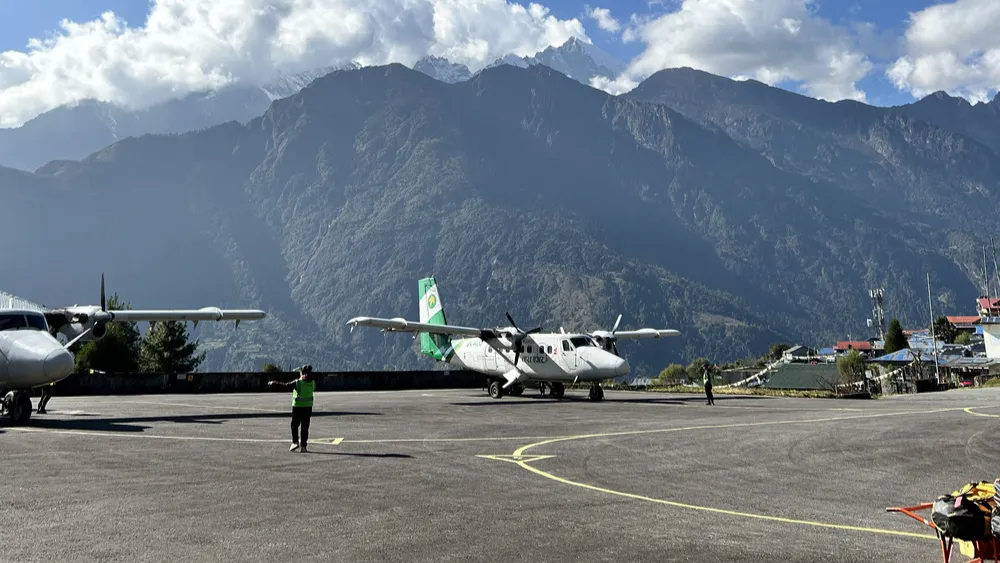
This type of turbulence was observed at Mingbo Airport, a rather esoteric aerodrome that was located in the Lukla region of Nepal, and was considered to be the most dangerous. The catastrophic 1966 crash of BOAC Flight 911 near Mount Fuji (addressed in detail below) remains the defining historical case study in the lethal potential of orographic turbulence.
Wake turbulence
Wake Turbulence is an entirely aircraft-generated phenomenon. As a wing produces lift, it sheds tight, swirling vortices from its tips that trail behind the aircraft in a gradually descending, counter-rotating pair. A following aircraft that flies through these vortices can experience sudden, violent roll inputs.
Wake turbulence is most intense at low speed and high angle of attack. This is why air traffic controllers enforce minimum separation distances between successive aircraft, particularly when a heavy widebody precedes a smaller jet on final approach.
Can Turbulence Crash a Modern Commercial Aircraft?
Modern commercial aircraft are engineered to withstand forces substantially beyond anything they are likely to encounter in normal or even severe operational turbulence. An aircraft can withstand 1.5 times any force imposed on the airframe, Skybrary reports:
The Ultimate Load is the Limit Load multiplied by a prescribed Safety Factor of 1.5. Any part of the structure of an aircraft must be able to support the Ultimate Load and, with certain exceptions, be able to do so without failure for at least 3 seconds. However, when proof of strength is shown by dynamic tests simulating actual load conditions, the 3-second limit does not apply. Static tests conducted to ultimate load must include the ultimate deflections and ultimate deformation induced by the loading
This 150-percent load factor is standardized across the industry and applies not just to the wings but to every structural component.
The engineering basis for this confidence lies in the distinction between Design Limit Load (DLL) and Design Ultimate Load (DUL). As we noted in our piece about how much aircraft wings flex during turbulence, the DLL represents the maximum load a component is expected to encounter in service, while the DUL — set at 150 percent of DLL — represents the absolute maximum it must survive without catastrophic failure, even if permanent deformation occurs.
Wings are tested to destruction to verify that they exceed this threshold. When Boeing conducted its ultimate-load wing bending test on the 787 Dreamliner, the wings flexed upward by approximately 25 feet — nearly 7.6 metres — before the test concluded, with the manufacturer stating the test programme was “more robust than any conducted on a Boeing commercial jetliner.” The Airbus A350XWB, for its part, achieves a flex of approximately 5.2 metres (17 feet) under comparable test conditions.
Wing flex is not a structural weakness; it is an engineered safety feature. Rigid wings would transmit the full force of turbulent air loads directly into the fuselage structure, dramatically increasing the probability of catastrophic failure. Flexible wings, particularly those built from carbon-fibre composite materials — which now constitute approximately 50 percent of the A350XWB and 787 structures — dissipate those loads through controlled bending.
As Captain Lim has noted, the Airbus A330’s wings are designed to withstand 2.5 times the aircraft’s maximum landing weight. This, in theoretical terms, is 467,500 kilograms.
The last known commercial aviation crash definitively caused by turbulence was BOAC Flight 911, which disintegrated in clear air near Mount Fuji, Japan, on March 5, 1966, killing all 113 passengers and 11 crew. The aircraft, a Boeing 707, encountered what the accident investigation described as “abnormally severe turbulence over Gotemba City which imposed a gust load considerably in excess of the design limit” — a catastrophic mountain wave rotor that exceeded what any jet of that era could survive.
The pilots had received pre-flight briefings warning of moderate-to-severe turbulence but chose a southwest heading that brought the aircraft into close proximity with Fuji’s treacherous lee-side rotor zone. In the subsequent four decades, no commercial jet has experienced structural failure from turbulence alone.
The last wing failure in commercial aviation occurred in 1981, when a Fokker F-28 entered a tornado and experienced acceleration loads of plus 6.8 G and minus 3.2 G — forces so extreme they caused the outer wing to separate and the aircraft to invert. Modern radar systems can detect the convective activity that generates tornadoes and severe thunderstorm turbulence, and aircraft operating procedures categorically prohibit intentional penetration of such cells.

Turbulence Can Cause Injuries Inside the Cabin
According to a National Transportation Safety Board (NTSB) report, Turbulence accounted for 37.6 percent of all accidents on larger commercial airlines between 2009 and 2018. Cabin crew are 24 times more likely to sustain injuries than passengers in turbulence events, because they spend considerably more time moving through the cabin unrestrained.
The mechanics of turbulence injuries reveal why the fasten-seatbelt sign is not merely procedural theatre. During Singapore Airlines SQ321 in May 2024, the aircraft experienced vertical acceleration swings from plus 1.35 G to minus 1.5 G within seconds, before rebounding to plus 1.5 G — a whiplash sequence that launched unrestrained passengers into the overhead panels with enormous force. The resulting injuries included spinal cord damage, skull and brain trauma, and fractures.
Over a hundred people required hospital treatment in Bangkok. Singapore Airlines CEO Goh Choon Phong subsequently apologised in a video statement, saying:
“We are deeply saddened by this incident. On behalf of Singapore Airlines, I would like to express my deepest condolences to the family and loved ones of the deceased. We are very sorry for the traumatic experience that everyone on board SQ321 went through.”
In direct consequence of SQ321, Singapore Airlines changed its seatbelt and meal-service policies, mandating that all cabin service — including hot drinks and meal service — be suspended whenever the seatbelt sign is illuminated, and that crew members return to their seats and strap in. The policy revision stopped short of requiring passengers to remain belted throughout the flight.
The Federal Aviation Administration’s data recorded 146 serious turbulence injuries between 2009 and 2021 across US carriers. These numbers, while numerically modest relative to millions of daily passengers, understate global injury rates because reporting frameworks vary by jurisdiction and minor injuries frequently go unrecorded. John Strickland, a general aviation expert, told the BBC:
“It is not for nothing that airlines recommend keeping seat belts loosely fastened throughout a flight, be it long or short.”

Light and Extreme Severity of Turbulence
Not all turbulence is created equal. The aviation industry classifies turbulence on a four-tiered scale that corresponds to the severity of the forces imposed on both the airframe and its occupants:
Light turbulence produces slight altitude or attitude changes. Passengers feel a mild strain against their seatbelts, and unsecured items remain largely undisturbed. It is the most common form and virtually never poses a safety risk.
Moderate turbulence involves more significant altitude and attitude changes but the aircraft remains under full control. Walking through the cabin becomes difficult, passengers experience noticeable seatbelt tension, and loose objects may shift. This grade of turbulence accounts for the majority of in-flight passenger discomfort and is the level at which crew typically suspend service.
Severe turbulence causes abrupt, large altitude or attitude changes with vast fluctuations in indicated airspeed. The aircraft may momentarily lose controlled flight, passengers are thrown forcefully against their seatbelts or into the air if unrestrained, and unsecured objects become airborne. This is the grade associated with the SQ321 incident and with most of the high-profile turbulence events reported in recent years.
Extreme turbulence is defined as a condition in which the aircraft is violently tossed and becomes practically impossible to control. It carries the potential for structural damage. By definition, extreme turbulence is encountered only in the most severe convective or mountain wave environments, and modern route planning and radar systems make deliberate entry into extreme turbulence conditions essentially the result of operational error or unforeseeable atmospheric events.

Five Misconceptions and Myths Related Turbulence
Despite the breadth of publicly available information, a number of persistent myths about turbulence continue to generate unnecessary fear and, in some cases, dangerous complacency.
The first myth holds that turbulence can be fully predicted. It cannot. Clear air turbulence in particular is generated by atmospheric dynamics at a scale far smaller than the grid resolution of current numerical weather prediction models, meaning that even the most sophisticated forecasting tools can only identify regions of elevated probability, not specific encounter zones.
The second myth holds that turbulence can tear an aircraft apart. With the exception of extreme, well-documented circumstances involving mountain wave rotors or entry into tornadoes — events against which modern operational protocols provide robust protection — this is false. As the engineering discussion above makes clear, design load factors, destructive wing testing, and composite construction provide an exceptional safety margin over any turbulence an aircraft is realistically likely to encounter.
The third myth holds that pilots are always warned about approaching turbulence. In the case of convective turbulence associated with visible cloud formations, onboard weather radar provides useful guidance. In the case of CAT, no such warning system exists. Pilot reports — PIREPs — transmitted via air traffic control represent the industry’s primary real-time information mechanism for CAT, but they describe conditions where preceding aircraft have already encountered the turbulence, not necessarily where the next aircraft will.
The fourth myth holds that injuries are common among passengers following standard crew instructions. The data show the opposite. Of the serious turbulence injuries recorded by the FAA between 2009 and 2021, the majority involved individuals who were not wearing seatbelts. The seatbelt is the single most effective turbulence injury-prevention tool available and requires no technological investment whatsoever.
The fifth myth conflates the discomfort of turbulence with structural danger, as we should note that Turbulences are issues of comfort rather than danger. Cabin crew experience exactly the same physical motions as passengers during a turbulence encounter. Their composure is not performative indifference — it reflects professional knowledge that what the aircraft is experiencing is well within the envelope it was designed to survive.
Climate Change and The Rising Frequency of Clear Air Turbulence
The most consequential development in the field of aviation turbulence over the past decade is not an operational or engineering one but a geophysical one: mounting scientific evidence that clear air turbulence is already increasing as a direct consequence of anthropogenic climate change and will continue to do so at an accelerating rate.
The landmark study, published in June 2023 in the peer-reviewed journal Geophysical Research Letters by researchers Mark Prosser and Professor Paul Williams of the University of Reading, analysed four decades of atmospheric reanalysis data and reached unambiguous conclusions. At a typical point over the North Atlantic — one of the world’s busiest flight corridors — the total annual duration of severe turbulence increased by 55 percent, from 17.7 hours in 1979 to 27.4 hours in 2020.
Moderate turbulence over the same corridor increased by 37 percent, and light turbulence by 17 percent. Significant increases were documented over the USA, Europe, the Middle East, and the South Atlantic as well. Professor Williams stated:
“Following a decade of research showing that climate change will increase clear-air turbulence in the future, we now have evidence suggesting that the increase has already begun. We should be investing in improved turbulence forecasting and detection systems, to prevent the rougher air from translating into bumpier flights in the coming decades.”
The causal mechanism is wind shear in the jet streams. Carbon dioxide emissions warm the upper troposphere unevenly, strengthening the temperature gradient between the tropics and the poles and thereby intensifying jet stream wind shear — which has already increased by 15 percent at aircraft cruising altitudes since 1979.
A further increase of between 17 and 29 percent is projected by 2100 under current emissions trajectories. At the May 2025 European Geosciences Union conference in Vienna, Professor Williams warned delegates that along some of the world’s busiest routes, turbulence was projected to “double or treble or quadruple over the next few decades” — with jet stream regions in both hemispheres affected.
A follow-up study published in the Journal of Geophysical Research: Atmospheres in 2024 found that moderate-to-severe CAT had increased by between 60 and 155 percent over East Asia, the Middle East, North Africa, the North Atlantic, and the North Pacific between 1980 and 2021. Mohamed Foudad of the University of Reading, the study’s lead author, stated: “We now have high confidence that climate change is increasing clear air turbulence in some regions.”
The economic dimension of turbulence is also significant. Mark Prosser of the University of Reading stated:
“Airlines will need to start thinking about how they will manage the increased turbulence, as it costs the industry $150 to $500 million annually in the United States alone. Every additional minute spent traveling through turbulence increases wear-and-tear on the aircraft, as well as the risk of injuries to passengers and flight attendants.”

How Airlines Are Responding to Deal with Turbulence
The aviation industry’s technological response to the turbulence problem is accelerating, driven by a combination of scientific urgency and the commercial imperatives that follow high-profile incidents. Emirates (EK) has adopted what it describes as a “diverse, multi-layered strategy” that integrates three distinct real-time turbulence intelligence platforms.
The first is SkyPath, an AI and machine-learning system that aggregates Eddy Dissipation Rate (EDR) measurements — a standardised metric for turbulence intensity — with Automatic Dependent Surveillance-Broadcast (ADS-B) transponder data and accelerometer readings from iPads in the cockpit. This enables detection of turbulence in areas with sparse flight activity or clear-air conditions that conventional tools miss.
The second is Lido mPilot from Lufthansa Systems, a mobile navigation and weather prediction platform that provides real-time cloud and convection data, turbulence and icing forecasts, and high-resolution weather modelling for global routes.
The third is IATA Turbulence Aware, a crowd-sourced industry platform that aggregates report data from participating airlines worldwide.
Captain Hassan Alhammadi, Emirates’ Divisional Senior Vice President of Flight Operations, said these combined tools ensure pilots have “comprehensive, real-time situational awareness,” while also acknowledging that turbulence-free flights remain an unattainable promise:
“Turbulence remains an ongoing challenge that cannot be fully eliminated. However, by partnering with technology leaders and integrating AI-driven solutions, we can significantly reduce the frequency and impact of severe turbulence incidents.”
Separately, over 12,000 Delta Air Lines pilots currently use tablet-based turbulence forecasting tools that allow them to assess the likelihood of CAT development along their flight paths. Boeing has offered similar tools as purchase options on its newer aircraft, and Cathay Pacific (CX) has for years partnered with the Hong Kong Observatory (HKO) to share real-time atmospheric sensor data from its fleet, contributing to both weather forecasting and the IATA Turbulence Aware database.
Laser-based turbulence detection systems — which emit forward-looking beams into clear air to detect velocity variations in the molecules ahead — are under development and may eventually provide pilots with the kind of pre-encounter warning that radar currently provides for convective weather.

What Passengers Can Do During Turbulence
The passenger’s toolkit for turbulence safety is modest but highly effective. No amount of seat selection, aircraft type preference, or pre-flight research removes the fundamental randomness of atmospheric disturbance, but the following practices, drawn from aviation safety data and the recommendations of aeronautical engineers, reduce injury risk to a near-negligible level.
Wearing the seatbelt at all times while seated — even with the seatbelt sign off — is the single most important protective action available, and it interesting to note how the laws have evolved over time to save lives.
Seats near the front of the aircraft and above the wing generally experience less vertical motion than seats at the rear, because the centre of gravity and the structural stiffness of the fuselage produce a more damped response at the wing box than at the tail. This is not a guarantee of comfort but represents a marginal statistical advantage for those susceptible to motion sickness or anxiety.
Passengers travelling on high-risk route segments — defined informally as those crossing jet stream regions, mountainous terrain, or tropical convective zones — can access publicly available turbulence forecast services such as Turbli.com, which aggregates numerical weather prediction output, to assess expected conditions before departure. These forecasts are probabilistic rather than deterministic but can inform seat selection and pre-boarding decisions about seatbelt habituation.

All in All
The 1966 crash of BOAC Flight 911 near Mount Fuji remains the defining historical event in the study of aviation turbulence, and understanding it illuminates why the modern industry operates with such different assumptions about atmospheric threat management. The Boeing 707, registered G-APFE and operating as “Speedbird 911,” had departed Tokyo Haneda Airport on March 5, 1966, passing the still-smouldering wreckage of a Canadian Pacific DC-8 that had crashed the previous day. The crew chose a scenic routing that brought the aircraft into the lee of Mount Fuji, where strong upper-level winds create mountain wave rotors of extraordinary violence.
The investigation concluded that the 707 “suddenly encountered abnormally severe turbulence over Gotemba City which imposed a gust load considerably in excess of the design limit.” The outer right wing and the forward fuselage section separated before the aircraft impacted the ground, leaving no survivors among the 124 on board.
Subsequent analysis found that strong winds blowing over Fuji’s cone created unstable air extending up to 20 kilometres in the mountain’s wake, with wind shear within this zone occasionally severe enough to exceed any aircraft’s structural limits. The crash prompted the aviation industry to abandon low-altitude scenic diversions near volcanic peaks and to invest in pilot reporting systems for turbulence encounters — the precursor to today’s IATA Turbulence Aware platform.