Why Did WestJet Cut These 24 Routes to the US and 14 Routes to the Caribbean?

WestJet Airlines (WS) has eliminated 41 international routes from its network when comparing its January 2025–May 2026 schedule against forward bookings spanning June 2026 to March 2027 — the most consequential single-season network contraction the Calgary-based airline has undertaken in recent years, Simple Flying reported.

According to analysis from aviation data platform OAG cited by Simple Flying, WestJet currently accounts for nearly one-fifth (approximately 19 percent) of all flights in Canada in 2026, with a domestic market share of 22 percent but a considerably thinner slice of long-haul international operations at just 7 percent of Canada’s long-haul flying.
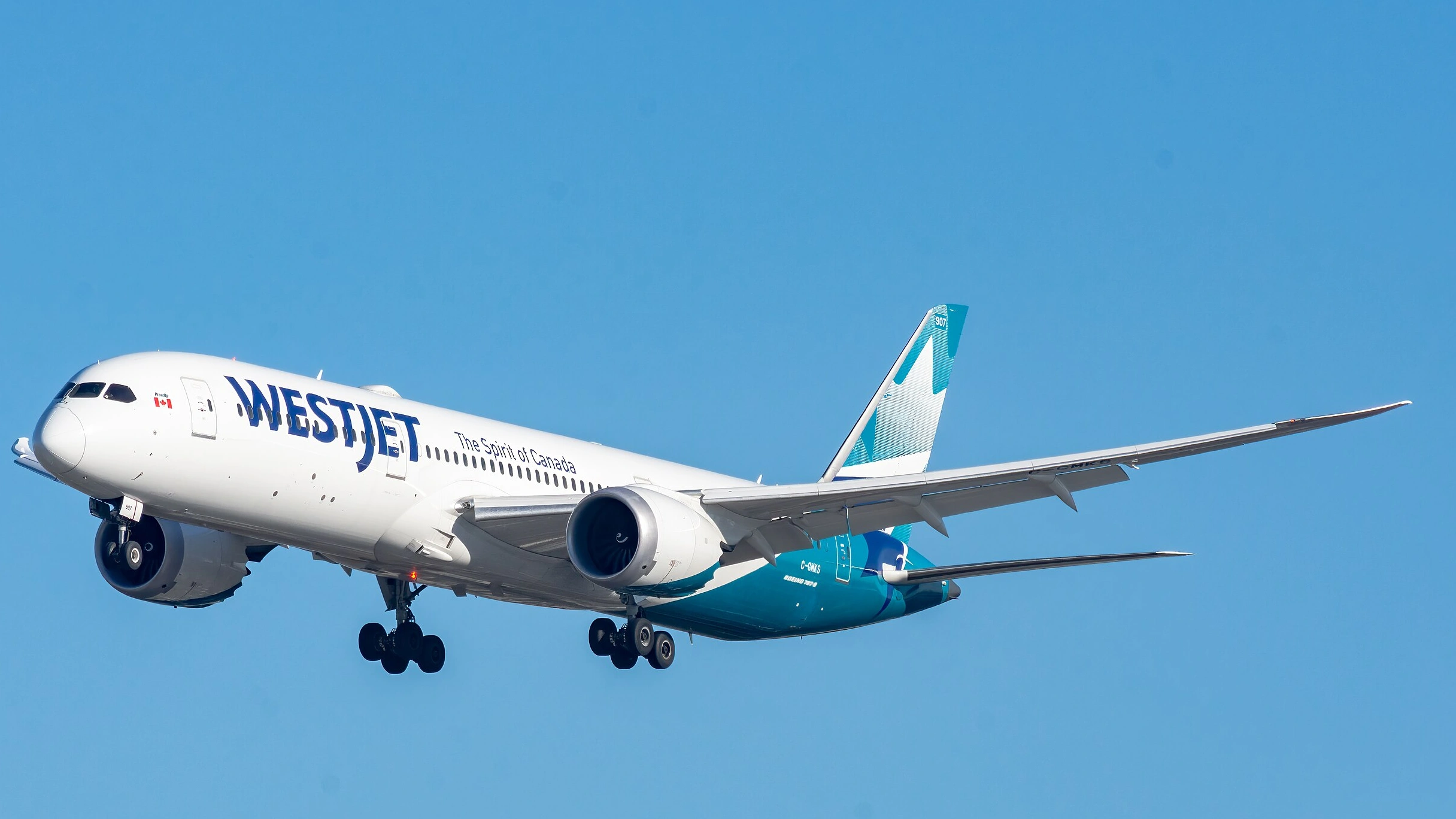
The timing of these cuts is particularly striking, arriving within weeks of WestJet’s most aggressive transatlantic push to date. The airline launched eight new European routes in spring 2026 — including first-ever nonstop services from Halifax Stanfield International Airport (YHZ) to Adolfo Suárez Madrid–Barajas Airport (MAD), and a restored service between Toronto Pearson International Airport (YYZ) and Glasgow International Airport (GLA) — both inaugurated on May 15, 2026.

Photo: Mitchul Hope | Wikimedia Commons

WestJet’s 24 US Route Cuts: How Political Tensions Drained Canada–US Air Demand

The United States absorbs the largest share of WestJet’s network cuts by a considerable margin: 24 of the 41 eliminated routes — 57 percent of the total — involve transborder Canada–US flying. The scale of this withdrawal reflects a structural erosion in demand rather than a tactical schedule adjustment. WestJet spokesperson Julia Kaiser confirmed to Global News that the airline experienced “a notable decline in transborder travel demand throughout 2025” and stated that the carrier was reducing its full-year US flying by approximately 10 percent, with a 15 percent reduction during what were “historically peak” summer travel periods.

Aggregate data confirms the severity of the downturn. According to Statistics Canada, return trips by Canadians to the United States fell by 23.6 percent in late 2025. US Department of Transportation (DOT) data covering WestJet’s own passengers found that the carrier’s US traffic between March 2025 and February 2026 ran 19 percent lower than in the preceding 12 months. When measured in Available Seat Miles — the metric that accounts for both seat count and distance flown — WestJet’s US capacity for Summer 2026 fell by approximately 32 percent compared with its earlier schedule submission, representing one of the most significant single-season corrections in the airline’s history.

Several forces compound one another to explain the demand collapse. The Canadian dollar weakened persistently against the US dollar throughout 2025 and into 2026, making cross-border travel materially more expensive for Canadians.

Trade tensions, tariff disputes between Ottawa and Washington under the second Trump administration, and what analysts describe as a “friction-heavy” border experience soured appetite for discretionary US travel among Canadians of all demographics. The combination has redirected Canadian leisure demand toward Europe, Mexico, and domestic alternatives rather than toward traditional US sun-and-city destinations.

Among the most commercially interesting individual route eliminations is WestJet’s withdrawal from Winnipeg James Armstrong Richardson International Airport (YWG) to Hartsfield-Jackson Atlanta International Airport (ATL). WestJet had operated this service from September 2023 to April 2026, primarily to feed codeshare partner Delta Air Lines (DL) at its dominant Atlanta hub.

Despite the unparalleled network connectivity available at ATL — the world’s busiest airport by passenger traffic — WestJet managed only a 79.0 percent load factor on the route. Other US routes removed include:

  • Vancouver International Airport (YVR) to Boston Logan International Airport (BOS), served June to October 2025
  • Calgary International Airport (YYC) to Raleigh-Durham International Airport (RDU), served June to October 2025
  • Edmonton International Airport (YEG) to Nashville International Airport (BA), served May 2024 to October 2025
  • YWG to BNA
  • YVR to Tampa International Airport (TPA), last operated in October 2025.
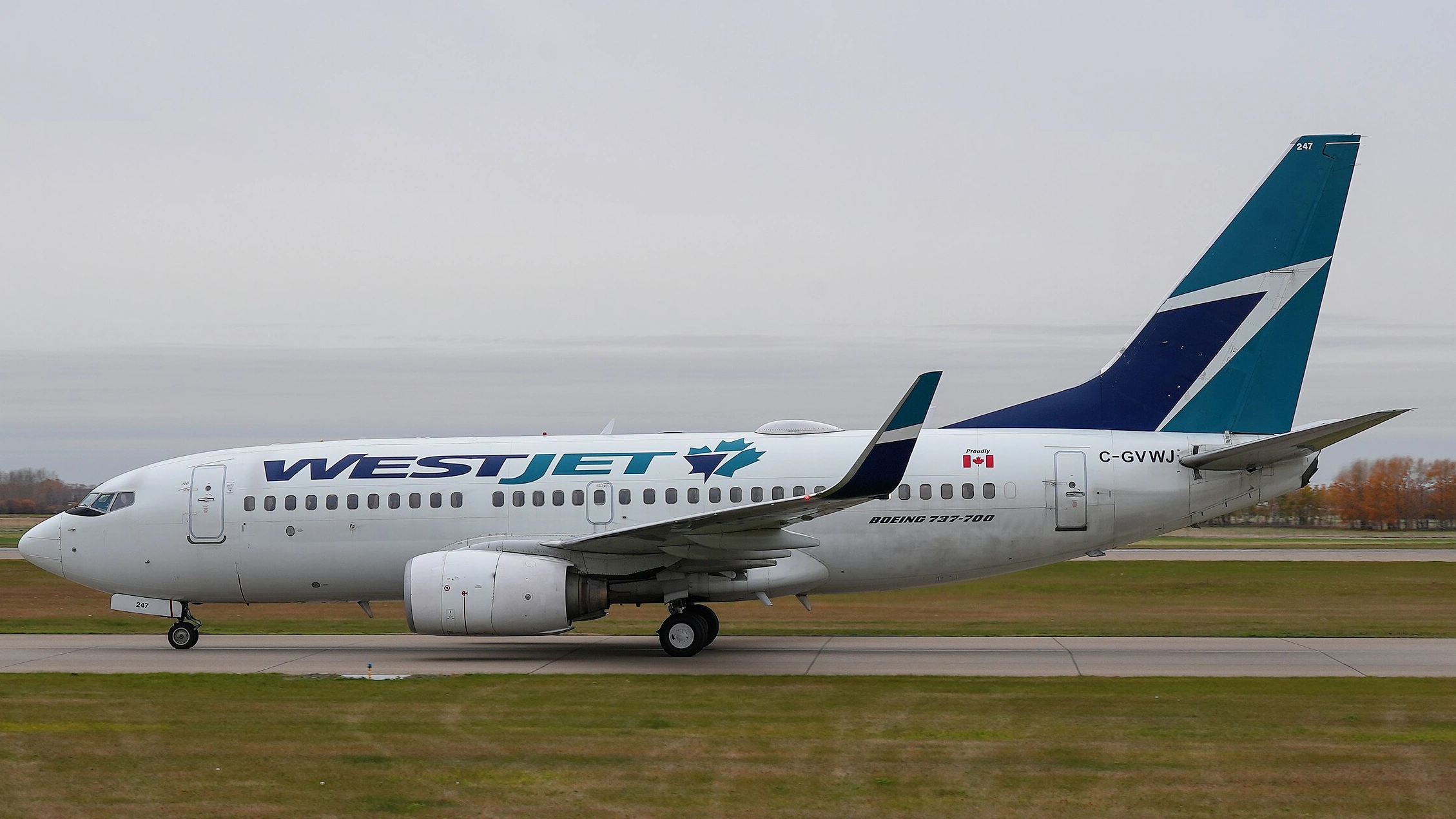
The WestJet–Air Canada parallel is instructive. Air Canada also exited Vancouver–Tampa at the same juncture. The two carriers had launched the route concurrently in competitive response to each other’s entry. Air Canada’s load factor on the route sat at a catastrophic 54 percent, and the simultaneous withdrawal has left the market entirely unserved — a market that received at least weekly nonstop service from multiple carriers as recently as 2024.

Similarly, Air Transat exited the US market entirely in spring 2026, cancelling all routes including its popular Snowbird Florida services, citing the same structural demand collapse.

Photo: Quintin Soloviev | Wikimedia Commons

Cuba’s Geopolitical Fuel Crisis Cuts WestJet’s 14 Caribbean Route

All 14 of WestJet’s eliminated Caribbean routes involve Cuba, and every single one is a direct inheritance from the carrier’s 2023 acquisition of Sunwing Airlines — itself one of Canada’s pre-eminent leisure operators in the Cuban market for decades. The backstory is as much geopolitical as commercial.

Cuba is, by a considerable margin, the most popular Caribbean winter-sun destination for Canadians; at the height of the Sunwing era, multiple Canadian airports maintained seasonal direct services to Varadero, Cayo Coco, Holguín, Santa Clara, and Havana. These routes were a cornerstone of the leisure business WestJet was attempting to inherit and grow when it completed the Sunwing acquisition in May 2023.

In early February 2026, that business was abruptly and entirely suspended. Cuba’s major airports warned that Jet A-1 aviation fuel was critically depleted, a consequence of geopolitical forces far beyond the airline’s control. The Trump administration’s blocking of Venezuelan crude oil shipments — Cuba’s primary fuel source — combined with Mexico’s suspension of its own supplies to the island to avoid punitive US tariffs, left Cuba without meaningful aviation fuel.

January 2026 marked the first month since 2015 in which Cuba received no oil shipment whatsoever. The result was nationwide blackouts, civilian fuel shortages, and the complete commercial inviability of operating scheduled passenger services to Cuban airports.

WestJet, along with Air Canada (AC), Air Transat (TS), and the full Sunwing Vacations Group, began suspending operations on February 9–10, 2026. WestJet Group stated it would dispatch empty aircraft to Cuba to repatriate approximately 3,000 Canadians then vacationing on the island, and that “all aircraft dispatched to Cuba will carry sufficient fuel to safely depart without reliance on local fuel availability.”
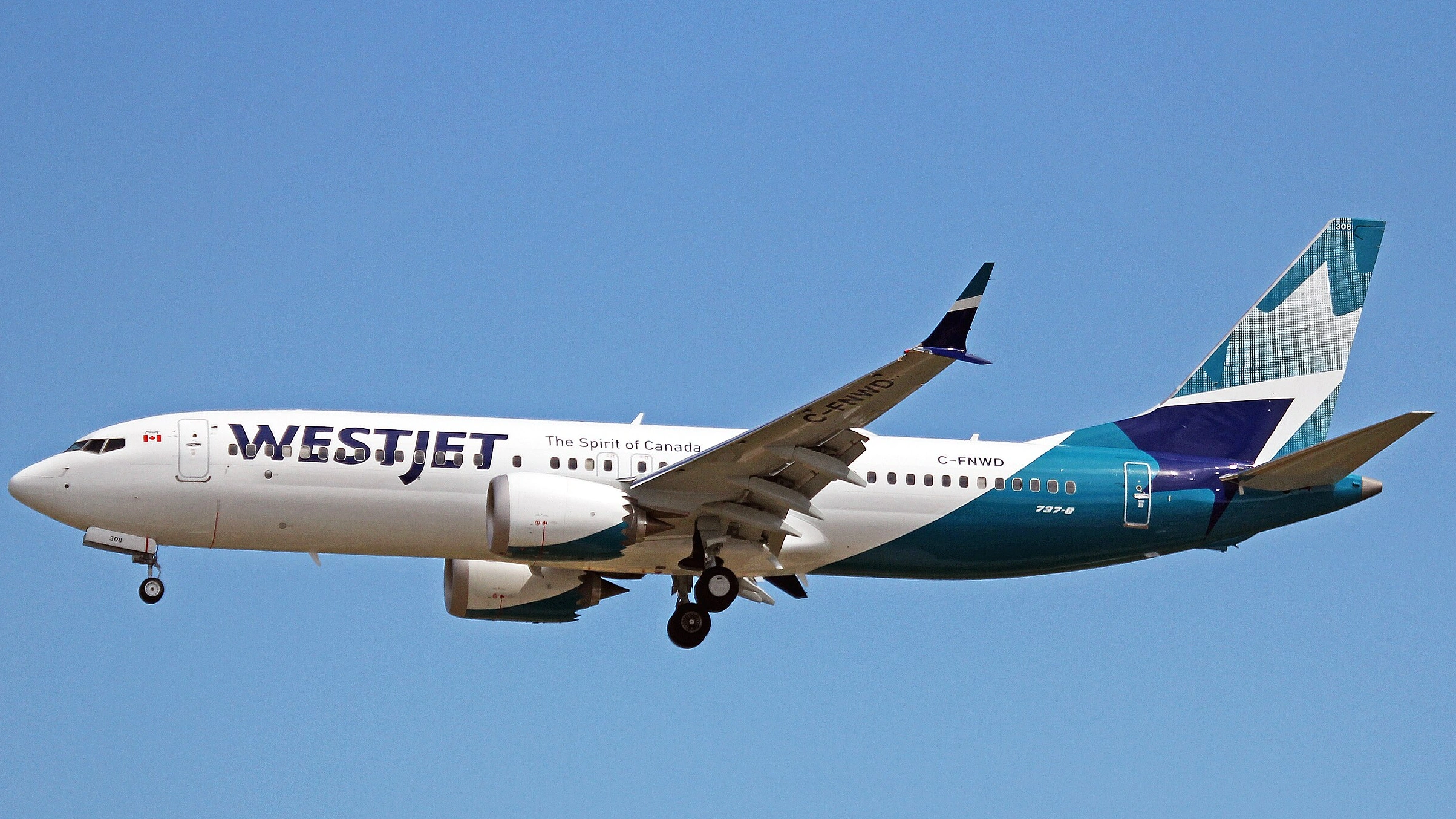
The airline initially planned to resume Cuba services on April 26, 2026. In April, however, Sunwing Vacations Group, which includes WestJet Vacations and Vacances WestJet Québec, extended the suspension through June 20 to October 9, 2026, citing the continued unavailability of commercial aviation fuel.

What distinguishes the 14 routesthat have been slashed is that WestJet has not scheduled any of these specific city pairs for the October 2026 Cuba return, even though the airline does plan to resume Cuba operations at that time with more than 20 routes. These 14 links that last operated between December 2025 and February 2026 represent an inherited Sunwing network that WestJet has chosen not to reinstate under its own brand, effectively rationalizing the legacy carrier’s footprint rather than perpetuating routes that WestJet itself never launched organically.

Photo: ken Fielding | Wikimedia Commons

Routes to Mexico and a Colombian Caribbean Island Also Axed

Beyond the US and Cuba, WestJet has eliminated three additional routes spanning Mexico and Colombia. These involve different circumstances from the Cuba fuel crisis and the US demand collapse, but each reflects the same underlying rationalization of routes whose commercial viability proved insufficient.

Two of the cuts involve Mexico — a market that now represents WestJet’s second-largest international country destination after the US. Mexico accounted for 16 percent of WestJet’s flights in 2022, a figure that has grown to 27 percent in 2026 following the full absorption of Sunwing’s Mexico-heavy leisure network.

Against this backdrop of overall Mexico growth, the removal of two specific routes reads as normal network housekeeping. Regina International Airport (YQR) to General Rafael Buelna International Airport in Mazatlán (MZT), served December 2025 to April 2026, and Montréal–Trudeau International Airport (YUL) to Los Cabos International Airport (SJD), served November 2025 to April 2026, are both standard seasonal leisure routes that have not been renewed in the current forward schedule.

The third cut is more unusual. WestJet had operated a service between YUL and El Embrujo Airport on San Andrés Island (ADZ), a Colombian territorial possession located geographically in the Caribbean and culturally distinct from mainland Colombia, from December 2025 to March 2026.

The route was inherited directly from Sunwing, which maintained seasonal leisure service to San Andrés as a Cartagena-adjacent alternative popular with Quebec-based tour operators. WestJet has not scheduled a replacement, and the San Andrés market will be unserved by Canadian carriers for the foreseeable future.

Photo: Thomas Nugent | Wikimedia Commons

How WestJet’s Cuts Compare with Air Canada’s Parallel Retreat

According to another piece published by Simple Flying, Air Canada’s international schedule data from Cirium Diio shows that 13 markets have been dropped when comparing April–September 2025 with the corresponding 2026 period Air Canada’s cuts are predominantly US-facing and Cuba-related, with the Star Alliance carrier also pausing routes to six Cuban destinations from Montréal and Toronto.

The critical distinction between the two carriers lies in their response to the demand vacuum. Air Canada, which operates a schedule over three times larger than WestJet’s in the international segment, has offset its US losses with a 6 percent year-over-year increase in European flying. This is driven primarily by the Airbus A321XLR’s ability to access secondary European cities that previously required widebody aircraft.

WestJet’s parallel European expansion eight new transatlantic routes, a record 16 daily European departures in July, and the claim of becoming the world’s second-largest narrowbody transatlantic operator after Icelandair — represents exactly the same strategic pivot executed on a Boeing 737 MAX platform.

Air Transat’s response to the same market forces has been more extreme. The leisure specialist announced in early 2026 that it would exit the US market entirely, winding down nine routes to just three before shutting all US flying. Collectively, these three carriers’ simultaneous withdrawal from US transborder operations leaves fewer nonstop Canada–US flights available in summer 2026 than at any point since the immediate post-pandemic recovery period.

Photo: 4300streetcar | Wikimedia Commons

WestJet, Sunwing, Swoop, And A Network in Transition

 WestJet completed the acquisition of Sunwing Airlines and Sunwing Vacations in May 2023 — a deal first announced in March 2022 that attracted significant scrutiny from Canada’s Competition Bureau, which warned that the merger of the country’s two largest integrated tour operators would likely reduce competition on 31 routes between Canada and the Mexico/Caribbean corridor. WestJet also absorbed Swoop — its own ultra-low-cost subsidiary carrier— in October 2023, completing the integration of that carrier’s 16-aircraft fleet into the mainline operation.

Sunwing’s full integration under a single Air Operator Certificate was finalised on May 29, 2025, bringing 18 former Sunwing Boeing 737s into WestJet’s fleet alongside nine aircraft formerly operated by the now-defunct Lynx Air.

WestJet CEO Alexis von Hoensbroech described the completion of two airline consolidations in two years as “complex and required coordination across every aspect of our business“, framing the completed integration as “a story of transformation in Canadian aviation“. In practice, this transformation means that WestJet now operates more than 130 Boeing 737s under a single AOC and holds network reach across more than 40 leisure destinations in the Caribbean, Mexico, and Central America.

Several of the 14 Caribbean routes now designated as cuts are a direct legacy of this inheritance, representing Sunwing services that WestJet has retrospectively judged unsuitable for perpetuation in its unified network.

Despite the loss of the two specific Mexico routes identified above, Mexico’s share of WestJet’s overall flying has grown from 16 percent in 2022 to 27 percent in 2026 — a 69 percent relative increase attributable almost entirely to the addition of Sunwing’s dense Mexico leisure network.

Photo: WestJet

WestJet’s European Expansion

WestJet’s eight new European routes launched in spring 2026 are all operated on the Boeing 737 MAX 8, a narrowbody aircraft whose extended range has unlocked transatlantic flying from secondary Canadian cities that previously lacked direct European access.

From Halifax Stanfield International Airport (YHZ), WestJet launched nonstop services to Lisbon Humberto Delgado Airport (LIS) on May 1, to Madrid on May 15, and to Copenhagen Airport (CPH) on May 28 — making Halifax one of only a handful of mid-size North American airports with nonstop links to three European capitals simultaneously.

From Toronto Pearson (YYZ), the carrier restored its Glasgow service on May 15 after a four-year absence and launched a new Toronto–Cardiff International Airport (CWL) service on May 22 — a route that represents the longest single-aisle operation in WestJet history at 3,434 miles, and the first scheduled Canada–Wales nonstop service since Zoom Airlines’ collapse in 2008.

Aviation Week noted that Cardiff Airport CEO Jon Bridge called the service “a major step forward in reconnecting Wales with North America“, citing approximately 35 Canadian companies operating in Wales and employing 6,500 people.

WestJet also added service to Reykjavik Keflavík International Airport (KEF) from both Edmonton International Airport (YEG) and Winnipeg, and to Ponta Delgada João Paulo II Airport (PDL) in the Azores from Toronto. At its planned peak in July 2026, WestJet expects to operate an average of 16 daily departures to Europe — a 25 percent increase on its previous record.

Photo: WestJet

What WestJet’s Route Cuts Mean for Passengers and Stranded Markets

The practical consequence of WestJet’s 41 route eliminations — particularly the 24 US cuts — is a meaningful reduction in nonstop connectivity for passengers in secondary and mid-size Canadian cities.

Several markets are now entirely unserved by nonstop flights: the YVR–Tampa corridor, once served concurrently by both WestJet and Air Canada, has no scheduled service from any carrier. Winnipeg–Atlanta and Winnipeg–Nashville are both gone. Passengers who relied on these routes must now connect through hub airports, typically Calgary International Airport (YYC), YVR, or YYZ, adding both time and cost to their journeys.

Travel Pulse Canada notes that Edmonton International Airport and Vancouver International Airport are the hardest-hit airports by the cancelled US routes, with multiple routes eliminated from each hub. Key routes in overlapping markets continue to be served by Air Canada and other carriers:

  • Toronto–Las Vegas remains available through Air Canada and United Airlines
  • Vancouver–San Francisco retains multiple daily departures with Air Canada and United
  • Toronto–Los Angeles continues to be heavily served.

However, for the secondary routes from secondary cities, there is now significantly less choice.

Leave a Comment

Your email address will not be published. Required fields are marked *

Scroll to Top
