Nepal’s aviation sector has emerged as a critical economic engine, contributing USD 1.0 billion to GDP and supporting 381,200 jobs, according to a report by the International Air Transport Association (IATA).
Nepal has some remarkable aviation history: Nepal houses the world’s most dangerous airport, its main international airport was once a grazing field for cows, and one of its archaic airports help transport goods for refugees who had fled during their uprising in Tibet.

Currently, Nepal houses around 50 airports- most of which are defunct or don’t see regular operations. Nevertheless, the aviation sector of Nepal directly employs around 12,100 individuals and contributes approximately USD 256.9 million to the economy—accounting for about 0.6% of the nation’s total GDP. Overall, the industry supports nearly 381,000 jobs and represents roughly 2.5% of the country’s gross domestic product.
Aviation Sector Contribution to Nepal GDP and Employment
The “core aviation” segment of Nepal includes:
- airlines
- airport operators
- air navigation service providers
- associated on-site businesses
Airlines alone account for USD 207.2 million in output and around 7,000 jobs, while airport infrastructure and related services contribute an additional USD 49.7 million and 5,100 jobs.
However, the sector’s broader economic footprint extends far beyond these direct activities. When factoring in supply chains, employee spending, and tourism, aviation’s total contribution rises sharply to USD 1.0 billion—representing 2.5% of Nepal’s GDP.
Tourism Supported by Aviation Drives Economic Expansion
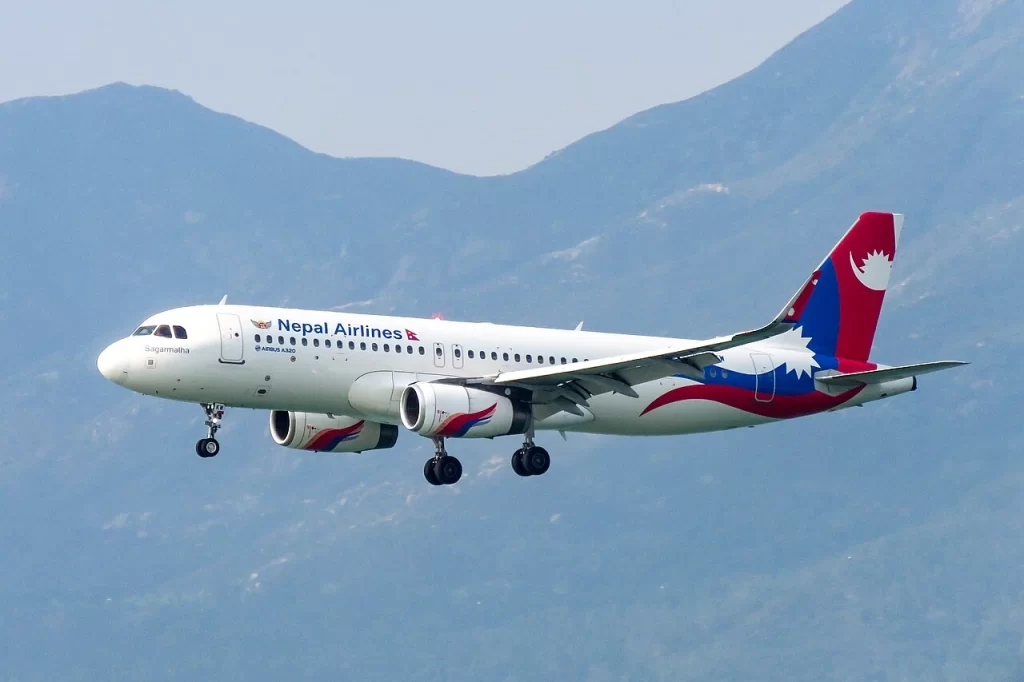
Tourism remains the most significant multiplier of aviation’s economic value in Nepal. The sector contributes USD 542.2 million to GDP and sustains approximately 260,900 jobs. However, one has to note that when Nepal Airlines (RA), the flag carrier, tried to lease a Boeing 757 during the Visit Nepal Year 1998, it resulted in the Chase Air scandal that rocked the nation.
International visitors arriving by air inject an estimated USD 633.7 million annually into Nepal’s domestic economy through accommodation, transport, and local consumption.
In its global analysis, IATA emphasizes that aviation-enabled tourism functions as a “catalytic” force, amplifying economic activity across sectors by linking remote destinations with international markets:
The movement of goods, enabled by the air transport industry, brings about improved economic outcomes via catalytic collaboration, specialization, and more efficient allocation of resources across all sectors of the local and world economy. Aviation plays a crucial role in, for example, enabling the development of dynamic and efficient supply chains, and in driving the growth in e-commerce.
Air Connectivity and Passenger Traffic Trends in Nepal
Nepal’s air transport network handled approximately 2.5 million international passenger departures in 2023, with international traffic accounting for 38% of total origin-destination flows.
The Asia-Pacific region dominates outbound travel, representing 52% of passenger flows, followed by the Middle East (30%) and Europe (12%).
Key global city links include Delhi, Dubai, Kuala Lumpur, Doha, and London, reflecting both labor migration patterns and tourism demand. Over the past decade, international passenger volumes have grown cumulatively by 29%, underscoring sustained demand despite structural constraints.
Air Cargo and Trade Facilitation in Nepal
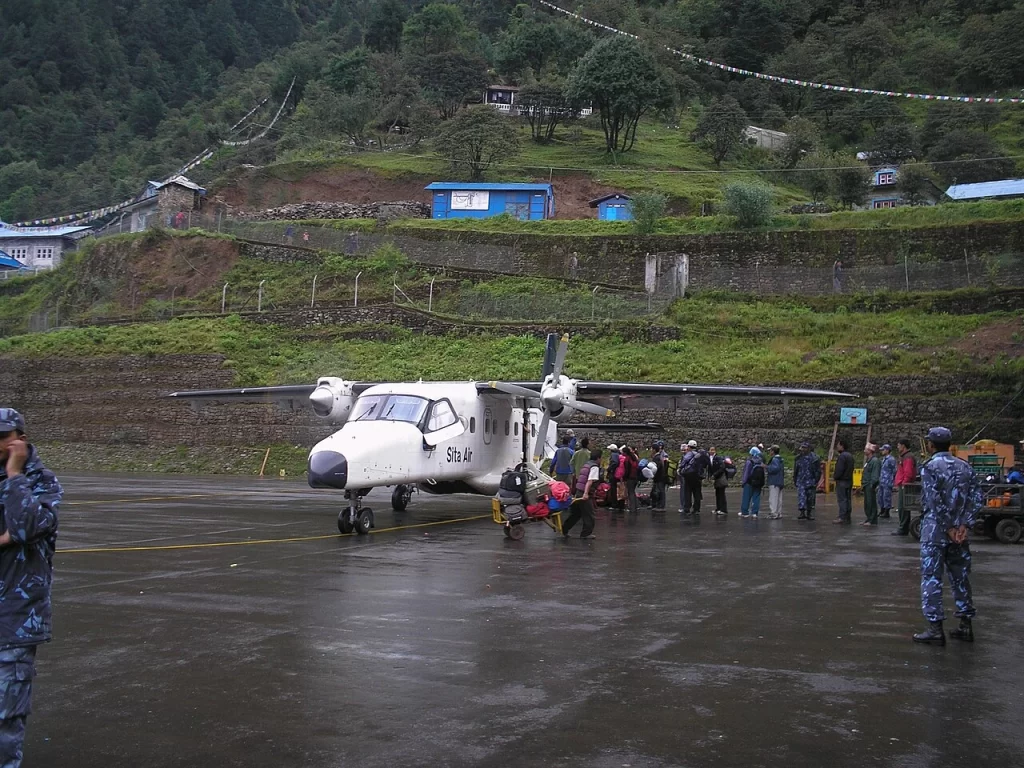
Air freight continues to play a strategic role in Nepal’s trade ecosystem, particularly given the country’s landlocked geography. In 2023, Nepal handled approximately 26,400 tonnes of air cargo, supporting both imports and exports across high-value and time-sensitive goods.
| Ranking Category | Position |
|---|---|
| Air Cargo Market | 90th |
| Trade Market | 122nd |
IATA notes that aviation enables more efficient allocation of resources, strengthens supply chains, and accelerates e-commerce growth. Also, during crises such as Covid-19, air cargo becomes essential for delivering humanitarian assistance and emergency supplies worldwide.
Affordability and Accessibility of Air Travel in Nepal
Despite its economic benefits, air travel affordability remains a structural concern. The average real airfare in Nepal declined by 37% between 2011 and 2023. But due to the war in Iran, airfares have doubled in nation. This is one of the reasons why carriers have dropped up to 40% of their flights, and this has led to the nation being in a “survival mode”.
As far back as 2024, passengers still need to work approximately 38.6 days on average to afford a flight, indicating persistent income constraints.
Globally, flight costs have fallen by around 70% over the past five decades, significantly expanding accessibility. Yet in Nepal, affordability remains uneven, particularly for domestic travel. However, Nepal announced that some senior citizens would get around 80% discount on airfares.
Aviation as a Driver of Social and Regional Development
Beyond economics, aviation delivers substantial social benefits by enhancing mobility and access.
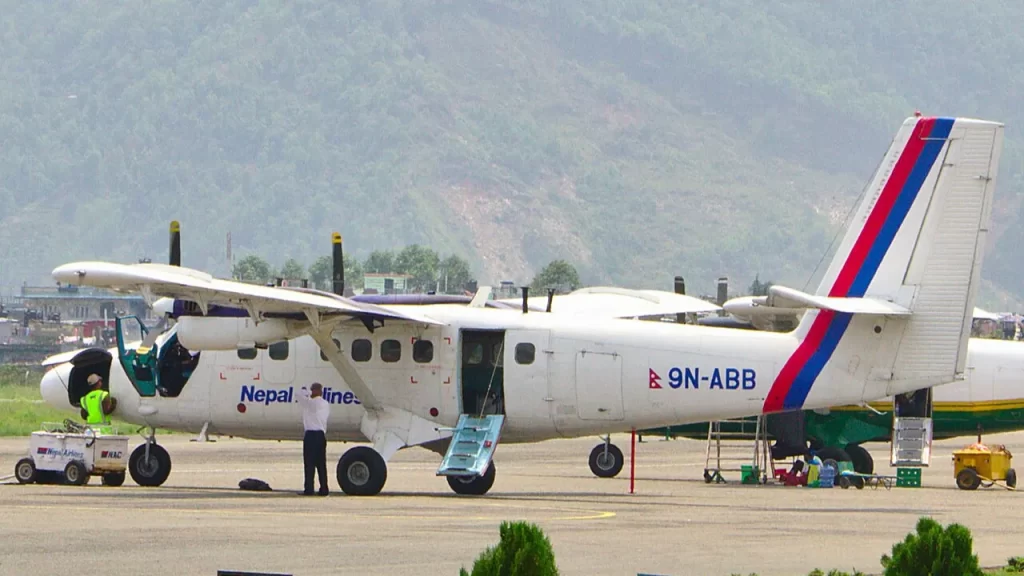
Air transport connects remote and mountainous regions to essential services, including healthcare, education, and employment opportunities. It also facilitates cultural exchange and strengthens diaspora ties.
IATA underscores that these factors collectively contribute to long-term productivity gains, poverty reduction, and improved living standards—aligning aviation with the United Nations Sustainable Development Goals (SDGs).
Nepal currently operates 16 airports with scheduled commercial flights and maintains direct air links with 31 international airports across 17 countries. However, there are still some problems: Nepal has signed bilateral agreements (in aviation) with 42 countries, but Nepal doesn’t operate in all these nations.
Airlines operate approximately 43 outbound international flights daily, supported by 36 carriers. The country has also added seven new international routes over the past five years.
Since 2014, Nepal’s international connectivity index has increased by 14% within the Asia-Pacific region and by 120% with other global regions, reflecting gradual integration into global aviation networks.
All in All
Despite measurable progress, Nepal’s aviation sector continues to face structural limitations, including infrastructure bottlenecks, high operating costs, and regulatory complexities. One of these complexities was highlighted in the investigation of the crash of a helicopter in Louche (Everest region) last year.
The IATA report stresses that unlocking aviation’s full potential will require sustained investment, policy alignment, and cost rationalisation. These reforms could significantly enhance connectivity, reduce fares, and expand economic spillovers.
In a country defined by challenging geography, aviation remains less a luxury than a necessity—serving as a strategic enabler of national development, economic diversification, and global integration.



_@_HKG,_March_2019.jpg)

