Nepal Airlines Corporation (NAC) continues to operate a fraction of its potential international network despite holding bilateral air service agreements with 42 countries, many of which remain commercially dormant decades after signing.More than 20 years after Nepal and South Korea formalized an air services agreement in September 2004, no scheduled Nepali carrier has operated a direct flight between the two nations, Nepal News reported.
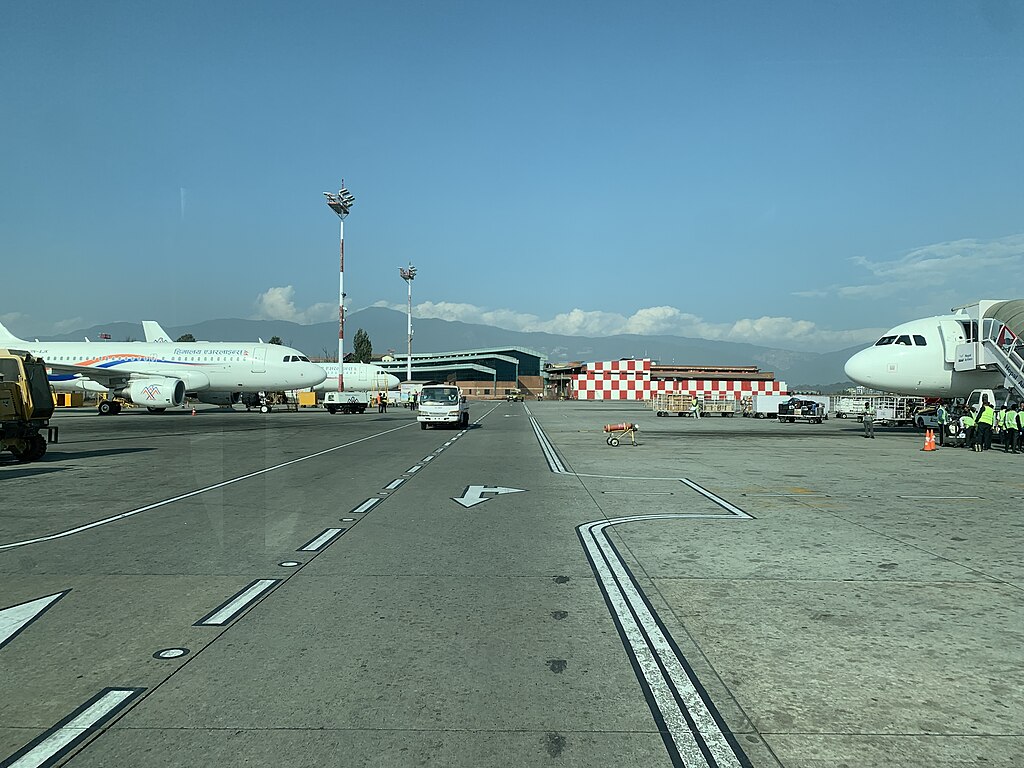
Stalled Nepal–South Korea Route Amid Regulatory Deadlock
The long-proposed Nepal–South Korea route remains emblematic of policy inertia and regulatory discord.
NAC confirmed that it has repeatedly sought government facilitation to operationalize the service, but progress has stalled due to conditions imposed by Korean aviation authorities.
Archana Khadka, spokesperson for Nepal Airlines, stated that institutional coordination remains a critical bottleneck. “This is not the responsibility of the corporation alone; the policy level is equally responsible,” she said, emphasizing the airline’s continued appeals to the government.
The impasse primarily stems from South Korea’s insistence on conducting an on-site safety “on-site inspection of Nepal’s aviation safety standards” by the Civil Aviation Authority of Nepal (CAAN).
CAAN has rejected this requirement, asserting that only the International Civil Aviation Organization (ICAO) holds the mandate to audit national regulators.

Underutilized Wide-body Fleet at Tribhuvan International Airport (KTM)
At Tribhuvan International Airport (KTM), Nepal Airlines’ Airbus A330 fleet operates significantly below optimal utilization levels. Although the Airbus A330, whose acquisition saw the largest aviation scandal in the country, are capable of flying up to 20 hours daily, NAC currently deploys them for only seven to eight hours on average.
Khadka indicated that network expansion remains the most viable strategy to improve utilization. She noted that introducing long-haul destinations such as South Korea could increase daily aircraft usage to approximately 15 hours.
At present, NAC’s longest operational route connects Kathmandu to Tokyo’s Narita International Airport, supplemented by services to Doha, Dubai, and New Delhi.

Nepal’s Bilateral Agreements without Commercial Execution
Nepal has formalized air service agreements [Bilateral Air Services Agreement (BASA)] with 42 countries, including multiple European states such as Germany, France, Italy, Austria, Croatia, Luxembourg, Netherlands, and Switzerland. However, Nepalese aviation system has been dubbed to be unsafe and Nepalese carriers are barred from flying into European airspace. According to The Diplomat, effects of this ban were visible during the Covid 19 when:
“aircraft of the state-owned Nepal Airlines ferried nationals from Japan, Australia, and New Zealand back to their countries. But this wasn’t possible for EU destinations. EU citizens in Nepal had to charter non-Nepali aircraft, mainly Qatar Airways, to fly home. The EU ban also has a visible impact on long-haul North American flights, which need to stopover in European airports for refueling”.
NAC’s inability to penetrate European markets remains closely tied to regulatory restrictions imposed by the European Union. The EU blacklisted Nepal in 2013, citing deficiencies in aviation safety oversight, regulatory enforcement, and accident investigation mechanisms. At a point in its history, Nepalese avaition had been blacklisted by EU as well as ICAO.
Nations have suggested that the dual role of CAAN being a service provider as well as regulator be separated – a move that might help make the aviation ecosystem better.
This discrepancy of Nepal’s theoretical possibility of operating to many nations but being limited to handful of nations reflects a systemic gap between diplomatic aviation frameworks and operational execution.
Former NAC Executive Chairman Ubaraj Adhikari had proposed several expansion initiatives, including direct flights to Australia following a 2019 bilateral agreement. However, these plans have not materialized into scheduled services.
Adhikari maintained that implementation responsibility rests with airline management, stating that strategic proposals alone cannot ensure operational outcomes.

This classification prevents Nepali carriers from operating within European airspace, effectively nullifying multiple bilateral agreements signed with EU member states.
Former NAC General Manager Kul Bahadur Limbu criticized the lack of institutional reform, asserting that persistent governance issues and weak accountability mechanisms have hindered progress.

Reasons behind Nepal’s Limited Regional Expansion
Despite robust passenger demand on labor migration routes, NAC has not fully capitalized on regional opportunities. Almost 1500-3000 Nepalese leave the nation each day for foreign employment, especially in the Gulf Nations. The airline operates flights to key destinations in the Gulf and Asia, including Saudi Arabia, Qatar, and Malaysia, but capacity remains constrained.
According to former General Manager Sugat Ratna Kansakar, who was mired the A330 purchase scandal, Nepal has agreements permitting operations to 11 Indian cities, yet NAC currently serves only Delhi, Mumbai, and Bengaluru.
Another major hurdle is a dearth of pilots. Technical spokesperson Devendra Pun confirmed that the airline has reduced certain international frequencies due to insufficient cockpit crew availability. NAC requires 17 pilot pairs to operate its two Airbus A330 aircraft efficiently but currently employs only 11 pilots and six co-pilots. This comes as a surprise to many given that unofficial data suggests that hundreds of Nepalese students complete their pilot training each year.
International aviation standards mandate strict limits on pilot duty hours, typically capping flight time at 10 hours per day and 100 hours per month, necessitating larger crew pools for sustainable operations.

All in All
In its 2079 (2021/22) report, Nepal’s Auditor General office concluded that failure to operationalize international air service agreements reflects inadequate engagement from both the Government of Nepal and CAAN.
The report emphasized that signing agreements without establishing execution frameworks undermines the strategic value of such accords.


_-_img_05.jpg)
.jpg)

_Manchester_Airport_329900.jpg)

