KLM Royal Dutch Airlines (KL), the Netherlands’ flag carrier, has reached a binding two‑year collective labour agreement with its cabin crew unions — VNC, FNV Cabine and De Unie — covering employment terms from 1 March 2025 through 28 February 2027, reported NL Times.
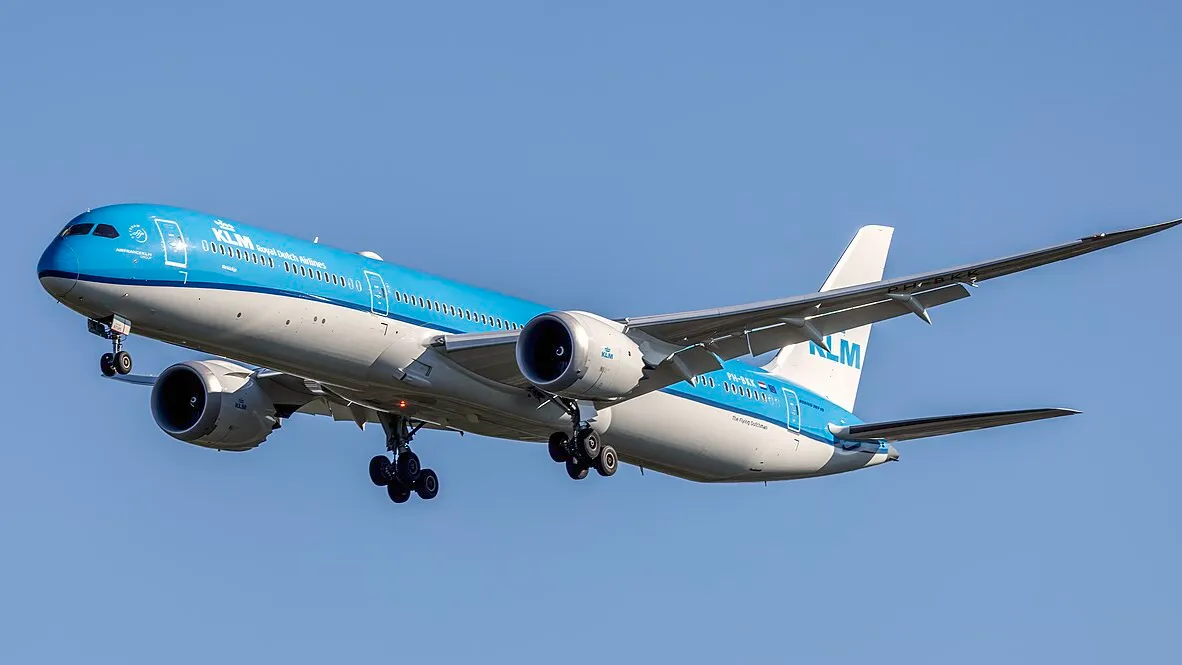
The agreement — ratified following positive union member votes — addresses compensation, working conditions, employability measures and stability provisions aimed at resolving a protracted period of industrial action and accountabilities that affected operations at Amsterdam Schiphol Airport (AMS), which is one of the busiest international airport.
Key Provisions of the KLM Cabin Crew Labour Deal
The collective labour agreement (CLA) with cabin crew is critical to workforce stability. Its key elements include:
-
Structured salary increases totalling approximately 3.25 % over the two‑year period, with defined phases.
-
One‑off net payment of €750 to cabin crew in January 2026, conditional on full‑time status.
-
Agreements on allowances, scheduling methodology and shift parameters that aim to balance operational requirements with employee well‑being.

Employability and Retention Frameworks
The new two-year collective labour agreement between KLM and its cabin crew unions also includes measures aimed at improving flexibility and long-term employability. According to aviation.be, the existing 80-90-100 scheme will be extended, allowing eligible cabin crew to reduce their working hours while retaining a higher proportion of their salary and pension accrual.
The agreement, which runs retroactively from March 1, 2025, to February 28, 2027, also provides for a total 3.25% salary increase. Cabin crew will receive staged increases of 1% from December 1, 2025, 1.25% from July 1, 2026, and another 1% from January 1, 2027, alongside a one-time net payment of €750 in January 2026 for full-time employees.
The agreement is set to support stability and long-term employability for cabin staff, while providing predictable cost development for the airline over the next two years. A new temporary early retirement (RVU) scheme and provisions enabling cabin crew to transfer to ground positions with clear return pathways.
Background: Cabin Crew Negotiations and Industry Context
KLM’s current cabin crew agreement follows a history of lengthy and sometimes contentious labour negotiations. A notable example came in 2019, when KLM reached a new deal with the VNC and FNV after months of negotiations and the threat of industrial action.
NL Times had reported that the agreement provided cabin crew with a 7% salary increase over two years and nine months, implemented in three stages. Pay rose by 2% retroactively from September 1, 2019, followed by increases of 2.5% in August 2020 and another 2.5% in August 2021. Employees also received a one-off €375 payment and access to a budget worth nearly 2% of their annual salary, which could be used for training, additional leave or a cash payment.
However, more recent talks were complicated by parallel disputes involving ground staff unions (CNV, FNV), which at times led to operational strikes and flight cancellations at Schiphol. A few months ago, the carrier saw flight cancellations and delays due to strike- the details of which are as follows:

What This Move Means for Passengers and KLM’s Long-Term Employability
KLM’s two-year cabin crew agreement provides a foundation for consistent onboard service and predictable staffing. The key benefits for travelers and operations:
| Aspect | Impact |
|---|---|
| Workforce consistency | Ensures experienced cabin crew are available across routes |
| Defined employment terms | Facilitates predictable staffing and scheduling |
| Timeline alignment | Employment planning matches travel demand across multiple seasons |
| Service continuity | Maintains stable passenger experience without operational changes |
The integration of long-term employability measures for KLM’s cabin crew such as reduced-hour work schemes and structured early retirement pathways will allow cabin crew to remain active in the workforce while managing career progression, supporting a sustainable staffing model by:
-
Reducing abrupt departures from active duty
-
Encouraging retention of experienced staff
-
Providing structural certainty for staffing throughout 2025–2027
By formalizing these arrangements, KLM ensures operational stability and a reliable travel experience for passengers, even though the agreement itself does not introduce immediate service changes.
The agreement also gives KLM greater visibility over its labour costs through the two-year period. Its phased salary increases and fixed one-off payments establish a clearly defined compensation structure, making it easier for the airline to plan expenses and forecast costs without requiring changes to existing routes or services.
This approach provides greater certainty for both KLM and its cabin crew, as compensation changes are predetermined for the duration of the agreement. With no additional cost provisions included beyond those already agreed, the airline can maintain a clearer financial and operational outlook through February 2027.