Lockheed Martin has secured a U.S. government contract to deliver 55 Legion Infrared Search and Track (IRST) pods to the Republic of China Air Force (RoCAF), strengthening Taiwan’s airborne surveillance and interception capabilities, reported Reuters. The sale was approved under the U.S. Foreign Military Sales (FMS) framework in late December 2025 and announced by the U.S. Department of Defense.
Work under the agreement will be performed primarily in Orlando, Florida, with deliveries scheduled to conclude by June 2031. U.S. officials framed the sale as a defensive capability enhancement consistent with long-standing policy toward Taiwan. The contract addresses an urgent operational requirement identified by Taiwan’s defense authorities as regional air activity around the island continues to intensify. This is a much larger development in the part of a geological development where China canceled close to a million flights to Japan after Prime Minister Sanae Takaichi suggested that Japan might intervene militarily in Taiwan, if China attacks Taiwan.
First Finnish F‑35A Rolls Out: What This Means for Finland’s Air Force
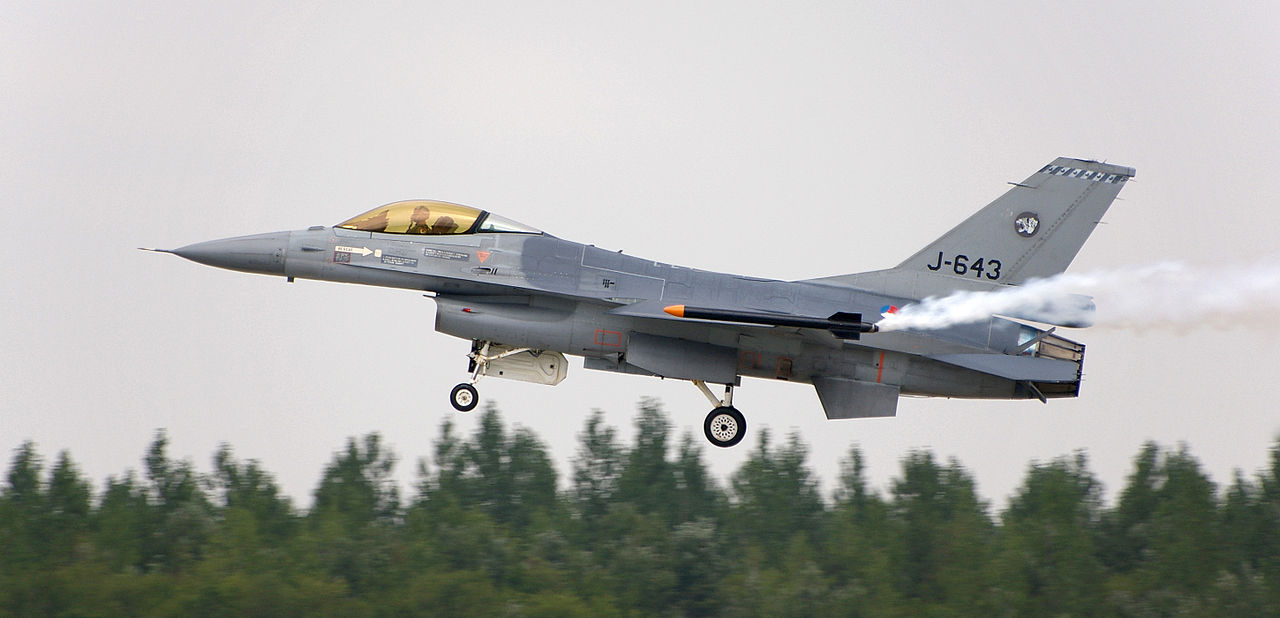
Why Taiwan’s F-16V modernization makes IRST integration critical
Taiwan’s Peace Phoenix Rising program upgraded 140 legacy F-16A/B aircraft to the F-16V configuration, introducing:
- AESA radar
- New mission computers
- Advanced electronic warfare suites
- Modern cockpit displays.
These upgrades elevated the aircraft to a 4.5-generation standard despite the age of their airframes.

In parallel, Taiwan ordered 66 new-build F-16V Block 70 fighters, representing the most advanced production variant of the F-16. Once deliveries are complete, Taiwan will operate over 200 advanced F-16s, the largest F-16V fleet globally. But the history of this traces back to the times before the pandemic:
- In 2019: Washington approved the sale of 66 new-build F-16V Block 70 fighters to Taiwan under a Foreign Military Sales program.
- In 2024: The United States approved a $320 million package to support F-16 sustainment and AESA radar maintenance for Taiwan’s fighter fleet.
The Legion IRST pod complements this modernization by providing a passive detection layer that reduces reliance on active sensors. Defense analysts view this as essential for countering increasingly sophisticated regional air threats.
According to the US Department of War, Lockheed Martin was “awarded a ceiling of $328,500,000 undefinitized contract action issued as a letter contract for Department of Defense and Foreign Military Sales (FMS) Sniper, Infrared Search and Track, and Low Altitude Navigation and Targeting Infrared for Night fixed wing hardware production“:
“This contract provides for the procurement and delivery of fifty-five Infrared Search and Track Legion Enhanced Sensor pods, processors, pod containers, and processor containers required to meet the urgent operational need of the Taiwan Air Force. FMS funds in the amount of $157,300,000 are being obligated at the time of award”.
Inside the U.S. Air Force’s $240 Million Joint Strike Missile Deal for the F-35A Fleet
Strategic Rationale Behind the IRST Procurement
By integrating IRST across multiple squadrons, Taiwan gains flexibility in deploying fighters without broadcasting radar emissions. This capability is particularly relevant against stealth aircraft and electronic attack platforms.
These sales demonstrate a pattern of capability-focused support rather than offensive force expansion. U.S. officials have repeatedly emphasized that such transfers are intended to preserve deterrence and stability.
The integration of IRST pods across Taiwan’s F-16 fleet reflects a broader shift toward information dominance and survivability in modern air combat.